

BMJ Best Practice to Exclusively Launch on Yike App, Files Prospectus for Strategic Collaboration in China
Junior physicians often struggle to know where to begin when confronting challenging cases in clinical diagnosis. Even established experts in a specific field may find themselves at a loss when faced with cross-disciplinary issues. For doctors working at the primary care level, encountering a wide variety of diseases on a daily basis makes efficient and accurate differential diagnosis a perennial imperative. Indeed, every physician encounters diagnostic uncertainties to some extent during their practice. How can these challenges be addressed? In the era of mobile internet, such issues hold promise for resolution through authoritative and reliable clinical decision support tools.
On May 23, Yike, a platform dedicated to building a nationwide collaborative network for physicians, announced a strategic partnership with BMJ Best Practice (hereinafter referred to as “BP”), the globally leading evidence-based clinical decision support tool. Under this agreement, BP will be exclusively integrated into the Yike App, and Yike is authorized as BP’s strategic partner for individual users in China, providing Chinese physicians with authoritative and efficient clinical decision support services.
Some industry experts believe that, compared with the traditional model of dispatching renowned specialists to grassroots levels for concentrated lecture tours and guidance, the collaboration between Yike and BP is expected to pave a new path for efficiently enhancing the medical service outcomes of general practitioners at the primary care level, thereby identifying a precise breakthrough point for the long-stalled initiative of tiered diagnosis and treatment.
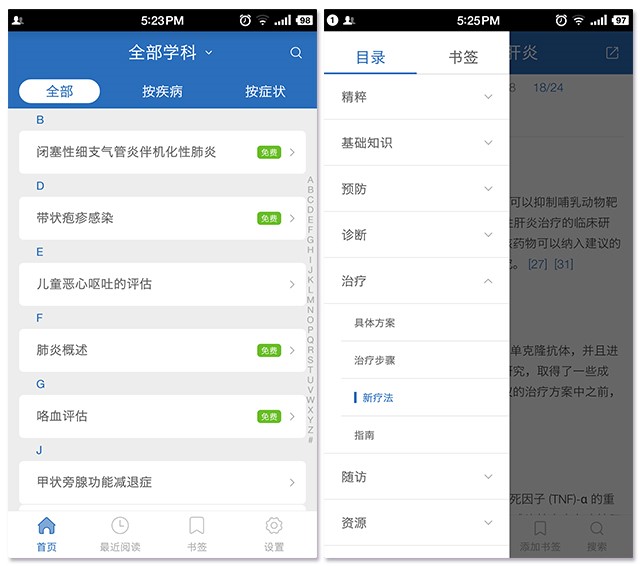
Physicians can access professional information via the Yike App, including diagnostic procedures, treatment plans, and differential diagnosis data provided by BP.
"Put Top Clinical Diagnostic Support Tools in Doctors' Pockets"
BMJ Best Practice is the flagship clinical decision support product of BMJ Group, a globally renowned provider of medical knowledge. It integrates systematic and comprehensive evidence from around the world, best-practice guidelines, and expert opinions. The content covers 1,010 topics, addressing 80% of common diseases, and includes more than 10,000 diagnostic approaches, over 3,000 diagnostic tests, and more than 4,000 international guidelines, along with a variety of images. All content is kept up to date.
For healthcare professionals, BMJ is a household name. As a professional body under the British Medical Association, it has evolved over nearly two centuries into a world-leading provider of medical knowledge. Since launching its flagship journal, The British Medical Journal (known as The BMJ), in 1840, BMJ has expanded its expertise from medical journals to clinical decision support, medical education and training, and healthcare quality improvement. It is dedicated to helping healthcare institutions and clinicians address critical medical challenges, enhance services, and improve patient outcomes.
Within BMJ’s product pyramid, BP stands as the culmination of its accumulated knowledge base.
By searching for disease or symptom keywords on BP, physicians can instantly access a comprehensive range of information via their mobile devices, including overviews, fundamentals, prevention, diagnosis, treatment, and follow-up care. This enables them to rapidly acquire essential diagnostic and therapeutic knowledge related to specific symptoms or diseases at the earliest opportunity. For conditions prone to misdiagnosis, BP also provides concise differential diagnosis guidance, assisting clinicians in distinguishing specific diseases based on both symptoms and diagnostic tests. To facilitate deeper understanding of diseases and support clinical teaching, BP offers a wealth of real-world case studies and high-quality images for various conditions.
It is understood that, in addition to its widespread use in the United Kingdom, the international edition of the British Pharmacopoeia (BP) has been introduced by national agencies or ministries of health for use by healthcare professionals nationwide in countries such as Norway, Brazil, and Saudi Arabia. In China, since the introduction of the international edition of the BP in 2010, it has been adopted by nearly twenty top-tier medical schools and more than one hundred teaching hospitals.
Coming soon to the Yike App is the Chinese edition of BMJ Best Practice (BP). Developed through a collaborative effort between BMJ and the Chinese Medical Association, with contributions from over 1,000 experts across China, this edition not only provides a complete and timely updated translation of the international version but also incorporates commentaries from Chinese experts and guidelines from the Chinese Medical Association. It is better tailored to the practical needs of Chinese healthcare professionals in terms of both reading preferences and content selection. Upon launch, licensed physicians in China will be able to access professional information from BP—including differential diagnoses, diagnostic steps, and treatment plans—anytime and anywhere via the Yike App, enabling them to efficiently address challenges encountered in clinical practice.
Regarding this collaboration, Ms. Kong Yuyan, Managing Director of BMJ Publishing Group China, stated: “With a long-standing history and enduring vitality, BMJ Publishing Group is a pioneer and practitioner of advanced concepts such as evidence-based medicine. Our China branch is committed to providing Chinese physicians with localized medical knowledge and tools grounded in robust evidence-based medicine through local internet platforms. By partnering with YiKe, we have added a Chinese-language mobile application to BMJ Best Practice (BP), offering individual physicians greater accessibility and usability. These efforts will enable physicians to enhance productivity while reducing time and financial costs. They can access the latest, credible diagnostic and therapeutic knowledge anytime and anywhere, promptly optimize treatment plans, avoid errors and omissions, stay abreast of advances in evidence, and even support training activities and lifelong learning.”
A Multi-Pronged Approach to Enhance the Overall Diagnostic Capabilities of Primary Care Physicians in China
In fact, BMJ had already collaborated with Epocrates, the world’s first publicly listed mobile health company, in the United States for many years. Since 2009, more than one million healthcare professionals have accessed and utilized BMJ’s content through Epocrates. In the United States, BMJ chose the leading platform Epocrates; in China, it selected Yike. The parallel between these two choices is quite intriguing.
Yike is a professional app under Huakang Mobile Healthcare, designed specifically for physicians. Initially launched with patient management features, Yike has since integrated a suite of tools centered around clinicians’ needs, including patient management, online medical education, peer case discussions, and medication references. A month ago, Yike prominently unveiled “Yike Studio,” engaging top-tier medical expert teams across China to conduct online lectures and remote consultations for primary care physicians. These initiatives aim to leverage internet-based approaches to enhance the training of primary care physicians, thereby facilitating remote communication and professional collaboration among doctors across different regions and hierarchical levels. This marks Yike’s official evolution from a “patient management tool” into a “nationwide physician collaboration platform” built around the clinical needs of doctors.
In this context, it is only natural for Yike to introduce BP.
“It can be said that, having already established doctor-patient connections, Yike has extended this chain to doctor-to-doctor connections since 2015. One of Yike’s current operational priorities is to enhance the overall clinical diagnostic capabilities of Chinese physicians and to leverage the experience, knowledge, and clinical service expertise of senior, highly skilled doctors to support a broader base of primary-care physicians,” said Dai Lian, COO of Huakang Mobile Health and head of Yike. “Consistent with the original intent behind establishing doctor-to-doctor connections, Yike has spared no effort in negotiations with BMJ since late 2015, ultimately culminating in this strategic partnership. The aim is to disseminate structured knowledge grounded in classic global medical experience to Chinese physicians and to use this tool to improve their overall clinical diagnostic capabilities.”
The flow of information is more creative than the movement of people.
Dai Lian stated that Yike is currently committed to building a nationwide physician collaboration platform, providing doctors with patient management, online education, and consultation and referral services. This represents an attempt to facilitate tiered diagnosis and treatment by engaging physicians directly. In her view, the implementation of tiered diagnosis and treatment in China has been ineffective for many years due to factors such as insufficient diagnostic capabilities at the primary care level, a lack of informational tools to support tiered care, and lagging healthcare payment mechanisms. Currently, Yike is leveraging information technology to improve the efficiency of triage and referrals, while simultaneously enhancing the diagnostic capabilities of primary care physicians through physician-focused tools like BP and online medical education features.
Some industry experts believe that, against the policy backdrop of the state’s vigorous promotion of tiered diagnosis and treatment and its advocacy for initial consultations at the primary care level, Yike’s explorations hold significant innovative value.
Currently, a consensus across various sectors regarding the sluggish implementation of tiered diagnosis and treatment is that primary healthcare services suffer from insufficient capacity and a shortage of talent, particularly manifested in relatively weak clinical diagnostic and therapeutic capabilities. As a result, most patients are reluctant to seek care at the primary level. "Strengthening primary care" is considered the key to resolving the challenges of tiered diagnosis and treatment. Traditionally, healthcare administrative departments have addressed this by mobilizing renowned national experts to conduct centralized lectures and guidance for physicians in primary care settings, or by having large hospitals regularly dispatch experts to provide consultations at primary healthcare institutions. However, due to short training durations and limited coverage, primary care physicians rarely receive sustained mentorship and hands-on guidance from these renowned experts, rendering efforts to improve their diagnostic and therapeutic skills ineffective. In contrast, whether by delivering BP’s authoritative medical knowledge services through more accessible mobile terminals or by introducing top-tier medical expert teams to conduct online lectures and cross-regional consultation activities, these approaches help explore an efficient and broader-learning pathway for the training of general practitioners in primary care.
Professor Hu Dayi, a renowned Chinese cardiovascular expert and medical educator, holds high expectations for the impact of BMJ Best Practice on China’s healthcare reform. He once stated, “BMJ Best Practice is of great importance to China’s healthcare reform and clinicians alike, as it helps standardize clinical pathways and disseminate the latest diagnostic and therapeutic information. I believe it will have a significant impact on the overall landscape of healthcare in China in the future.”
Explorations stemming from the concept of interoperability are just beginning, but each endeavor holds promise for improving the current state of healthcare in China.