

Mathematical Medicine: China's Pioneering Approach to Precision Healthcare Through Mathematics
The 2016 China Big Data Industry Summit and China E-Commerce Innovation and Development Summit (hereinafter referred to as the “Big Data Expo”) is scheduled to take place from May 25 to 29. Themed “Data Creates Value, Innovation Drives the Future,” the Big Data Expo was officially elevated to a “national-level” conference in 2016 and remains the world’s only professional exhibition dedicated exclusively to big data. Experts and scholars from government, industry, academia, research institutions, and user communities around the globe will convene to discuss topics such as industrial big data, smart machines, and artificial intelligence, while showcasing prominent big data application cases in areas including AI and robotics.
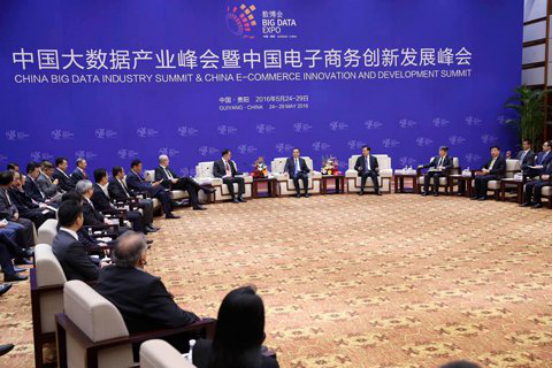
In the current era of “Internet Plus,” big data, cloud computing, and other technologies are increasingly permeating the healthcare and health industries. Mobile healthcare is gaining momentum and reshaping the healthcare industry chain and service models. This edition of the Digital China Summit has designated medical big data as a key focus of its events and forums, attracting numerous digital health projects to participate in the exhibition. Participating companies includePharmaceutical service consulting platform, specialized enterprise in health measurement and analysis technology, hospital informatization projects, medical imaging data projectsetc. Among them, Hangzhou Lianzhong Medical Technology Co., Ltd. held a themed promotional event on May 25, specially inviting Mr. Song Yulin, Deputy Director of the Second Division of the Health and Family Planning Commission of Inner Mongolia Autonomous Region, and Professor Kong Dexing, a specially appointed professor at Zhejiang University and postdoctoral fellow at Harvard University, to deliver keynote speeches.
To this end, VCBeat interviewed Professor Kong Dexing to gain further insight into the application of products built on the foundation of “mathematical medicine.”
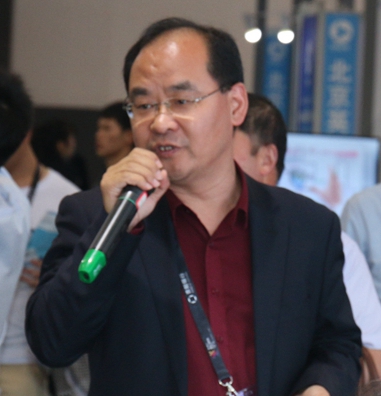
Professor Kong Dexing at the Big Data Expo
Professor Kong Dexing is a Distinguished Professor at Zhejiang University, a Doctoral Supervisor, and holds a Ph.D. in Science. He completed his postdoctoral research at Harvard University. He currently serves as the Director of the Image Processing R&D Center at the Faculty of Science, Zhejiang University, Director of the Institute of Applied Mathematics, and Chairman of the Zhejiang Society for Mathematical Medicine.
“Mathematical Medicine” is a concept first proposed by Professor Kong’s team, which isAn Emerging Interdisciplinary Field at the Intersection of Medicine, Modern Mathematics, Physics, and Information Science。
The core focus is to leverage mathematical models and high-performance algorithms to conduct in-depth mining of medical data from ultrasound, CT, and MRI, enabling the development of diverse products. Current flagship offerings include an abdominal imaging analysis system, precision radiofrequency ablation, and a surgical assistance design system.
For example, the digital liver and surgical navigation system, co-developed with Deshang Yunxing Image Technology Co., Ltd., assists physicians in surgical planning and preoperative assessment by delineating the spatial relationships around tumors. It has already been implemented in clinical practice at the First Affiliated Hospital of Zhejiang University and Beijing 301 Hospital. Furthermore, by leveraging extensive data, it enables regularity analysis of disease onset and progression, thereby facilitating pathological attribution.
Precision Radiofrequency Ablation Technology: For tumors with a diameter of less than 3 centimeters, this technique achieves minimally invasive tumor removal by destroying cancer cells through high-temperature thermal therapy delivered via a radiofrequency needle, without the need for open surgery. It employs mathematical methods to achieve precise localization, needle placement, and temperature field calculation, thereby guiding the radiofrequency needle accurately to the target site.
It is reported that Professor Kong’s team has already achieved the ability to predict whether tumors are benign or malignant. Taking thyroid nodules as an example,The average accuracy for detecting thyroid nodules currently reaches 95%, while the average accuracy for differentiating between benign and malignant nodules reaches 83.5%.As data volume increases, accuracy continues to improve. This is based on deep learning theory: by collecting data such as ultrasound images and biopsy results to serve as a training foundation for machine learning, computers can develop their own “clinical expertise,” thereby enabling tumor detection and diagnosis.