

Four Business Models of 'Internet + Assisted Reproductive Technology' Companies Competing for a RMB 480 Billion Market
Assisted Reproductive Technology (ART) refers to medical interventions designed to help infertile couples achieve pregnancy. It primarily encompasses two categories: artificial insemination and in vitro fertilization-embryo transfer (IVF-ET) along with its derived techniques. "Test-tube babies" are infants conceived through the IVF-ET method, which involves separately collecting sperm from the male partner and oocytes from the female partner, co-culturing them in a laboratory to allow for natural fertilization (in vitro fertilization), developing the resulting zygotes into early-stage embryos, and subsequently transferring these embryos into the woman’s uterine cavity to facilitate implantation and pregnancy. (As embryo transfer [ET] accounts for a relatively small proportion of the market, it will not be further discussed in this text.)
As the assisted reproductive technology (ART) market matures, the “Internet+” trend within the field has become increasingly prominent. In recent years, numerous Internet+ ART platforms, such as Haoyunbang, Beibeike, Quyun, and Aiding Doctor, have emerged. While these platforms retain users seeking ART services within China, they are also gradually directing a portion of their clientele to overseas providers.
Assisted Reproduction is a rapidly growing healthcare services market.
As survival pressures intensify, environmental conditions deteriorate, physiological functions decline, and childbearing age is delayed, the incidence of infertility continues to rise.
Meanwhile, existing assisted reproductive technologies and institutions fail to meet market demand, constituting a scarce resource. As of May 2015, there were approximately 350 medical institutions in China licensed for IVF-ET (in vitro fertilization and embryo transfer), with around 700,000 IVF cycle transfers performed. However, fewer than 20 of these institutions boasted mature technology and large-scale operations supported by expert teams.
Furthermore, driven by rising consumer spending power among the Chinese population, the continuous introduction and widespread adoption of assisted reproductive technologies (ART) in China, and the relaxation of the two-child policy, domestic demand for human ART is expected to remain robust.

According to predictions by the World Health Organization (WHO), infertility will become the third major disease, following cancer and cardiovascular and cerebrovascular diseases. In the mid-to-late 1980s, the incidence of infertility in developed countries was approximately 5%–8%, while in some developing countries it reached as high as 30%. By the late 1990s, the global incidence of infertility had risen to 10%–20%.
In China, the average prevalence of infertility ranges from 12.5% to 15%, meaning that one in every eight couples is affected by infertility. Data indicates that the number of individuals with infertility in China has exceeded 50 million. Furthermore, due to the relatively late start of reproductive medicine research in China, there remains a gap compared with international advanced standards, resulting in one-quarter of infertility patients nationwide failing to achieve successful treatment after prolonged efforts.
According to statistical data from the National Bureau of Statistics, the total number of women of childbearing age in China averaged 304,733.00 in 2014 (sampling ratio: 0.822‰).
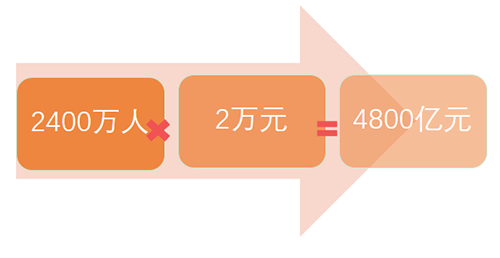
Assuming that patients with infertility account for 12.5% of the population of childbearing age in China, it is estimated that there are approximately 40 million such patients nationwide.
Assuming that 20% of infertility patients undergo treatment, with a success rate of one-third, the theoretical market size for infertility treatment in China could reach 24 million cases.
Assuming an average treatment cost of RMB 20,000 per patient for infertility, the market size of the infertility medical services industry could reach RMB 480 billion.
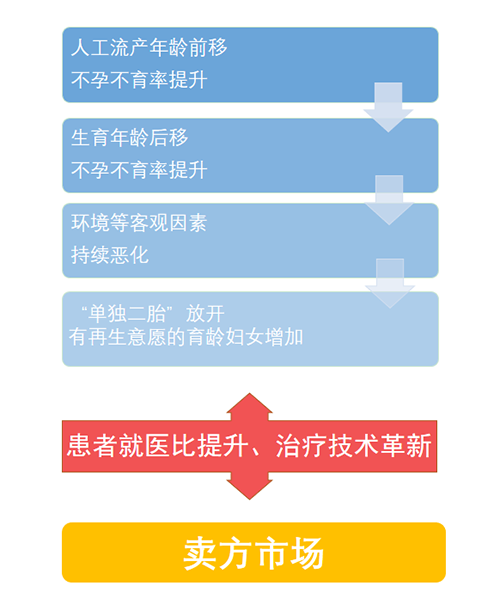
China’s assisted reproductive technology (ART) sector has evolved into a robust “seller’s market.” As demand for ART services intensifies and the proportion of patients seeking medical care rises, treatment technologies in China continue to undergo constant innovation.
Surveys indicate that the robust demand for assisted reproductive technology (ART) in China is closely linked to the rising prevalence of infertility, escalating work and life stress, and the continuing trend of delayed childbearing.
On one hand, the decline in male sperm count has led to a significant drop in human fertility. For women, driven by factors such as life stress and social status expectations, the age of childbearing is continuously being postponed. Furthermore, as fertility declines with age, the likelihood of requiring assisted reproductive technologies increases.
Since 2012, the central government and relevant state authorities have successively promulgated a series of policy documents, including the “12th Five-Year Plan for Health Development,” the “Guiding Opinions on Government Purchase of Services from Social Forces,” the “Several Opinions on Promoting the Development of the Health Service Industry,” the “Several Opinions on Accelerating the Development of Non-Public Medical Institutions,” the “Outline of the National Health Service System Plan (2015–2020),” and the “Proposals for Formulating the 13th Five-Year Plan for National Economic and Social Development.” These documents specify preferential policies and incentive measures to actively encourage social capital participation in the medical service industry.
Due to China’s family planning policy and the inherent surgical and ethical risks associated with in vitro fertilization (IVF), regulatory approval for assisted reproductive technologies (ART) has remained relatively stringent. Although the Ministry of Health devolved administrative approval authority for ART services to provincial-level authorities in 2007, health departments across provinces have continued to exercise caution in their approvals. Official data indicate that there were 102 reproductive centers in China by the end of 2007. The number has increased slightly in recent years, with an estimated current total of approximately 170 centers.
However, even though most provinces currently have several to more than ten centers capable of performing in vitro fertilization (IVF) procedures, the overall market remains in a state of excess demand over supply, with outpatient clinics at some well-known institutions consistently overcrowded. In fact, institutions such as CITIC-Xiangya Reproductive & Genetic Hospital, Shandong University Reproductive Hospital, Peking University Third Hospital, and The Third Affiliated Hospital of Guangzhou Medical University dominate the majority of the assisted reproductive technology market.
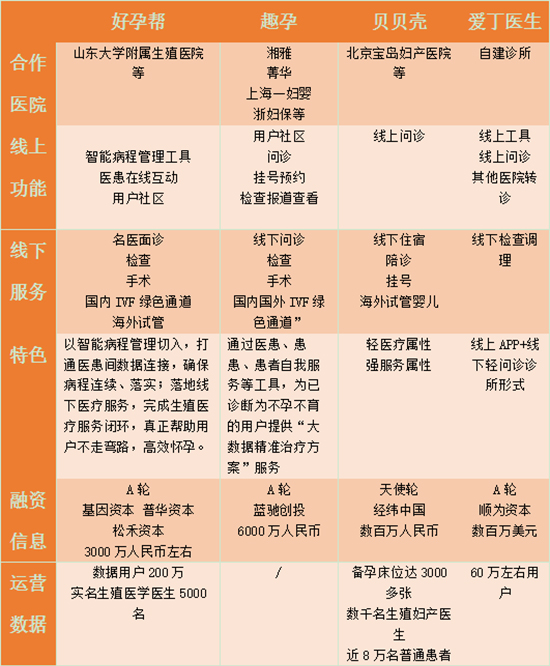
The mainstream market for “Internet + Assisted Reproductive Technology” is composed of heavy-medical-service products represented by Hao Yun Bang, big-data products represented by Qu Yun, heavy-service products represented by Bei Bei Ke, and self-built clinic products represented by Ai Ding Doctor.
[VCBeat Exclusive] Haoyunbang is set to launch its one-stop international medical service for overseas fertility care. With this move, Haoyunbang has initially completed its “Internet + Assisted Reproductive Technology” closed-loop ecosystem.
Haoyunbang International Medical Services is committed to leveraging internet thinking to integrate authoritative global assisted reproductive medical resources, providing Chinese clients with high-quality overseas medical services.
Addressing the various irregularities in the current overseas IVF market, Huang Sen, CEO of Haoyunbang, told VCBeat that Haoyunbang International Healthcare aims to address the pain points and challenges faced by users and the industry, providing higher-quality and more reliable reproductive solutions for families choosing overseas in vitro fertilization (IVF). This is primarily reflected in three aspects: First, it continuously integrates global assisted reproductive medical resources, presenting customers with a variety of high-quality overseas reproductive products through professional and rigorous services. Second, Haoyunbang International Healthcare has assembled a team of professional consultants with medical backgrounds, implementing a standardized full-process service comprising 26 steps tailored to the entire diagnosis and treatment cycle, ensuring that every couple trying to conceive receives more professional and considerate overseas reproductive care. Third, product pricing is clear and transparent; by leveraging internet platforms, excessive profit-driven intermediaries are eliminated, and only the most suitable overseas hospitals, specialists, and reception services are recommended to clients.
Currently, Haoyunbang International Medical has established in-depth collaborations with numerous top-tier reproductive medicine centers abroad, including those in Thailand and the United States, to provide professional, high-quality, safe, and cost-effective overseas fertility solutions for more couples seeking conception abroad.
It is reported that the launch of Haoyunbang’s international medical services primarily leverages the platform’s advantages, including a base of 2 million high-quality users and access to more than 5,000 reproductive specialists from top-tier (Grade A tertiary) hospitals. This move marks a significant step in the commercialization of Haoyunbang’s one-stop, medically graded fertility and pregnancy service platform, officially initiating its transition from a digital tool and lightweight consultation service toward heavy-consumption medical care. This strategic shift aims to enable the platform to achieve a complete closed-loop ecosystem, extending from online tools to comprehensive offline reproductive medicine services.
Huang Sen, CEO of Haoyunbang, once revealed that the company began its commercialization efforts in 2016. With the launch of Haoyun Hospital, it introduced a series of offline reproductive medicine services—including diagnostic tests, surgeries, and consultations with renowned specialists—tailored to patients at different stages of treatment, resulting in rapid month-on-month growth in surgical procedures and IVF orders. Meanwhile, Haoyunbang has partnered offline with top-tier domestic reproductive centers and specialists, such as Peking University Third Hospital, Peking Union Medical College Hospital, and Shandong University Reproductive Hospital. By leveraging an intelligent internet-based disease management system, these collaborations provide complementary services to patients, effectively establishing a vertical ecosystem in the field of fertility treatment.
It is reported that Haoyunbang secured RMB 4 million in angel investment in October 2014, and raised tens of millions of RMB in Series A financing from Gene Capital, Puhua Capital, and Sinoway Capital in October 2015. After more than a year of accumulation, the platform now boasts over 2 million users and has access to resources from more than 5,000 reproductive specialists at Grade 3A hospitals across China.
QuYun has observed that when choosing in vitro fertilization (IVF), patients often blindly opt for renowned experts, professors, and large hospitals. In reality, due to individual differences, the choice of physician and treatment protocol should vary; rather than indiscriminately seeking out experts or professors, patients should select personalized treatment plans based on their actual physiological conditions (data). QuYun was established in response to this need, aiming to build a one-stop preconception care service platform. By facilitating doctor-patient interactions, peer-to-peer support, patient self-service, and leveraging big data analytics, QuYun seeks to improve the success rates of assisted reproductive technologies.
Leveraging big data algorithms, patients can upload clinical records and health status information to the QuYun platform, which then provides professional treatment recommendations to assist in medical decision-making. Additionally, it offers ancillary services such as hospital appointment registration, ride booking, and hotel reservations.
In fact, the core service provided by Quyun is to help patients formulate the most suitable treatment plan—by analyzing the medical data provided by patients, and then recommending appropriate hospitals and doctors based on individual physical conditions and differences in conception methods.
As Yu Pan, COO of Quyun, stated, “Assisted decision-making is Quyun’s greatest distinguishing feature.”
Bei Beike is a leading assisted reproductive technology platform in China, offering patients one-stop fertility support services including pre-consultation, basic testing, medical referrals, accommodation for conception preparation, accompanied follow-up visits, psychological intervention, and post-treatment care.
As a product that prioritizes user service experience, many of Beibeike’s decisions are centered around “service.”
Recently, Beibeike, a tool-based fertility assistance platform, and GO Health, a comprehensive mobile medical testing service platform, signed the “Strategic Cooperation Framework Agreement” in Beijing to establish a robust online-to-offline (O2O) alliance. Through this partnership with GO Health, Beibeike will provide families trying to conceive with medical laboratory services equivalent to those offered by Grade A tertiary hospitals, along with professional home sampling services performed by registered nurses. Users can view test reports and expert recommendations online, as well as access online consultations, enabling them to comprehensively monitor their health status.
In fact, BeiBeiKe also offers a pre-conception care center for patients. It is similar to a postpartum care center, except that the latter provides services after childbirth, while the former focuses on the period before pregnancy. Shi Lei, its CEO, believes, “For patients with medical conditions, they will ultimately need to consult doctors and hospitals. Therefore, medical consultation, treatment, and accommodation are all essential needs. The more of these essential needs we meet, the higher the likelihood of success.”
At the fertility preparation center, Bei Beike not only helps patients with accommodation but also assigns them reproductive specialists, fertility care managers, and psychologists to assist in thorough pre-consultation preparations, such as organizing medical records, handling in-hospital administrative matters, and providing guided consultation and accompaniment. Bei Beike also regularly holds offline lectures or events to offer psychological counseling and health education to patients.
Currently, Beibeike has established its own preconception care centers in seven cities—Beijing, Jinan, Zhengzhou, Guangzhou, Wuhan, Changsha, and Chengdu—with more than 3,000 preconception care beds.
iDing Preconception (also known as Dr. iDing) is a professional preconception and fertility assistance service founded by a medical team of returnees from Harvard University in the United States. By integrating an online app with offline clinics, iDing Preconception provides an integrated eugenics and fertility support service that helps users comprehensively improve their chances and quality of conception across multiple dimensions: medical, lifestyle, and psychological (i-MLP).
Currently, the online operational projects of Aiding Preconception mainly include the Aiding Preconception App, WeChat Official Account, and video-based preconception courses, primarily providing lightweight services to users.
It is understood that the Aiding Preconception APP is a mobile health product that enters the market at the user’s initial preconception stage, employing a unique algorithm simulating clinical physicians to provide services aimed at achieving optimal pregnancy outcomes. It covers specialized fields such as reproductive endocrinology, eugenic preconception care, infertility, and assisted reproductive technology. The app provides risk assessment and evaluation of disease-related factors or conditions for young couples planning to conceive, while also offering reminders to improve lifestyle habits and guidance on seeking medical care.
Meanwhile, the Aiding Preconception App also features a “Quick Ask-a-Doctor” function, allowing users to obtain professional clarification and advice from physicians for minor medical concerns. The platform’s physician network comprises nearly 10,000 specialists across China in the fields of infertility and assisted reproductive technology (ART).
On WeChat, users can also receive feedback from doctors. The platform regularly pushes preconception care knowledge and courses to users, such as preconception exercise routines.
Aiding also operates a nationwide telemedicine program, providing remote consultations to users via phone and video calls, which is currently its only paid online service. Bi Ye stated that while the company will explore new online revenue models in the future, it is unlikely to venture into online retail, as its primary focus remains on delivering services and solutions.
In its offline operations, Aiding Clinic positions itself as offering “light diagnosis and treatment.” Currently, Aiding Fertility Preparation operates one outpatient clinic in Shanghai’s CBD, with services including examinations, diagnosis, pharmacological treatment, and physical conditioning. Bi Ye told VCBeat that in 2016, Aiding Fertility Preparation planned to open four additional offline outpatient clinics, located in Shenzhen, Hangzhou, Wuxi, and Suzhou, respectively.
While positioning itself for light clinical care, Aiding Clinic has also established partnerships with domestic Grade-A tertiary hospitals and select overseas medical institutions to provide comprehensive fertility assistance services throughout the entire journey. Unlike platforms that simply facilitate appointments with specialists, Aiding Clinic initially provides light clinical assessments through its own medical services. Only when specialist intervention is deemed necessary does it collaborate with relevant experts for advanced treatments, such as in vitro fertilization (IVF) and hysteroscopic/laparoscopic procedures.
It is understood that Aiding Preconception has established partnerships with Shanghai Renji Hospital, JiAi Hospital, the First Maternity and Infant Health Care Hospital, and Zhongshan Hospital, among others. It also collaborates with hospitals in Thailand, the United States, and Japan.