

Apixio Secures $19.3 Million in Series D Funding to Advance Cognitive Analytics Platform for Chronic Disease Management
Recently, Apixio, a rising star in the field of medical big data, secured $19.3 million in its latest Series D financing round. Apixio aims to provide healthcare institutions with a big data analytics platform to facilitate more precise diagnosis and treatment by physicians. The round was led by SSM Partners, with participation from First Analysis and Bain Capital Ventures. To date, Apixio has raised a total of $41.88 million.

Apixio leverages cognitive analytics to process data, with its platform providing management services for chronic diseases.
In 2009, Apixio was founded in San Mateo, California. Its medical big data analytics platform, HCC Profiler, leverages unstructured data analysis to predict patient health outcomes, with a primary focus on chronic diseases. Meanwhile, the company has developed a new platform called Apixio Iris, backed by a more extensive database. Darren Schulte, CEO of Apixio, stated that the funds from the Series D financing round would be used to enhance the analytical accuracy of existing platforms and to develop health management mobile applications.
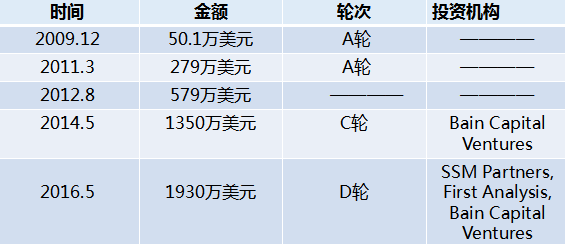
Overview of Apixio's Investment and Financing Activities
All platforms built by Apixio leverage cognitive analytics for data processing. Data analysis can be divided into four stages: descriptive analytics, predictive analytics, prescriptive analytics, and cognitive analytics. Descriptive analytics derives insights from historical transaction data to understand the past; predictive analytics uses existing data to forecast future trends; and prescriptive analytics guides actions based on the results of both past analysis and future predictions. Descriptive, predictive, and prescriptive analytics are all forms of static analysis. However, in the era of big data, where vast amounts of valuable data resources are generated daily, data analysis has entered a new stage: cognitive analytics. Cognitive analytics is a process that enables analytical capabilities to gradually evolve and enhance cognition through interactive learning. It represents a new phase in the evolution of data analysis.
Big Data Creates High Added Value in the Healthcare Sector, with a Vast Amount of Medical Records Awaiting Development and Utilization
In 2014, IBM launched the Watson Foundations big data analytics platform, which employs cognitive analytics to perform its functions. In recent years, massive amounts of data have been continuously generated across various industries. The healthcare sector also needs to analyze and process this data, applying the insights to diagnostic and therapeutic services. Consequently, many countries have been actively promoting the development of healthcare informatization, and numerous medical institutions now have the financial resources to conduct big data analytics. Darren Schulte, CEO of Apixio, stated, “Although there are many emerging technologies in the healthcare field today, 80% of medical records remain undeveloped and underutilized.”
McKinsey noted in its report that big data analytics could help the U.S. healthcare industry create $300 billion in additional value annually, and if big data in clinical operations were fully adopted, national healthcare expenditures in the United States could be reduced by $16.5 billion per year. IDC (International Data Corporation) predicted that by 2018, approximately one-third of health management systems would employ cognitive analytics to derive diagnostic and treatment outcomes from patient clinical data, thereby enabling personalized treatment plans for patients.

Medical big data is primarily applied in the following five scenarios in clinical practice:
1.Comparative Effectiveness Research
Comparative Effectiveness Research forBy comprehensively analyzing patient characteristic data and treatment efficacy data, the effectiveness of multiple interventions is compared,WithIdentify the optimal treatment pathway for individual patients.Comparative effectiveness research can advance the development of the precision medicine industry.
2.Clinical Decision Support System
Clinical decision support systems analyze entries input by physicians, compare them with medical guidelines to identify discrepancies, and thereby alert physicians to prevent potential errors, such as adverse drug reactions.WaitBig data analytics technology will make clinical decision support systems smarter., which utilizesImage analysis and recognition technologies for identifying medical imaging data, or mining medical literature data to establishMedical Expert Database, thereby providing physicians with rational diagnostic and treatment recommendations.
3.Medical Data Transparency
Based on the operational and performance datasets configured by healthcare providers, data analysis can be conducted to create visualized flowcharts and dashboards.Enhanced InformationTransparentDegree。andEnhancing the transparency of medical process data can make the performance of healthcare practitioners and institutions more transparent, thereby indirectly promoting improvements in the quality of medical services.
4.Remote Patient Monitoring
Systematic CollectionRemote Care for Chronic Disease PatientsMonitoring Systemofdata, and feed the analysis results back to the monitoring device (to check whether the patient is complying with medical advice),Can assist physiciansConfirmPatientFuture medication and treatment plans.
5.Analyze Medical Records and Predict Disease Risk
The system analyzes patient medical recordsAdvanced Analytics,to identify the susceptible population for a specific category of diseases, aiming to help them take preventive measures before falling ill and achieve the concept of “treating potential diseases.”
Lumiata integrates data through knowledge graph analysis, while CR Wanyiyun Medical provides big data analytics services for medical imaging to primary healthcare institutions.
In 2013, Lumiata, a company founded in San Mateo, California, also dedicated itself to leveraging big data to help physicians analyze patients’ conditions and predict disease progression. The company’s distinguishing feature is its integration of electronic health records (EHRs) and pathophysiological data, using graph-based analysis to simulate human multidimensional reasoning processes, thereby analyzing patient conditions and generating predictions. In 2014, Lumiata completed two rounds of Series A financing, raising a total of $10 million.
In China, CR Wanyun Medical is also conducting research and exploration in the field of medical big data. Established in August 2009, the company operates a cloud platform for medical imaging big data, dedicated to building efficient and professional connections among primary care hospitals, patients, and specialists, thereby providing innovative imaging services to primary care institutions and patients. In March this year, CR Wanyun Medical secured RMB 225 million in Series A financing invested by Ali Health.
Apixio Team
Darren Schulte, the company’s CEO, holds a Bachelor of Arts in Environmental Economics from the University of California, Berkeley, a Master of Public Policy from Harvard University, and an M.D. from Stanford University School of Medicine. Darren has extensive experience in healthcare data analytics and has served on the management teams at Alere, Anvita Health, and Resolution Health. John Schneider, the CTO, earned a Bachelor of Science in Engineering from Columbia University’s School of Engineering. John previously served as Vice President at GE Healthcare and has many years of research experience in the field of biotechnology and genetics.