

Remebot: China's First Neurosurgical Robot Set for Commercialization After 18 Years of R&D
In the world of surgical robots, the most renowned is currently the "da Vinci" Surgical System. Developed by Intuitive Surgical, Inc. in the United States, the da Vinci system was born on January 9, 1999. It received formal clearance from the U.S. Food and Drug Administration (FDA) for clinical use in 2000, becoming the world’s first robotic surgical system approved for laparoscopic procedures.
Coinciding with the debut of the "Da Vinci" surgical robot, China successfully applied a "frameless neurosurgical robot" in clinical surgery for the first time. This "frameless neurosurgical robot" was the predecessor of Remebot.
Recently, VCBeat was invited to attend a multi-party exchange meeting hosted by Beijing Baihui Weikang Technology Co., Ltd. (hereinafter referred to as “Baihui Weikang”), the developer of Remebot. Participants included Liu Da, CEO of Remebot; Professor Wang Tianmiao from Beihang University; Zhang Ruijun from Yarui Capital, an investor in Remebot; the musical duo Yu Quan; Wang Wenzhong, Senior Advisor at Haiquan Fund; Partner Wang Yu; and Li Jianwei, Partner and CIO at ZhenFund. The attendees discussed the market development and prospects for surgical robots, the advantages and challenges facing Remebot, and its future development plans.
Remebot has accumulated 18 years of technological expertise.
According to VCBeat, Remebot was officially launched in 2015, following 18 years of technological accumulation, 15 years of clinical exploration, more than 20,000 clinical surgeries, and six product iterations.
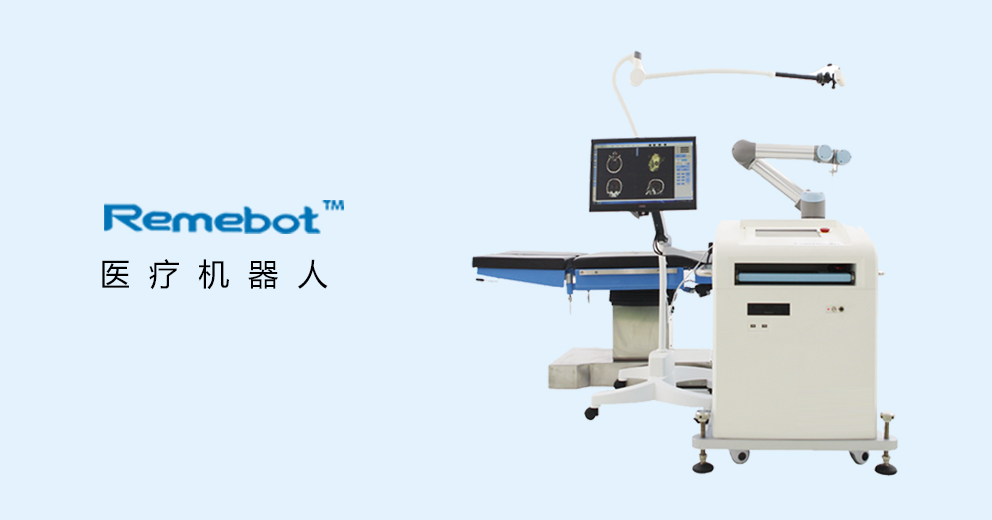
The new-generation Remebot neurosurgical robot consists of three components: a computer software system, real-time cameras, and an automated robotic arm, which can be analogized to the brain, eyes, and hands, respectively. Preoperatively, patients are fitted with specialized markers for medical imaging scans. Leveraging 3D visualization and multimodal image fusion technologies, physicians can clearly and intuitively observe the lesion, as well as the distribution of surrounding tissues and blood vessels, to plan the optimal puncture trajectory. During surgery, registration of both the patient and the robotic arm is first performed to establish a one-to-one mapping between the virtual 3D model and the physical environment. Upon completion of registration, the robotic arm accurately moves to the preoperatively planned position under camera monitoring. Finally, the physician performs the puncture and carries out procedures such as biopsy, aspiration, ablation, or implantation. With Remebot, surgeons can complete the procedure within 30 minutes, achieving a localization error of less than 1 mm. Patients incur only a 2-mm minimally invasive incision and can be discharged after 2–3 days of postoperative observation.
Leveraging the operating platform at the end of the robotic arm, physicians can perform 12 types of procedures, including biopsy, aspiration, ablation, implantation, and radiotherapy, for the surgical treatment of nearly 100 conditions such as cerebral hemorrhage, brain cysts, Parkinson’s disease, and epilepsy.
Prior to the advent of robotic systems, stereotactic frame-based surgery was a relatively common procedure in neurosurgery. The traditional Leksell stereotactic frame requires four burr holes for fixation, and patients must undergo medical imaging while wearing the frame. In contrast, with robot-assisted surgery, patients only need four fiducial markers attached to the scalp, thereby avoiding any additional trauma beyond the surgical incision.
According to Wang Tianmiao, surgical robots offer several key advantages. First, they enhance physicians’ productivity. While physicians retain control over critical steps such as surgical planning, Remebot assists with precise positioning, thereby reducing their physical workload. Second, robotic systems enable remote surgery. By leveraging two networked robots, the expertise of specialists in formulating optimal surgical plans can be combined with the high-precision positioning capabilities of local robotic systems, thus improving diagnostic and treatment efficiency. Previously, Remebot successfully facilitated remote surgeries between Beijing and Yan’an, as well as between Beijing and Shenyang, and is expected to achieve more successful cases through remote surgical applications in the future.
However, in clinical surgery, robotic products merely assist physicians with localization; critical steps such as surgical planning still rely on expert experience.
Currently, robotic surgery offers certain cost advantages over traditional stereotactic frame-based surgery. The costs are approximately RMB 20,000–30,000 for intracerebral hemorrhage and biopsy procedures, and under RMB 50,000 for lesioning procedures in Parkinson’s disease and epilepsy. However, there are still some disadvantages: robotic positioning systems and specialized consumables are not yet covered by medical insurance reimbursement.
Remebot's Industrialization Path and Planning
According to Liu Da, CEO, Remebot has currently passed through the green channel for approval of innovative medical devices and has carried out in-depth clinical cooperation with top-tier tertiary hospitals such as Tiantan Hospital and Xuanwu Hospital. The leading role of these hospitals in the academic field will help promote the system to primary-level hospitals. Moreover, Remebot can be customized to a certain extent based on doctors’ clinical needs in a timely manner, meeting the personalized requirements of different physicians. It is reported that Remebot will establish cooperative relationships with approximately 30 hospitals across various provinces and prefecture-level cities this year.
Baihui Weikang will establish an “Internet + Medical Robot” model in each province, where specialists from central hospitals support surgical procedures at multiple subordinate hospitals, thereby maximizing the utilization of high-quality expert resources. By leveraging the Remebot robotic system, experts are only required to perform the core surgical planning phase, while the remaining steps are completed by the robot and general physicians. This allows experts to finish surgical planning in just 3–5 minutes. Through telemedicine, a single expert can manage and support multiple hospitals, completing several times more surgical plans online per day than previously possible, with remote surgeries performed by general physicians under robotic assistance.
As planned, once Remebot obtains its approval certificate from the China Food and Drug Administration (CFDA) in the second half of this year, it will be officially launched for commercial sales. Baihui Weikang expects to sell approximately 100 units of Remebot next year. Liu Da told VCBeat that Baihui Weikang has already established a production base in Yizhuang, making advance preparations for the mass production of Remebot.
Furthermore, Remebot is already laying out its strategy for the international market.
In the international market, Remebot’s competitor is ROSA, a startup from France; however, the adoption rate of this product remains low. Remebot has initiated its CE certification process, and upon approval, it will meet the requirements for entering the European market. In particular, once telemedicine integration is achieved, the globalization of the product will accelerate.
Another plan of Baihui Weikang is to establish a biopsy center in each of Beijing, Shanghai, and Hangzhou.
“Imaging alone cannot provide an accurate diagnosis of tumors; biopsy is a more reliable and safe method for confirmation,” Liu Da told VCBeat. Brain tissue biopsy procedures number in the millions annually, and Remebot offers a minimally invasive and highly efficient solution for such surgeries. Baihui Weikang has partnered with public and private hospitals across various regions to establish brain tissue biopsy centers, performing over 1,000 biopsies per year at a fee of RMB 20,000 per procedure.
Notably, Remebot’s core technologies—the multi-image 3D fusion system and the robotic localization system—are not only applicable to neurosurgery but also address critical needs in minimally invasive procedures across many other specialties. Huiwei Kang will further strategize and expand its presence in this area, collaborating with physicians from various departments to develop new products.
Remebot Partners with Xingshulin and Mingyi Zhudao
Currently, Remebot has established strategic partnerships with Xingshulin and Mingyi Zhudao. By collaborating with medical robots in the areas of physician education and patient education, these alliances aim to promote the adoption of this new technology among both professional communities and the general public.
The facilitation of the tripartite collaboration is somewhat linked to ZhenFund, one of Remebot’s investors.
ZhenFund has invested in multiple healthcare projects, including the physician learning and social platform “Xingshulin” and the mobile surgical platform “Famous Doctor Performs Surgery.” “The primary users of Xingshulin are physicians, while Famous Doctor Performs Surgery targets patients. When combined with Remebot’s technology, these three entities demonstrate strong resource synergy,” Li Jianwei told VCBeat.
Li Jianwei stated that ZhenFund’s decision to invest in Remebot was primarily driven by the product’s significant technological breakthroughs. “Neurosurgical robots are more technically challenging than other types of robots, and this robot offers substantial benefits to doctors and hospitals. For physicians, it serves as an enhanced version of themselves.”
Haichuan Fund, another investor in Remebot, comes with its own star power and enjoys high public recognition. Therefore, for projects in the broader health sector, Haichuan Fund aims to leverage its premium resources and high visibility to increase awareness and understanding of such initiatives among more patients. Wang Yu, co-founder of Haichuan Fund, revealed that the firm places greater emphasis on medical diagnostic equipment projects and is optimistic about companies driven by technological innovation.
According to VCBeat, Haiquan Fund, established less than three years ago, currently manages assets worth RMB 3 billion and has invested in nearly 30 projects. Among these, it has successfully invested in several leading domestic medical device companies, including Meikewohua Medical, a pioneer in China’s glaucoma diagnostic equipment, which received investment in October 2015; and Meishi Medical, which boasts the world’s first breast MRI system and pediatric MRI system, offering broad market prospects. The investment in Remebot marks Haiquan Fund’s third project in the medical detection equipment sector. The fund secured this investment early in the project’s market entry, recognizing its advantages in assisting physicians with precise localization, improving surgical efficiency, and minimizing trauma.
(PS: Remebot is seeking talents in various technical roles (Software Engineers, Electronics Engineers, Mechanical Engineers, System Software Engineers), as well as HR Specialists and Operations Professionals. Interested candidates may send their resumes to meng.wang@remebot.com.cn.)