

Gancao Doctor Secures Tens of Millions in Series A Funding to Build China's First TCM Physician Group
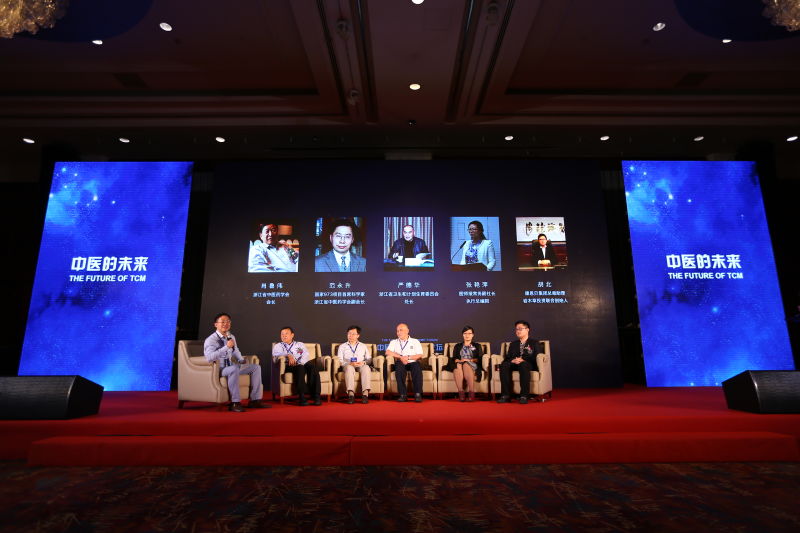
On May 29, the “Future of Traditional Chinese Medicine” International Summit was held in Hangzhou. At the forum, “Gancao Doctor” announced the completion of a financing round worth tens of millions of RMB and will focus on building China’s first TCM physician group. This round of financing was led by Yanmu Cao Investment, with Dingni Investment participating as a co-investor.
Dr. Xu Zhiliang, founder of Gancao Doctor, announced that upon the completion of this financing round, the company will continue to accelerate its layout in Zhejiang Province and major domestic cities, while prioritizing the establishment of renowned TCM practitioner studios across four key specialties: internal medicine, surgery, gynecology, and pediatrics, with the aim of creating China’s first physician group focused on Traditional Chinese Medicine (TCM). Dr. Xu introduced that Gancao Doctor was established in August 2015, and its mobile app was launched in November of the same year. The “Gancao Doctor” mobile platform is currently the largest Internet-plus TCM platform in East China. As of May 2016, it had aggregated more than 5,000 certified TCM practitioners and nearly 300,000 users. Currently, Gancao Doctor has received special funding from the National Administration of Traditional Chinese Medicine and is collaborating with institutions such as the China Academy of Chinese Medical Sciences, Beijing University of Chinese Medicine, Zhejiang Chinese Medical University, and Zhejiang Provincial Hospital of Traditional Chinese Medicine to develop a vertical search project for TCM on the internet.
Internet: The Future of Traditional Chinese Medicine Lies Online
Dr. Xu Zhiliang believes that the integration of Traditional Chinese Medicine (TCM) with the Internet offers inherent advantages. “Unlike Western medicine, TCM emphasizes preventive treatment. The services provided by TCM extend beyond the traditional doctor-patient relationship to also cover individuals in healthy and sub-health states,” he said.
At the conference, Xu Runlong, Deputy Director of the Zhejiang Provincial Health and Family Planning Commission, stated that with Tu Youyou’s Nobel Prize win, Traditional Chinese Medicine (TCM) has once again garnered significant attention. The development of TCM should not come at the cost of mere temporal accumulation, nor can its progress rely solely on the passage of time; disciplinary advancement must keep pace with the times, and technological progress in the modern era is ushering in breakthroughs for TCM. “Traditional TCM theories need to be closely integrated with contemporary civilizational achievements for our benefit. China’s TCM development is already facing challenges from countries such as Japan and South Korea. In the global market for traditional herbal medicine, China accounts for less than 10%, and 70% of related patents are not held by Chinese entities. We must maintain a sense of crisis; China should not ultimately become merely the birthplace of TCM.” Xu Runlong indicated that “TCM plus the Internet” may represent a new model for TCM. Before embracing the Internet, one must adopt an Internet mindset characterized by cross-sector integration and disruption. Integration with modern technology may serve as a breakthrough point for TCM development; only by accurately gauging the pulse of the era can TCM keep up with its rhythm.
Globalization: How Traditional Chinese Medicine Goes Global
Traditional Chinese Medicine (TCM) is gaining increasing recognition in Europe. In response, the European Pharmacopoeia has established a dedicated Committee on Traditional Chinese Medicines. The future of TCM lies in its alignment with international standards and markets. At the forum, the “TCM in Europe” initiative, a collaborative project between Gancao Doctor and the European Pharmacopoeia Commission, was officially launched. During the meeting, Prof. Dr. Gerhard Franz, Chairman of the Committee on Traditional Chinese Medicines of the European Pharmacopoeia, noted that TCM had already become widely renowned in European countries two decades ago. “In light of this, the European Directorate for the Quality of Medicines & HealthCare (EDQM) established the Committee on Traditional Chinese Medicines under the European Pharmacopoeia and developed a specific monograph section for TCM within the European Pharmacopoeia. These standards have regulated the sale and use of TCM medicinal materials and proprietary Chinese medicines in Europe.”
The internationalization of Traditional Chinese Medicine (TCM) is an inevitable direction for its future development. Zhang Boli, an academician of the Chinese Academy of Engineering and President of the China Academy of Chinese Medical Sciences, also believes that “going global presupposes that the world needs TCM. The internationalization of TCM is a process, and the cornerstone for further advancing this process lies in strengthening internal capabilities and conducting rigorous research in TCM.” Wang Yinghui, Party Secretary of the Institute of Information on Traditional Chinese Medicine at the China Academy of Chinese Medical Sciences, stated that the internationalization of informatization and internet-based dissemination platforms will reshape the future of TCM.
Currently, the global development of Chinese herbal medicine is mainly concentrated in three areas: food products, primarily in the United States and some EU countries; traditional herbal products, mainly in EU countries; and botanical drugs, predominantly in Germany and some EU countries.
However, imported traditional Chinese medicine (TCM) still faces numerous challenges: frequent exposure of quality issues, difficulties in accurate standardized identification, confusion with similar species, heavy metal contamination, microbial and pesticide contamination, and synthetic adulterants leading to pseudo-pharmacological effects. Gerhard Franz believes that a crucial step toward the internationalization of TCM is its inclusion in the European Pharmacopoeia standards. Leading TCM onto the global stage relies on scientific research and standardization. Only by employing modern technology for quantitative and qualitative analysis, thereby achieving standardized and reproducible practices, can TCM gain global recognition.
Capital: Traditional Chinese Medicine in Internet Healthcare
“The traditional Chinese medicine (TCM) industry has reached a critical juncture,” said Zhou Linlin, Chairman of Purun Capital, when discussing industry trends and background. The State Council recently issued the Outline of the Strategic Plan for the Development of Traditional Chinese Medicine (2016–2030), which proposes that by 2020, the total output value of the TCM pharmaceutical industry should account for more than 30% of the total output value of the entire pharmaceutical industry, making the TCM industry one of the important pillars of the national economy. Currently, health and wellness applications account for 75% of internet healthcare services, appointment and consultation applications make up 20%, and physician assistant applications constitute 5%. As an enterprise in the field of internet-based TCM, Gancao Doctor has established a comprehensive layout covering diagnosis, pharmaceuticals, and payment. Although the market size of China’s internet healthcare sector has grown year after year, internet-based TCM is still in its early stages of development. Industry growth is accompanied by challenges: how to ensure service standardization under the “Internet Plus” model, how to attract high-quality TCM professionals, and how to guarantee the quality of TCM materials, among other issues that remain to be resolved.