Global Tumor Immunotherapy Market Projected to Reach $60 Billion by 2025, Driven by PD-1, PD-L1, and CTLA-4 Blockade Therapies
The principle of tumor immunotherapy is to apply immunological methods to enhance the immunogenicity of tumor cells, stimulate and augment the body’s anti-tumor immune response, thereby inhibiting tumor growth. Tumor immunotherapy holds promise as a revolutionary advancement in the field of oncology, following surgery, chemotherapy, radiotherapy, and targeted therapy.
Hot targets for tumor immunotherapy include PD-1, PD-L1, and CTLA-4. In 2011, the anti-CTLA-4 monoclonal antibody Yervoy was approved by the U.S. FDA for second-line treatment of advanced melanoma, marking the advent of the era of tumor immunotherapy.
In late 2014 and 2015, PD-1 monoclonal antibodies were successively approved for the treatment of melanoma, non-small cell lung cancer, and renal cell carcinoma, propelling immunotherapy to the forefront of oncology. In the future, with the approval of new indications and advancements in the development of PD-L1 monoclonal antibodies, cancer immunotherapy is poised to account for half of all cancer treatments.
$60 Billion Market Opportunity
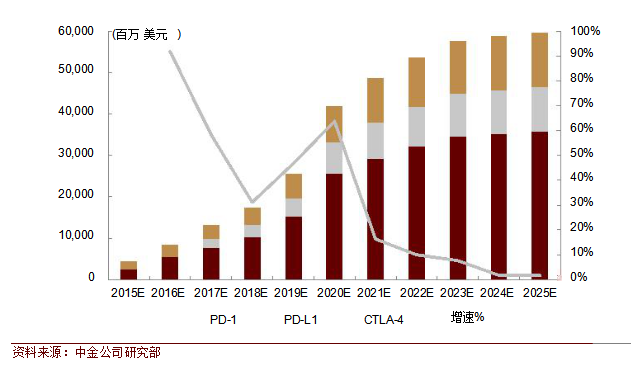
Currently, PD-1 inhibitors have been approved for the treatment of melanoma, non-small cell lung cancer, and renal cell carcinoma, with clinical trials for other indications ongoing. The market size for PD-1 monoclonal antibodies is projected to reach $35.8 billion by 2025. As no PD-L1 inhibitors have yet been launched on the market, their market size upon commercialization is estimated to be approximately 30% of that of PD-1 monoclonal antibodies.
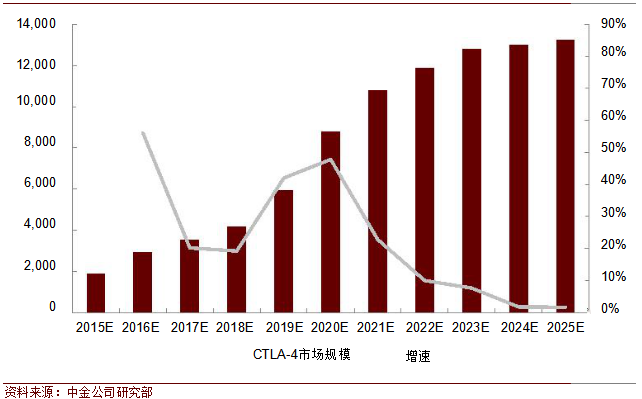
By 2025, the market size for PD-L1 inhibitors is projected to reach $10.7 billion. CTLA-4 monotherapy and its combination with PD-1 inhibitors have also demonstrated favorable clinical outcomes in oncology, with CTLA-4 sales expected to account for 37% of PD-1 sales. By 2025, global sales of CTLA-4 monoclonal antibodies are anticipated to reach $13.3 billion. Furthermore, the combined market size for these three targeted therapies is expected to reach $59.8 billion by 2025.
Market Size Forecast for Immunotherapy Monoclonal Antibodies (PD-1 + PD-L1 + CTLA-4) from 2015 to 2025
Breakthrough in Immune Checkpoints—PD-1
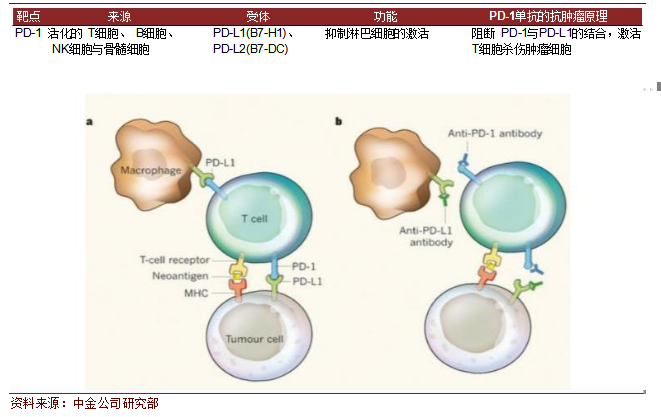
PD-1 Monoclonal Antibodies—The Stars of Tumor ImmunotherapyPD-1 stands for Programmed Cell Death Protein 1. When PD-1 on lymphocytes binds to its corresponding ligands, PD-L1 and PD-L2, it inhibits lymphocyte activation. This is a normal homeostatic mechanism of the immune system, as excessive T-cell activation can lead to autoimmune diseases.
When PD-L1 on tumor cells extensively binds to PD-1 on lymphocytes, it inhibits T-cell function, allowing tumors to evade immune clearance in the body. The mechanism of action of anti-PD-1 monoclonal antibodies is to block the binding between PD-1 and its ligand PD-L1 in the body, thereby restoring normal T-cell function and enabling the immune system to eliminate tumor cells.
Mechanism of Action of PD-1 Monoclonal Antibodies
Fierce Competition in Overseas R&D of PD-1 Monoclonal Antibodies
Other foreign companies are also engaged in the competitive development of PD-1 monoclonal antibodies. CureTech and Teva are collaborating on the development of a new drug, pidilizumab (a humanized anti-PD-1 monoclonal antibody). Amplimmune is developing MEDI0680 (AMP-514), an anti-PD-1 monoclonal antibody indicated for certain solid tumors.
Meanwhile, Hengrui reached an agreement with Incyte in the United States to license its PD-1 monoclonal antibody project, which features independent intellectual property rights, to Incyte for a fee. Incyte paid Hengrui Pharma an upfront payment of $25 million and milestone payments totaling $770 million.
On October 12, 2015, Innovent Biologics and Eli Lilly reached a global development and collaboration agreement on three PD-1 bispecific antibodies, with total milestone payments exceeding $1 billion. BeiGene’s fully human anti-PD-1 monoclonal antibody entered overseas Phase I clinical trials in Australia, enrolling its first patient on June 5, 2015.
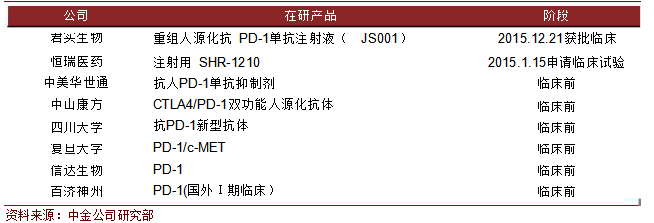
Domestic Progress of PD-1 in Development
PD-1 Clinical Trial Data—Broad Indications and Significant Efficacy
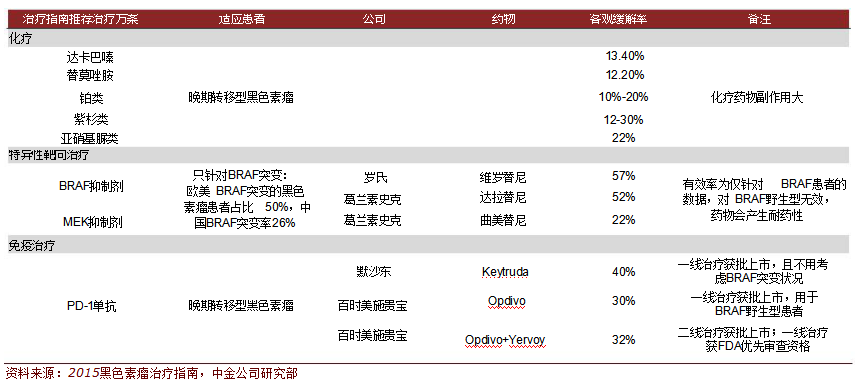
Clinical Data on PD-1 in Melanoma: PD-1 has been approved for the treatment of advanced melanoma. Compared with conventional chemotherapy, PD-1 inhibitors demonstrate a higher objective response rate (30%–40%) than conventional chemotherapy (10%–30%). Furthermore, unlike BRAF-targeted therapies, which are limited to patients with specific BRAF mutations, PD-1 inhibitors have a broader indication population.
Clinical Data on PD-1 in Non-Small Cell Lung Cancer: PD-1 inhibitors have been approved for second- and third-line treatment of non-small cell lung cancer, with an objective response rate of 16%–20%, reaching up to 40% with Keytruda in PD-L1-positive patients. Patients who have failed first-line therapy may receive PD-1 inhibitors as second-line treatment.
Comparison of Clinical Data on Different First-Line Treatment Regimens for Advanced Melanoma
PD-1 Combination Therapy—Immune Cocktail Therapies Ignite Industry Growth Points
PD-1 inhibitors are disruptive agents in cancer therapy. Their efficacy as monotherapy has been clinically validated in melanoma, non-small cell lung cancer, and renal cell carcinoma, particularly achieving high response rates in PD-L1-positive patients. The optimal strategy involves combining them with other immune checkpoint inhibitors to enhance the efficacy of immunotherapy through a multi-pronged approach.
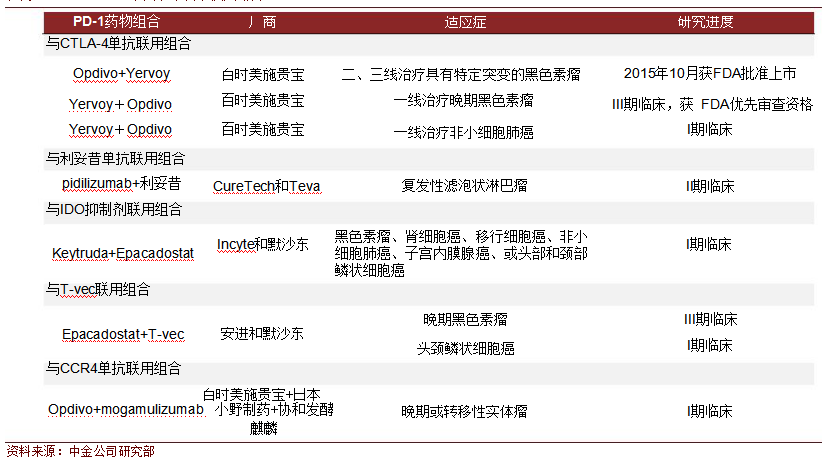
Combination of PD-1 and CTLA-4 inhibitors. Bristol-Myers Squibb’s drug combination Opdivo + Yervoy has been approved for the second- and third-line treatment of melanoma with specific mutations, and is expected to gain approval for first-line treatment of advanced melanoma and non-small cell lung cancer in 2016 and 2019, respectively.
Combination of PD-1 and Rituximab. The novel drug pidilizumab (an anti-PD-1 monoclonal antibody), jointly developed by CureTech and Teva, in combination with rituximab, has demonstrated efficacy in B-cell lymphoma and follicular lymphoma. In a Phase II clinical trial, the combination of pidilizumab and rituximab also showed therapeutic efficacy in treating relapsed follicular lymphoma.
Combination of PD-1 and IDO inhibitors. In an early-phase clinical trial, the combination of Incyte’s IDO inhibitor epacadostat and Merck’s PD-1 monoclonal antibody Keytruda demonstrated favorable efficacy and safety. Combination of PD-1 and T-VEC.
In December 2014, Amgen and Merck & Co. entered into a strategic collaboration in immuno-oncology to advance the combined use of the cancer vaccine T-VEC and the PD-1 immunotherapy Keytruda for the treatment of advanced melanoma. In June 2015, the two companies expanded their partnership to apply this immunotherapy combination to the treatment of recurrent or metastatic squamous cell carcinoma of the head and neck, while simultaneously initiating a Phase III clinical study of the regimen in advanced melanoma.
Combination of PD-1 and CCR4 Monoclonal Antibodies. In December 2014, Bristol-Myers Squibb entered into a clinical trial collaboration agreement with Japan’s Ono Pharmaceutical and Kyowa Hakko Kirin to conduct a Phase I clinical trial evaluating the safety, tolerability, and antitumor activity of the combination therapy of Opdivo and the anti-CCR4 monoclonal antibody mogamulizumab for the treatment of advanced or metastatic solid tumors.
PD-1 Combination Therapy with Other Drugs
The PD-1 Market Has Broad Prospects
Global PD-1 Monoclonal Antibody Market Size: The PD-1 Market Will Exceed $35 Billion. PD-1 inhibitors represent a breakthrough mechanism in anticancer therapy, having demonstrated efficacy in multiple indications such as melanoma and renal cell carcinoma. This suggests that the indications for PD-1 inhibitors will continue to expand in the future, indicating significant market potential.
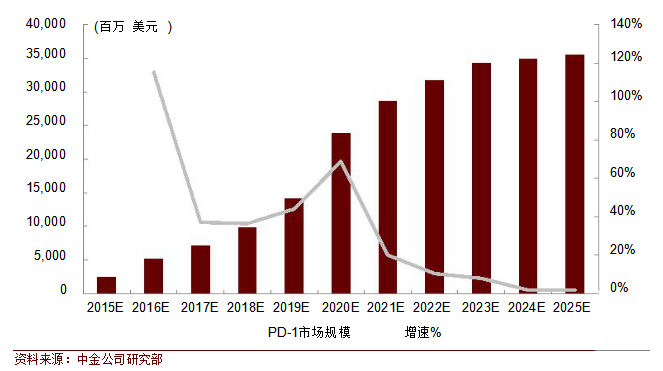
Based on the indications of PD-1 monoclonal antibodies and the projected market launch timelines, the market size is analyzed, with the global market for PD-1 monoclonal antibodies expected to reach $35.8 billion by 2025.
2015E–2025E Global PD-1 Market Size Forecast
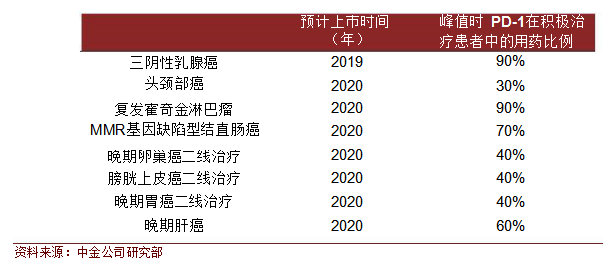
Key Assumptions for Projecting the Global Market Size of PD-1
Proportion of PD-1 Treatment Selection for Other Indications
Market Size of PD-1 Monoclonal Antibodies in China
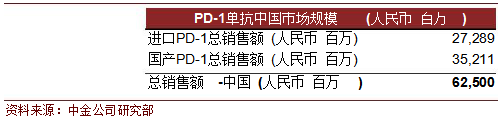
At its peak, the market size of PD-1 inhibitors in China reached RMB 62.5 billion, with domestically produced PD-1 inhibitors accounting for RMB 35.2 billion. Currently, no PD-1 monoclonal antibody drugs have entered the Chinese market. Opdivo has obtained approval for Phase III clinical trials in China, and Junshi Biosciences has received domestic clinical trial approval.
The projected peak sales of PD-1 inhibitors in China amount to RMB 62.5 billion, comprising RMB 27.3 billion for imported drugs and RMB 35.2 billion for domestically produced drugs. Key assumptions underlying the forecast for the peak sales market size of PD-1 inhibitors in China:
The average duration of PD-1 therapy for Chinese patients is the same as that for US patients;
Market Size Forecast for PD-1 Monoclonal Antibodies in China
Hot Immunotherapy Target—PD-L1
Principle of PD-L1 Monoclonal Antibody Immunotherapy: PD-L1 (Programmed Death-Ligand 1), also known as B7 Homolog 1 (B7-H1), is the ligand for PD-1. The mechanism of action of PD-L1 monoclonal antibodies involves binding to the PD-L1 target on tumor cells in vivo, thereby inhibiting the interaction between PD-L1 expressed by tumor cells and PD-1 on T cells. This restores the normal function of T cells, enabling them to kill tumor cells.
Differences Between PD-1 and PD-L1 Monoclonal Antibodies

R&D Status of PD-L1 Monoclonal Antibodies
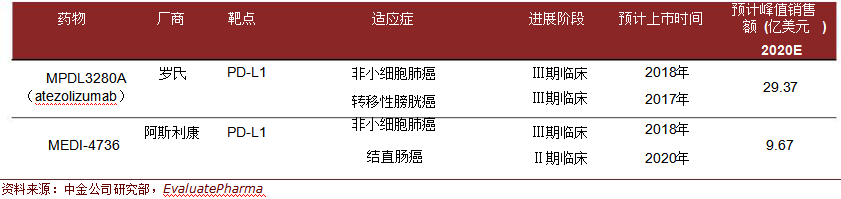
As of now, no PD-L1 monoclonal antibody drugs have been approved for marketing. Companies such as Roche and AstraZeneca have products under development. Roche’s anti-PD-L1 therapeutic agent MPDL3280A (atezolizumab) has been granted Breakthrough Therapy designation by the FDA for certain cases of non-small cell lung cancer and metastatic bladder cancer.
AstraZeneca’s PD-L1 monoclonal antibody, MEDI-4736, is currently undergoing Phase III clinical trials for lung cancer and Phase II trials for colorectal cancer. In China, in addition to developing PD-1 monoclonal antibodies, Junshi Biosciences and BeiGene are also conducting preclinical studies on PD-L1 monoclonal antibodies.
Research Progress on PD-L1 Monoclonal Antibodies by Roche and AstraZeneca
PD-L1 Combination Therapy: A New Multi-Target Treatment Option
Combination of PD-L1 inhibitor and bevacizumab. In 2014, Roche conducted a small-scale clinical trial of MPDL3280A plus bevacizumab in patients with renal cell carcinoma and colorectal cancer.
Combination of PD-L1 and CTLA-4. AstraZeneca is strategically prioritizing combination regimens involving its PD-L1 inhibitor with other anticancer agents, with CEO Pascal Soriot asserting that MEDI4736 holds greater advantages in cancer combination therapy. A Phase III clinical trial evaluating this combination therapy for advanced non-small cell lung cancer is currently underway.
Combination of PD-L1 Inhibitor and T-vec. Amgen and Roche are collaborating on a Phase I clinical trial evaluating T-vec and MPDL3280A for the treatment of triple-negative breast cancer (TNBC) and colorectal cancer with liver metastases.
Future Market for PD-L1
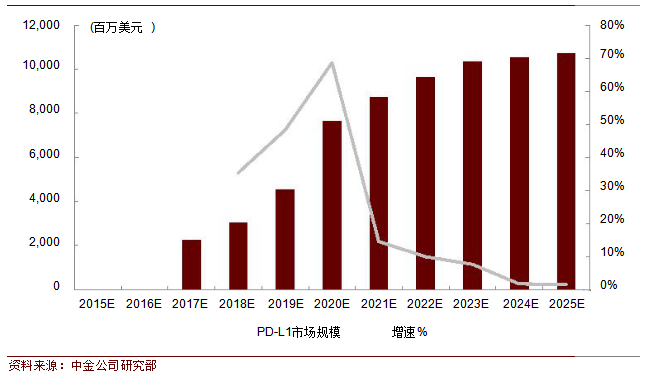
The market size for PD-L1 monoclonal antibodies is $10.7 billion. Currently, no PD-L1 products are on the market, and the future market size is expected to be smaller than that of PD-1, for the following reasons:
PD-1 monoclonal antibodies have gained a first-mover advantage, with products already on the market to seize market share for similar indications.
In clinical trials, the required dosage of PD-L1 monoclonal antibodies is an order of magnitude higher than that of PD-1 monoclonal antibodies; therefore, the price of PD-L1 monoclonal antibodies will be higher than that of PD-1 monoclonal antibodies in the future.
In terms of expanded indications, the research progress on PD-L1 has lagged behind that of PD-1 monoclonal antibodies. Consequently, the market size for PD-L1 is projected to be approximately 30% of that for PD-1 monoclonal antibodies, reaching $10.7 billion in 2025.
Market Size Forecast for PD-L1 Monoclonal Antibodies
Another Target of Immunotherapy—CTLA-4
CTLA-4 (Cytotoxic T-Lymphocyte-Associated Antigen 4), also known as CD152, is a transmembrane receptor on T cells. Upon binding to B7 molecules, CTLA-4 induces T-cell anergy and specifically inhibits cellular and humoral immune responses. The therapeutic mechanism in oncology involves anti-CTLA-4 monoclonal antibodies binding to the CTLA-4 target, thereby blocking signaling pathways that facilitate tumor immune evasion and stimulating the host immune system to attack tumor cells.
Schematic Diagram of the Mechanism of CTLA-4 Monoclonal Antibody in Tumor Therapy
The Future of CTLA-4: Combination Therapy Is the Way Forward. The combination of CTLA-4 and PD-1 inhibitors holds a potential market size of $13.3 billion. Given the frequent launch of new PD-1 monoclonal antibody products, which are competitors to CTLA-4 agents, and the fact that clinical studies of PD-1 monoclonal antibodies cover more than 10 indications, whereas CTLA-4 drugs are currently studied in only a few cancers such as melanoma and non-small cell lung cancer, monotherapy with CTLA-4 inhibitors will face intense competition from PD-1 monoclonal antibodies in the future.
The optimal strategy is to combine CTLA-4 inhibitors with PD-1 inhibitors, enhancing therapeutic efficacy through distinct immunotherapy targets. Assuming CTLA-4 inhibitor sales reach 37% of PD-1 inhibitor sales, the global revenue for CTLA-4 monoclonal antibodies is projected to reach $13.3 billion by 2025.
Projected Market Size and Growth Rate of CTLA-4 Monoclonal Antibodies