

Industry Leaders' 18 Insights on Precision Medicine: From Technological Innovation to Clinical Commercialization
Precision Medicine
The Precision Medicine Industrialization Salon, hosted by the Committee on Precision Medicine and Oncology Rehabilitation under the China Association for Promotion of Rehabilitation Technology Translation and Development, co-organized by VCBeat, and supported by media partners Qiyun Nuode and Huoshi Chuangzao, was held on the afternoon of May 26 at Wujie Space (Wangjing) in Chaoyang District, Beijing.
This salon featured Professor Zhou Xiaoguang, an expert under the Organization Department of the CPC Central Committee’s “Thousand Talents Plan”; Dr. Li Hongtao, Chief Medical Officer at Vcanbio and an expert under Tianjin’s “Innovation Thousand Talents Plan”; Cai Daqing, Managing Director at Legend Capital; Rao Jiang, Chairman of Huasheng Hengye; and other distinguished industry leaders. The event focused on pathways for the industrialization of precision medicine.
Yan Wei, Secretary-General of the China Association for the Promotion of Rehabilitation Technology Translation and Development, and Deputy Secretary-General Song Wuchen attended the event. Secretary-General Yan Wei delivered an opening address. Yu Xiaoguang, Deputy Secretary-General of the Precision Medicine and Oncology Rehabilitation Professional Committee under the China Association for the Promotion of Rehabilitation Technology Translation and Development, served as the moderator.
VCBeat has compiled the insightful perspectives shared by conference attendees for our readers’ benefit.

Zhou Xiaoguang
Professor Zhou Xiaoguang is a Research Fellow and Doctoral Supervisor at the Institute of Semiconductors, Chinese Academy of Sciences. In 2011, he was recruited as an overseas high-level talent under the “Thousand Talents Plan” organized by the Organization Department of the Communist Party of China Central Committee. He serves as Vice Chairman of the Precision Medicine and Oncology Rehabilitation Professional Committee of the China Association for Promotion of Rehabilitation Technology Translation and Development. He is also a Foreign Expert and Visiting Professor at the Beijing Institute of Genomics, Chinese Academy of Sciences. Professor Zhou has long been engaged in research on analytical methods for life sciences and the development of high-end instruments. He previously held positions at Thermo Fisher Scientific Inc. as a Scientist, Senior Engineer, Supervising Engineer, and Project Leader, and served at Applied Biosystems Inc. as R&D Project Manager, Senior R&D Manager, and R&D Director.
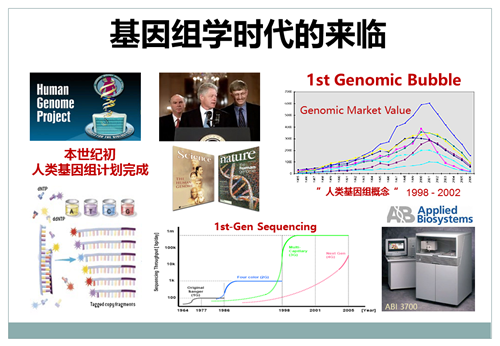
1From the late 1990s until the downturn that began in 2001–2003, gene sequencing experienced a bubble period.
In the mid-to-late 1980s, sequencing technologies promoted the development of genomics, while mass spectrometry, through high-throughput protein analysis, gave rise to the discipline of proteomics. At the beginning of this century, the completion of the Human Genome Project signaled the advent of the genomics era. A key driving force emerged around 1995, when the company I was working for developed the first-generation sequencer; the subsequent introduction of the ABI 3700 greatly accelerated the completion of the Human Genome Project. Around 2001, we witnessed the first genomic bubble. The chart above illustrates the changes in market capitalization of our company and other genomics-related firms, showing that the hype surrounding gene sequencing technologies, which had surged since the late 1990s, began to decline from 2001 to 2003, revealing it to be a complete bubble.
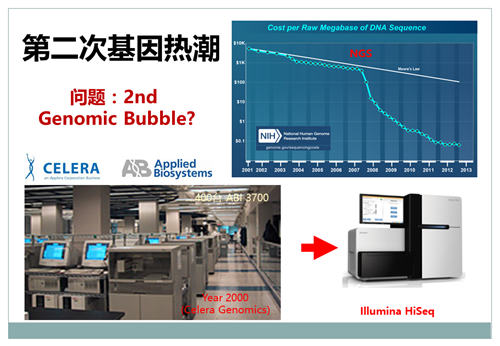
2We are now in the midst of the second genomics boom.
The period from 2007 to 2008 marked the emergence of the second genomics boom, which was actually driven by the advent of what is now widely known as next-generation sequencing (NGS) technology. This photo, taken by me at Celera Genomics in 2000, shows the company’s primary effort at the time: sequencing the first human genome. As can be seen, the company’s sequencing facility housed 400 first-generation sequencing instruments, a truly spectacular sight. However, by current standards, the combined output of 400 ABI 3700 first-generation sequencers is surpassed by a single next-generation sequencer. Thus, technological innovation and revolution are progressing at an exceptionally rapid pace.
3The development of proteomics technology has provided another growth point for clinical medical testing.
Proteins are the direct participants in life processes and, therefore, the ultimate manifestations of an organism’s physiological state. Compared with genetic molecules, proteins more directly reflect the status of living organisms. The information basis for precision medicine should not rely solely on genomic data; acquiring proteomic information is equally important. I believe that advances in proteomics technology have provided another growth driver for clinical diagnostic technologies.
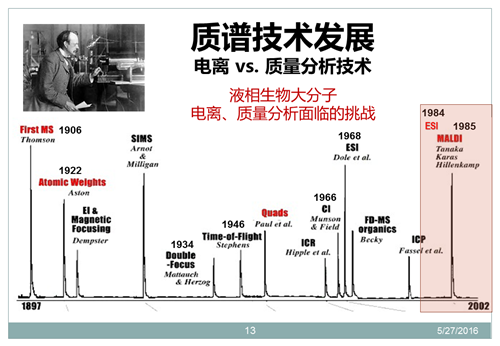
4Mass spectrometry-based detection technology emerged in the late 1980s, providing an effective high-throughput method for protein detection.
Proteomic analysis presents significant challenges, far exceeding those of genetic testing. This is because protein function depends on three-dimensional structures, and the proteome is vastly larger and more dynamic than the genome, featuring extensive variations such as diverse post-translational modifications. Additionally, proteins exhibit an extremely wide dynamic range, with abundance levels varying by tens to hundreds of thousands of fold. A major limitation in proteomic analysis is the inability to amplify protein molecules. In the late 1980s, the emergence of mass spectrometry provided an effective high-throughput method for protein detection.
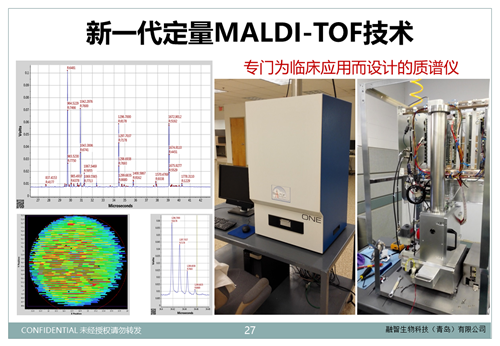
5Innovations in mass spectrometry technology have laid the foundation for its widespread application in clinical medicine.
Mass spectrometry has long had a limitation: it failed to meet the requirements for clinical quantification. Although mass spectrometry is semi-quantitative, its quantitative precision was insufficient. However, through a series of technological innovations and improvements, we can now achieve highly precise quantification. The mass spectrum shown above is an overlay of 80 mass spectra acquired from the same sample, which essentially represents hemoglobin. The emergence of such technologies will undoubtedly provide more diagnostic tools for clinical applications.
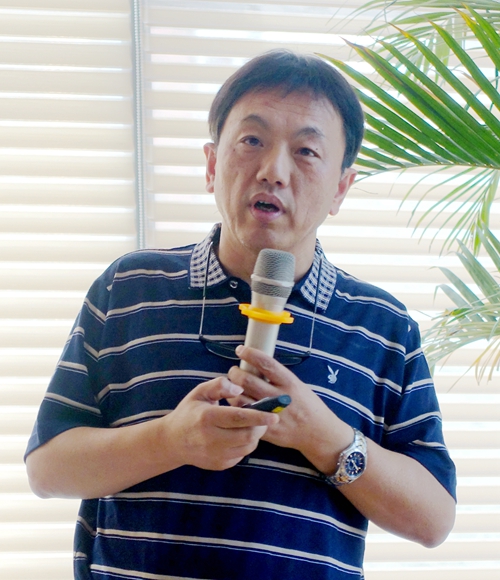
Rao Jiang
Mr. Rao Jiang serves as the Chairman of Huasheng Hengye. He earned his bachelor’s degree from the Department of Engineering Mechanics at Tsinghua University and received his Master of Science degree from the Institute of Engineering Thermophysics, Chinese Academy of Sciences, in 1988. An expert in numerical analysis and computation, image and signal processing, computer programming, and software engineering, Mr. Rao has made significant contributions to the fields of computational fluid dynamics, computer network application software development, DNA data signal analysis, and bioinformatics software engineering.
6
Precision medicine in the narrow sense is closely related to the rise of genetics and molecular pathology.
In my view, the concept of precision medicine can be understood in both broad and narrow senses. In China, many people discuss precision medicine, stating that it enables more precise diagnoses and more accurate selection of treatment regimens; some even associate it with Traditional Chinese Medicine (TCM). I believe that precision medicine, in its narrow sense, is closely tied to the rise of genetics and molecular pathology.
The advent of molecular pathology emerged as research delved into the molecular level. For instance, in the future, healthcare institutions will leverage molecular pathology departments and laboratories to conduct testing and molecular subtyping for patients, followed by the prescription of corresponding medications based on the subtyping results. Furthermore, diseases can be categorized through this process, enabling targeted therapy and immunotherapy grounded in molecular subtyping. This is my understanding of precision medicine.
7The primary battlefield for precision medicine currently lies in oncology, with research in cardiovascular diseases and diabetes also gaining significant momentum. Liquid biopsy serves as a diagnostic and therapeutic tool within the realm of precision medicine.
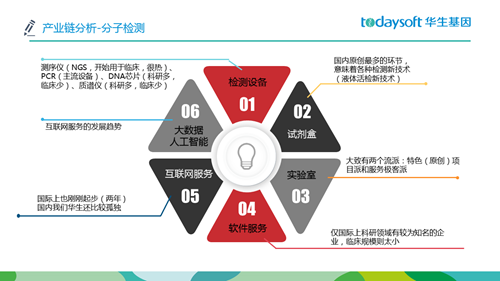
8Which fields hold the most promise in relation to precision medicine?
At the apex of the precision medicine industry lies the field of R&D for instruments and equipment, with next-generation sequencing (NGS) platforms representing the most sophisticated segment; currently, the most renowned manufacturers are all involved in this domain.
Precision medicine is inseparable from molecular subtyping tests. These tests are provided by third-party clinical laboratories, clinical testing centers, and laboratory facilities. Fewer than 100 large hospitals have established their own in-house laboratories. Approximately several dozen major hospitals have developed proprietary laboratories and purchased high-end sequencing instruments.
Most companies in the precision medicine and genetics sectors are closely linked to molecular testing. However, in terms of industry scale, the number of companies dedicated to drug research and development (R&D) and pharmaceutical manufacturing is one to two orders of magnitude greater than that of testing companies. A current trend in pharmaceutical research, influenced by molecular pathology and precision medicine, is that while many pharmaceutical researchers are specialists in chemistry, the shift toward precision medicine has created significant opportunities for professionals with expertise in biology.

Cai Daqing
Mr. Cai Daqing holds a Ph.D. from the University of California, Berkeley, and an MBA from Yale University; previously, he earned a Bachelor of Science degree from the University of Science and Technology of China. Mr. Cai joined Legend Capital, the predecessor of Legend Capital (Junlian Capital), in May 2011 as Investment Director. He currently serves as Managing Director at Junlian Capital.
9In China’s genetic testing sector, BGI Genomics is an indispensable player.
In fact, those in China dedicated to the field of genetic testing are either at BGI Genomics, on their way out from BGI Genomics, have already left BGI Genomics, or are competitors of BGI Genomics; in any case, they are invariably connected to BGI. In reality, those who have left BGI Genomics still hope that it will continue to improve and perform better.
10Medical services, medical devices, diagnostics, and new drugs are all our investment directions.
Since joining Legend Capital, our team has invested over $300 million in more than 40 companies, most of which are the leading or second-largest players in their respective niche markets and have demonstrated strong growth. Building on the foundation we previously established in this sector, we facilitated a financing round this year for a specialized healthcare industrial park, raising over $500 million, split equally between U.S. dollars and renminbi. Moving forward, our investment focus will continue to span healthcare services, medical devices, diagnostics, and innovative drugs.
11The first dimension of the entire healthcare industry follows the progression of a disease's course.
In my view, the first dimension of the entire healthcare industry follows the disease progression pathway: prediction and prevention as the first step, diagnosis as the second, treatment as the third, and rehabilitation as the fourth. The second dimension is the disease spectrum, which essentially encompasses a wide variety of diseases; general hospitals are largely organized and operated around this disease spectrum. The third dimension includes pharmaceuticals and certain service-oriented organizations. Investment hotspots are concentrated within this spatial framework.
12Whether it is liquid biopsy or precision medicine, many of the underlying natural science principles remain not fully understood.
Shenzhen has hosted numerous conferences on precision medicine, with friends from the China Health Promotion Association and VCBeat also organizing such events. While the sheer volume of these gatherings might suggest that enthusiasm for precision medicine is at a fever pitch, my own perception diverges somewhat from this prevailing sentiment; in fact, I have detected a subtle chill.
First, I remain highly optimistic about genomics and sequencing; this industry holds tremendous growth opportunities over the next 5–7 years, or even 7–10 years. However, I would like to offer a friendly reminder: whether in liquid biopsy or precision medicine, many underlying natural science principles in these research areas remain unknown to humanity.
We are currently riding the wave of the fervent “Mass Entrepreneurship and Innovation” campaign. However, investors must avoid becoming overly enthusiastic. Many serial entrepreneurs have told me directly that these investors are too easily impressed. I am aware that some startup teams even hire college students to work in their laboratories, going so far as to pour water into machines just to make them appear operational. Upon seeing such scenes, these investors remark, “They’re really busy,” “That’s impressive,” or “These things are quite interesting.” Such undesirable phenomena have already begun to emerge.
Li Hongtao: Chief Medical Officer of Vcanbio; Expert under Tianjin’s “Innovation Thousand Talents Program”; Director of the China Association for Promotion of Rehabilitation Technology Transformation and Development
13Both cell-based and gene-based therapies serve as excellent complements to conventional drugs.
The human body is a bioreactor, and all biological reactions can be directly identified at the protein level. By identifying the specific proteins involved and characterizing the corresponding biological responses, we can modulate these processes based on the magnitude of the reaction. Furthermore, adopting a holistic approach to regulation at the cellular, genetic, or even organ level represents a paradigm shift. The entire medical field continues to evolve through ongoing exploration. Among these approaches, cell-based therapies are arguably closer to clinical treatment, individualized therapy, and the concept of precision medicine; therefore, I believe this constitutes a key direction for future development.
Luo Qibin: Founder of Qi Yunnuode; Deputy Secretary-General of the Precision Medicine and Oncology Rehabilitation Committee, China Association for Promotion of Rehabilitation Technology Transformation and Development
14The Pain Point in the Industrialization of Precision Medicine Lies in Clinical Healthcare
What are the current pain points in the industrialization of precision medicine? I believe they lie in healthcare, not in wellness. The clinical healthcare sector can be segmented into 6–8 segments, which can be further divided into different application outlets, with more than 30 domestic companies operating in each application outlet. According to our statistics on China’s precision medicine sector, there are approximately 800–1,000 companies.
Nevertheless, the health market is substantial, but it represents a “nice-to-have” rather than a critical pain point. In China, there are no more than ten companies genuinely offering high-end whole-genome sequencing services. Among these, how many have successfully completed whole-genome sequencing for 1,000 families? I can state with certainty that, if we consider family-centered whole-genome cohort data, there may not be a single company that has achieved this.
Tian Geng: Founder of Yuanma Gene
15Non-invasive prenatal testing is also a form of liquid biopsy, belonging to a highly specialized market.
The number of tests required corresponds directly to the number of children; thus, the market scope in this context is simply the number of children multiplied by a single test. However, the potential in the oncology field is vast. Given the high incidence of cancer, healthy individuals can detect tumors at an earlier stage through high-frequency mutation monitoring from a preventive perspective. The market potential is enormous, spanning multiple rounds of testing for prevention, treatment, and prognosis, including early cancer screening, auxiliary diagnosis, personalized medication, monitoring of minimal residual disease (MRD), therapeutic efficacy monitoring, and prognostic assessment.
Yu Xiaoguang: Deputy Secretary-General, Committee on Precision Medicine and Oncology Rehabilitation, China Association for the Promotion of Rehabilitation Technology Translation and Development
16In this field, entrepreneurship demands even greater imagination.
In 2014, there were more than 160 independent clinical laboratories (ICLs) in China; by the end of 2015, this number had exceeded 350, doubling within a year. However, the survival outlook for these laboratories is not optimistic. They are squeezed from upstream by instrument and reagent manufacturers who hold significant leverage, while downstream bargaining power and pricing authority rest entirely with hospitals, making operations in this sector extremely challenging. In such an environment, greater imagination is required—whether through service differentiation, enhancing problem-solving capabilities for hospitals, or achieving breakthroughs in upstream independent R&D. Precision medicine entails precise data, accurate classification, and refined specialization. Currently, however, there is excessive homogeneity among enterprises, inadequate refined specialization, and insufficient service differentiation. The industrialization and sectoral development of this specialty have not yet reached full scale; thus, it is premature to characterize the market as either a “red ocean” or a “blue ocean.” De-homogenization and identifying distinctive features and strategic focal points for corporate development are key to survival and growth.
Liang Junbin: Founder of Annoroad Gene Technology
17This field is currently in the early exploratory stage.
How to integrate medical or clinical information to uncover new industrial value remains unclear in the early stages, with all parties still in the process of exploration. From an entrepreneurial perspective, the integration of imaging and clinical data, as well as the combination of biochemical and immunological data, and how these can generate commercial value, are currently in the early stages of exploration.
Hao Xiangwen: Founder, Yimai Gene
18Deploy personal information processing workflows on Alibaba Cloud; applications must not stop at merely generating reports from data.
The moderator just mentioned the distinction between asset-light and asset-heavy business models. Compared to Annoroad Gene Tech, Yimai Genomics is indeed a much more asset-light enterprise. It costs Annoroad $10 million to purchase a HiSeq X Ten system. If Yimai Genomics were to secure $10 million, in line with our philosophy and strategic approach, we would invest in recruiting more talent. When we were first established, we planned to build a data server center; the facility was even fully renovated. However, testing revealed that the costs were prohibitively high. By leveraging the Alibaba Cloud platform for our business processes, we could significantly reduce both time and financial costs. Therefore, this past Monday, we announced that personal genomic data processing and interpretation would be completely free of charge. We hope that through our efforts, we can accelerate the application of genetic technologies at the data level. The distinction between asset-light and asset-heavy models involves not only factors related to heavy capital expenditure on assets but also differences in managerial philosophy. As a professional with over ten years of experience in the genomics industry, my current entrepreneurial venture incorporates significant internet-driven elements. This shift involved considerable internal struggle, but we believe that our current approach can accelerate the utilization and widespread adoption of genomic data.
China Association for Promotion of Rehabilitation Technology Translation and DevelopmentIt is a national first-class association approved for establishment by the State Council of the People's Republic of China and directly registered with the Ministry of Civil Affairs.
VCBeatVCBeat is a leading discourse platform in the field of internet healthcare and the industry’s most renowned primary media outlet for internet medical and health venture capital and entrepreneurship. As an emerging technology media and industry research institution, VCBeat exerts profound influence on venture capital and the industrial chain within the medical and health sectors.