

CancerTalk Files IPO Prospectus, Targeting Post-Surgical Oncology Rehabilitation Market with Knowledge-Based Platform
On May 29, 2016, Tumor Talk (produced by World Medical News) held the first season of the “Tumor Talk” Chinese and Foreign Experts Open Day, a public welfare event in Beijing. The event offered free registration to members of the Tumor Talk APP’s “Community” as well as the general public, providing opportunities for face-to-face exchanges with Chinese and international experts.
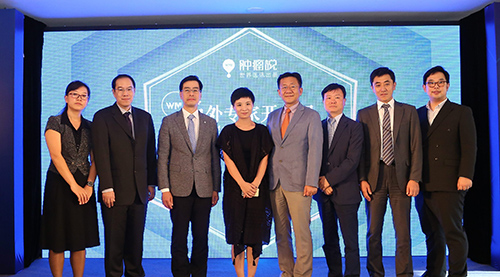
Zhong Yan, Co-founder and CEO of World Medical News, stated at the event: “Since its inception, the Tumor Talk APP has always been patient-centric, aiming to serve cancer patients and those experiencing cancer-related anxiety with professionalism and a positive attitude. Patients and their families can not only access the most comprehensive cancer information online, engage with fellow patients in the APP community, and receive professional guidance from healthcare providers, but we also regularly organize offline public-welfare initiatives such as Expert Open Days and patient support gatherings.”
It is reported that "Tumor Talk," a vertical medical app developed by World Medical News, focuses on building a knowledge-based database covering cutting-edge oncology research, treatment protocols, and overseas medications. With a professional and positive approach, it aims to serve cancer patients and those experiencing cancer-related anxiety. The app is expected to complete the construction of its knowledge base for all 206 cancer subtypes in 2016.
For physicians, "Oncology Talk" serves as a powerful tool for academic discussion, data collection, experience sharing, follow-up management, and international exchange. For patients, it is an effective channel for information inquiry, health education, and personal medical record management. For the industry, "Oncology Talk" is dedicated to resource integration, information consolidation, and fostering industry consensus.
Domestic Oncology Treatment Resources Are Scarce and Unevenly Distributed
Data shows that China currently sees approximately 2.2 million new cancer cases annually, with over 6 million patients undergoing treatment and 1.6 million deaths. On average, 8,474 people are diagnosed each day, meaning roughly six people are diagnosed with cancer every minute. Despite the large patient population, domestic oncology treatment resources are scarce and unevenly distributed.
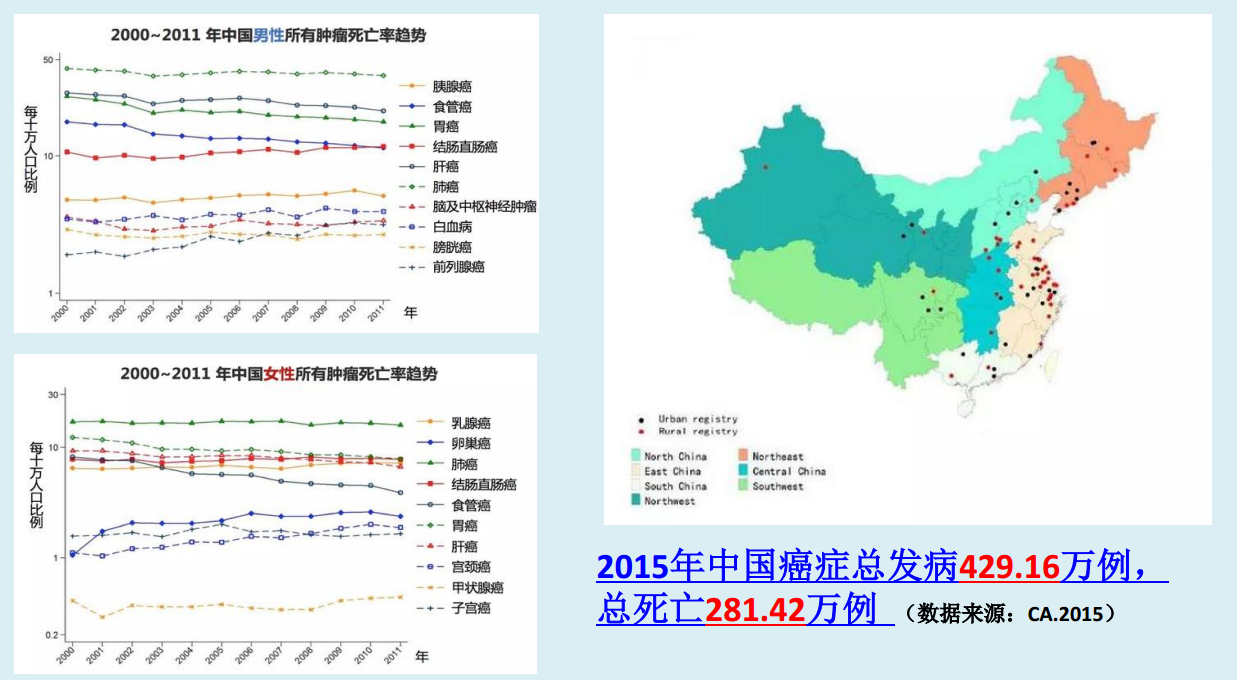
The total number of specialized oncology hospitals is limited, and there is a shortage of hospital beds, leaving patients and their families facing significant difficulties in accessing medical care. In fact, the distribution of hospital beds in China is polarized: 44 hospitals (primarily public hospitals) have more than 500 beds, while the majority (mainly private hospitals) have fewer than 300 beds. Hospitals with a medium capacity of 300–500 beds are the least numerous. Based on approximately 3 million new cancer cases annually in China and a conservative estimate of 15 million prevalent cases, there is only one hospital bed for every 98 patients.
The scarcity of medical resources in China is also reflected in the difficulty of securing appointments and the brevity of consultations. “Sometimes it takes three hours to register, only to have a few minutes of communication with the doctor,” said Zhong Yan. Many doctors have reported that they spend valuable consultation time answering repetitive questions from patients, such as “Is this disease fatal?” and “How long will it take to cure this condition?”
Meanwhile, cancer remains relatively unfamiliar to most people. Unlike common ailments such as colds and fever, where the causes, treatment protocols, and recovery processes are widely understood.
It typically takes about a month from cancer diagnosis to the finalization of a treatment plan. “Although oncologists are highly familiar with cancer, patients often experience significant anxiety during this one-month waiting period for a confirmed treatment plan,” Zhong Yan told VCBeat. “During this time, they lack accessible channels to understand their condition, making them particularly susceptible to psychological distress.”
This means that the domestic market needs an enterprise that truly approaches from the patient's perspective, integrating domestic and international medical information and resources, to play a positive role in tumor prevention, management, and rehabilitation.
Meanwhile, Tumor Talk officially entered the market from this angle, alleviating user anxiety and acquiring users by providing cancer-related knowledge.
Three Major Databases Are the Product Foundation
Currently, the content covered by Tumor Talk includes three sections: oncology industry news, an oncology knowledge database, and a user community.

These three components correspond to the three major data pillars of the oncology platform: a frontier knowledge database, a cancer patient community database, and a database of medical records and doctor-patient interactions. Zhong Yan stated, “This medical-record-based platform for both physician-physician and physician-patient communication breaks the vicious cycle in which existing online consultations lack effective patient data. It enables more targeted medical recommendations and provides a platform for patients to engage in in-depth discussions based on similar cases.”
To establish a scientifically robust and comprehensive database, Tumor Talk has established a dedicated research institute. Approximately 20 medical professionals work daily to research and refine the database. The data is sourced from overseas medical websites and peer-reviewed journal literature, supplemented by cutting-edge interviews with physicians and clinical treatment pathways from various hospitals. This endeavor involves the extensive collection and integration of fragmented information.
Meanwhile, to bolster the authority of its database, Tumor Talk will first cite the sources for all articles. These sources will be exclusively medical websites and institutions recognized both nationally and globally. “Even if only one or two sentences are mentioned, we ensure that the full text can be retrieved, thereby guaranteeing the integrity of the entire system. This is the primary aspect we must uphold in building a medical database.” Furthermore, Tumor Talk will continuously invite physicians to share additional information and content through videos or events. Zhong Yan stated, “Videos and events tend to foster greater trust among users. This is a key premise behind our ongoing Open Day initiatives and serves as a crucial strategy for addressing trust-related challenges.”
Commercialization: Targeting the Rehabilitation Market
In view of future commercialization, Tumor Talk is targeting the postoperative recovery market. Postoperative recovery for cancer patients involves numerous tasks, such as rehabilitation from muscle damage caused by long-term treatment, daily postoperative monitoring and nursing care, and psychological therapy for recovering patients. Furthermore, cancer treatment remains in the research phase, with no fully established system encompassing diagnosis, treatment, and rehabilitation. The initiatives undertaken by Tumor Talk can also provide certain research value to oncology research institutions.
Currently, Tumor Talk offers services that connect patients with overseas cancer rehabilitation hospitals for medical treatment. “Patients choose to seek medical care abroad partly due to the scarcity of domestic medical resources, and also because postoperative rehabilitation environments are generally better overseas.”

Ms. Zhong Yan, CEO of Tumor Talk
In the future, Tumor Talk will build a cancer recovery system. Once this system is established, Tumor Talk will consider opening its own hospital.
“Opening a hospital is the ultimate destination for healthcare entrepreneurship. One of Youxiang, the parent company of Oncology Talk’s businesses, is its own Youxiang International Life Hospital,” Zhong Yan told VCBeat. “Hospitals do not lack patients. What cancer treatment needs is not merely the matching of medical resources; rather, providing reliable medical services to patients is the breakthrough point for healthcare entrepreneurship.”
Since its official launch over a month ago, Tumor Talk has accumulated more than 60,000 users.