Market Prospects and Product Overview of CD20-Targeted Monoclonal Antibodies for Lymphoma: A Global and China Analysis
Rituxan, the originator CD20 drug: a blockbuster monoclonal antibody with years of strong sales
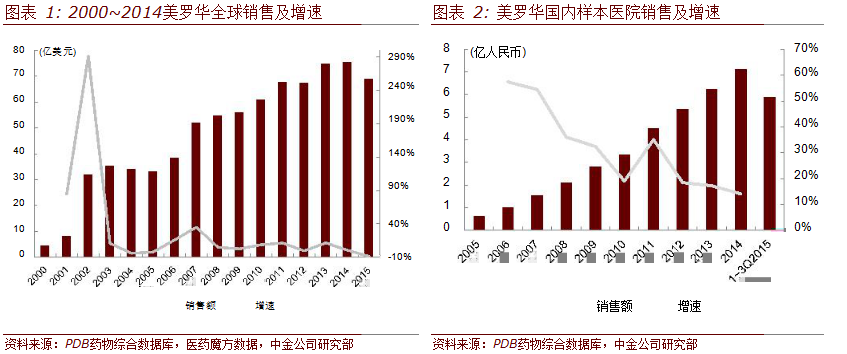
Rituximab (brand name: MabThera) is the first blockbuster monoclonal antibody product developed by Roche Pharmaceuticals. Since its launch in the United States in 1997, sales have grown rapidly, with annual sales exceeding $7 billion by 2012.
Following the expiration of Rituxan’s European patent in 2014, sales experienced a slight decline in 2015, with global sales reaching $6.897 billion that year. The compound annual growth rate (CAGR) from 2000 to 2015 was 20.06%. With Rituxan’s U.S. patent set to expire in 2018, low-cost generic versions of the drug are expected to enter the market.
Rituxan’s sales in China have grown steadily. In 2000, the China Food and Drug Administration (CFDA) approved Rituxan for marketing in China, with indications for CD20-positive follicular and diffuse large B-cell non-Hodgkin lymphoma.
Based on data from sample hospitals in two Chinese cities, the product maintained rapid growth from 2005 to 2014. In 2005, expenditure on rituximab in these sample hospitals amounted to RMB 64.15 million, rising to RMB 715 million in 2014. The compound annual growth rate (CAGR) from 2005 to 2014 was 30.72%. Sales in the sample hospitals reached RMB 590 million during the first three quarters of 2015.
Currently, MabThera has been included in the medical insurance coverage of 10 provinces and continues to demonstrate strong growth momentum, driven by rigid demand in the domestic market.
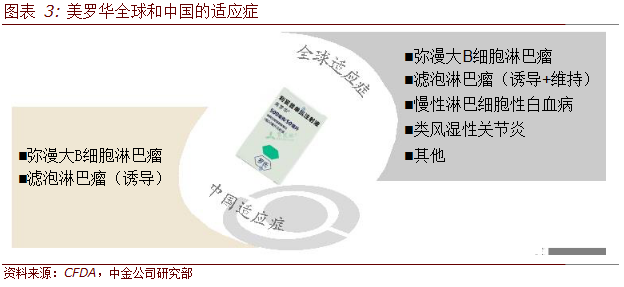
In China, the limited number of approved indications constrains market size. While Rituximab has gained approval for multiple indications globally (covering lymphoma, leukemia, and autoimmune disorders), only its two primary indications have been approved in China, thereby restricting the market potential for both Rituximab and subsequent biosimilars.
According to survey findings, MabThera (rituximab) is currently conducting academic education and sales activities in the Chinese market solely for diffuse large B-cell lymphoma and follicular lymphoma. Clinical applications for lymphocytic leukemia and autoimmune deficiency disorders are virtually nonexistent.
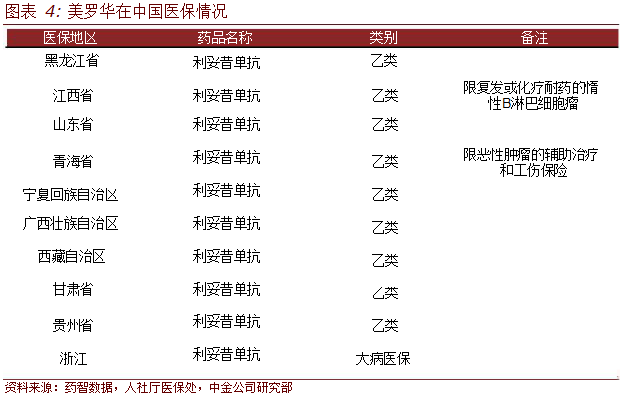
Rituximab is a blockbuster targeted therapy for lymphoma.
Lymphoma is a type of malignant hematologic tumor. According to data from the Annual Report of Cancer Registration in China, in terms of incidence and mortality rates, the incidence rate of malignant lymphoma was approximately 6.68 per 100,000 population between 2003 and 2013, with nearly 90,000 new cases annually, ranking eighth among all malignant tumors in terms of incidence.
The incidence rate is higher in males than in females, with a mortality rate of 3.75 per 100,000, ranking it as the tenth leading cause of death. In terms of disease classification, lymphoma is generally divided into two major categories: Hodgkin lymphoma (HL, accounting for 10% of all lymphomas) and non-Hodgkin lymphoma (NHL, accounting for 90% of all lymphomas), comprising more than 70 subtypes in total.
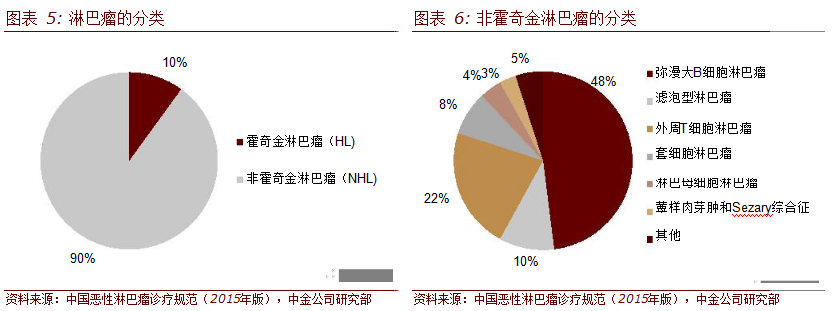
“Rituximab + CHOP/CVP Chemotherapy” is the gold standard for treatment
Patients with indications for rituximab account for 51% of all lymphoma patients in China. The indications for rituximab are CD20-positive patients among the two major subtypes of non-Hodgkin lymphoma (NHL): diffuse large B-cell lymphoma and follicular lymphoma.
In China, the combined incidence of diffuse large B-cell lymphoma and follicular lymphoma accounts for approximately 52% of all lymphoma cases. Among these, over 98% of patients are CD20-positive; therefore, patients eligible for Rituximab (MabThera) constitute 51% of the overall lymphoma patient population.
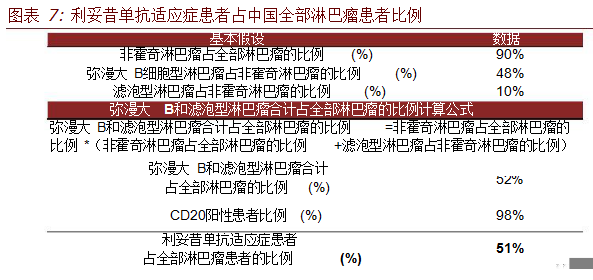
“Rituximab + CHOP/CVP chemotherapy” is the recommended first-line therapy. For the initial treatment of diffuse large B-cell lymphoma, clinical guidelines recommend rituximab plus CHOP chemotherapy (cyclophosphamide, doxorubicin, vincristine, and prednisone) as the first-line regimen.
For the initial treatment of follicular lymphoma, first-line therapy recommends rituximab plus CVP (cyclophosphamide, vincristine, and prednisone). Rituximab is also used for maintenance therapy and in the setting of relapse. Rituximab combined with CHOP or CVP chemotherapy yields high response rates and improves patient survival.
Currently, MabThera has no competitors or substitutes. In China, the cost per administration of MabThera is approximately RMB 20,000–25,000 (once per cycle), with the total cost for a full course of eight cycles ranging from RMB 160,000 to 200,000.
China's Rituximab Market Size Exceeds RMB 3 Billion
MabThera, the originator drug, has achieved a 21% penetration rate in China. As the first monoclonal antibody to enter the Chinese market, MabThera has benefited from the company’s in-depth academic promotion and effective education initiatives for both physicians and patients. Additionally, patient adherence to treatment is relatively high, driven by the approximately 60% cure rate for non-Hodgkin lymphoma.
In 2014, MabThera’s sales in China amounted to approximately RMB 1.5 billion. Based on an average of six treatment cycles per patient, the number of patients treated with MabThera in 2014 was approximately 10,000, accounting for 21.37% of all patients with indications for rituximab.
Forecast of the Market Size for CD20 Monoclonal Antibodies in China
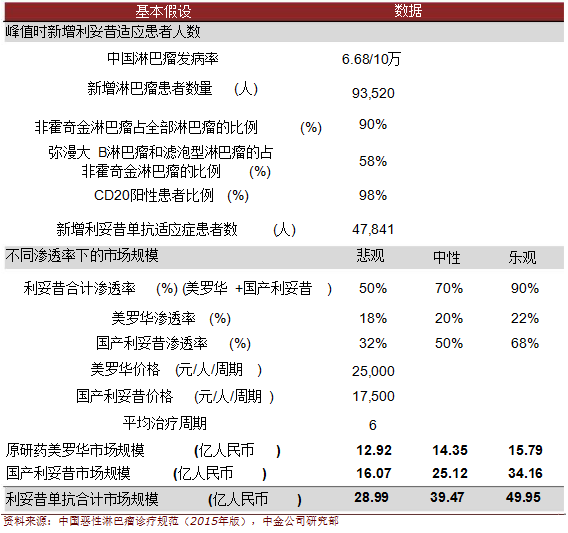
At its peak, the total market size for rituximab in China is projected to reach RMB 3.947 billion, with domestically produced rituximab expected to account for RMB 2.512 billion and the originator drug MabThera reaching a market size of RMB 1.435 billion.
Basic Assumptions:
In China, non-Hodgkin lymphoma accounts for 90% of all lymphomas;
Multiple Domestic Companies Are Developing Rituximab
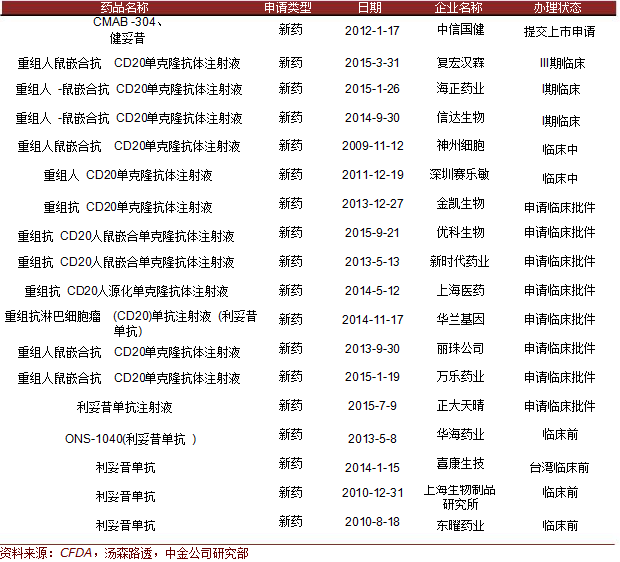
Multiple domestic companies are developing rituximab. Currently, Shanghai CP Guojian Pharmaceutical’s Jian Tuoxi is the most advanced in development among Chinese firms; it has submitted a marketing application and is poised to become the first rituximab biosimilar approved for market launch in China. Henlius’ rituximab is currently in Phase III clinical trials. Other companies with products in clinical stages include Hisun Pharmaceutical, SinoCellTech, Innovent Biologics, and Shenzhen Sailuomin. Several other companies have also obtained clinical trial approvals and are closely following behind.
Rituximab R&D Status in China