

Mayo Clinic Secures $142 Million NIH Grant to Build World's Largest Biobank for Precision Medicine Initiative
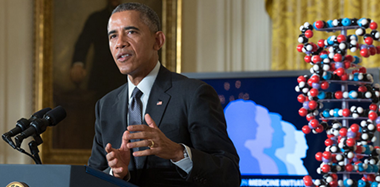
Recently, the U.S. National Institutes of Health (NIH) provided $142 million in funding to the Mayo Clinic to advance the implementation of the Obama administration’s Precision Medicine Initiative. It is reported that the Mayo Clinic will establish the world’s largest biobank over the next five years. The funds will be used to collect and store samples from known biological species and to build a biorepository.
The Significance of Precision Medicine Lies in the Analysis of Large-Sample Data
Precision medicine is a disease treatment approach that has emerged in recent years, emphasizing the consideration of individual genetic variations, environmental influences, and lifestyle factors during therapy. Diagnostic tests based on patients’ genetic information, combined with other molecular or cellular analytical results, are used to selectively identify appropriate and optimal treatments. Enabling technologies include molecular diagnostics, imaging, and analytical software.
In the data collection process of precision medicine projects, analyzing and studying biological samples through chemical testing and genetic testing is a critical step. The collected biological sample data can help researchers conduct differentiated studies on health and disease at the individual level. Sources of these biological data include results from health questionnaires, medication history, electronic health records, physical examination results, environmental exposure data, and real-time tracking data obtained from mobile health devices.
Dr. Francis S. Collins, Director of the National Institutes of Health, stated, “The scale of this data collection effort, encompassing one million participants, is unprecedented. Researchers are leveraging these data to gain a comprehensive understanding of the factors influencing health and disease. Only with a thorough understanding of individual differences can we more effectively prevent and treat diseases.”
Biobanks Are Key to the U.S. Precision Medicine Initiative
Biobanks are critical to advancing the U.S. Precision Medicine Initiative and serve as its cornerstone. Dr. Stephen N. Thibodeau, Co-Director of the Center for Individualized Medicine Biorepository at Mayo Clinic, and Dr. Mine Cicek, Director of the Mayo Clinic Biobank Core Laboratory, will oversee the implementation of this project. Dr. Thibodeau also serves on the Precision Medicine Initiative Research Committee and provides guidance on the advancement of the project’s plans.
Biobanks are infrastructure facilities where researchers store and analyze samples of known biological species. During the establishment of biobanks, Mayo Clinic utilizes state-of-the-art laboratory equipment to ensure efficient and precise data collection and analysis. Meanwhile, biobank staff prioritize information security to safeguard collected data against damage or loss, thereby enabling volunteers to provide samples with confidence. Mayo Clinic’s laboratory in Florida, United States, provides a sample storage platform for 20%–25% of the 8 million to 10 million samples.
Mayo Clinic will leverage the resources of Mayo Medical Laboratories to support the establishment of a precision medicine biobank project. With a presence across all 50 U.S. states and more than 300 staff members, Mayo Medical Laboratories currently receives 35,000–40,000 new specimens daily and conducts 23 million biological tests annually.
Dr. Thibodeau stated, “For Mayo Clinic, collaborating with the National Institutes of Health represents an extraordinary opportunity. In this pivotal national study, we are leveraging Mayo Clinic’s years of experience and technical capabilities to actively advance the Precision Medicine Initiative. We also hope to contribute our utmost to the healthcare sector under the framework of precision medicine.”
Mayo Clinic, the top hospital in the United States, launched its affiliated hospital network program in China in 2015.
Mayo Clinic, founded in 1864, is a world-renownedNon-Profit Private Medical InstitutionFounded by Dr. Mayo in Rochester, Minnesota, it is also the second-largest nonprofit organization in the state of Minnesota. In its early days, the Mayo Clinic primarily treated casualties from the American Civil War; after the war, it began collaborating with a monastery and expanded its operations. Since the early 20th century, the Mayo Clinic has gradually established a new model of medical management, philosophy, and treatment methods, becoming a multi-specialty collaborative care hospital and pioneering a residency training system. Currently, the Mayo Clinic has built a comprehensive healthcare system encompassing outpatient services, hospitals, medical research, and medical education institutions. The Mayo Clinic operates branches in Florida and Arizona, owns its own medical school, and runs dozens of medical clinics in neighboring states, employing more than 2,700 clinical experts and scientists.
In 2004, the Mayo Clinic reported revenues of $5.6 billion, served 510,000 new patients, recorded approximately 2 million outpatient visits, had around 130,000 admissions, and treated nearly 600,000 inpatients.For 20 consecutive years, Mayo Clinic has topped the “Best Hospitals” list in U.S. News & World Report. In 2014, it ranked first on the list, becoming a representative of the most advanced medical diagnostic and treatment technologies and high-quality service standards in the United States and worldwide. In 2015, Mayo Clinic and Medison Medical Group signed a master agreement on healthcare services cooperation at Mayo Clinic’s headquarters, officially launching the Mayo China Affiliated Hospital Network initiative.
Precision Medicine Is Booming, and China Is Not Falling Behind
China is also actively advancing and planning initiatives in the field of precision medicine. In March 2016, the Ministry of Science and Technology convened the nation’s first expert meeting on precision medicine strategy, proposing the China Precision Medicine Initiative. The meeting indicated that, by 2030, China will invest RMB 60 billion in precision medicine, with RMB 20 billion from central government funding and RMB 40 billion in matching funds from enterprises and local governments.
As a next-generation diagnostic and therapeutic technology, precision medicine offers significant technical advantages over traditional approaches. Compared with conventional methods, precision medicine is characterized by its accuracy and convenience. On one hand, gene sequencing can identify cancer-related mutant genes, thereby rapidly determining targeted medications, sparing patients the time spent trial-and-erroring various treatments, and improving therapeutic outcomes. On the other hand, gene sequencing requires only blood or even saliva samples, eliminating the need for traditional pathological biopsies and reducing physical harm to patients during the diagnostic process. It is foreseeable that the emergence of precision medicine will significantly enhance the diagnostic and treatment experience and outcomes for cancer patients, demonstrating substantial development potential.
VCBeat recently hosted a Precision Medicine Forum this month and will continue to closely monitor developments in the field of precision medicine.