

Qiangsen Medical Secures Tens of Millions in Series A Funding to Expand Digital Community Healthcare Ecosystem
Recently, Johnson Community Medical Group (“Johnson Medical”), which positions itself on a “family medicine general practice model,” announced that it had raised tens of millions of RMB in its Series A financing round. The round was led by Legend Capital, with follow-on investment from Dehui Capital, the investor in its Pre-Series A round. Last year, Johnson Medical secured a strategic investment of RMB 50 million from Dehui Capital.
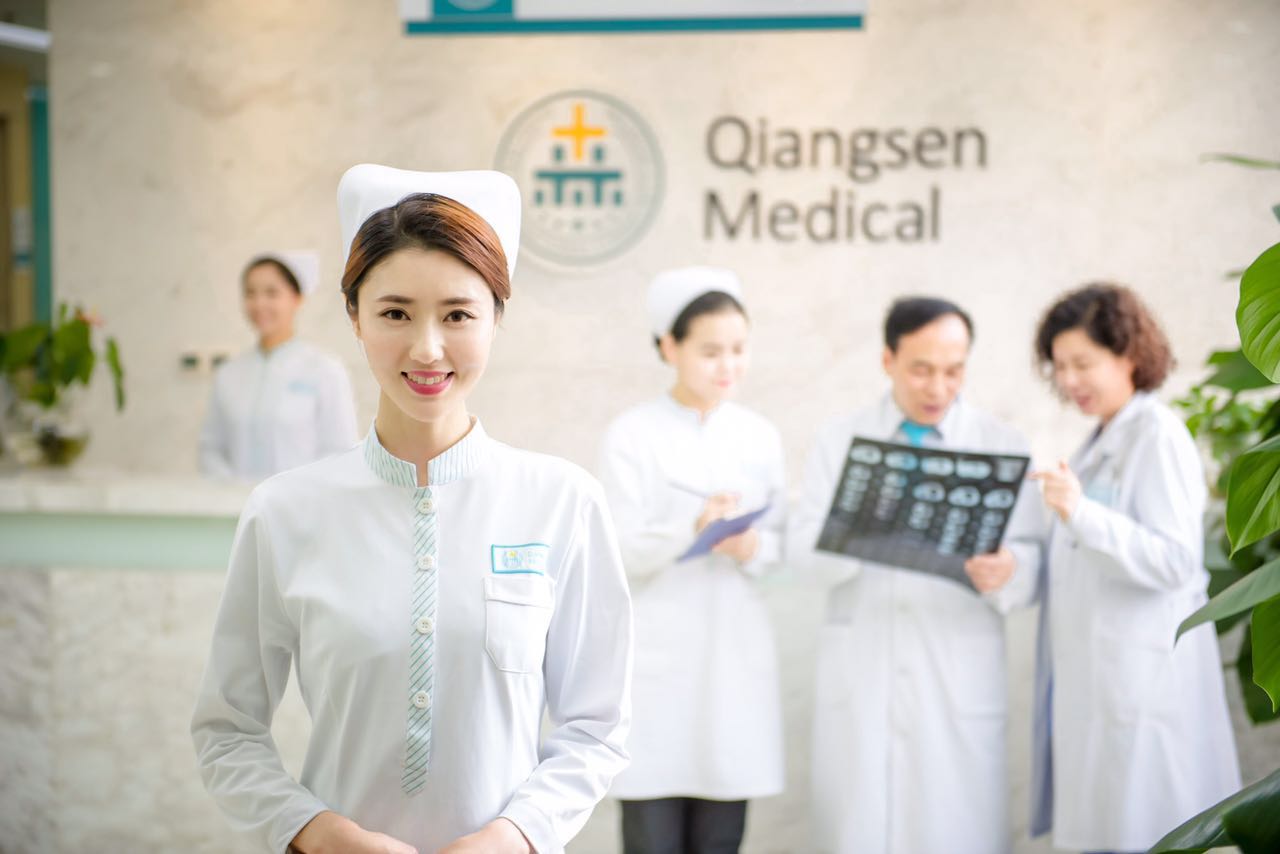
According to He Haiyang, Founder and CEO of Johnson Medical, the company’s first model community clinic was established in September 2014 in Shaanxi Xixian New Area, a state-level new area. Currently, the clinic’s monthly revenue is approximately RMB 500,000.
He Haiyang stated that Johnson Medical’s facilities are all located in urban development zones and new city districts. The residents in these areas have relatively high disposable incomes, but access to high-quality public medical resources remains insufficient in the short term—precisely the opportunity for Johnson Medical.
Clinic Positioning: Mid-to-High End.
Target Population: The elderly, women, and children.
Clinic Departments: Internal Medicine, Pediatrics, Gynecology, Traditional Chinese Medicine (TCM), Dentistry, Laboratory, Ultrasound, Electrocardiography (ECG), etc.
Consultation fees: Approximately 20% higher than those at public hospitals, with fluctuating rates during holidays and weekends. Currently, the fee ranges from RMB 180 to RMB 190 per visit. A few clinics have already integrated with the national medical insurance system, although the proportion of patients using this benefit remains low. In the future, the primary patient base will consist of individuals covered by commercial health insurance.
Clinic Patient Volume: Relatively mature clinics typically handle approximately 2,600 patient visits per month, averaging over 80 patients per day.
Current Number of Physicians: 200, including full-time and part-time staff, with 90% being full-time.
Collaboration with Developers: The developer offers Johnson Medical more favorable rental rates and assists in conducting promotional activities within the community.
He Haiyang told VCBeat that this is his third entrepreneurial venture. He first started a business in 2002, establishing a marketing planning company based on his years of experience in marketing. In 2011, He Haiyang founded three health examination centers in Xi’an. After observing that the health examination sector was gradually becoming a saturated “red ocean” market, he decided to pivot.
“It was precisely through conducting health check-ups that we gained insight into the market potential of community healthcare,” said He Haiyang, noting that the decision to focus on community healthcare was primarily driven by a clear recognition of the broader trends in national healthcare development.
In the past two years, the state has continuously increased investment in primary healthcare and introduced the “primary care first” initiative. However, existing community health centers are concentrated in older urban districts, failing to meet the medical needs of residents in newly emerging communities. He Haiyang believes this presents a new market opportunity. On another front, accelerated urbanization has drawn large populations into cities, while the relaxation of the “two-child policy” and rapidly aging population have further spurred demand for community-based medical services.
Currently, Johnson Medical operates 15 clinics. By the end of 2016, Johnson will have 30 community clinics, a medical and nursing team of over 400 professionals, more than 15,000 family members, and provide employee healthcare coverage services for nearly 20,000 individuals across 100 enterprises. It has already established strategic partnerships for community healthcare support with several well-known real estate developers, including Vanke Xi’an, Tianlang, China Railway, China Overseas, Huayuan, China Resources, Shanghai Industrial Urban Development Group, and Ronghua. This collaboration has created a “Three-Good” healthcare support model featuring “Good Communities, Good Families, and Good Healthcare,” jointly building a “15-minute convenient medical care circle” for community residents to address the difficulty of accessing medical care in the “last kilometer.”
Following this round of financing, Johnson Medical will accelerate the expansion of its offline clinic network and launch the SaaS-based “Medical Assistant Cloud Manager” system.
He Haiyang told VCBeat that since launching community clinics, he has identified two key factors for the development of clinic chains: talent and standardized management tools. Last June, Johnson Medical began investing in the SaaS-based “Medical Assistant Cloud Manager” system, which was designed and developed based on the specific operational workflows of its clinics.
The SaaS-based Medical Assistant Information Management System enables clinic management, operations, inventory control, financial management, statistical analysis, customer relationship management (CRM), electronic medical records (EMR), health records, and remote collaboration. Once data integration is achieved, pre-consultation appointment scheduling and post-consultation chronic disease management will also be incorporated into the system.
Currently, the Johnson SaaS Medical Assistant Cloud Manager system is undergoing internal optimization and improvements, with plans to make it available to other clinics in the future.
Wang Jianfei, Executive Director at Legend Capital, stated, “Over the next three years, scaling to 300 medical institutions will enable Johnson’s offline clinics to integrate their expansion with mobile internet-based IT information management solutions. This integration will reconstruct a new ecosystem for community healthcare, facilitating big data analytics and cloud platform sharing for community medical services, which will undoubtedly deliver unique value to the community healthcare industry.”
He Haiyang stated that as medical services are a necessity for daily life, convenience is no longer a luxury but a requirement. Convenience clinics will spark a consumer revolution in the realm of primary care, and rebuilding a series of service chains around primary healthcare represents a promising industry of the future.
Legend Capital and Dehui Capital place significant emphasis on the gateway value and service value of community healthcare services. They concur that vigorously developing new types of primary care clinics is the most critical preparation for addressing China’s healthcare challenges and coping with population aging. Furthermore, they are committed to growing alongside entrepreneurial ventures such as Johnson Medical. In addition, the two parties exhibit strong complementary synergies in resources, and their collaboration will deliver more valuable primary healthcare services to the public.