

MedLink: Pioneering Healthcare Payment Solutions from NASDAQ NEEQ Listing to IPO Filing
Since the advent of the mobile healthcare boom, nearly all industry perceptions of innovation in medical payments have stemmed from the aggressive expansion of Alipay and WeChat Pay—such as how many hospitals and pharmacies have adopted these payment methods, or where they have integrated with public health insurance payment systems.
However, within the payment processes involving WeChat Pay and hospitals, Alipay and hospitals, as well as banks and hospitals, there exists a hidden category of payment connectivity service providers—those quietly operating in the medical payment middleware business.
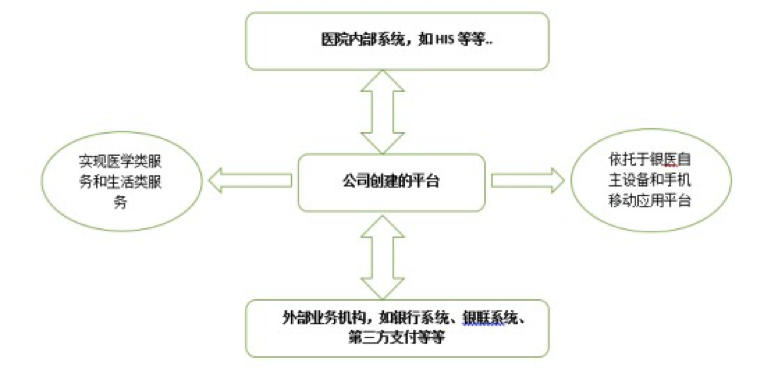
Schematic Diagram of Molian Integrated Payment Platform
Source: Molian Co., Ltd. Prospectus
In the view of Fang Dayuan, founder of Wuhan Molian Co., Ltd.—the first medical payment company listed on China’s New Third Board—the business of medical payment middleware is a “dirty and tedious job” that few are willing to undertake. However, after six or seven years of development, Molian has expanded from its payment business core into a surprisingly diverse business landscape.

Fang Dayuan
From Middleware to a Platform
Founded in 2009 in the East Lake High-Tech Development Zone of Wuhan, Hubei Province, Molian has developed an extensive product portfolio, including comprehensive solutions for integrated healthcare payment platforms, self-service hardware, smart health devices, mobile healthcare services, and resident health card applications. An analysis of the company’s product and business development trajectory reveals three distinct phases.
Phase I: Featuring “Silver-Medical Connect” as the flagship product.
The Silver-Medical Transaction System serves as an intermediary platform for payment services between banks and hospitals. This business initiative emerged before the establishment of Molian. At that time, Fang Dayuan, who had just experienced the failure of his startup in a pharmaceutical sales company, recognized the “three long waits and one short visit” problem frequently complained about by patients—namely, long registration times, long waiting times for consultations, long queues for payment and medication pickup, and short consultation durations. He began deploying self-service kiosks in hospitals. In 2006, China’s first patient self-service kiosk was put into operation at Kunshan Traditional Chinese Medicine Hospital, a milestone achieved by Fang Dayuan.
Subsequently, Fang Dayuan returned to Hubei Province to establish Molian. The company quickly became one of the first suppliers selected by the former Ministry of Health to provide self-service solutions for hospitals participating in the “Treatment First, Payment Later” pilot program. It was also the first provider in China of healthcare application solutions based on financial IC cards. To date, Molian’s Bank-Hospital Connect service continues to rank among the industry leaders in market share.
The model of Yin Yi Tong 1.0 primarily relied on hospitals directly purchasing equipment, but market expansion was slow due to tight hospital budgets. Fang Dayuan, with a background in the healthcare industry, deeply understood the predicament hospitals faced due to their limited investment capacity in the medical sector.
By chance, a friend from the banking sector commissioned him to introduce relevant hospital services. After analyzing the shortcomings and pain points of bank services for hospitals, he boldly proposed that banks provide self-service devices to partner hospitals. Thus, the “Bank-Hospital Connect 2.0” version was launched, under which banks fund the purchase of software, hardware, and related products and services, offering them free of charge to cooperating hospitals in exchange for access to hospital settlement funds as a source of bank liabilities. This approach not only reduces hospitals’ capital expenditures, allowing them to focus on improving medical services, but also lays the foundation for the company’s comprehensive payment platform through close collaboration with financial institutions.
Phase 2: Connecting Payments to Services。
After the “Silver-Medical Connect” solution helped the company establish a firm foothold in the healthcare payment sector, MoLian entered what Fang Dayuan described as its second phase: “Connecting Services Through Payments.” This slogan signifies the company’s strategy of leveraging payments as a cornerstone to expand into broader healthcare and related business areas.
Hospital medical service processes are lengthy and complex, making it difficult to standardize healthcare payment scenarios. Leveraging his background as a physician, Fang Dayuan adopted the perspectives of both hospitals and patients. By utilizing Bank-Hospital Connect self-service kiosks and mobile payment terminals, he integrated various online and offline payment channels into a robust comprehensive payment platform tailored for healthcare settings. This platform optimizes payment processes across pre-consultation, during-consultation, and post-consultation stages, significantly enhancing patients’ hospital experience and greatly alleviating the difficulties associated with seeking medical care during peak hours.
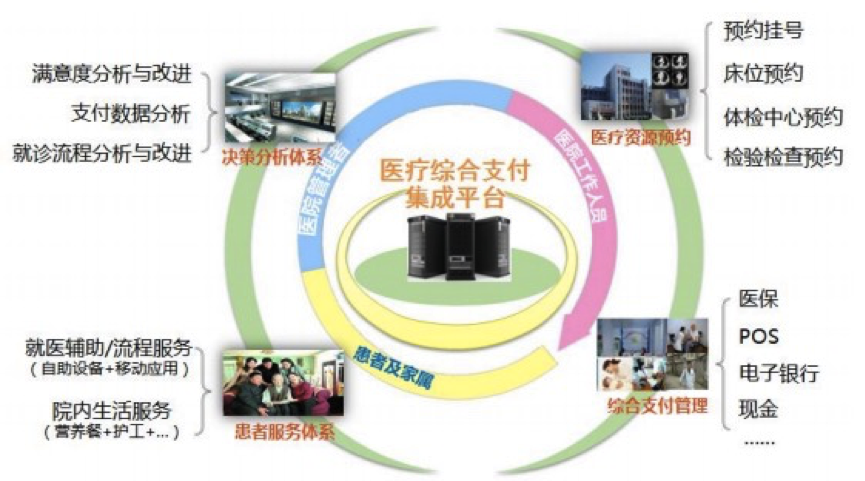
“Integrated Payment Platform” is the version 3.0 of Bank-Hospital Connect, regarded as a representative product that “connects services through payment.” It meets hospital needs across various business scenarios, including support for multiple payment methods and channels, unified account management, and automatic reconciliation. Additionally, it supports statistical analysis of hospital financial data by business type, payment method, payment channel, and transaction party, providing decision-making support for hospital administrators.
Meanwhile, drawing on his firsthand experience and deep understanding of the healthcare industry, Fang Dayuan recognizes that “30% of recovery depends on treatment, while 70% relies on proper care.” To this end, Molian has launched “Yi e Bang,” a non-medical service platform. The platform is now available via its WeChat Official Account, Alipay Service Window, and mobile app, aiming to create an integrated online-to-offline (O2O) in-hospital lifestyle service platform. It provides inpatients with services such as nutritious meals, medical accompaniment, hiring of caregiving aides, rental of companion beds, and purchase of visitation gifts, offering one-stop inpatient support to facilitate patients’ swift recovery. The platform is currently operational and being promoted at multiple hospitals, including Xiangyang Central Hospital.
The platform’s visible advantages include the following aspects. First, hospitals are highly concentrated in terms of geography and patient population, making them well-suited for O2O (Online-to-Offline) business operations. Second, Yi e-Bang is integrated with hospital information systems; when patients submit nutritional meal planning requests, the hospital’s nutrition department can immediately access the patients’ nutritional data and, assisted by Yi e-Bang’s nutritional knowledge system, rapidly formulate appropriate meal plans. Third, although there are numerous non-medical service needs within hospitals, introducing external services is often challenging due to safety concerns. If such services operate within a controllable framework, hospitals are naturally inclined to outsource non-medical services, thereby enhancing the overall patient experience.
Schematic Diagram of Molian Hospital's Comprehensive Services
Source: MoLian Co., Ltd. Prospectus
Phase 3: Payment is Far More Than Just Settlement.
Throughout the first two phases of Molian’s development, the focus has been on optimizing hospital consultation processes from the perspective of both hospitals and patients, thereby enhancing the patient experience. The third phase of Molian’s development centers on leveraging its comprehensive payment platform to further improve patient services.
With the promotion and development of commercial insurance in China, an increasing number of people are purchasing commercial insurance as a supplement. However, due to the cumbersome claims process, many have formed the perception that “insurance is a scam—easy to pay, difficult to claim.” How can Molian leverage its existing comprehensive payment platform to address the challenges of difficult and slow commercial insurance claims? Fang Dayuan drew inspiration from a conversation with his younger brother, who works at an insurance company. Since Molian’s “Comprehensive Payment Platform” has already enabled real-time settlement of basic medical insurance in hospitals across certain Chinese cities, breaking down the information silos between insurance companies and hospitals to improve the healthcare experience for commercial insurance customers has become Molian’s development goal for its third phase.
“For hospitals, a platform that encompasses all patient payment channels—including self-pay, medical insurance, and commercial insurance—would be an essential tool. This indicates substantial room for business growth and helps establish Molian’s differentiated competitive advantage,” said Fang Dayuan.
Healthcare cannot explode overnight like the internet.
According to Molian’s 2015 annual report, the company achieved revenue of RMB 51.78 million that year, representing a year-on-year increase of 130%.
Fang Dayuan stated that among the four founders of Molian, three are physicians who possess a deep understanding of the healthcare industry’s characteristics. Molian has never been concerned with narratives about “territorial encroachment,” as the healthcare sector is unlikely to experience the kind of explosive overnight growth seen in internet companies.
Fang Dayuan told VCBeat that he never refers to Molian as a mobile healthcare company. The key point is that Molian’s products and services all stem from needs identified in frontline markets and have been developed within the company’s capabilities. He added that Molian will continue to focus on healthcare payments, constantly integrating various payment gateways, channels, and methods through its products and services, thereby making healthcare payment a standardized and universal capability.