160 Health Launches China's First Patient-Centric Internet-Based Tiered Diagnosis and Treatment Platform Strategy
China’s leading internet healthcare service platform, JiuYi160, officially unveiled the nation’s first patient-centric internet-based tiered diagnosis and treatment platform strategy at the Fourth Healthbound Summit today (June 5). Centered on patients, this strategic initiative aims to reconstruct care pathways, enhance healthcare efficiency, and improve patient experience. Regarded by the industry as a “groundbreaking” innovative practice, it is expected to play a significant role in promoting the government-led tiered diagnosis and treatment system.
Luo Ningzheng, Founder and CEO of JiuYi160, pointed out that the patient-centric internet-based tiered diagnosis and treatment platform strategy is the core strategy of JiuYi160. The current tiered diagnosis and treatment system is institution-centric, focusing on two-way referrals between hospitals and community health centers, without fully considering the needs of patients and doctors. In contrast, JiuYi160’s launch of a patient-centric tiered diagnosis and treatment platform not only emphasizes the patient’s medical experience but also fully mobilizes doctors’ enthusiasm, serving as a beneficial supplement to the existing tiered diagnosis and treatment system.

Luo Ningzheng, CEO of 160 Healthcare
Patient-Centered Care: Focusing on the Patient Experience
Tiered Diagnosis and Treatment refers to the classification of diseases based on their severity, urgency, and complexity of treatment, with medical institutions at different levels assuming responsibility for treating different conditions. This approach aims to achieve initial diagnosis at primary care facilities, two-way referrals, separate management of acute and chronic conditions, and coordinated care across different levels of the healthcare system. According to the "Guiding Opinions of the General Office of the State Council on Promoting the Construction of a Tiered Diagnosis and Treatment System," the tiered diagnosis and treatment system will be gradually improved by 2017 and steadily enhanced by 2020.
Luo Ningzheng, CEO of Jiuyi 160, stated that the first step in implementing tiered diagnosis and treatment is patient triage. In this triage phase, Jiuyi 160 possesses inherent advantages as an internet-based platform. Leveraging its substantial user traffic, Jiuyi 160 promotes tiered diagnosis and treatment policies to patients and provides guidance, directing those with mild or chronic conditions to community health centers, thereby alleviating the diagnostic and treatment burden on large hospitals. Meanwhile, patients can easily access health education materials through the Jiuyi 160 platform, cultivate proper healthcare-seeking habits, and establish a model of “initial consultation at primary care facilities.”
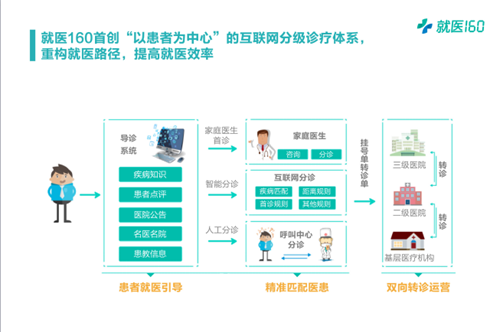
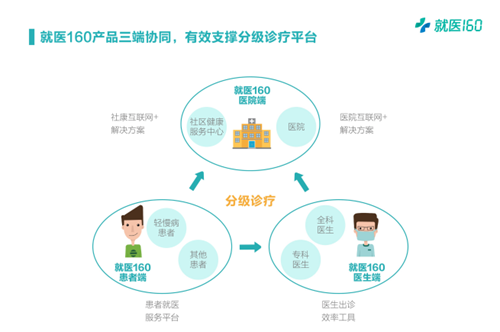
During the triage process, the patient-centered tiered diagnosis and treatment platform strategy also takes into account physicians’ needs. The Jiuyi160 Tiered Diagnosis and Treatment Platform uses “condition priority” as its entry point, leveraging the internet’s advantage in connecting information to effectively link patients with doctors, stimulate specialists’ enthusiasm, and reasonably match medical resources through a model of free patient applications plus physician review, thereby improving the efficiency of care for referred patients. Meanwhile, the Jiuyi160 Tiered Diagnosis and Treatment Platform fully supports contracted services with community general practitioners, providing patients with initial consultation and guiding them toward precise medical care.
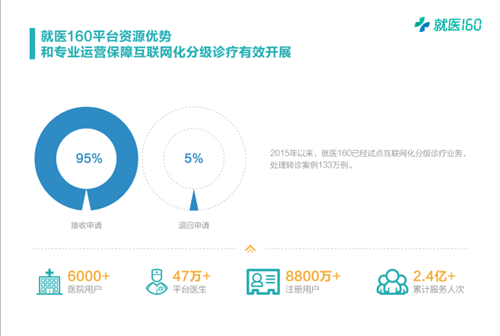
The core strengths of the 91160 platform lie in its extensive resources of high-quality hospitals and physicians, as well as its significant user traffic. As of May 2016, the platform had integrated more than 2,000 large hospitals across China, covering over 200 cities, with 470,000 affiliated physicians. Currently, the platform boasts over 88 million registered users, has served nearly 250 million patient visits cumulatively, and records a daily traffic volume exceeding 1 million.
In addition to patient guidance and triage, the JiuYi 160 platform leverages its extensive resources of physicians, patient base, and traffic to facilitate “two-way referrals” between hospitals and community health centers. By integrating with Hospital Information Systems (HIS), it supports online referrals and can serve as an operational platform for the existing tiered diagnosis and treatment system.
Sun Daning, Chief Strategy Officer of JiuYi160, stated that the core of patient-centered tiered diagnosis and treatment is to serve as an important supplement to the existing tiered diagnosis and treatment system through three key components: triage guidance, internet-based triage, and the operation of two-way referrals.
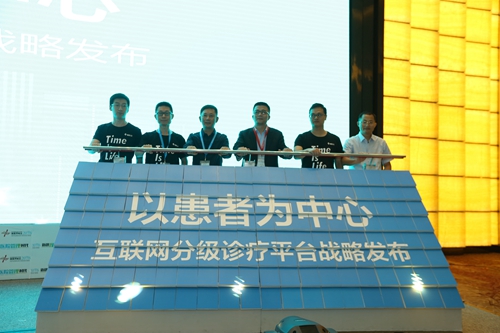
Jiuyi160 Launches Patient-Centric Internet-Based Tiered Diagnosis and Treatment Platform Strategy
The 91160 Platform Has Reached One MillionReferral Case
In 2015 alone, the Jiuyi 160 platform facilitated 1.33 million referral cases. Taking the two-way referral program implemented by Jiuyi 160 in Shenzhen’s Bao’an District as an example, Fuyong People’s Hospital (a primary care institution) handled 10,070 referrals in 2015, while Shiyan People’s Hospital (a primary care institution) handled 24,484 referrals.
In addition to upward referrals, the Jiuyi 160 platform has facilitated numerous other referral cases based on patients’ clinical conditions. In May 2014, five-year-old Huang Xiaoya (a pseudonym) was initially infected with Mycoplasma pneumoniae. Her condition improved after treatment at Shenzhen HKU Hospital, but deteriorated into severe pneumonia in July. She was transferred to Shenzhen Second People’s Hospital in October 2014; however, her Mycoplasma antibody titers remained persistently elevated, accompanied by recurrent high fevers. Through the Jiuyi 160 platform, her parents learned that Dr. Ge Qiusheng at Peking University Shenzhen Hospital had experience in successfully treating similar cases. They contacted Dr. Ge via the platform and successfully applied for a referral, ultimately leading to the patient’s full recovery.
A hospital president stated that the “Internet + Tiered Diagnosis and Treatment” model is being rapidly rolled out. This model not only facilitates the downward flow of high-quality resources from large hospitals but also enhances primary care service capabilities and improves patients’ healthcare experience.
Internet analysts have stated that Jiuyi160’s launch of China’s first patient-centered tiered diagnosis and treatment system is not only a comprehensive product upgrade but also a strategic layout for the healthcare industry. Primary care serves as a crucial entry point for the future of China’s healthcare system, and Jiuyi160 is precisely targeting this gateway.
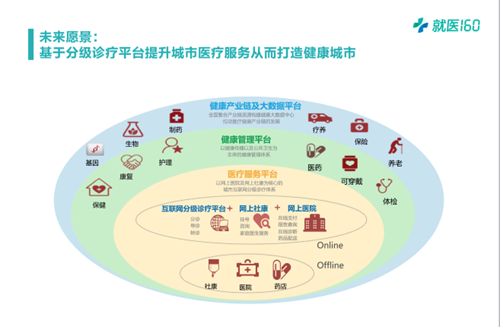
Jiuyi160 stated that it will gradually increase its investment in promoting tiered diagnosis and treatment, working together with health authorities and medical institutions to effectively address public health service issues and contribute to the development of healthy cities.