

Xinlianda's Jiao Tong: Empowering Doctors First to Drive Mobile Healthcare Transformation
2010Founded as a company born for mobile healthcare, Xinlianda still proudly bears the title of pioneer six years on.
2014Year,2015For nearly two full years, the concept of mobile health has dominated much of the discourse in healthcare investment. However, most mobile health companies have chosen to start by addressing patient-side needs, with the cash-burning model of subsidizing users to gain traction becoming widespread.
At the same time, there are of course those who choose to obtain them from hospitals, pharmacies, and other sources.BInternet healthcare companies that start from the patient or physician end generally experience slower initial growth but appear to be more reliable.
Mobile Healthcare Begins Within Hospitals
The prospectus of Xinlianda explicitly states that its initial strategic objectives are product development and maximizing market share in hospitals, aiming to increase the adoption of Xinlianda’s integration gateways and clinical application systems by more hospitals. This approach seeks to lock in patients through the hospital channel, thereby laying the foundation for its subsequent strategic transformation toward patient-centric services.
Moreover, the company’s product and business development trajectory reflects its core philosophy: by enabling doctors and nurses in hospitals to “go mobile” first, patients will naturally follow suit and become “mobile” as well.
Xinlianda has successively launched its flagship products, including the Mobile Physician Workstation, Mobile Nurse Workstation, and Mobile Pharmacist Workstation, addressing various modules of complex hospital information systems (HIS、LIS、EMR、PACS、ICUetc.) for rapid integration. With the establishment of the mobile clinical workstation system, the initial integration and consolidation of in-hospital data have been completed, currently covering400Multiple Hospitals.
This is precisely its hospital “Internet+“The cornerstone enabling the launch of the solution—the cloud platform, which, together with the management terminal, physician terminal, and patient terminal, forms a ‘one-cloud, three-terminal’ internet”+Solution.
5Month28Recently, Xinlianda's affiliated hospitals "Internet+“Core Product of the Solution — Fenxiang Medical”App V2.0Edition Product Launch Event. The product was first introduced in2015Year9In [Month], Wuhan Central Hospital was launched, helping the hospital achieve full-process application across pre-hospital, in-hospital, and post-hospital stages.
According to Jiao Tong, Executive Deputy Director of the Smart Healthcare Project Office of the Chinese Medical Doctor Association and Vice President of Xinlianda Company, Fenxiang Medical currently...AppDeployed in hundreds of large hospitals, with over 100,000 physicians using it as a ward-rounding tool.
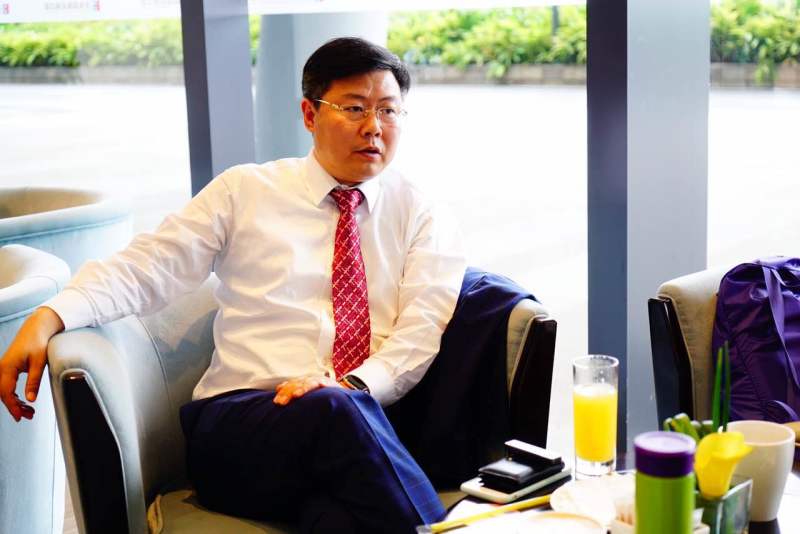
Jiao Tong
Fenxiang MedicalV2.0Version, on the basis of helping doctors achieve mobile ward rounds, free calls, communication management, critical value alerts, and other functions, has added new applications such as mobile consultation, lossless imaging, and the Dean's Cockpit.
According to Jiao Tong, Fenxiang MedicalAppAs a mobile rounding tool for smartphones, it truly offers highly integrated coverage of the entire patient care journey within the hospital, including electronic medical records, laboratory tests, imaging studies, and even financial information.
The mobile presentation of information across the entire diagnosis and treatment process provides a technical foundation for enhancing collaboration among physicians—particularly between specialists and junior doctors—and for improving medical safety and quality. This is currently the value most recognized by hospitals.
Jiao Tong cited as an example that a large Grade A tertiary hospital has approximately200Experts at the level of deputy chief physician and above work long hours; however, under the integrated system of medical practice, teaching, and research, a significant portion of their time is non-clinical. Even when present in the hospital, much of their time is spent outside their home department, as they are required to cover outpatient and emergency services.
However, with Fenxiang Medical, one can view the entire diagnosis and treatment process conducted by resident physicians and attending physicians anytime and anywhere. At this point, conservatively estimating, assuming one expert supervises5a single physician can extend expert-level diagnostic and treatment capabilities to1000positions, covering virtually all patients in the hospital. Moreover, by replacing the previous expert guidance provided during weekly grand rounds with real-time guidance, it can help young doctors grow at twice the speed.
Furthermore, by facilitating seamless communication among physicians within the hospital, Fenxiang Medical effectively assists hospitals in implementing the authentic “three-tier diagnosis and treatment” protocol. This approach has garnered significant recognition from hospital administrators.
Under an Open-Source Mindset, Transitioning from Direct Sales to Distribution
As its product portfolio continues to expand, Xinlianda has also undergone significant adjustments to its marketing model.
According to its prospectus, the company has primarily adopted a direct sales model since its inception, namely, by interfacing directly with hospitals. However, in2015Year1Starting from [Month], the company began to develop a distribution model.
The distributors currently being vigorously developed areHISManufacturers andEMRManufacturers. Under the distribution model, the company can not only fully leverage the resources of distributors but also capitalize on their interface advantages to successfully help Xinlianda's data communication integration gateway...HISSystem andEMRThe system is connected to the hospital database.
The Vice President of Xinlianda previously revealed the reasons behind this, stating that among the overall demands of hospitals, there are80%These are common features, allowing for modular implementation of this part, while the remaining20%personalized issues, can be handled byHISResolved by the manufacturer.
Thus, Xinlianda adopted an open-source model to reach various regionsHISManufacturers open up basic modules. Compared toHISManufacturers would otherwise need to independently shoulder R&D expenditures amounting to millions or even tens of millions, making Xinlianda’s licensing fees highly cost-effective. And theseHISManufacturers naturally transitioned into Xinlianda’s distributors across various regions, transforming former local powerhouses into a community of shared interests.
Listed on the New Third Board After Three Rounds of Financing
4Month26On [a certain] day, Xinlianda rang the opening bell for its listing on the New Third Board. Prior to this, the company had already2012、2013、2015The company has completed three rounds of financing, involving renowned investment institutions such as Northern Light Venture Capital and Guotai Asset Management.
Jiao Tong stated that, while adhering to the development strategy of “rapidly covering hospital clients,” Xinlianda hopes to in the future3-5Annual Service2500 coverage rate of Grade 3A hospitals among large hospitals reached40%, covering8.8100 million residents, managing over250100 million entries/Years.
“Mobile internet applications will comprehensively transform the way humans live and work. Xinlianda hopes to join forces with all stakeholders, starting from the perspective of seamless information connectivity, to realize its vision of bridging the world of doctors and patients, drive transformation in healthcare management and services, make healthcare smarter and more efficient, and restore harmony to the doctor-patient relationship,” said Jiao Tong.