

Surgeek Launches with VR Integration into Medical Education, Files Prospectus
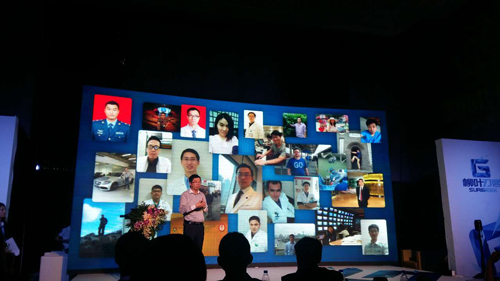
On June 5, the surgical AI assistant Surgeek held its launch event in Shanghai. At the event, its developer, Shanghai Yiweixun Digital Technology Co., Ltd., signed strategic cooperation agreements or letters of intent with Beijing Meiermu Hospital, the Zhang Qiang Doctor Group, the Donglei Neurosurgery Doctor Group, the Top 100 Famous Doctors List, and Zeiss.
In January, Lancet Guest announced a partnership with the Zhang Qiang Doctor Group. In March, it secured tens of millions of RMB in angel-round funding from Yueyin Ventures. In early June, it conducted China’s first live VR broadcast of a surgical procedure. This mobile application, hailed as a “miracle tool for surgery,” integrates 3D stereoscopic concepts to transform traditional flat-textbook and atlas-based education. VR technology will break down barriers among hospitals, across different specialists, and even between varying levels of medical practitioners, delivering immersive experiences. By leveraging the expertise of surgical specialists, the platform generates vivid and intuitive learning content.
Decoding The Lancet Surgeons
At the press conference, Pan Geng, Co-founder and CEO of Yiweixun, introduced that the team behind “The Lancet Knight” has an average age of under 28, with backgrounds primarily in animation, virtual reality, and design. After more than six months of closed-door development, “The Lancet Knight” features seven independently developed editors and 18 functional modules. Currently, Yiweixun has launched 36 surgical procedures, covering four departments: orthopedics, general surgery, neurosurgery, and urology. Regarding future development, Pan Geng stated, “We hope to integrate third-party resources for in-depth collaboration, including partnerships in medicine, technology (software and hardware), content, and distribution channels, ultimately forming a strategic ecosystem for medical virtual reality.”
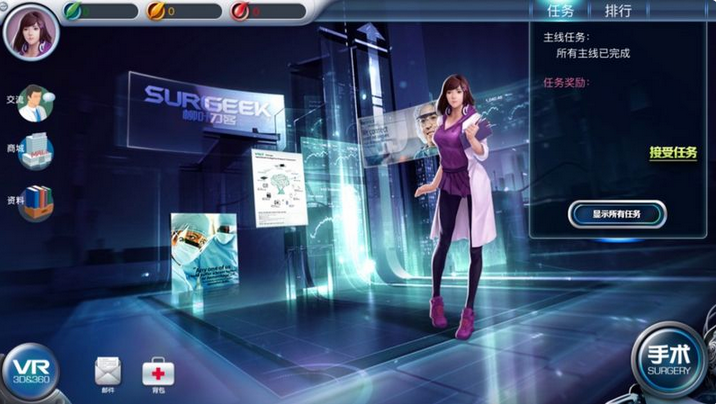
In addition to providing panoramic surgical videos for educational purposes, the Lancet Surgeon App features a 3D simulated surgical training function. This allows users to freely practice surgical procedures through 3D reconstruction and animated simulations. By employing step-by-step simulated training and interactive operations, the app facilitates surgical learning. It gamifies the learning process by adopting an advanced, incentive-based game architecture. Meanwhile, VR technology is used to broadcast and record 360-degree panoramic live and on-demand videos of surgeries performed by experts and their assistants in the operating room.
VR + Healthcare
Currently, the most promising application of “VR + Healthcare” lies in the significant advantages that VR technology offers in medical training. On May 30, Ruijin Hospital conducted a live broadcast of a 3D laparoscopic radical right hemicolectomy for colon cancer using VR technology. On June 2, Zhongshan Hospital streamed a subtotal gastrectomy via VR. It is evident that VR-enabled surgical live streaming has entered the spotlight of the medical community. The technical support for Ruijin Hospital was provided by Lancet Surgeon.
VR Live Streaming in the Operating Room Faces Numerous Technical Challenges: Panoramic Image Distortion, Balancing the Overall Operating Room View with Surgical Details, and More. Particularly, as many current surgeries are minimally invasive, more details are displayed through images from surgical instruments. Traditional surgical broadcasts only focus on endoscopic images, whereas VR live streaming effectively integrates panoramic video with 3D surgical video. It not only includes endoscopic images but also allows viewers to see the lead surgeon, assistants, nurses, and anesthesiologists. Viewers can interactively choose their viewing angles and content by shifting their visual focus, enabling them to observe both the panoramic view and the endoscopic field of view simultaneously.
Professor Wang Shan of Peking University People’s Hospital stated that advanced equipment and technology can help address the shortage of teaching resources, enabling students at various levels to access educational materials. “We often speak of ‘clinical care, teaching, and research,’ but the reality is that the order is ‘clinical care, research, and teaching.’ Clinical practice brings fame and financial gain, research also yields financial benefits, while teaching relies more on everyone’s passion.”