

Smart Screening Technology Powers the Launch of 'China Diabetic Retinopathy Screening and Prevention Program': Shanggong Yixin Files IPO Prospectus
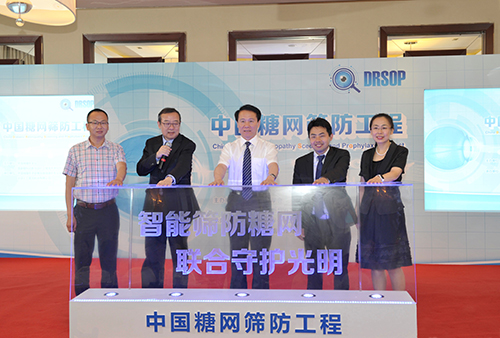
On June 5, 2016, the “China Diabetic Retinopathy Screening and Prevention Project,” aimed at “increasing the screening rate for diabetic retinopathy and preventing blindness among patients with diabetes,” held a media press conference in Beijing. The event was hosted by the Chinese Society of Microcirculation and the National Technical Guidance Group for Blindness Prevention, organized by the Professional Committee on Diabetes and Microcirculation of the Chinese Society of Microcirculation, supported technically by the National Engineering Research Center for Ophthalmology Diagnosis and Treatment, and co-organized by Beijing Shangong Yixin Technology Co., Ltd. Experts from the Project’s Professional Committee, leaders from participating hospitals, and representatives from news media attended the event.
According to statistics from the National Health and Family Planning Commission, China currently has only 32,000 ophthalmologists, among whom approximately 800–1,000 are engaged in the diagnosis, treatment, and research of fundus diseases. Given that there are over 100 million patients with diabetes mellitus in the country, there is a severe shortage of ophthalmologists, which is a major factor contributing to the very low screening rate for diabetic retinopathy in China. To change this situation and implement the “China Diabetic Retinopathy Screening and Prevention Project,” it is essential to address the core issue of insufficient medical personnel.
Following years of technological accumulation and development, ShangGong MedInfo and the National Engineering Center for Ophthalmology have jointly established the “Joint Laboratory for Intelligent Screening of Eye Diseases.” Leveraging internet and artificial intelligence technologies, they have co-developed an intelligent screening and diagnostic system for diabetic retinopathy that enables computers to learn from ophthalmologists’ expertise. This system automatically reads and analyzes fundus photographs on a cloud platform to screen for diabetic retinopathy. The adoption of this technology will make the implementation of the “China Diabetic Retinopathy Screening and Prevention Project” more feasible.
Severe Ocular Damage in Diabetic Patients: Urgent Need for Screening and Prevention of Diabetic Retinopathy
China's diabetes prevalence rate rose rapidly from 0.67% in 1980 to 11.6% in 2010, with the number of patients exceeding 130 million, making it the country with the largest diabetic population in the world.
As the host of this press conference, Professor Liu Naifeng, Dean of the School of Medicine at Southeast University, pointed out that the greatest harm of diabetes lies in its various acute and chronic complications, particularly diabetic retinopathy (hereinafter referred to as “DR”), which leads to extremely high rates of disability and mortality. DR is the leading cause of blindness among individuals of working age (18–65 years). Approximately more than 80% of patients with diabetes will develop DR, and their risk of blindness is 25 times higher than that of the general population. Currently, there are over 30 million patients with DR in China. DR is a cause of preventable blindness; regular fundus examinations during the early stages of the disease can reduce the risk of blindness by 94.4%. Therefore, early screening, early diagnosis, and early treatment are key for patients with DR to preserve their vision.
However, the screening rate for diabetic retinopathy in China is less than 10%. The vast majority of patients with diabetic retinopathy are unaware of its hazards, and many do not even know they have the condition. Among the broader population of individuals with diabetes, awareness of this serious complication is even more lacking.
Therefore, it is imperative to focus on and improve the awareness and screening rates among patients with diabetic retinopathy. The World Health Organization has further prioritized the prevention and control of diabetic retinopathy as a key component of Phase II of its "VISION 2020" initiative, calling for the global eradication of blindness caused by diabetic retinopathy by 2020.
Against this backdrop, the launch of the “China Diabetic Retinopathy Screening and Prevention Project” will significantly enhance the level of screening and prevention for diabetic retinopathy, enabling more patients to preserve their vision.
Establish a National Joint Prevention and Control Platform to Enhance Screening and Prevention of Diabetic Retinopathy
Academician Zhan Qimin, President of the Chinese Society of Microcirculation, attended this conference and delivered an important address. He pointed out that patients with diabetic retinopathy (DR) currently present for medical care at a late stage, often with severe disease progression, poor treatment prognosis, and high medical costs. The resulting blindness is irreversible, imposing a significant burden on families and society. The “China Diabetic Retinopathy Screening and Prevention Project” will enhance patient awareness and improve the level of screening and prevention for DR nationwide, yielding significant positive social and economic benefits. Academician Zhan Qimin also urged the Chinese Society of Microcirculation and all relevant participating parties to implement this initiative as soon as possible, so that more patients may benefit.
At the conference, Professor Sun Zilin, Chairman of the Diabetes and Microcirculation Professional Committee of the Chinese Society of Microcirculation, introduced the “China Diabetic Retinopathy Screening and Prevention Project.” He vividly summarized the initiative as the “Five Ones”: selecting 100 hospitals with solid foundations across China to establish the first batch of “Screening and Prevention Centers”; completing screening for 100,000 individuals within one year; providing free screening for 10,000 patients; delivering education to 10,000 patients; and establishing a database for 10,000 patients. On this basis, the project ultimately aims to develop China’s first “Consensus on Early Screening, Prevention, and Treatment of Diabetic Retinopathy in China.” Currently, the “China Diabetic Retinopathy Screening and Prevention Project” has received active support and enthusiastic response from major hospitals nationwide.
Director Wang Fenghua of the Ophthalmology Department at Beijing Tongren Hospital highlighted the importance of primary screening and prevention for diabetic retinopathy within endocrinology departments. He emphasized that screening and prevention for diabetic retinopathy are urgent and have become a major public health issue requiring immediate attention. Since patients with diabetes typically receive their initial diagnosis in endocrinology departments, these departments should serve as the first line of defense for diabetic retinopathy screening and prevention. The official launch of the "China Diabetic Retinopathy Screening and Prevention Project" marks the starting point for establishing a national primary screening and prevention network for diabetic retinopathy in China, which will have a positive impact on such efforts nationwide.