

Miniaturization and Implantable Systems Emerge as Key Trends in Medical Robotics, ROBO Highlights in IPO Filing
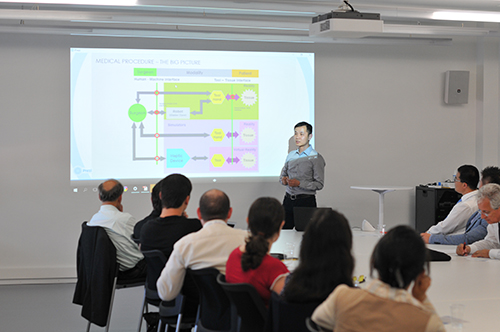
On May 27, the second session of the MRS (World Medical Robotics Society) touring salon series, themed “Healthcare: Entering the Robot Era,” was held at the École Polytechnique Fédérale de Lausanne (EPFL) in Switzerland. More than 30 participants, including professors, researchers, corporate representatives, and intellectual property experts from EPFL, ETH Zurich, the University of Zurich (UZH), and the ROBO Institute for Medical Robotics, specializing in medical robotics and artificial intelligence, attended the event.
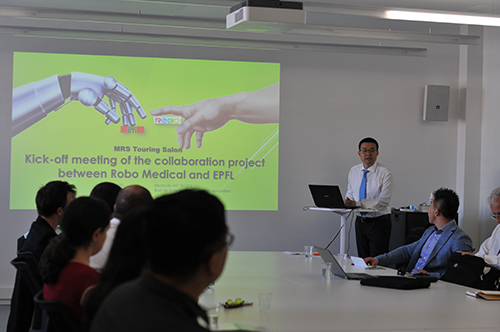
One of the keynote speakers at the conference was Professor Hannes Bleuler, Director of the Robotics Laboratory at EPFL. He previously led the European Space Agency’s surgical robotics project and was a key contributor to the European Blue Brain Project. During the symposium, Professor Bleuler first outlined research advancements in the field of medical robotics and presented his team’s achievements in this area. Commercial surgical robotic systems, exemplified by the da Vinci Surgical System, have been successfully and widely adopted in clinical practice, with their broad implementation underscoring the significant potential of robotics in advancing medicine. Subsequently, Professor Bleuler introduced his team’s cutting-edge research findings in areas such as parallel robots, intelligent manipulation, and haptic fusion. The professor statedSingle-port surgical robotic systems and novel control methods represent the development direction of next-generation surgical robots.
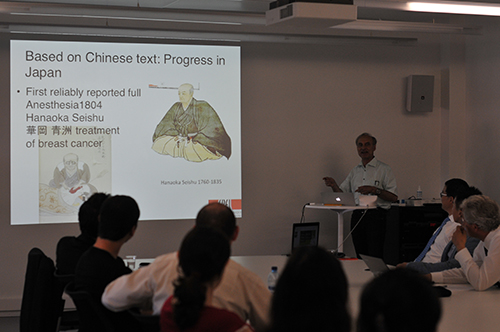
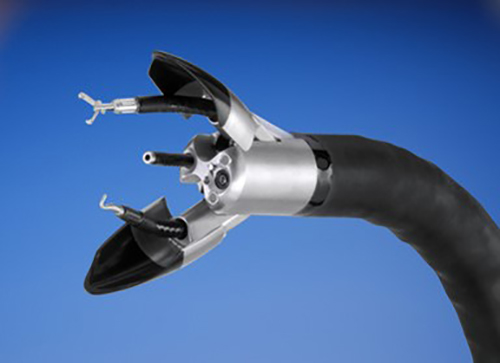
Another keynote speaker at the conference was Professor Pierre-André Farine, Director of the Microelectronics Laboratory at EPFL (École Polytechnique Fédérale de Lausanne), who was previously a key participant in Europe’s “Galileo” program. Professor Farine presented his laboratory’s cutting-edge technologies in 3D high-definition cameras, advanced low-power electronic devices, and signal processing algorithms applied to medical robotics. His primary research interests focus on CMOS sensors for medical applications and ultra-low-power wireless transmission systems. He has published more than 200 journal and conference papers in the fields of electronics, signal processing, and portable devices, and holds 55 granted international patents. Professor Farine believesIntegrating microelectronic systems with medical robots can effectively enhance miniaturization and portability, accelerating the realization of wearable and implantable capabilities. This will be one of the main directions for the future development of medical robots.
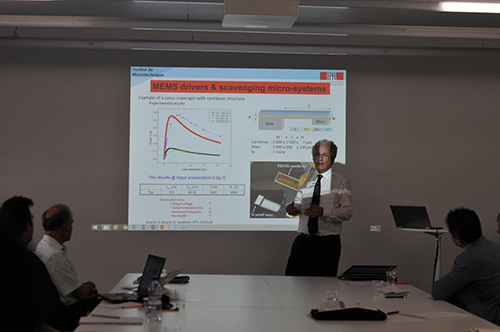
Dr. Hanson Xiong from the ROBO Medical Robot Research Institute presented the latest research advancements of ROBO in surgical robotics. The first-generation surgical robot developed by ROBO has completed prototype fabrication and is currently in the product development and clinical preparation phase. Meanwhile, ROBO’s pre-research on a single-port multi-arm robotic system has achieved breakthrough progress. By leveraging haptic feedback operation and a single-arm multi-hand system, it addresses existing challenges in current surgical robotic systems, such as limited control precision and constrained operative space. The successful industrialization of ROBO’s latest research outcomes will overcome the current application limitations of surgical robots, reduce trauma and postoperative recovery time, and expand the scope of robotic surgery applications.
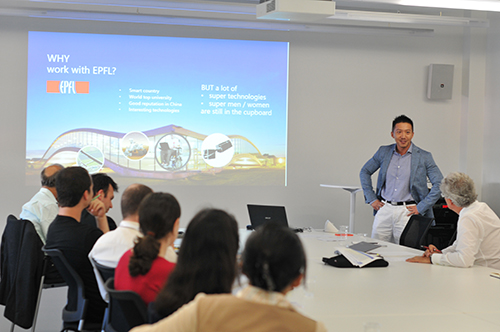
Desert Yang from ROBO Medical introduced ROBO’s global strategic layout in the medical robotics industry. ROBO is an emerging innovative medical robotics enterprise initiated in China, with R&D centers established in the United States and Switzerland. It is reported that ROBO has invested substantial resources in Lausanne (Switzerland), Silicon Valley and Ohio (USA), as well as Shenzhen and Suzhou (China), to conduct research on cutting-edge technologies and applications, including surgical robots, ultrasound robots, rehabilitation robots, and robotic physicians. The company will continue to expand its collaborations with top-tier universities and advanced laboratories in Switzerland and other countries, such as EPFL and ETH, leveraging global expertise to address the worldwide shortage of medical professionals, including doctors and nurses, through technological solutions. Meanwhile, ROBO is jointly working with EPFL to establish a research institute in China focused on medical robotics and artificial intelligence.
The salon welcomed Dr. Christian Enz, a member of the ISSCC and ESSCIRC committees, an IEEE Fellow, a professor at the Swiss Federal Institute of Technology (EPFL), and Vice President of the Swiss Center for Electronics and Microtechnology (CSEM). Healthcare is the area of greatest interest to Professor Enz and his team, and he expressed strong interest in collaborating with ROBO, a Chinese company. Professor Christian Enz is one of the renowned creators of the EKV MOS transistor model in the semiconductor industry. It is reported that, at the invitation of ROBO, the organizer of this salon, conference guest Professor Hannes and his team will visit China this June, and Professor Enz will also visit China this October.
This conference marked the second stop of the Medical Robotics Society (MRS) 2016 Touring Salon. The first session was previously held in Shenzhen, China, jointly organized by ROBO and the Shenzhen Institutes of Advanced Technology, Chinese Academy of Sciences. The meeting highlighted the collaborative projects between ROBO and EPFL in the field of medical robotics, with both parties committing to a series of collaborations in cutting-edge areas such as next-generation surgical robotic systems and micro-medical robots.
————————————————————————————————————
About ROBO Company
ROBO is an emerging technology company dedicated to the fields of medical robotics, artificial intelligence, health big data, and the internet, providing health products and services to the public. ROBO’s core team and technology originate from Switzerland; the company was founded in Silicon Valley and has grown in China. It has established multiple research centers in China, the United States, and Switzerland, focusing on the research and development of cutting-edge technologies across various aspects of healthcare. In the field of medical robotics, Robo possesses globally leading technological and talent advantages, with key research areas including force feedback systems, electronic system integration, image processing, and machine learning. The company is committed to creating first-class “hardware + software + biology” integrated products for the health industry. Robo’s mission is: “To help 7 billion people feel 10 years younger through our efforts.”
About the Robotics Laboratory at École Polytechnique Fédérale de Lausanne (EPFL)
The Robotics Laboratory at École Polytechnique Fédérale de Lausanne (EPFL), led by Professor Hannes Bleuler, boasts world-leading expertise in cutting-edge research on surgical robotics. The laboratory’s founder, Professor Reymond Clavel, is widely recognized as the father of the “parallel (Delta) robot,” which has been extensively applied in industry. Established in 1853, EPFL is a premier global institution specializing in science and technology. Located in the French-speaking region of Switzerland, it serves as a sister institution to ETH Zurich in the German-speaking part of the country. Beyond its teaching and research missions, EPFL ranked 2nd, 1st, and 2nd respectively among continental European universities in engineering and technology during 2013–2014 across the three most influential global university rankings: the QS World University Rankings, the Academic Ranking of World Universities, and the Times Higher Education World University Rankings. In these rankings, EPFL joined the University of Cambridge, the University of Oxford, Imperial College London, and its sister institution ETH Zurich to occupy the top five positions in Europe for science and technology. Renowned worldwide for its favorable faculty-to-student ratio, forward-looking international perspective, and significant scientific impact, EPFL was ranked 13th globally and 1st in Europe in the CWTS Leiden Ranking, which aims to accurately measure the scientific impact of universities.