

Dudu Doctor Files for IPO, Aiming to Become the 'Didi' of Maternity-Focused Telemedicine
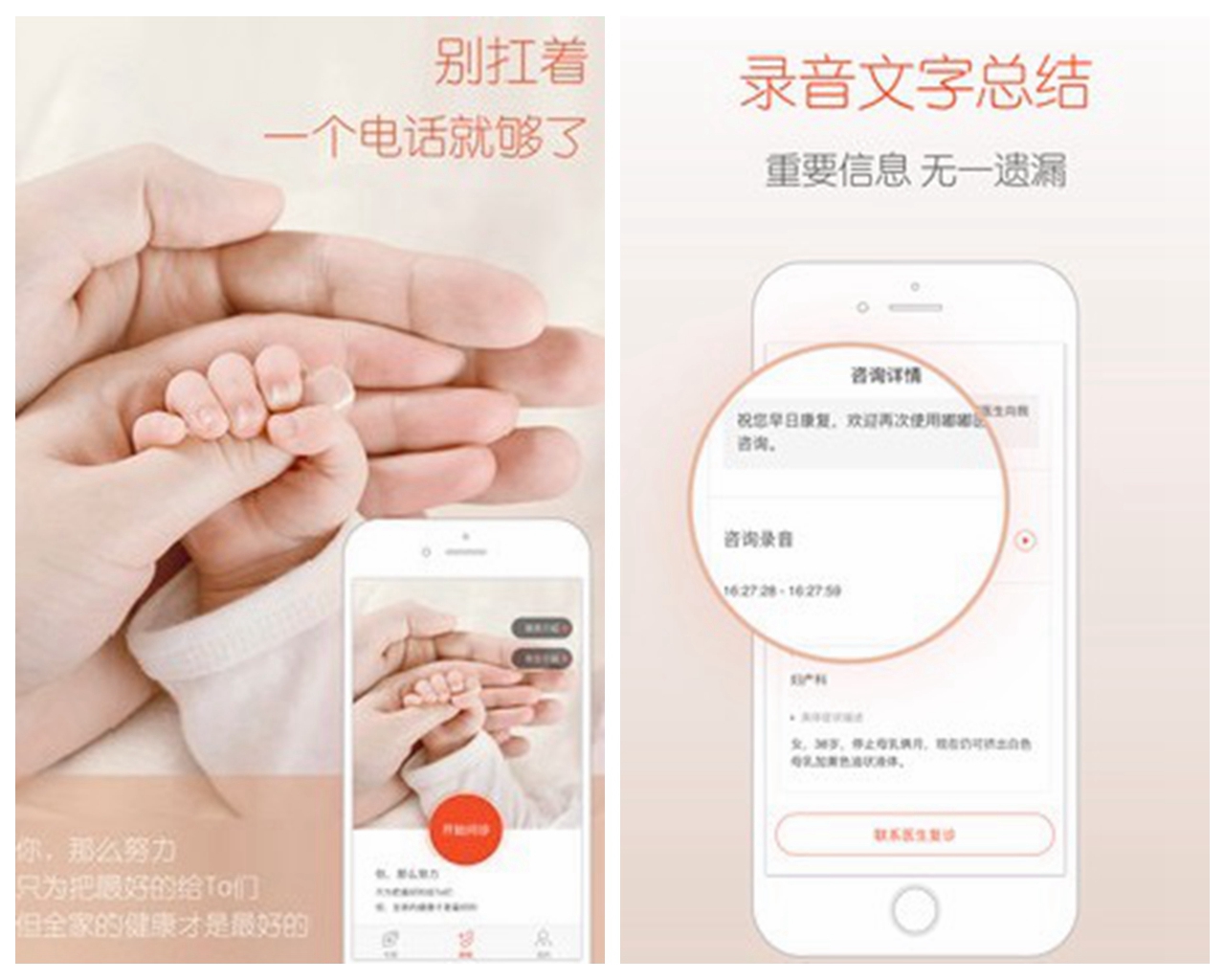
Dudu Doctor is a mobile healthcare app under Purple Medical that provides telephone consultation services. By establishing a new mode of connection between users and doctors, it delivers scientific and personalized medical and health services to families during the preconception, pregnancy, and postpartum periods.
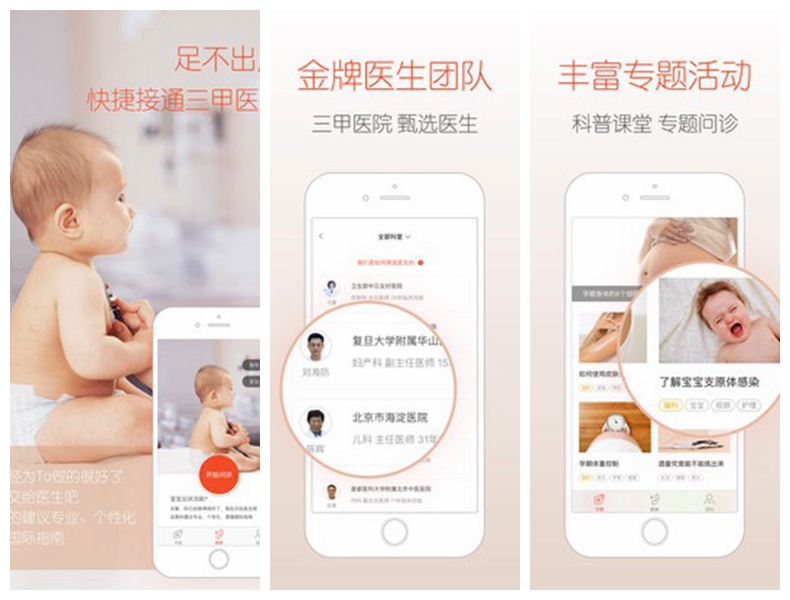
Currently, Dodo Doctor has gathered approximately 1,000 physicians on its platform to provide services, all of whom are from Grade 3A hospitals. “The physicians offering telephone consultations have been carefully selected; they align with Dodo Doctor’s core values and are best positioned to deliver high-quality services to users,” Lu Jie, founder and CEO of Dodo Doctor, told VCBeat. Currently, the Dodo Doctor platform receives around 300 inquiries per day.
Purple Medical was established in 2014. At its inception, the company entered the market through the dermatology sector, primarily offering follow-up consultations and text-and-image-based medical advice, thereby accumulating a registry of 65,000 physicians. However, due to the low entry barriers and the inexpensive nature of medications used in dermatological treatment, the commercial value of this segment was relatively limited. In late 2015, Purple Medical launched “Dudu Doctor,” a product specifically designed to serve individuals during pregnancy and childbirth.
Target Audience: Individuals During the Perinatal Period
“‘Du Du’ is the sound of a phone call, indicating that the product’s primary service format is telephone consultation; additionally, ‘Du Du’ evokes the cuteness of babies, signaling that the product targets users in the prenatal and parenting stages,” said Lu Jie. He noted that the product name “Du Du Doctor” inherently reflects both its service delivery model and its core market positioning.
“With over 100 million individuals in the maternal and infant demographic, the market holds immense potential. This group has diverse needs, ranging from various mother-and-baby products to social interaction.” In Lu Jie’s view, healthcare needs are particularly significant within this market, yet current offerings that adequately address these needs are markedly insufficient. Through continuous exploration and market practice, Dudu Doctor has positioned its target users as those in the preconception, pregnancy, and postpartum stages.
A key reason Dudu Doctor targets individuals in the prenatal and postnatal period is that this group demonstrates the highest willingness to pay. “According to our current data, mothers in the prenatal and postnatal stage show a strong willingness to pay. Instances of payment default—where users fail to pay after completing a telephone consultation—are rare. Even when payments are initially missed, it is usually due to simple oversight, and users generally complete the payment afterward. Furthermore, these mothers exhibit high engagement frequency, averaging 4–5 consultations per month. If a user defaults on payment, they will be barred from accessing future telephone consultations,” explained Lu Jie.
The current childbearing population is primarily aged 25 to 35, many of whom are working professionals. This group exhibits several key characteristics: they are keen on sharing information, have a demand for new parenting concepts, and typically search for information online rather than relying solely on others’ experiences. It is precisely these traits that have reinforced Dudu Doctor’s commitment to targeting this demographic.
Compared to the prenatal population, other groups exhibit distinct characteristics: first, their usage frequency is lower; second, they have a weaker willingness to pay and are more prone to payment default.
Didi Chuxing's Service Model Increases Supply
Dudu Doctor connects users with physicians. Users post their consultation inquiries on the Dudu Doctor platform, where an algorithm matches them with the most suitable doctor. Physicians respond within three minutes and conduct consultations via phone, with each session lasting approximately 10 minutes. After the consultation, users independently complete payment and submit evaluations. Currently, telephone consultations are offered at a flat rate of RMB 29.9 per session.
This mobile-based publishing model enables physicians to respond quickly, with post-service billing closely resembling that of Didi Chuxing. Its key feature is an increase in service supply, as it allows doctors to provide care during fragmented time slots. “It does not simply allocate demand by raising prices; rather, it unlocks the potential for physicians to offer services during their fragmented spare time, thereby increasing supply,” said Lu Jie.
When patients visit hospitals, doctors are constrained by time and must complete diagnoses within a very short period, sometimes as brief as two minutes. In such circumstances, doctors may offer generic, liability-avoiding recommendations or engage in overtreatment. On Dudu Doctor, however, users receive an average consultation time of approximately 10 minutes, allowing for greater interaction with physicians and more thorough information exchange. Consequently, the medical advice provided under these conditions is more scientifically sound.
In the new version of Dudu Doctor, the concept of medical departments has been eliminated for users. As Dudu Doctor evolved, it adjusted its strategy from primarily serving individuals during pregnancy and childbirth to focusing exclusively on this demographic. After users post their questions, Dudu Doctor automatically matches them with physicians using algorithms. This approach offers greater convenience for users and reflects Dudu Doctor’s user-centric value proposition.
In addition, Dudu Doctor offers online popular science video courses, allowing users to access educational content on pregnancy and childbirth. Currently, all video courses are free of charge.
Evidence-Based Medical Consultation Services
Dudu Doctor’s consultation services are characterized by two key principles: evidence-based medicine and personalized healthcare. Specifically, Dudu Doctor requires that consulting physicians operate strictly within the framework of evidence-based medicine and refrain from drawing conclusions based solely on clinical experience, as some experiential insights may be unreliable. For instance, Dudu Doctor first strives to collect comprehensive user information relevant to decision-making. Based on this data, physicians provide specific, scientifically grounded recommendations in accordance with evidence-based clinical guidelines.
“If you have a cold and consult online, general practitioners may recommend antiviral granules. This advice may sound reasonable to the public, as it is a common practice. However, from the perspective of evidence-based medicine, the efficacy of these granules is highly questionable; drinking water may yield the same effect as taking antiviral granules,” Lu Jie explained.
Big data plays a significant role in evidence-based medicine, and Dudu Doctor has its own strategic considerations in this area. Patient inquiries and the corresponding advice provided serve two key purposes: first, they establish an informational foundation for future patient services; second, they offer reference value to others through information sharing. Building a comprehensive database can better support evidence-based medical decision-making, which is also part of Dudu Doctor’s future roadmap.
Unique Advantages of Telephone Consultations: Paid + Real-Time
At the end of 2015, Lu Jie’s team rethought their service model and decided to transition from text-and-image consultations to telephone consultations—the approach currently adopted by Dudu Doctor. “The previous text-and-image consultation service was offered free of charge. Converting it into a paid service proved extremely difficult, as users were not accustomed to paying for such services,” said Lu Jie.
“Text-and-image consultations suffer from a significant drawback: their asynchronous nature, which imposes high costs on physicians and delivers a poor experience for patients,” explained Lu Jie. He noted that so-called asynchronous consultation involves disjointed exchanges where messages are sent back and forth without real-time synchronization, often requiring long waits for responses and prolonging the overall communication timeline.
Based on these two characteristics—payment and real-time interaction—Dudu Doctor has adopted telephone consultations. Compared with text-and-image consultations, telephone consultations inherently possess a paid attribute, and customers are more willing to pay when using this service. Additionally, telephone consultations are conducted in real time, enabling direct communication between customers and doctors.
Video consultations also feature paid and real-time characteristics. Regarding why video was not chosen as the consultation method, Lu Jie’s main argument is that the conditions were not yet mature. When Dudu Doctor launched its startup last year, video consultations faced two major issues: cost and situational constraints. The cost issue primarily referred to the high data charges incurred by users when using their mobile data plans. Even if users could access video consultations via Wi-Fi, situational challenges remained. The situational issue mainly stemmed from the lack of necessary infrastructure for doctors in hospitals, such as computers and stable internet connections, making video calls highly difficult.
“Market conditions have changed significantly; for instance, the surge in live streaming has created promising prospects for video consultations. Dodo Doctor may consider offering video consultations in the future, but current conditions are not yet ripe,” Lu Jie added.
Dudu Doctor's Vision: Three Major Use Cases
When it comes to the usage scenarios of Dudu Doctor, Lu Jie is full of anticipation. He mainly introduced three major scenarios, describing the three roles of Dudu Doctor. He hopes that users will first think of Dudu Doctor in these scenarios, receive personalized services, and subsequently become loyal users of Dudu Doctor.

Pictured is Lu Jie, founder of Dudu Doctor.
1. A disseminator of advanced parenting knowledge. “Nowadays, many young people do not subscribe to the child-rearing experiences of the older generation; they need reliable channels to access such information. Much of the content available online lacks scientific rigor and struggles to earn users’ trust.” Lu Jie believes that mothers in the new era, through watching American TV dramas or their own experiences abroad, have been exposed to many new parenting concepts and thus have a demand for more scientifically grounded approaches. They hope to access the most advanced and scientifically based management practices for pregnancy and childcare.
2. A Strong Advocate for New Concepts. As the older generation is often unwilling to change their established views, conflicts over child-rearing methods frequently arise between mothers-in-law and daughters-in-law. In such situations, Dr. Dudu can provide a strong defense for scientific parenting practices and concepts. For instance, during conflicts, young mothers can cite Dr. Dudu’s recommendations to persuade the older generation.
3. Verifier of Offline Services. Users receive medical services at hospitals but may have concerns, such as whether there is overtreatment, whether the diagnosis is scientific, and whether the medication is appropriate. Users can consult Dodo Doctor to verify these issues. As the assessment is provided by a third party, it carries greater credibility and is more likely to gain user trust.
Detours on the Entrepreneurial Journey
“Purple Medical initially focused on dermatological treatments before gradually expanding into other specialties. Now that we are dedicated to perinatal consulting, it is no longer feasible to pivot back to our original field. In retrospect, however, I feel our early efforts in dermatology were too superficial. Had we remained focused on skincare, persisted in our endeavors, and strived to build core competitive advantages, we would likely have secured a solid market position by now,” said Lu Jie with some regret.
In addition, Lu Jie specifically noted: “Entrepreneurs should not let capital cloud their judgment. Initially, Purple Medical entered the market through dermatology, but due to the capital frenzy, it expanded its business scope too rapidly, resulting in a loss of focus on the dermatology sector. Capital investors look at metrics such as user count and physician headcount; however, startups must maintain their core competitiveness and avoid indiscriminately broadening their scope merely to pursue impressive-looking data. Otherwise, when the capital hype subsides, the company will quickly become unsustainable.” This is Lu Jie’s advice to entrepreneurs.
Lu Jie received his Ph.D. from Peking Union Medical College in 2008. He was a co-founder of Chunyu Yisheng and is the founder and CMO of Dudu Doctor. Co-founder and COO Tong Fei previously worked at Apple and brings extensive experience in operations management.
Lu Jie’s team secured $3 million in Series A financing from the renowned Silicon Valley venture capital firm GSR in March 2014; in May 2015, it raised $10 million in Series B financing from Trustbridge Partners, Ping An, and GSR.