

Jack Ma Ends Aikang-Meinian Battle as 'Internet + Health Checkup' Era Begins
The nearly year-long privatization battle between iKang Healthcare Group and Meinian Onehealth has finally drawn to a close with Jack Ma’s entry into the fray. Nevertheless, various signs indicate that in the health checkup industry—characterized by deep marketization yet a fragmented landscape of small, scattered players—the grand era of “Internet + Health Checkups” has already begun.
On June 6, 2016, iKang Healthcare Group, a U.S.-listed provider of health checkup services, announced that its board of directors had received a non-binding acquisition proposal from Yunfeng Capital, a private equity investment firm, seeking to acquire all outstanding shares of iKang at a price of $20–$25 per American Depositary Receipt (ADR).
The market had initially assumed that Yunfeng Capital was merely a new bidder in the privatization takeover battle, but it ultimately emerged as the deal’s closer. Over the following two days, the two parties previously deadlocked over the privatization of iKang Healthcare Group—iKang’s founder and CEO Zhang Ligang and its primary competitor, Meinian Onehealth—successively announced their withdrawal from the privatization bid.
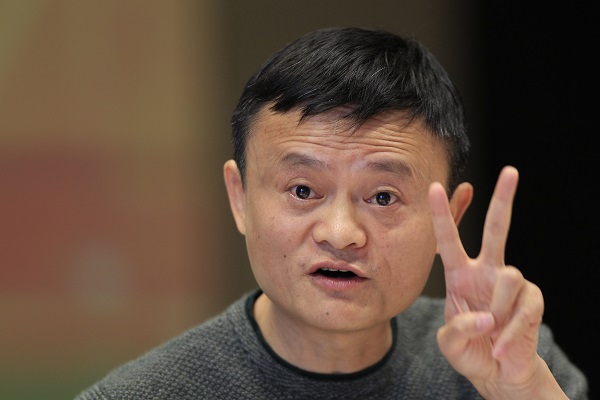
Jack Ma Enters the Fray, Ending the Year-Long “Love-Hate Relationship” Between iKang and Meinian
In fact, although the upper limit of the offer proposed by Yunfeng Capital ($25/ADS) represented a premium of approximately 24.5%–55.6% over the price in the initial privatization proposal from the internal buyer consortium that iKang Healthcare Group received on August 28 last year, it did not increase further compared to the $25/ADS offered in Meinian Onehealth’s privatization proposal on January 6 this year.
In August 2015, Zhang Ligang, Chairman of iKang Healthcare Group, joined forces with the private equity firm FountainVest Partners to launch a privatization offer for iKang Healthcare Group at a price of $17.8 per ADS.
On November 29, 2015, Jiangsu Sanyou, which had just completed its asset restructuring with Meinian Onehealth, announced that it would join forces with capital institutions such as Ping An, Sequoia, and Taiping to submit a “non-binding” privatization offer to iKang Guobin. The offer price was $22 per ADS, representing a 23.6% premium over the bid submitted by Zhang Ligang’s buyer consortium.
In February 2015, iKang Healthcare Group rolled out a “poison pill” plan, aiming to block Meinian Onehealth’s aggressive “offensive” by increasing the difficulty and cost of acquisition. Zhang Ligang stated that his determination, together with FountainVest Partners, to complete the privatization would remain unchanged, and that he would not sell any shares owned or controlled by him to any third party.
On December 15, 2015, Meinian announced another price increase, raising the acquisition offer to $23.5 per ADS.
On January 5, 2016, iKang Guobin announced that new members, including Alibaba and China Life Insurance, had joined the privatization consortium previously led by Zhang Ligang, the company’s chairman.
On January 6, 2016, Meinian issued another acquisition offer, raising the price to $25 per ADS, representing a premium of approximately 40.4% over the price proposed by Zhang Ligang’s buyer consortium.
It is evident that both camps wield considerable power: Meinian Onehealth has rallied major capital players with insurance, venture capital (VC), and private equity (PE) backgrounds, such as Ping An, Sequoia Capital, and Taiping; while iKang Healthcare Group has gathered industrial and insurance capital from giants like Alibaba and China Life Insurance. Notably, Jack Ma had already quietly entered the fray through Alibaba at this time.
Over the following six months, the privatization battle entered a stalemate, with neither party submitting new acquisition offers. However, the conflict appeared to extend beyond capital markets into broader arenas, as iKang Healthcare Group filed three lawsuits against Meinian Onehealth:
On February 24, iKang Healthcare Group issued an announcement stating that it had filed a civil lawsuit against Mou Yuanmao, a former executive of Meinian Onehealth; Meinian Onehealth Industrial (Group) Co., Ltd.; Meinian Onehealth Industrial Holdings Co., Ltd.; Guangzhou Meinian Medical Outpatient Department Co., Ltd.; and Guangzhou Meinian Onehealth Medical Technology Co., Ltd. for infringing upon trade secrets, seeking compensation totaling RMB 50 million for all losses incurred.
On March 10, iKang Guobin issued a public statement announcing its formal report against Meinian Onehealth for illegally acquiring Ciming Health Checkup without undergoing antitrust review, in violation of the Anti-Monopoly Law.
On May 23, the day Meinian Onehealth resumed trading, iKang Guobin held another press conference, stating that it had received an anonymous tip from an insider at Meinian Onehealth. The tip alleged that Wang Haifeng, General Manager of Meidong Software, a wholly-owned software subsidiary of Meinian Great Health, had taken source code with him after resigning from iKang. A few months later, highly similar software was deployed in Meinian Onehealth’s health examination centers.
Just as the rivalry between the two sides was reaching a fever pitch, Yunfeng Capital, under Jack Ma’s umbrella, put an end to it all.
BAT Officially Enters the Health Checkup Industry, Ushering in the Era of “Internet + Health Checkups”
Yu Rong, Chairman of Meinian Onehealth, may have long anticipated the outcome of Jack Ma’s “decisive battle.” In an interview earlier this year, he stated that the fundamental reason for launching this competitive struggle was a sense of urgency, as BAT (Baidu, Alibaba, and Tencent) were also accelerating their entry into the healthcare sector: “A lot can happen within three years. If we do not consolidate now, we will miss the best golden opportunity. After these three years, it may no longer be our turn to lead this initiative.”
Yu Rong indeed has reason to be concerned. Unlike Chinese hospitals, which are dominated by a public, administrative system, the health checkup industry is a highly marketized yet fragmented and small-scale market. Even combined, the two largest health checkup service providers, iKang Guobin and Meinian Onehealth, likely hold only about 5% of the market share. The BAT giants (Baidu, Alibaba, and Tencent), arriving with substantial capital, could indeed unleash a “bloodbath” in the health checkup industry.
If we view the entry of Jack Ma and even BAT into the physical examination industry solely from the perspective of the industry itself, we might react with alarm, crying “The wolf is coming!” However, when examining the development landscape of the broader health and wellness sector from a more macroscopic viewpoint, Jack Ma’s involvement indicates that the strategic value of the physical examination industry has gained strong recognition from both capital and industrial stakeholders. The grand era of “Internet + Physical Examination” has already begun.
From Jack Ma’s perspective, he has been evangelizing the advent of the DT (Data Technology) big data era in recent years with missionary zeal, sparing no expense to invest in and acquire numerous enterprises across various sectors. The primary objective is to secure the most core data assets for the impending big data era.
Jack Ma has also made significant investments in the healthcare industry, with one of his primary intentions being the acquisition and control of big data in healthcare. However, objectively speaking, Jack Ma’s progress in the healthcare sector has not been smooth. The reason is that China's healthcare system is highly administrative and fragmented. No matter how strong Jack Ma's financial resources and operational capabilities are, it is difficult to effectively disrupt this entrenched industry structure in the short term.
The market-oriented nature of the physical examination industry, its position as a gateway to health services, and its continuously accumulating big health data represent the ideal entry point for Jack Ma to break into the broader healthcare sector and aggregate health-related data, following his repeated setbacks within the traditional hospital system.
The health checkup industry, similar to niche segments within the healthcare sector such as dentistry and medical aesthetics, is characterized by a high degree of marketization, small-scale operating entities, and a highly fragmented competitive landscape. Meanwhile, the technical barriers in the health checkup industry are relatively low. These factors create an ideal environment for Jack Ma, who boasts substantial financial strength and formidable market operational capabilities, to make significant strides.
Furthermore, health checkup services primarily target healthy individuals, enabling effective tracking and monitoring of their health status before the onset of actual disease. These services also provide comprehensive health management along with various medical services such as consultations and referrals, naturally positioning them as a primary entry point to healthcare. This creates deep complementarity with Jack Ma’s strategic layout in the broader health sector, particularly with AliHealth, which bears the responsibility for his medical and healthcare operations. Meanwhile, the entire process accumulates complete, full-lifecycle health data, aligning closely with Jack Ma’s vision for the DT (Data Technology) big data era, underscoring its significant strategic value.
Perhaps driven by the considerable strategic value of the health checkup industry, Alibaba, under Jack Ma’s leadership, allied with iKang Guobin as early as January this year, aiming to swiftly capture this strategic market that had yet to draw the attention of other BAT giants. However, over the past six months, iKang Guobin’s privatization has made virtually no progress, while the mutual hostility between the parties has intensified significantly, greatly delaying Jack Ma’s strategic rollout in the broader healthcare sector. This may well explain why Yunfeng Capital opted for a “quick strike” approach this time.
Although the dispute between iKang and Meinian has come to a temporary close, the structural evolution of the health checkup industry continues to unfold beneath the surface. While appearing calm on the outside, the sector is rife with undercurrents. Will iKang and Meinian ignite a new commercial battle? Will BAT (Baidu, Alibaba, Tencent) or other major capital players quietly enter the fray? What dramatic developments will unfold as the grand curtain rises on the “Internet + Health Checkup” era? VCBeat will continue to monitor these developments closely. Industry professionals are welcome to add us on WeChat at yeyurenlei for further discussion and exchange.