

Five Major Applications of Blockchain Technology in Healthcare: Revolutionizing Medical Data Management, Drug Authentication, and Beyond
As the underlying technology of Bitcoin, blockchain remained little known to the general public until The Economist’s 2015 article, “The promise of the blockchain: The trust machine,” highlighted its potential to profoundly impact human society at all levels, sparking widespread interest in the concept. Overseas investment in blockchain began in 2014 and surged rapidly in the second half of 2015, with major global financial institutions and more than 200 investment firms flocking to the sector.
The most compelling aspect of blockchain is its high level of security and reliability as a decentralized, trustless technology. Bitcoin has been operational for over seven years, with a total market capitalization of approximately $3–4 billion. Despite countless attempts by hackers worldwide to attack the Bitcoin network, no transaction errors have occurred to date.
What Is Blockchain
On November 1, 2008, “Satoshi Nakamoto” published a research paper in a clandestine cryptography discussion group, introducing the concept of Bitcoin for the first time. To support the operation of the Bitcoin system, ensure the authenticity of data, and maintain consistency in transmission, he proposed the concept of blockchain.
Blockchain is a fundamental concept of Bitcoin, essentially serving as a decentralized database and the underlying technology for Bitcoin. It consists of a chain of data blocks linked through cryptographic methods. Each block contains information from a Bitcoin network transaction, used to verify the validity (anti-counterfeiting) of the information and to generate the next block.
Blockchain technology has seven key characteristics: establishing trust through pure mathematical methods; decentralized structure (high operational efficiency and low operating costs); complete and transparent data information (compliant with laws and easy to trace); distributed ledger and storage (high fault tolerance); programmable smart contracts (a burden-free evolutionary model); a single global database (highly inclusive business model); and anonymity behind a transparent world (privacy protection).
Due to these characteristics, the core application advantages of blockchain technology are highly significant: its decentralized distributed structure can substantially reduce intermediary costs in real-world applications; its tamper-proof timestamp feature addresses issues related to data traceability and information anti-counterfeiting; its secure trust mechanism resolves the core deficiencies of current Internet of Things (IoT) technologies; and its flexible programmability helps standardize existing market order.
Blockchain Technology and Its Evolution
During its development, blockchain technology has gradually given rise to the concepts of Blockchain 1.0, Blockchain 2.0, and Blockchain 3.0. Blockchain 1.0 refers to virtual currencies represented by Bitcoin. Blockchain 2.0 can be understood as the application of blockchain technology in other financial sectors. Blockchain 3.0 extends blockchain applications beyond the financial industry, covering all aspects of human social life. It enables self-verification of information in various social activities, eliminating the need to rely on third parties or institutions to establish trust or credit, thereby achieving information sharing. In fields such as judiciary, healthcare, and logistics, blockchain technology can address trust issues and enhance the overall operational efficiency of systems.
The healthcare sector is likely to become the second-largest application scenario for blockchain technology, following the financial industry. In reality, breaches of patients’ private information occur frequently, indicating that centralized databases or file-cabinet-style management by medical institutions are no longer the optimal solutions. With the widespread adoption of fingerprint data applications and genetic testing technologies, growing concerns exist that any data leakage could lead to catastrophic consequences. Due to its high redundancy, immutability, low cost, and capability to manage complex multi-signature permission controls, blockchain may currently be the best available solution for data custody. Healthcare institutions are leveraging blockchain technology to ensure the confidentiality of patients’ private information.
5 Major Applications of Blockchain in Healthcare
Electronic Health Record (EHR)
In the healthcare sector, the primary application of blockchain is the preservation of personal medical records, which can be understood as electronic health records (EHRs) stored on a blockchain. If medical records are envisioned as a ledger, they were traditionally held by various hospitals rather than by patients themselves. Consequently, patients lacked access to their own medical records and historical health data, causing significant difficulties in seeking medical care, as physicians could not obtain a comprehensive understanding of their medical history. However, with blockchain technology enabling secure storage, individuals now have access to their historical medical data. This data can be utilized for clinical consultations and personal health planning. Crucially, the true owner of this data is the patient, rather than any specific hospital or third-party institution.
DNA Wallet
Genetic and medical data can be securely stored using blockchain technology and accessed via private keys, forming a “DNA wallet.” This enables healthcare providers to securely share and analyze patient data, helping pharmaceutical companies develop drugs more efficiently. This model is gradually being established.
Bitcoin Payment
As blockchain technology is built upon Bitcoin, its development has likewise facilitated Bitcoin-based payments, offering patients more options for insurance payments. Although this depends on the market trajectory of Bitcoin, insurers that provide this payment method hold a significant competitive advantage over their rivals. For health insurance companies, blockchain is being established as an integral component of financial services.
Pharmaceutical Anti-Counterfeiting
Similar to coding-based anti-counterfeiting technologies, pharmaceutical products utilizing blockchain for anti-counterfeiting feature a scratch-off panel on the surface of the packaging box. Beneath this panel lies a unique verification label, which is cross-referenced with the blockchain to ensure the product's authenticity.
Protein Folding
Due to the rapid nature of protein folding, Stanford University previously relied on extremely expensive supercomputers to simulate the process. This approach was clearly costly and presented a single point of failure. By leveraging blockchain technology, they were able to utilize a massive distributed network for high-speed computation. This example is likely to strongly attract other enterprises that currently rely on expensive supercomputers.
With the advancement of medical technology, healthcare data is playing an increasingly vital role in documenting patients’ demographic backgrounds, medical histories, and payment information. Although healthcare data may constitute some of the most sensitive personal information, large-scale breaches of such private data have occurred in the past due to issues such as operational errors or cyberattacks. For instance, Anthem once exposed the records of 80 million patients and employees, and UCLA Health suffered a breach affecting 4.5 million patients.
6 Blockchain Companies with Healthcare Layouts
Gem
Gem is a blockchain company with Gem Health as its subsidiary. Gem Health is an application development network that provides network infrastructure to healthcare service providers. Gem is committed to building a global healthcare ecosystem and delivering more personalized, lower-cost services to individuals.
Gem Health is exploring the application of blockchain technology in the following areas: medical data, claims processing, pharmaceutical supply chains, health networks, universal health identities, and genetic data management.
Gem has secured $7 million in investment to expand its enterprise platform and has partnered with various stakeholders in the healthcare industry to assess the need for blockchain technology.
Regarding Gem Health, Micah Winkelspecht, Founder and CEO of Gem, stated: “Blockchain technology will create a new framework connecting the pharmaceutical and healthcare industries, integrating critical data from all medical platforms. Blockchain technology ensures the validity and security of data. For the healthcare industry, this enables hospitals, insurance companies, and laboratories to connect in real time and share information instantly and seamlessly, without concerns about data breaches or tampering.”
Gem provided an example, stating, “For instance, blockchain can establish open standards for data recording and identity management. A global healthcare blockchain could link each patient’s records from local hospitals and physicians to a unique ID by matching and associating the information. A universal healthcare ID based on blockchain technology can reduce medical errors during patient diagnosis and treatment while safeguarding patient privacy.”
Gem Health’s establishment and its partnership with Philips have propelled Gem into the healthcare sector. While blockchain technology is applicable across a wide range of industries, Gem chose this collaboration because it represents far more than a simple “plug-and-play” solution. Gem is building a network infrastructure that will enable the broader adoption of Internet of Things (IoT) solutions in healthcare in the future.
HealthNautica&Factom
Factom is a blockchain technology services company that leverages blockchain technology to facilitate the development of various applications, including audit systems, medical records, supply chain management, voting systems, property deeds, legal applications, and financial systems. Businesses and government agencies can utilize Factom to streamline data record management, document business activities, and address issues related to data security and regulatory compliance. Factom maintains an immutable, timestamp-based blockchain data network, significantly reducing the costs and complexities associated with independent audits, authentic record management, and adherence to government regulations.
Founded in 2000 and headquartered in Chicago, Healthnautica is dedicated to facilitating smoother communication among hospitals, physicians, and patients. Healthnautica offers a customizable, customer-driven cloud software system that enables physicians to manage operations and patients to handle registration procedures. The company’s eOrders product significantly enhances surgical treatment workflows and procedure scheduling, reduces network latency, and resolves unexplained data loss issues.
In April 2015, Factom announced a partnership with Healthnautica, a provider of medical records and services solutions, to explore the use of blockchain technology for securing medical records and tracking transactions, thereby offering tamper-proof data management for medical record companies.
By leveraging Factom’s immutable ledger to verify and timestamp medical records and contracts, Healthnautica’s clients—including hospitals and physicians—aim to enhance efficiency in the claims process and ensure that medical data records remain unaltered.
Factom’s technology first encrypts and encodes private medical data, then generates a data fingerprint for timestamping and verification. This approach ensures that the actual medical data is not disclosed to third parties, thereby safeguarding patient privacy.
“We are very pleased to apply Factom’s technology to the healthcare industry. One of our purposes in developing this software is to ensure the integrity of medical data while protecting patients’ private information.” Healthnautica, a pioneer in digital health records, stated, “We are extremely excited about tamper-proof research records, as well as data preservation and tracking.”
This collaboration between the two enterprises marks the first commercial application of blockchain technology in the healthcare sector. Due to issues such as file misalignment and tampering in decentralized systems lacking information exchange, businesses are attempting to leverage blockchain technology to permanently store documents and safeguard customer records.
“Factom’s technology is particularly well-suited for audit trails and the customer medical records maintained by Healthnautica,” said Shailesh Bhobe, Chairman of Healthnautica.
Using blockchain technology to process claims, resolve procedural disputes, and ensure the validity of medical records is the first step in addressing security and efficacy issues in the healthcare industry. Andrew Yashchuk, a board member at Healthnautica, stated, “The next step is to encourage insurers to adopt blockchain technology for data storage, thereby enabling all parties to verify contract validity and improve the efficiency of medical bill payments.”
Tierion&Philips

Healthcare giant Philips announced in March 2016 the establishment of the Philips Blockchain Lab, a research and development center for emerging blockchain technologies based in Amsterdam.
On Philips’ website, it claims to have conducted a six-month exploratory study, a project dedicated to collaborating with IT experts, healthcare professionals, and blockchain developers to continue research.
Philips has indicated that it is seeking partners and developers to launch projects, and has provided a form on its website for users to subscribe to news updates and express their interest.
Evidently, Philips has hinted at its belief that blockchain technology can be applied to healthcare use cases.
Arno Laeven, founder of Philips Labs, stated, “As an innovative company, you need to continuously explore new technologies and the application areas where they may have an impact and deliver value. Our goal is to investigate whether blockchain technology can unlock the potential value of data exchange processes in the healthcare industry.”
Philips has announced a collaboration with Tierion, a blockchain data recording startup (specific details undisclosed), to explore the application of blockchain technology in the healthcare sector.
BitHealth
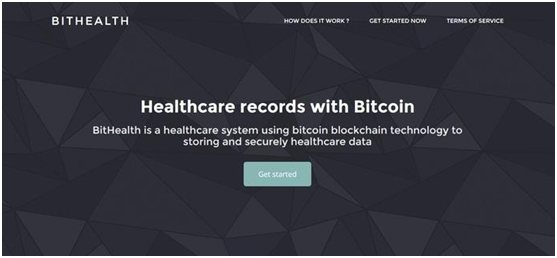
BitHealth is a blockchain technology company that applies blockchain to the storage and protection of healthcare data. Data privacy, data breaches, and data integrity are among the most critical issues in the healthcare industry. BitHealth is dedicated to storing and securely transmitting healthcare data on a global scale. By leveraging Bitcoin’s blockchain technology, BitHealth stores healthcare data and enables its recovery from any node worldwide. Using blockchain technology, data is distributed internationally through a peer-to-peer file-sharing mechanism similar to BitTorrent. In the event of network failures, data can be restored from local nodes. Additionally, this technology addresses challenges such as data redundancy, reduction of insurance premiums and other costs, and the decentralization of medical records. Patients can use it to safeguard their personal private data, physicians to access and document medical information, Bitcoin for payments, and insurance companies to retrieve medical histories.
Block Verify
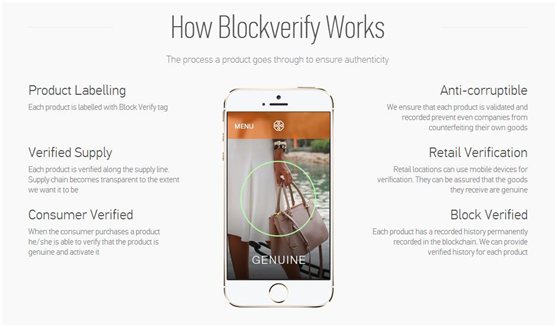
Block Verify is a blockchain-based anti-counterfeiting solutions provider, offering services including:Authenticity Verification,Help experts verify the authenticity of products.Genuine Product Guarantee,Blockchain can provide a transparent environment for products without the need for trust-based support.Product Traceability, the company can register their products and monitor the supply chain.Global Solutions,Block Verify can create a trusted global solution to connect the world. Block Verify can identify goods, including counterfeits, swapped items, stolen goods, and fraudulent transactions. In the pharmaceutical industry, it ensures that consumers receive authentic products through supply chain tracking by pharmaceutical companies.
DNA.Bits
The company leverages blockchain cryptography to securely, reliably, and anonymously address issues related to data labeling, data tracking, health data interoperability and referencing, big data, genomic data sharing, and other medical data challenges. Future breakthroughs in pharmacy, preventive medicine, and pharmacology are closely tied to our understanding of the interactions among genes, health, and disease; variations in genomes and lifestyles lead to differential treatment responses across individuals.
Currently, the concept of blockchain is gaining significant traction, yet its technological development remains in the early stages. As a foundational infrastructure for the future digital society, blockchain holds broad application prospects; however, its replacement of existing medical order rules and information systems will not happen overnight. It requires close collaboration among blockchain experts, medical professionals, and IT specialists to drive the development and adoption of blockchain technology in the healthcare industry.