

Philips and Texas A&M University Establish Global Health Innovation Center to Advance Population Health, Emergency Care, and Infectious Disease Surveillance
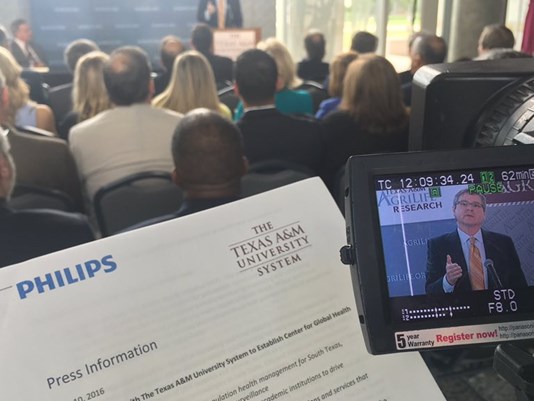
On June 10, health technology company Royal Philips announced an innovative partnership with Texas A&M University in the areas of population health management, emergency medical services, and healthcare regulation, establishing a Global Health Innovation Center at Texas A&M University.
This innovation center will seek to coordinate public-private partnerships and pilot new strategies in healthcare. The broader collaboration is dedicated to researching population health solutions and forms part of a state-funded pilot program called Healthy South Texas. Healthy South Texas is a $10 million grant initiative established by the Texas Legislature, which leverages county-level branches and health experts from the Texas A&M AgriLife Extension Service and the Texas A&M Health Science Center to provide medical prevention services for diabetes, asthma, and infectious diseases across 27 counties in South Texas.
“This project places us side by side with those on the frontlines of health, providing us with unexpected insights into the development of life and health applications and solutions that will transform human health at both regional and global levels,” said Hans Aloys-Wischmann from Philips Research in South America.
“Many of today’s problems are too complex and costly to be solved by public institutions alone,” said John Sharp, President of Texas A&M University. “We will demonstrate that these issues can be addressed through collaboration, which will benefit our citizens, including consumers and taxpayers.”
Healthy South Texas is committed to establishing a disease prevention institution that conducts research through the engagement of healthcare professionals and patients in areas with low health levels. In terms of population health, Philips and Texas A&M University will evaluate the best practices both domestically and internationally.
In terms of emergency services, the goal of this collaboration is to seek better management of scarce resources; therefore, Philips and Texas A&M University will establish a platform to coordinate emergency supplies and services. Additionally, the partnership will help public health agencies enhance their disease response capabilities.
The two parties will establish an infectious disease control network, with Philips leveraging Texas A&M University’s long-standing biosurveillance system. “Seventy percent of emerging diseases are zoonotic in origin. Experts at Texas A&M will detect and treat diseases, develop vaccines, and educate the public through the Healthy South initiative,” said Mark Hussey, Dean of the College of Agriculture and Life Sciences at Texas A&M University.
According to reports, the collaboration between the two parties will unfold in the following three areas:
Healthy South Texas (HST) Population Health Program- The primary objective of the HST initiative is to establish a robust and replicable foundation for disease prevention, community services, and civic engagement. This program will also expand health services to every citizen in South Texas by broadening and strengthening disease prevention efforts. Philips and The Texas A&M University System will evaluate and replicate best practices in population health management from both domestic and international contexts.
EMS Integration Solution- To enhance the real-time visibility of medical resources and channels, this project will develop comprehensive solutions to support emergency medical coordination, thereby improving efficiency and effectiveness. The project will include the development of an EMS supply and service platform, as well as the utilization of Philips’ decision support and analytics technology solutions to assist state, city, and municipal authorities in preparing for, responding to, and recovering from medical disasters. Training programs related to both emerging and existing technologies will also be included.
Laboratory Diagnosis and Biological Monitoring- By uniting Philips’ laboratory diagnostics experts with Texas A&M University’s biomonitoring specialists, this collaboration will advance the management of infectious diseases and help establish global health standards. The concept of One Health recognizes the interdependence of human, animal, and environmental health; there is a growing consensus that enhanced collaboration among healthcare providers can better mitigate public health threats.
Earlier, on June 1, Philips announced that it would collaborate with Yale University in the field of interventional oncology drugs. Last September, Philips partnered with the Massachusetts Institute of Technology to develop new intracranial pressure monitoring technologies.