

D-Nurse: Focusing on the Out-of-Hospital Market, Scaling from 420K to 2 Million Users
Shifting from a strategy focused solely on the out-of-hospital market to building a “diabetes treatment solution” with core competitiveness, and leveraging the nearly doubled patient blood glucose target achievement rate to unlock commercial value with hospitals, insurers, and enterprises, Tang Hushi offers a new model of mobile health for chronic disease management that merits attention and reflection.
Focus exclusively on the out-of-hospital market
Around 2013, mobile health entered its true nascent stage. In 2014, after several massive funding rounds—each worth tens of millions, or even hundreds of millions, of US dollars—left the industry stunned, mobile health became a sensation across media, venture capital, entrepreneurial, and healthcare circles.
After two to three years of fervor, although some companies have continued to make significant waves and constantly generate media buzz, and a considerable number have even listed or are preparing to list on the National Equities Exchange and Quotations (NEEQ), mobile healthcare is increasingly seen as showing signs of fatigue. This perception stems from the persistent difficulty in integrating with hospitals and physicians, the unsustainability of cash-burning business models, the widespread lack of viable monetization pathways, and the gap between actual growth rates and the high expectations held by mobile health ventures and internet capital.
Li Chengzhi, founder of Sugar Nurse, might have been somewhat displeased with such an opening remark.
At the outset, he emphasized to reporters the boundaries of Tang Hushi’s business—focusing exclusively on the out-of-hospital market for diabetes patients.
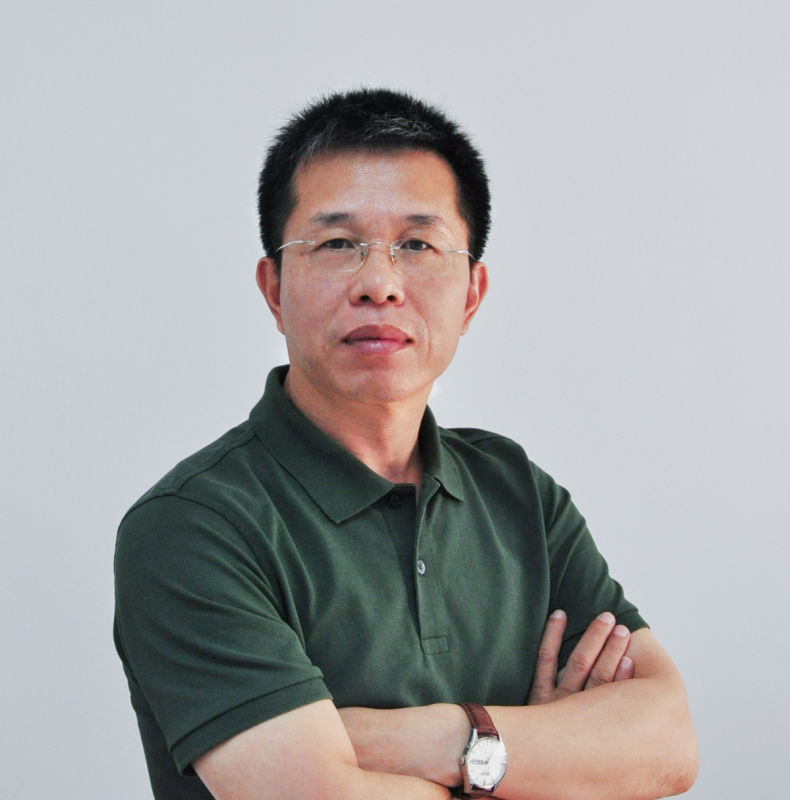
Li Chengzhi, Founder of Tanghushi
Whether intentional or not, this can be seen as a confident, even forceful, response to the criticism that mobile health is drifting away from core medical services, resulting in insufficient user stickiness and an inability to monetize.
Since its founding in 2013, Tanghushi has remained true to its original mission: to minimize or avoid engagement with hospitals and government entities.
In Li Chengzhi’s view, the government moves too slowly, or certain policies themselves lack merit for adoption—such as cost-containment measures that neglect the assurance of medical quality and outcomes.
Regarding domestic hospital resources, Li Chengzhi stated that they are quite fragmented and monopolized within isolated silos. It is difficult to aggregate them all overnight, as Didi did with drivers. It is never too late to enter this market, and the current moment is not yet suitable for targeting hospitals.
Furthermore, leading hospitals such as Peking Union Medical College Hospital and the First Affiliated Hospital of PLA General Hospital (301 Hospital) have developed their own apps and online hospital platforms. The core strength of hospitals lies in in-hospital diagnosis and treatment; attempting to encroach on their domain and compete for their existing patient resources is a laborious and unrewarding endeavor.
“I have always believed that, setting aside the issue of monopolized medical resources, the core essence of healthcare is akin to a purely manual craft; it is difficult to simplify, standardize, and replicate in the manner of the internet. The only area where we can truly make an impact lies in aspects weakly related to clinical diagnosis and treatment,” said Li Chengzhi.
However, this does not mean that weakly correlated factors are unimportant. Internationally, the treatment and control of chronic diseases also emphasize patient self-management.
For patients with diabetes, the aspect less directly tied to clinical diagnosis and treatment lies beyond physicians’ diagnoses and prescriptions: how to enhance patient adherence outside the hospital setting—where patients spend the vast majority of their time—to achieve optimal glycemic control and prevent complications. After all, current scientific methods cannot cure diabetes; as Mr. Robert, President of the American Diabetes Association, stated, “We can currently only manage diabetes.” Moreover, foreign mobile health products focused on diabetes, such as WellDoc, generally do not involve in-hospital care but instead emphasize patients’ self-management outside the hospital.
The rate of blood glucose target attainment nearly doubled
Improving patient adherence is a struggle against human nature and inertia. Which models are more effective in enhancing adherence? Li Chengzhi also candidly admitted that he experienced a period of confusion when confronted with the various models reported by the media.
For pure diabetes apps, Li Chengzhi believes it is difficult to retain customers under the pressure of dominant platforms such as WeChat. In contrast, Tang Hushi (Sugar Nurse) has its own hardware—the “App + medical device” smart blood glucose meter, which has obtained registration approval from the China Food and Drug Administration (CFDA)—providing a good user experience and resulting in a relatively high retention rate.
“Tanghushi is building a technology solution and positioning itself as a diabetes treatment company; it should by no means be regarded merely as a blood glucose meter company,” said Li Chengzhi.
Tang Hushi’s diabetes treatment regimen includes a “diabetes management app that integrates smart devices, social networking, and a personalized Decision Support System (DSS).”
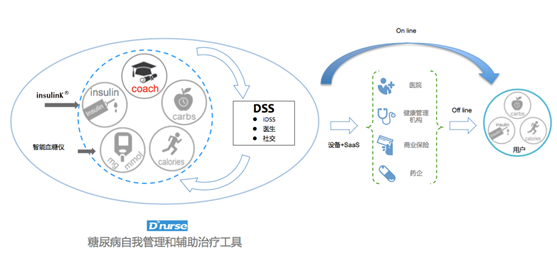
Smart glucometers and insulin dosage collection devices serve as user acquisition tools, guiding patients to measure blood glucose levels and upload data. Test strips, as consumables, represent a key operational strategy. For instance, in the partnership with Sinocare, Sinocare provides support in areas such as biochemical technology, while Sugar Nurse assists Sinocare in selling test strips and providing user feedback data. Furthermore, physicians help Sugar Nurse acquire users and retain all profits from the associated test strip sales.
A critical component of the comprehensive solution developed by Tang Hushi, which integrates self-management with adjunctive therapy across in-hospital and out-of-hospital settings, offline and online channels, and from data to decision-making, is the personalized artificial intelligence clinical decision support system built upon data and knowledge.
There is currently no cure for diabetes worldwide; it can only be managed. In addition to pharmacological treatment, therapeutic measures include self-monitoring of blood glucose, medication, dietary intervention, exercise intervention, and patient education, all of which place greater emphasis on adherence.
Li Chengzhi stated that to improve adherence, two key elements are required: first, real-time feedback—whether provided by humans or machines, as even single-player games can be addictive; second, personalization, since using a one-size-fits-all approach would quickly lead to user fatigue.
To meet these requirements, robust AI-powered systems backed by comprehensive databases are essential. Hardware devices, such as the insulin dose collection equipment scheduled for release in August, are designed to capture multi-dimensional data and enrich the database. This aims to deliver more accurate automated machine feedback, thereby enhancing patients’ self-management capabilities and adherence.
According to Li Chengzhi, the human-machine intelligent decision support system of Tang Hushi (Diabetes Nurse) adopts the common four-database DSS architecture. It fully leverages the knowledge derived from approximately 10,000 real-world diabetes scenarios, which were formed through medical interpretation of over 10 million multi-dimensional patient data entries by around 700 endocrinologists at Tang Hushi. The system encompasses descriptive knowledge of decision problems, procedural knowledge of the decision-making process, and inferential knowledge for problem-solving. By simulating the interactive dynamics of physicians’ actual clinical diagnosis and treatment processes through logical reasoning, it assists in resolving complex decision-making problems and guides users toward different solution pathways.
The “Report on Medication Adherence and Behaviors among Chinese Patients with Diabetes,” released by Tang Hushi in February 2016, was based on an analysis of 300,000 users and 2.68 million blood glucose records collected from November 2015 to January 2016. The report showed that the rate of blood glucose control among Tang Hushi users reached 69%, significantly higher than the national average target achievement rate of 39.7% for patients with type 2 diabetes in China, and indicated a substantial reduction in the incidence of complications.
In Li Chengzhi’s view, the technical solutions provided by Tang Hushi (Sugar Nurse) can generate value independently. For instance, under a B2C model, service fees could be charged on a monthly basis, similar to WellDoc. Additionally, a B2B2C model could be adopted, where the “B” parties—such as hospitals, insurance companies, and pharmaceutical firms—need to deliver valuable services to patients; otherwise, they risk losing them.
“We do not undertake the tasks performed by hospitals and physicians; instead, we focus exclusively on areas beyond their scope, striving for excellence in out-of-hospital care. Consider WellDoc: insurers are willing to cover its costs because it helps policyholders achieve significant improvements in blood glucose control, thereby reducing healthcare expenditures. For instance, a 1% reduction in HbA1c can save $200–$300 per month in medical costs. This demonstrates the tangible impact,” said Li Chengzhi.
Although the current focus is solely on out-of-hospital care for patients, which has yielded promising results, Li Chengzhi still anticipates the integration and seamless connection between in-hospital and out-of-hospital services, as this would deliver optimal outcomes for patients. For the time being, however, Tang Hushi (Sugar Nurse) must continue to concentrate on building its core competencies in out-of-hospital services. The key question remains: when hospitals eventually seek to procure an out-of-hospital diabetes service provider capable of integrating with in-hospital operations, what specific services can Tang Hushi offer to secure the contract?
Expand the user base to achieve economies of scale
From the perspective of the mobile internet's revenue model, it still relies heavily on advertising and e-commerce, which is also the model that Tang Hushi aims to adopt.
According to the latest data, Tang Hushi currently has 420,000 registered users, of whom 330,000 do not use the Tang Hushi smart blood glucose meter and thus rely on manual upload of test results. Additionally, 90,000 users have been retained through conversion via the Tang Hushi blood glucose meter.
Compared with the tens of millions of users claimed by many mobile health companies, 420,000 users seem rather insignificant. However, in the eyes of Li Chengzhi and his investment team, this is a promising figure.
In terms of ARPU (Average Revenue Per User), some apps boast large user bases yet generate no revenue, whereas the monetization potential of precisely targeted user groups in vertical sectors is incomparable. For instance, WellDoc has only 10,000 to 20,000 users.
Furthermore, Li Chengzhi believes that achieving an expected user base of over 2 million would be a highly ideal outcome. Although China has more than 100 million people with diabetes, only 30 to 40 million have been formally diagnosed. Taking Beijing as an example, individuals aged 60 and above account for 41.3% of the diabetic population. However, mobile healthcare services typically target users up to the age of 55, which limits the potential user base to approximately 20 million. When factors such as market education and acceptance of self-management are taken into consideration, capturing 2 million users would represent a substantial 10% market share.
Certainly, given the trend toward younger demographics among individuals with diabetes, the target user base will expand. There is also room for sustained growth, as market share could rise from 10% to 20% or even 30%.
However, for the time being, Li Chengzhi is more concerned with how to build and demonstrate the value of Tang Hushi (Sugar Nurse), thereby capturing a share of the approximately RMB 8,000 in annual healthcare expenditures per diabetic patient.
Hardware Generates Revenue
Amid the continuous growth in its user base and before e-commerce and advertising achieve economies of scale, Tang Hushi is also generating revenue through hardware.
In February 2015, building on its first-generation mobile blood glucose meter, the company launched its second-generation product, the “Tang Hushi Xing” blood glucose meter. This device simply added a data transmission module to the traditional blood glucose meter, enabling automatic upload of blood glucose test results and replacing the previous manual data entry process. Spouses, children, and physicians can view the relevant data via mobile devices. Li Chengzhi specifically highlighted the positive role that spouses or family members play in monitoring the health status of diabetic patients under the age of 60 and encouraging them to maintain effective self-management.
However, it is worth noting that this type of product was not what Li Chengzhi truly intended to develop, and it even deviated from the core objective of increasing the app’s user base and activity levels. The ratio of users opening the app when using Tang Hushi Xing (Apricot) compared to those using the first-generation Tang Hushi blood glucose meter was 1:5, indicating that the second-generation product, Xing, significantly reduced the frequency of app openings.
This fully validates the initial hypothesis of Li Cheng and his team: many users simply check their test results and stop there, as inertia prevents them from engaging in comprehensive diabetes management via the app. In contrast, the first-generation product—the world’s lowest-cost smart glucose meter—is particularly well-suited to the ethos of the mobile internet era. By omitting a built-in screen and requiring users to view data exclusively through the smartphone app, it more effectively drives user engagement with the app.
Given the straightforward development process of Xing and the absence of a requirement for CFDA medical device approval, coupled with the demand from elderly users who either lack smartphones or are unaccustomed to using them, such upgraded products were launched to drive hardware sales and expand revenue.
Another product with a similar positioning to Xing is the upcoming new release, “Tang Hushi Jin” (Sugar Nurse Gold), scheduled for launch in June. Built on the Android operating system, it integrates a mobile app that delivers intelligent, personalized, real-time recommendations and features a touchscreen with a large display. Its primary significance lies in driving hardware sales and generating revenue by targeting a more diverse customer base.
Of course, Tanghushi Gold also has its technical advantages. It meets the highest international accuracy standard, ISO 15197:2013, and uses precise gold electrode test strips, which better meet the needs of certain special populations, such as patients with gestational diabetes, who have higher and stricter requirements for accuracy.
Tang Hushi’s hardware and consumable products have also been exported to the Middle East, Africa, and India, with local internet service providers handling the delivery of its services.
To drive hardware sales, Tang Hushi has also launched an open-source initiative, primarily targeting Xing. For many organizations—such as health management institutions, research institutes, and universities—developing a smart blood glucose meter is no easy feat. They may face limitations in biochemical technical resources and must navigate the cumbersome regulatory registration process, which is time-consuming. The challenge is even greater when production volumes are low.
Furthermore, in April 2016, supported by the Tang Nurse Diabetes Treatment Solution, Taikang Life Insurance launched vigorous sales efforts for its first diabetes insurance product allowing enrollment with pre-existing conditions, “Taikang Sweet Life Plan A.” The two parties had initially begun collaborative preparations for this product in February 2015; it was launched in July and subsequently remained in an internal pilot sales phase. This was because health insurance has historically accounted for a small proportion of insurers’ business portfolios, making the extent of resources mobilized for sales critically important.
Three Unresolved Challenges
Diabetes is becoming an economic burden on countries around the world, and China has become the largest country in the world with diabetes. The annual expenditure related to diabetes in China exceeds 170 billion yuan, accounting for 13% of national medical expenditures! It is clear that there is a promising market facing the "Sugar Nurses."
Although an increasing number of diabetes patients are adopting mobile health tools for self-management and control, and without any targeted recruitment efforts, 4,800 of the 25,000 endocrinologists across China have already joined the Tanghushi platform. For secondary hospitals and physicians facing patient shortages, Tanghushi provides an effective tool to help them maintain communication and enhance patient engagement.
However, despite these significant advances, Li Chengzhi stated that he remains troubled by three major challenges.
First, understanding the needs of diabetic patients is not as straightforward as with ride-hailing apps, which have clearly defined pain points. Ride-hailing is simply about getting a ride. But what specific problem are we solving for diabetic patients? Is it blood glucose control? Enabling them to live like normal individuals? Or ideally, managing their condition without medication or injections? These needs are relatively broad. Therefore, blood glucose management requires a comprehensive approach, making it difficult to identify a sharp, singular breakthrough point akin to a needle piercing through.
Second, healthcare is a relatively slow and fragmented sector that demands greater patience; yet there remains a mindset of seeking quick results within oneself, one’s team, or the industry at large.
Third, market education remains relatively underdeveloped, requiring substantial investment. The primary setting for addressing patient needs is still hospitals, where patients rely on physicians’ advice; thus, rigid demands and key pain points are already monopolized. Tang Hushi must operate outside established consumer habits. In reality, it takes considerable time to educate patients and help them recognize the importance of self-management education.
Li Chengzhi stated that patient education is quite similar to elementary school education in principle: both require timely reminders, continuous rewards and supervision, trust in the educators, and the establishment of a robust interactive feedback mechanism. Delivering patient education that is scientific, easy to understand, and individually tailored is itself a highly technical endeavor. “While Tang Hushi (Sugar Nurse) shares with WellDoc’s Bluestar app a similar human-machine intelligent decision support system, its knowledge base and decision-making algorithms are better aligned with Chinese patients’ clinical practices, medication habits, dietary patterns, and exercise routines.” Li Chengzhi expressed strong confidence in his personalized artificial intelligence decision support system.