

Chinese Hypertension League Launches National Ambulatory Blood Pressure Monitoring and Big Data Processing Center
Recently, the "7th National Conference on Primary Prevention and Control of Hypertension" was held.Chinese Hypertension Alliance and Kangkang Blood Pressure (www.kang.cn) launched the construction of China's Ambulatory Blood Pressure Monitoring and Big Data Processing Center。
Professor Wu Zhaosu, Chairman of the Chinese Hypertension League; Professor Wang Wen, Vice Chairman and Secretary-General of the Chinese Hypertension League and President of the Beijing Hypertension Prevention and Treatment Association; Professor Chen Weiwei, Director of the Information Department at the National Center for Cardiovascular Diseases; Professor Zhang Yuqing, Deputy Secretary-General of the Chinese Hypertension League and a professor at Fuwai Hospital, Chinese Academy of Medical Sciences; Professor Chen Xiaoping from West China Hospital, Sichuan University; and Zeng Mingfa, Chairman of Kangkang Blood Pressure, jointly launched this project.
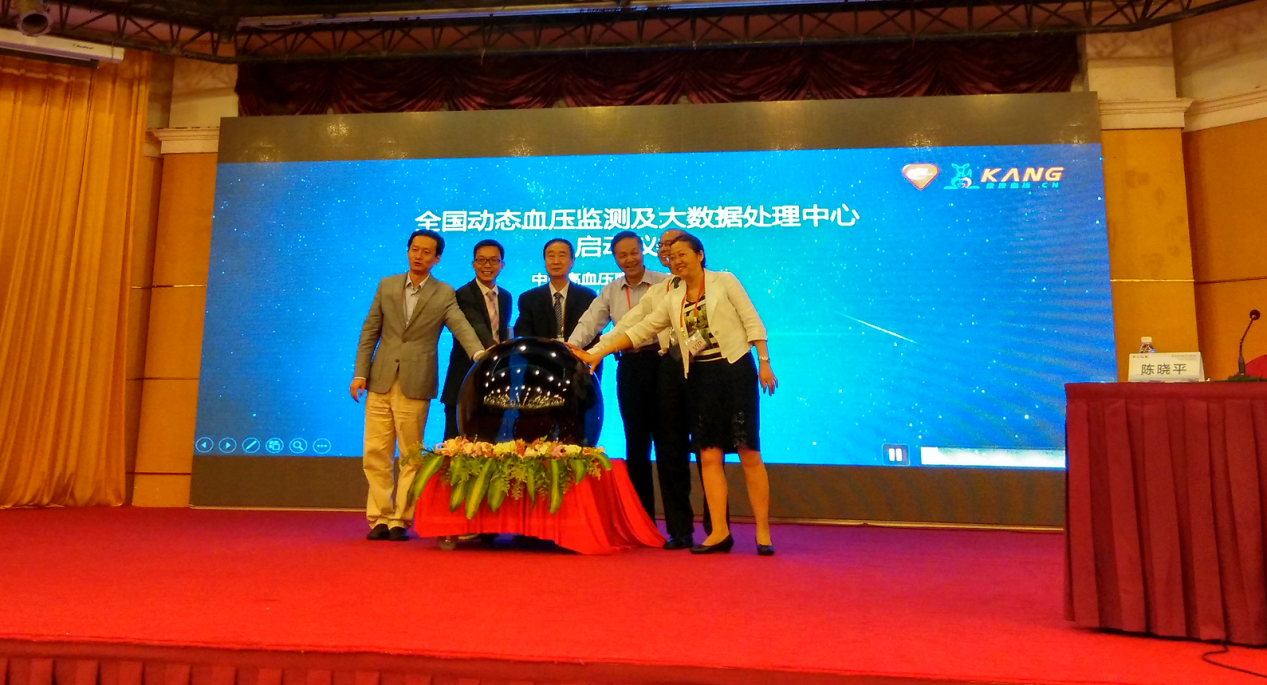
It is reported that this project has received support from numerous experts, including Professor Liu Lisheng, Former President of the World Hypertension League and Lifetime Honorary Chairman of the Chinese Hypertension League. Secretary-General Wang Wen stated, “Ambulatory Blood Pressure Monitoring Enables Comprehensive, All-Angle Data Collection for Patients; Mobile Internet-Based Hypertension Management Facilitates Primary Prevention and Control of Chronic Diseases at the Grassroots Level“The collaboration between the Chinese Hypertension League and Kangkang Blood Pressure represents a significant and practically meaningful partnership in the field of hypertension.”
Globally, ambulatory blood pressure monitoring (ABPM) has been in clinical use for over 30 years, and it has been applied in China for more than 20 years. ABPM is a crucial tool for blood pressure monitoring and management, offering significant advantages over occasional blood pressure measurements, such as home blood pressure monitoring and office-based blood pressure monitoring, in clinical practice.
It eliminates the randomness associated with occasional blood pressure measurements, avoids the influence of factors such as emotion, exercise, food intake, smoking, and alcohol consumption on blood pressure, and provides a more objective and accurate reflection of blood pressure status.
Ambulatory blood pressure monitoring provides more extensive blood pressure data, accurately reflecting the patterns of blood pressure fluctuations throughout the day.
Helps identify white-coat hypertension and masked hypertension.
Ambulatory blood pressure monitoring can guide pharmacological treatment. In many cases, it is used to assess the efficacy of drug therapy, assist in drug selection, and adjust dosage and administration timing.
Assessment of Target Organ Damage in Patients with Hypertension. Hypertensive patients with left ventricular hypertrophy, dynamic retinal vascular lesions, or impaired renal function typically exhibit a reduced day-night blood pressure difference.
It aids in the diagnosis of masked hypertension during specific periods, such as morning and nocturnal hypertension, and predicts the timing of sudden cardiovascular and cerebrovascular events within a 24-hour period. Cardiovascular and cerebrovascular diseases are most likely to occur when blood pressure rises abruptly in the early morning hours.

To standardize ambulatory blood pressure monitoring (ABPM), the Chinese Hypertension League, in collaboration with renowned experts and scholars in China who have long been engaged in research on blood pressure monitoring and related clinical practice, spent nearly two years completing the nation’s first “Chinese Expert Consensus on the Clinical Application of Ambulatory Blood Pressure Monitoring.” This achievement followed three rounds of face-to-face meetings and extensive solicitation of opinions.
To standardize the conduct of ambulatory blood pressure monitoring,The "Expert Consensus" recommends establishing a dynamic blood pressure monitoring technology support system based on cloud platforms and the Internet, which can rely on specialized hypertension institutions to complete the interpretation and judgment of monitoring reports., the National Ambulatory Blood Pressure Monitoring and Big Data Processing Center was established against this backdrop.
Zeng Mingfa, Founder and Chairman of Kangkang Blood Pressure, stated, “Kangkang’s independently developed world’s first 24-hour portable ambulatory blood pressure monitor has obtained CFDA certification from the China Food and Drug Administration and ESH certification from the European Society of Hypertension for meeting its technical standards. It is currently in use at more than 300 Grade IIIA hospitals across China. This collaboration with the Chinese Hypertension League to establish an Ambulatory Blood Pressure Processing Center responds to the national ‘Internet Plus’ initiative, particularly aligning with the spirit emphasized by Premier Li Keqiang on June 16 regarding the development and standardization of health and medical big data. By adopting a SaaS model, we provide remote ambulatory blood pressure monitoring and big data analytics services to medical institutions and individual users nationwide, delivering diagnostic and therapeutic outcomes equivalent to those achieved at Grade IIIA hospitals.”