

Huiyi Online Partners with Leading Korean Hospitals to Pioneer a New Model of Cross-border Healthcare
On June 15, Huiyi Online, the mobile healthcare platform under Hejia Co., Ltd., will sign a cooperation agreement with relevant South Korean institutions in Beijing. The announcement will reveal that four of South Korea’s top-tier hospitals—Samsung Medical Center, Severance Hospital (affiliated with Yonsei University), Asan Medical Center, and Seoul National University Hospital—as well as renowned institutions such as Gangnam Samsung Hospital, Ewha Womans University Medical Center, Banobagi Plastic Surgery & Aesthetic Clinic, BK Plastic Surgery Hospital, and Chaum Life Center, are successively joining Huiyi Online and launching their respective official online hospitals. This initiative will create a new international pathway for Chinese patients to access medical care.
It is understood that Huiyi Online, as a professional internet healthcare service platform, will provide the aforementioned South Korean hospitals with network technology, platform operations and maintenance, and brand promotion services in mainland China.
Since 2008, China and South Korea have elevated their relationship from a comprehensive partnership to a strategic cooperative partnership. As friendly neighbors, the two countries have rapidly developed multi-level, multi-channel, and diversified exchanges and cooperation across various industries in recent years. Leveraging the natural advantages of geographical proximity and cultural affinity, an increasing number of Chinese citizens are choosing to travel to South Korea for tourism and shopping. According to the Korea Tourism Organization, South Korea is also a popular international destination for medical tourism, characterized by advanced technology, high survival rates, and affordable surgical costs, particularly in the treatment of severe conditions such as cancer. Compared with other developed countries, including the United States, Canada, and Japan, South Korea boasts the highest five-year survival rate for cancer patients, leading to a continuous increase in the number of foreign patients seeking medical treatment there in recent years.
However, the general public in China primarily associates medical treatment in South Korea with cosmetic surgery. In recent years, unscrupulous individuals have exploited information asymmetry to steer unsuspecting Chinese patients to small-scale so-called “manager-run hospitals” in South Korea—some of which merely lease their medical credentials—where they receive costly, uninsured treatments. This has led to frequent disputes and even tragedies. Addressing this chaos, informed stakeholders in both China and South Korea generally agree that the root cause lies in the asymmetry of doctor-patient information between the two countries, highlighting an urgent need for channels that enable Chinese citizens to accurately assess the capabilities of South Korean medical institutions.
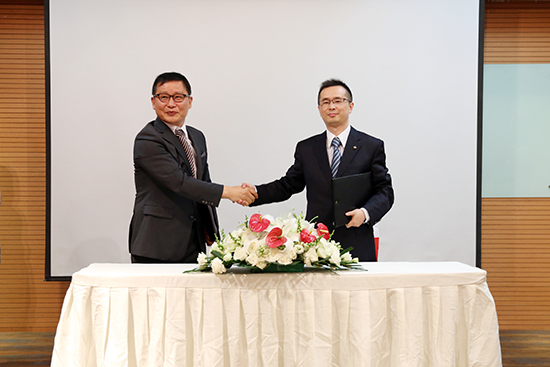
In response, He Yi, CEO of Huiyi Online, stated that due to various factors, many advanced critical care treatment technologies available overseas are temporarily inaccessible to Chinese patients. Furthermore, practices such as purchasing new drugs from abroad through unofficial channels are prohibited by law. Therefore, Huiyi Online aims to establish itself as a “Medical Tmall” in China by integrating legitimate overseas medical resources. The company seeks to build a platform that helps Chinese patients access information about overseas healthcare in specific specialties and disease areas, enabling them to receive treatment at accredited professional hospitals abroad.
Huiyi Online, which has signed cooperation agreements with 60 large hospitals in China, is dedicated to promoting information symmetry between doctors and patients. Following in-depth discussions with Korean medical consulting agencies and Kang Co., Ltd., which share the same values, Huiyi Online promptly decided to invite Korean hospitals to join its platform. It strives to establish a high-quality and efficient channel for Chinese citizens to seek medical treatment in Korea at the fastest possible speed, thereby providing tumor patients with greater access to premium medical care and preventing the recurrence of chaotic practices in the plastic surgery industry. Through these concrete actions, Huiyi Online fulfills its social responsibility as a medical service platform.
It is reported that, following the signing of the cooperation agreement, Huiyi Online and the Korean hospitals joining its platform will continue to expand their areas of collaboration through initiatives such as China-South Korea medical academic symposia and cultural exchanges between Chinese and South Korean hospitals, thereby promoting academic exchange and international cooperation in oncology between the two countries.
Previously, VCBeat conducted an exclusive interview with Huiyi Online. Beijing Huiyi Online Technology Co., Ltd. is a medical internet information service enterprise. Its flagship product, the Huiyi Online APP, is dedicated to building a “Tmall” for healthcare by offering B2C online video consultations. In this model, “B” refers to hospitals at all levels. These hospitals join the Huiyi Online APP as institutional entities. Patients complete their medical records on the platform and upload relevant documents such as laboratory test results, examination reports, and medical images. They then select available time slots to schedule appointments and engage in real-time, one-on-one video consultations with specialists. The specialists provide consultation opinions and further arrange offline diagnosis and treatment. As a professional third-party internet healthcare service platform, Huiyi Online APP provides technology and services to hospitals. Through this collaboration, hospitals can achieve “Internet Plus” transformation with zero investment. This creates a win-win situation for hospitals, doctors, and patients alike.