

Dongya Health Files IPO Prospectus: China's Enhanced Version of Higi Kiosks Targets 50 Million Users
With nearly 10,000 units installed, 30 million registered users, an average of 1 million weekly interactions, and $40 million in substantial financing, Higi’s health kiosks—despite appearing to lack high technological complexity and offering only a few routine measurements—achieved these figures within just four years of establishment.
In fact, there is also a product similar to Higi in China—“Dongya Health.”
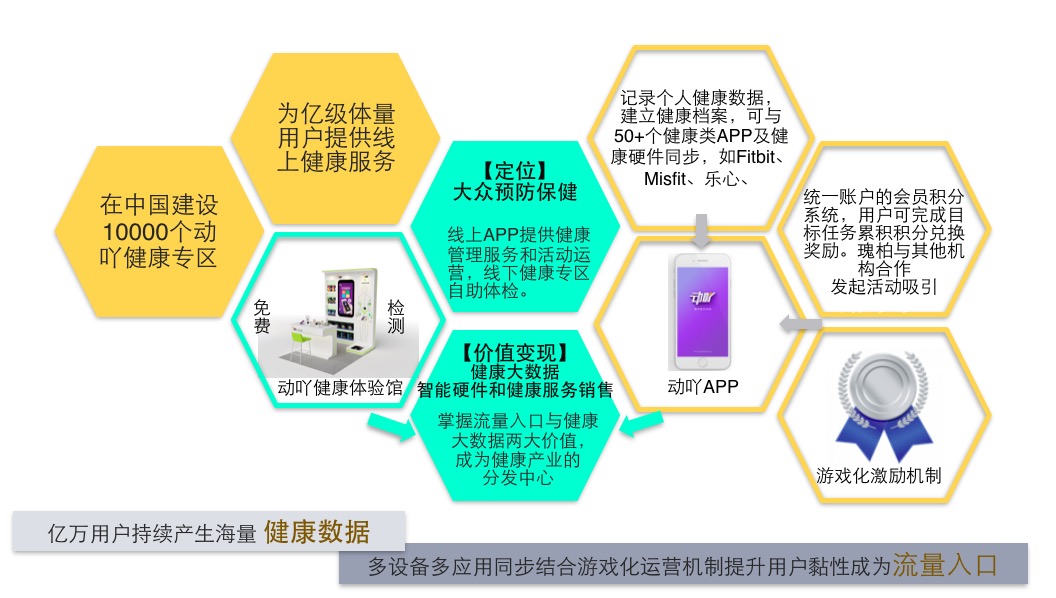
“Dongya Health” is the first mobile internet product launched by Beijing Guibai Technology Co., Ltd., dedicated to building China’s first gamified, one-stop health service platform based on behavioral health management. Starting with personal data collection, the product leverages a big data analytics system powered by backend engines and relies on authoritative, professional data analysis models to provide scientific and effective personalized health solutions across exercise, diet, sleep, and psychological well-being. Through gamified task mechanisms, combined with rich online and offline activities and social interactions, it helps users stay mindful of their health behaviors, optimize lifestyle habits, and enjoy life in a healthy and joyful way.
It is reported that since the launch of its products in early October 2015, “Dongya Health” has accumulated hundreds of thousands of registered users. In areas such as the development of health services, “Dongya Health” has partnered with dozens of renowned enterprises both domestically and internationally, including the Chinese Medical Association and the U.S. health company Welltok.
In the future, "Dongya Health" plans to accumulate 50 million users within three years, achieve industry leadership in health industry marketing platforms and wearable smart device channels, and become one of the key developers of universal standards for health management behavioral data as well as one of the managers of full-lifecycle health big data. It is reported that "Dongya Health" has currently secured angel-round financing led by D.Phone.
Data collection is the entry point
Higi has entered the health data market by addressing the needs of underserved populations and is beginning to capture a share of the market’s data value through open integration.
Similar to Higi, as a product that uses personal data collection as its entry point, “Dongya Health” has its own unique approach to gathering data.
In fact, there are four common data collection scenarios in the health sector:
1. Health checkup data collection, which typically occurs 1–2 times per year, involves the collection of users' vital sign data;
2. Hospital data collection, which involves sporadic disease-related data;
3. Software data collection requires users to input subjective symptom data on both PC and mobile platforms;
4. Data Collection via Smart Wearable Devices: In this scenario, users can collect dynamic, direction-specific physiological data anytime and anywhere by wearing smart hardware.
However, the current market situation is characterized by the fragmentation of these four data collection scenarios, which are not organically integrated. This means that none of these scenarios can truly provide scientifically grounded health management solutions based on big health data.
To collect comprehensive and accurate user data, “Dongya Health” has not only integrated a wide range of vertical health service providers and smart hardware products to encourage users to capture their own data anytime and anywhere, but also established an extensive network of offline data collection centers.
Collaboration with telecom operators, governments, and other institutions is essential to reduce costs and enhance value-added services.
“Dongya Health”’s offline data collection centers are divided into two parts. On one hand, “Dongya Health” collaborates with China Unicom to launch health experience zones in Unicom business halls. Each zone is equipped with a complete set of data collection hardware systems, allowing Unicom users to undergo free physical examinations and access their test reports via the “Dongya Health” platform. On the other hand, the Municipal Health and Family Planning Commission has enabled access to residents’ electronic health records (EHRs) for integration into the “Dongya Health” database. Through the operation of “Dongya Health,” local residents are encouraged to visit health kiosks to upload their data.
In fact, initiating promotion by seeking collaborations with government and enterprises was a key strategic decision for the “Dongya Health” team. Zhao Jian, founder and CEO of Dongya Health, told VCBeat, “Individuals are indeed the least motivated when it comes to health management. However, from the perspectives of cost reduction and service value enhancement, governments and enterprises demonstrate particularly high enthusiasm for health management.”
For a long time, the significant pressure on fiscal expenditure for healthcare has been a persistent challenge for the Chinese government. Previously, relevant government agencies vigorously promoted the concept that “prevention is better than cure” and established the “Healthy China 2020” plan. However, many community health stations built by local governments have remained vacant due to a lack of operational management. The operational tools provided by “Dongya Health” can effectively revitalize these underutilized resources.
Taking Qingshan District, Wuhan City as an example.
Currently, relying on the 100 health kiosks (located in enterprises, public institutions, and government agencies) established in collaboration with Qingshan District’s preventive healthcare units, hospitals, and community health service centers, VCBeat has implemented information technology upgrades for various health detection devices within these kiosks. This initiative has achieved network interoperability for health data from detection devices, enabling data upload to the cloud, cloud storage, and cloud-based management. It has truly realized a hybrid health management model: offline support through physical health kiosks and online operational services for health management.
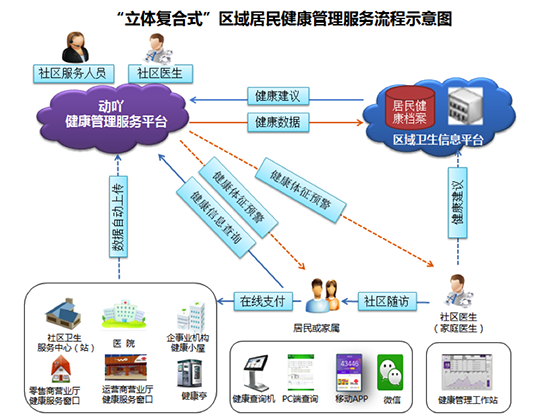
By extensively conducting resident health and physical fitness testing, as well as collecting and analyzing the resulting data, Dongya Health has enabled governments to implement a dynamic, end-to-end service workflow encompassing “health information collection, health data upload, health risk analysis, health promotion planning, and health intervention.” This approach facilitates a comprehensive understanding of residents’ current health and physical fitness status and allows for the assessment of their overall health conditions. Furthermore, Dongya Health has achieved integration with regional health information platforms, enabling the dynamic supplementation and improvement of electronic health record (EHR) management, while also expanding avenues for delivering equitable basic public health services.
It is understood that, based on the analysis of health information monitoring data and tailored to the actual health conditions of different residents, Dongya Health can prescribe personalized and targeted exercise, nutritional diet, sleep, and psychological/emotional interventions for various population groups, thereby promoting the scientific management of resident health.
Resident users can access personal health data metrics, dynamic analysis charts, and health reminders through the Dongya Health client.
General practitioners at community health service centers can collect patients' health information using devices such as health data collection terminals via the GP portal, and upload and consolidate the data in a complete, accurate, and timely manner, thereby enabling a one-on-one family contract service model.
Meanwhile, the Qingshan District Health and Family Planning Commission can leverage the cloud-based data center on the management platform to centrally aggregate, collaboratively process, and monitor in real time the health information data of residents across the entire district. This enables intuitive data analysis to support decision-making and management, thereby enhancing the service quality of mobile health management.
Channel partners, represented by telecom operators and including communications retailers and pharmacies, are facing the same challenges as government departments. They hope to leverage “Dongya Health” to build long-term, stable relationships with users by delivering health benefits, thereby driving sales growth.
It is reported that the “Dongya Health” initiative planned to establish “Dongya Health” zones in 2,500 stores nationwide in 2016, in partnership with telecom service retailers such as China Unicom, Dixin Tong, and Dadi Group. For instance, through its collaboration with Zhejiang Unicom, 1,800 such zones were scheduled to be set up by the end of 2016.
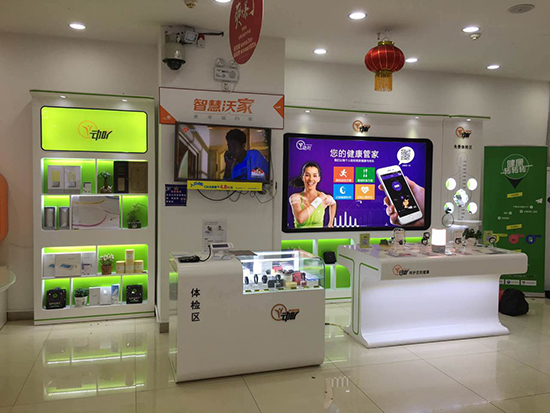
“Dongya Health” offers a variety of services to users through its offline “Dongya Health Experience Centers.”
First, users can undergo health check-ups using all-in-one examination kiosks. The “Dongya Health Experience Center” is equipped with these integrated units, creating a convenient screening method that functions as a “health check-up center” right at the user’s doorstep. This approach reduces the time cost associated with medical examinations, inevitably encouraging users to voluntarily increase their frequency of check-ups, thereby enabling more effective health monitoring. Currently, each experience center serves an average of approximately 15 visitors per day for health screenings, with this number continuing to rise. Meanwhile, sales of the hardware products have seen corresponding growth.
Secondly, upon completion of the physical examination, users can also access health management services. It is understood that after the examination, users can track their test results via “Dongya Health,” which will also intervene in users’ health behaviors based on their examination data.
In addition, users can purchase or experience smart wearable hardware devices at health community stores, including fetal heart rate monitors, maternal and infant safety scales, smart body fat scales, and blood pressure monitors. These products are targeted at the general consumer population, particularly those engaged in fitness (such as individuals seeking weight loss), patients with hypertension, and the elderly. Integrated into the “Dongya Health” platform, these smart wearable devices enable data to be directly synced to the “Dongya Health” app via smartphones. This data empowers users to gain a more comprehensive understanding of their health status, thereby facilitating more effective personal health management.
By establishing a “multi-dimensional, integrated” health management model through a government–social partner–health management platform framework, Dongya Health is able to integrate government resources and other social channel resources, ultimately creating a new form of health management model.
Boosting User Stickiness Through Gamification
To boost user stickiness, Higi has rolled out a carefully designed gamified incentive mechanism, even acquiring Earndit, a small team specializing in the development of health incentive systems.
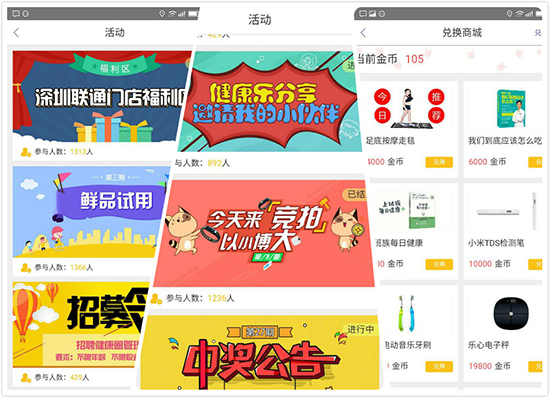
As the first health management app in China to integrate entertainment mechanisms, “Dongya Health” also leverages gamification and reward systems to encourage users to systematically manage their behavioral health. This approach fully mobilizes user engagement, allowing them to enjoy the pleasures of exercise and health management while earning substantial rewards.
It is understood that “Dongya Health” has already achieved monetization through the sales of smart hardware. In the future, “Dongya Health” will further enhance its revenue generation through health management services and precise data mining.