

Yike App Integrates BMJ Best Practice to Bring World-Class Evidence-Based Clinical Decision Support to Chinese Doctors
On June 15, 2016, BMJ Publishing Group (hereinafter referred to as “BMJ”) partnered with the Chinese Medical Association to launch the Chinese edition of BMJ Best Practice (hereinafter referred to as “BP”), introducing a world-leading clinical decision support tool to China. Concurrently, a mobile-based Chinese product jointly developed by BMJ and the Yike App was launched, enabling physician users to access authoritative and practical evidence-based clinical information on their smartphones, thereby assisting them in making better and more rational diagnostic and treatment decisions in clinical practice.
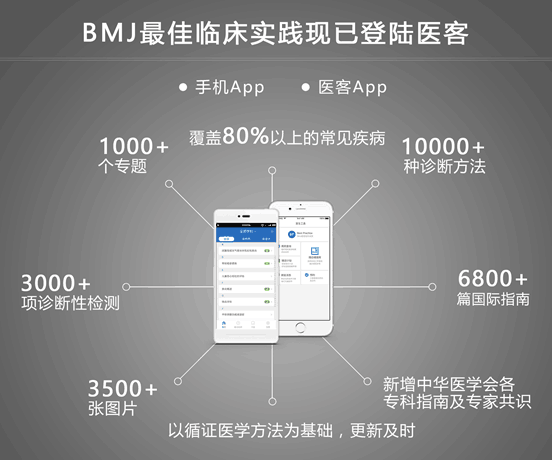
Mobile Version of the Professional Medical Knowledge Base
Yike App is the physician-facing product under Huakang Mobile Healthcare, a leading mobile health company in China. It currently integrates functions such as patient management, consultation management, physician tools, and online education, with the aim of building a nationwide platform for medical collaboration among physicians. In the future, physicians will be able to access professional information from BP—including diagnostic steps, treatment plans, and differential diagnosis data—anytime and anywhere via the Yike App, enabling them to efficiently address challenges encountered in clinical practice.
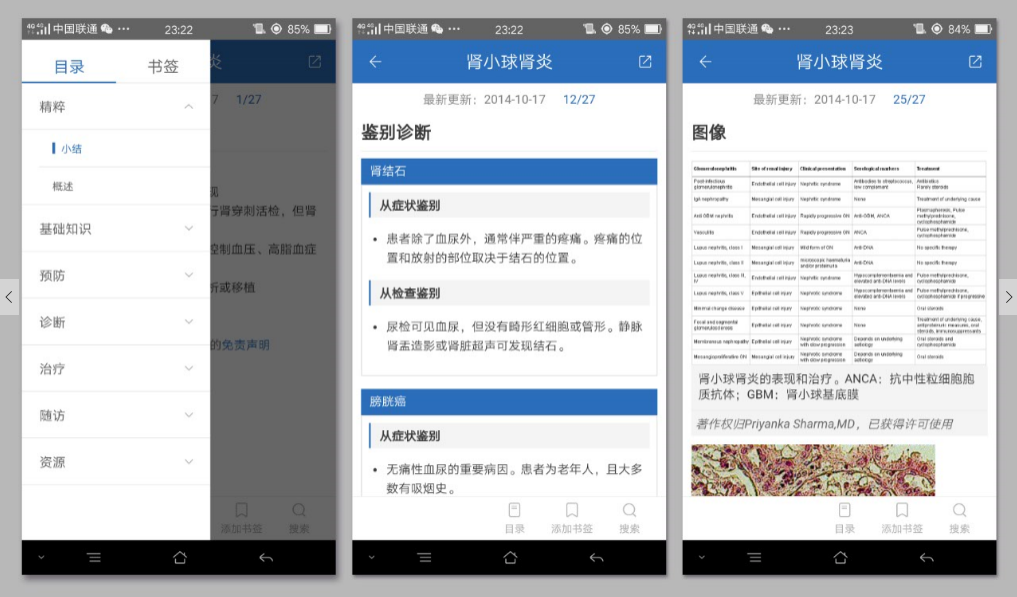
The international edition of BP integrates systematic and comprehensive evidence, best-practice guidelines, and expert opinions from around the world, all kept up to date. For many conditions prone to misdiagnosis, BP also provides concise differential diagnosis information, helping clinicians distinguish specific diseases based on symptoms and test results. To facilitate deeper understanding of diseases or support clinical teaching, BP includes a wealth of real-world case studies and high-quality images for various conditions. The Chinese edition of BP not only translates all content from the international version and ensures timely updates, but also adds commentaries from Chinese experts and guidelines from the Chinese Medical Association. In terms of both reading habits and content selection, it is better tailored to the practical needs of healthcare professionals in China.
At the press conference, Tim Brooks, CEO of BMJ, stated, “BMJ’s mission is to provide the latest medical knowledge and promote advances in medicine. Our decision to partner with the Chinese Medical Association to launch the Chinese edition of BMJ Best Practice (BP), and to collaborate with Yike to develop mobile-based Chinese products, is ultimately aimed at providing Chinese physicians with accessible medical knowledge and tools grounded in robust evidence-based medicine. These efforts will help countless Chinese physicians optimize clinical diagnosis and treatment and improve efficiency.”
Dai Lian, COO of Huakang Mobile Healthcare, stated, “When confronted with challenging cases, physicians seek to resolve diagnostic and therapeutic dilemmas promptly. Ideally, they would have immediate access to an evidence-based medicine knowledge base, where entering a disease name or symptom yields timely and practical clinical decision support. Even senior specialists, when facing issues outside their subspecialty, desire convenient access to systematic research advances in relevant disciplines. In response to this widespread need, Yike has spared no effort in fostering collaboration with BMJ, bringing Best Practice (BP)—an authoritative clinical decision support tool—to the more accessible mobile platform. This initiative delivers structured knowledge, grounded in global classic medical experience, to Chinese physicians. It enables nearly three million doctors in China to access the latest evidence-based diagnostic and treatment knowledge anytime and anywhere, helping them identify optimal treatment plans, reduce medical risks, and create greater value.”
Beneficial to Tiered Diagnosis and Treatment and Primary Care Physicians
Industry experts believe that migrating BP’s authoritative medical knowledge services to more accessible mobile terminals holds positive significance, particularly in light of the national policy backdrop that vigorously promotes tiered diagnosis and treatment and advocates for initial consultations at the primary care level. Currently, a consensus across various sectors regarding the sluggish progress of tiered diagnosis and treatment is that primary healthcare institutions suffer from insufficient service capacity and a shortage of talent, especially manifested in relatively weak clinical diagnostic and therapeutic capabilities. Therefore, strengthening training and continuing education for primary care physicians to enhance their diagnostic and treatment proficiency is regarded as a key foundation for the effective implementation of the tiered diagnosis and treatment policy.
In the field of mobile health, Yike has made many beneficial explorations on how to better serve doctors and improve their work efficiency. Not long ago, Yike launched its flagship product “Yike Studio,” which introduced top medical expert teams across China to conduct online lectures and consultations for primary care physicians, aiming to promote remote communication and professional collaboration among doctors from different regions and levels. This time, the cooperation between Yike and BP is expected to explore an efficient learning path for the training of primary care physicians.
Q&A with Reporters: Why Did Huakang Choose to Partner with BMJ?
Reporter: This collaboration between BMJ and Huakang is reportedly the first of its kind in the field of mobile health. What factors motivated Huakang to partner with BMJ?
Liu Bo, CEO of Huakang Mobile Health: In the “Healthy China” initiative under the 13th Five-Year Plan, there are two main themes. One is the family doctor system, with the goal of striving to ensure that every household has a qualified contracted family doctor by 2020. The other is tiered diagnosis and treatment. Although these concepts have been promoted for many years, their practical implementation still faces numerous challenges and difficulties. A major reason is that the overall level of primary healthcare in China, as well as the diagnostic and treatment capabilities of physicians at this level, still requires significant improvement. This is not an issue that can be resolved through price leverage alone, because patients’ primary concern is health; they are willing to pay more to seek care at large hospitals. As a result, the capacity of primary healthcare remains insufficient, and patients remain reluctant to seek medical attention at the primary care level. By introducing BP (Best Practice) through Yike, we aim to provide substantial diagnostic support to primary care physicians using this internationally authoritative tool and platform. This is the primary motivation behind our collaboration.
Dai Lian, COO of Huakang Mobile Health and Head of Yike: Since late 2014, Yike has been seeking a clinical decision support (CDS) product for collaboration. In analyzing user needs and designing our product, we found that physicians often require a tool to assist them in making clinical diagnoses. At that time, we aimed to identify a CDS solution compatible with mobile devices; however, there were few suitable products available on the market.
Not long after, we connected with BMJ and embarked on a highly successful collaboration in 2015, jointly hosting the “Strongest Medical Brain – BMJ Challenge,” which earned us considerable acclaim within the industry. Meanwhile, our team conducted extensive research on Best Practice (BP). We found that it is particularly well-suited for Chinese physicians, especially for mobile use, as its content is concise and authoritative, enabling doctors to quickly find diagnostic answers. This was precisely what motivated us to pursue a partnership with BMJ.
Subsequently, as Yike’s positioning evolved from a patient management tool to a “Physician Collaboration Platform”—enabling online collaboration among physicians at different levels—BMJ Best Practice has taken on greater significance for Yike. A key objective of Yike’s collaboration platform is to decentralize medical services and retain patients within their local communities. In this context, BMJ Best Practice serves as an invaluable tool for primary care physicians, helping them enhance diagnostic capabilities, retain patients, and facilitate the implementation of tiered diagnosis and treatment.
As an international organization, why did BMJ choose to partner with Huakang? I believe that, in addition to shared values, Huakang, as a local mobile health company, can provide substantial support for BMJ’s promotion in China, including technical, marketing, and branding support. We will fully leverage the internet to implement various innovative approaches to user education and market promotion, thereby increasing its adoption among Chinese physicians.
Our team has also invested heavily in this collaboration. Our product and technology team developed both the Android and iOS versions of the Chinese-language app for BMJ Best Practice within three months. Now that the app has been launched, our next task is to leverage various innovative marketing strategies to maximize its reach among physicians in China, ensuring that they truly benefit from it.