

DXY Amasses 20 Million C-end Users; MedLink Empowers Multi-point Practice for Doctors
6Month16On [Date], hosted by Tencent2016China“Internet+Medical”The High-Level Forum Was Held in Beijing. DXY Founder Li Tiantian, Medlinker Founder Wang Shirui, and Other Senior Executives from Prominent Internet Healthcare Companies Attended the Event. As One of the Invited Media Outlets for the Summit, VCBeat Has Compiled the Highlights from the Speakers’ Presentations.
Breaking the Ice with Ice: Healthcare Services from a New Patient-Centric Perspective
Speaker: Li Tiantian, Founder of DXY
Dingxiang Yuan is a professional community for physicians. Over the years, Dingxiang Yuan has been dedicated to providing services for doctors. Since last year, DXYEmpowering patients to experience healthcare services that integrate online and offline care. Today, I will discuss how to break the ice in medical services from the patient’s perspective.
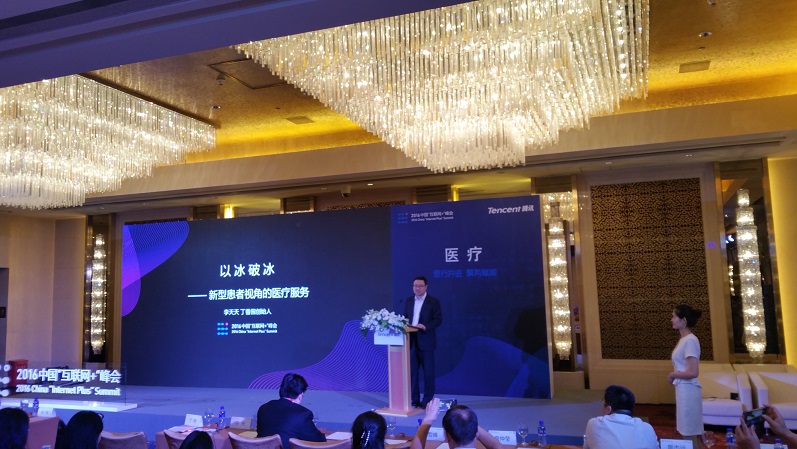
An Analysis of Patient Needs from the Perspectives of Information, Communication, and Interaction.
Online, medical-related information is extremely scarce in China. While there are many high-quality websites abroad, it is very difficult for patients to find authoritative and effective sources through Chinese search engines. This represents a significant market gap and pain point.
Of course, information alone is not enough. Some patients feel that reviewing the information suffices, as they already understand the disease and medications. Others desire interaction, while still others find such interaction inadequate and thus need to consult with their physicians in person. Therefore, this process resembles an inverted triangle.
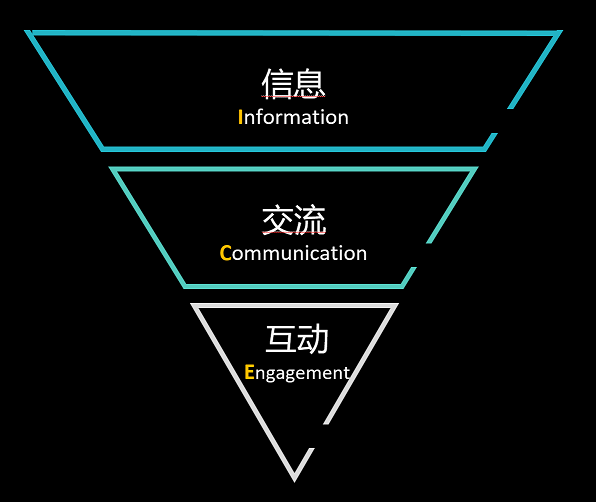
The top layer addresses the information retrieval needs of the vast majority of users, the middle layer facilitates communication between doctors and patients, and the bottom layer enables interaction between them. These three components form the acronym ICE. DXY aims to use this “ICE” framework to break through the entrenched “ice” of healthcare services mentioned earlier.
Let’s first examine the information dimension. When we talk about “information,” we are essentially talking about content creation; while the two share similarities, they also differ. More than a year ago, DXY launched a patient-centric medical information system tailored for patients on the consumer side. It transforms high-quality, evidence-based, clinically valuable content into formats that patients are willing to read and disseminates it accordingly—all of which incurs substantial costs. These WeChat Official Accounts areDingxiang YuanFocused on rare diseases and special populations.
In addition to content-based presentation, there are other forms of display.
The logic behind DXY’s achievement of its patient education objectives is as follows:
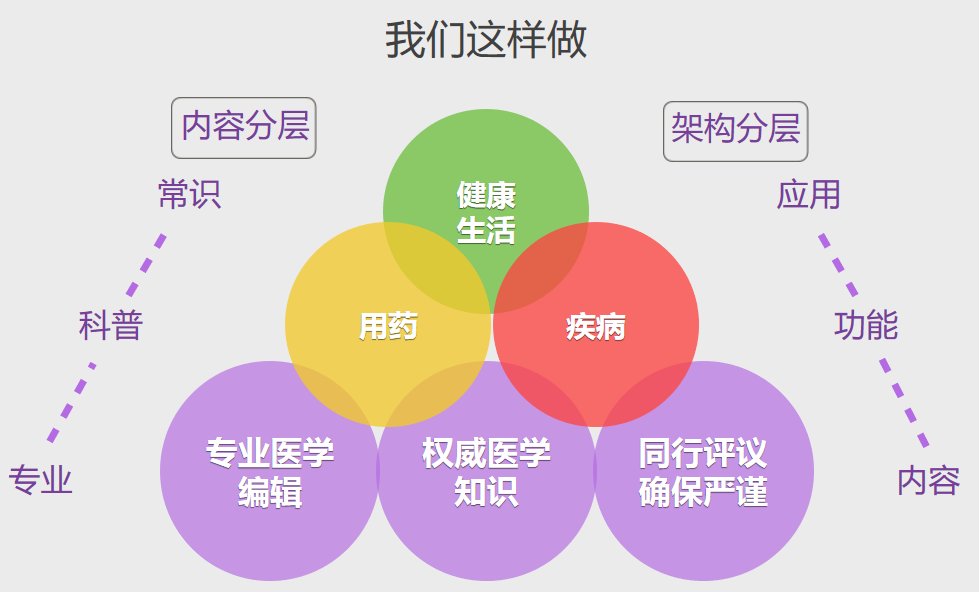
DXYWe have been striving to advance from the grassroots level upward. Over the past year or so, our core user base has surpassed 15 million.DXYWithin its WeChat Official Account group portfolio, the total number of followers exceeds 20 million. Individual WeChat articles garner more than 100,000 views.
Some people think that, on the surface, these are just numbers—isn’t it merely about writing articles and creating small games? In fact, that is not the case.DXYConduct extensive data-driven analysis in the backend to understand users, create user personas, and identify the target audience for your content delivery.
Therefore, when creating such content, it is essential to clearly define the subject matter. Secondly, data requires iterative analysis; after each online promotion campaign, one must review the backend analytics, as the data will reveal insights that may have otherwise gone unnoticed. Thus, proficiency in writing alone is insufficient; one must also possess a deep understanding of both the product and the data.
Secondly, regarding the communication level.DXYMore emphasis is placed on human-computer interaction. Every search is essentially a conversation, except that you are not asking a person, but Google. SoDingxiangyuanWe have conducted extensive optimization and exploration within search engines. However, to excel in search functionality, one must first establish a foundation of data—such as disease data, pharmaceutical data, health status data, hospital data, and pharmacy data. These datasets need to be collected and thoroughly “cleaned” before they can be utilized.
Dialogue between individuals is both inevitable and indispensable in healthcare services, as medicine is, after all, a service industry dedicated to people.DXYWhat we aim to explore is how to effectively connect doctors with patients, such as through online consultations.
What China lacks most is basic medical services. Of the more than 900,000 physicians in the United States, over 500,000 are general practitioners, whereas China has only 68,000 trained general practitioners. Given the severe shortage and underdeveloped state of general practice, there is substantial potential in the primary care sector. I believe the optimal use case for mobile health is not in tertiary Grade A hospitals, but rather in primary care institutions such as clinics and community health centers.
Whether it is traditional healthcare, mobile health, or internet-based healthcare, the essence remains healthcare itself. Healthcare emphasizes compassion for patients; this “craftsmanship spirit” is far more important than advanced technologies and equipment.
The Internet and Multi-Point Careers
Speaker: Wang Shirui, Founder of Medlinker
Physicians' Multi-Site PracticeThe primary objective is to optimize the allocation of medical resources and alleviate the mismatch between supply and demand. China has 2.9 million licensed physicians, yet this workforce exhibits severe polarization, resulting in an uneven distribution and scarcity of medical resources.
There are two solutions: first, establish more medical schools and recruit more qualified physicians. Although the national economy is growing rapidly, the population is expanding even faster, resulting in an increasingly insufficient number of physicians relative to the required demand.
The second approach,MedLinkIt has been observed that the most capable physicians have not been fully mobilized. Their clinical efficiency, precise patient-physician matching, and potential energy unleashed by freeing themselves from institutional constraints have yet to be realized. In other words, while it may not be possible to rapidly increase the overall supply of medical services, the efficiency of that supply can certainly be improved.
Physicians typically work five days a week and have two days off. Under economic incentives, they may be willing to utilize those two days as well, thereby increasing supply-side resources by 20% to 30% during weekends—this is the objective. However, to achieve maximum efficiency among physicians, market-based adjustments are necessary in addition to policy support.
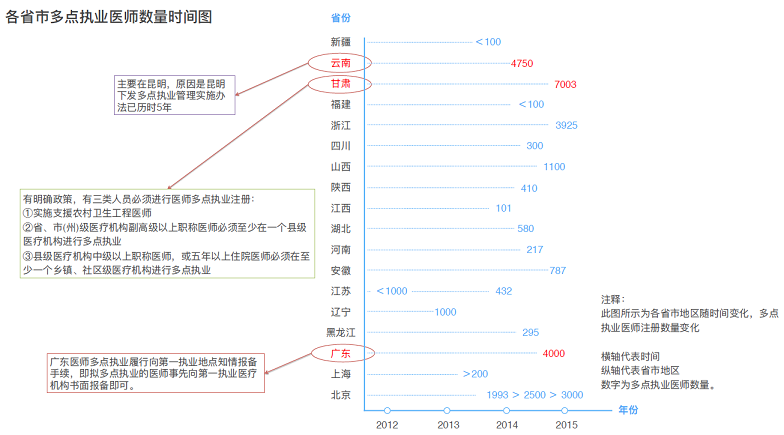
Opportunities and Challenges in Multi-Site Practice. The opportunity lies in the emergence of new markets and a new service system built around a physician-centric ecosystem. This model ensures efficiency on one hand, while on the other, it guarantees that all patients receive care within a trustworthy framework. In 2014, there were only two physician groups in China; today, there are 300, demonstrating rapid development.
It is essential to clearly distinguish between leisure time and one’s primary working hours. It is quite likely that physicians devote considerable energy on weekends to pursuits they deem worthwhile. However, this may result in diminished energy and reduced professional capacity during regular working hours. In some cases, this could even lead to absenteeism or a gradual disengagement from their core responsibilities, as they retreat into their own predefined sphere.
If doctors were to leave the public healthcare system en masse—though this is not currently feasible—even if they remain formally employed within the system, their lack of institutional commitment would pose a significant challenge to all tertiary Grade A hospitals.
New markets will emerge, and information exchange will occur. With the advent of new information flows and novel industrial models, many issues will come to light:
First, the pricing mechanism is flawed. There has been no consensus on how factors such as a physician’s age, background, and technical expertise should determine varying prices for treating the same condition. Currently, prices are negotiated on a case-by-case basis. This practice carries inherent risks and directly impacts the involvement of both basic medical insurance and commercial health insurance. If this pricing issue remains unresolved, it will be difficult for commercial insurers to effectively collaborate.
Secondly, it is difficult to assess the quality of professional practice settings. Many facilities appear impressive aesthetically, yet their infrastructure and sanitation systems fail to meet standards. In some secondary hospitals, conditions do not match physicians’ expectations; however, once the operating table is prepared, they are compelled to proceed with the surgery.
Third, there are institutional issues. Some new entities have emerged that popularize the model of deconstructing hospitals into individual studios, allowing physicians to move in and practice with minimal setup. However, this approach now faces challenges, primarily due to ambiguous agreements and unclear rights and responsibilities. Key unresolved questions include: What is the nature of the relationship between physicians and these institutions? How should payments be settled? If the government regulates this model, how should such regulation be structured? Conversely, if left unregulated, to what extent can flexibility be allowed? These matters remain unsettled.
Finally, there is the issue of patient trust. In a system lacking any brand or government endorsement, new institutions cannot achieve rapid growth overnight. Even if they are currently excellent and meet all standards, the level of patient trust remains effectively zero. This is because patients lack the ability to distinguish between high-quality hospitals and physicians, which constitutes the most significant challenge we face.
The primary approach to building a healthy market for multi-site practice is standardization and transparency,MedLink"Attempt to digitize, or at least structure, all data on physicians' expertise, content, and seniority levels for thorough analysis. By making all physician qualifications open and transparent, patients can access third-party or professional assessments before their consultations."
Additionally, regarding the specific measures for quality control of physicians,MedlinkThe most widely used system is the evaluation framework that has been employed at Harvard for over two decades, with more than 20% of hospitals in the United States also adopting it.
In summary, the criteria for evaluating a physician’s clinical competence are the types and volume of surgeries performed, adjusted according to China’s national context.MedlinkIt is now possible to assign professional scores to each surgical procedure, and every operation performed by a physician throughout their career can be graded.MedlinkThere are specific rules governing left versus right approaches and large versus small incisions in the operating room, and these protocols are becoming increasingly detailed. This is because what medical professionals observe differs significantly from the visual experience of laypeople.MedLinkWe aim to help ordinary people and patients develop such a framework to assist them in making informed judgments.