

Intel Launches Intel BioIT Partners Program and GTX One Acceleration Platform to Advance Precision Medicine
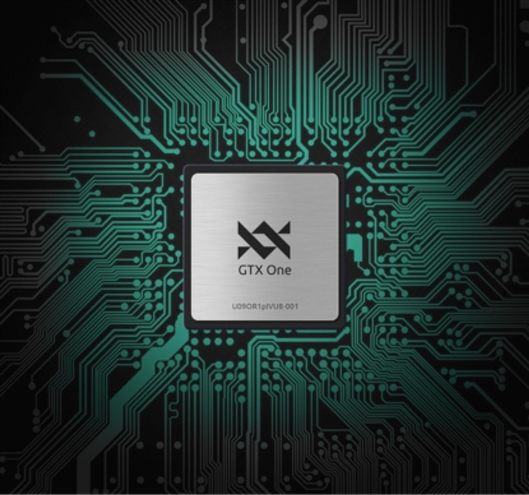
Recently, at the 2016 Intel Life Sciences IT Forum, a biological computing acceleration platform named GTX One was unveiled, sparking new perspectives within the industry on precision medicine. This GTX One acceleration system fully unleashes the computational power of FPGAs through algorithmic innovation, effectively compressing the capabilities of a supercomputer into a compact box. A single FPGA acceleration card can deliver computational performance equivalent to 60 high-performance Xeon CPU servers, significantly reducing the time required for bioinformatics data processing. In fact, the integration of biological data with the healthcare sector is driving rapid growth in the biomedical industry. The “Intel BioIT Partners” program, launched by Intel in Beijing, aims to enable the completion of the entire precision medicine workflow—including gene sequencing, medical analysis, and treatment plan formulation—within 24 hours by 2020.
Precision Medicine Still Has to Endure Countless Trials and Tribulations
However, the widespread adoption and development of precision medicine across China have not been smooth sailing; in fact, the industry still faces numerous pain points.
The first major challenge facing precision medicine is data collection. For many individuals, personal health information is confidential, and they are reluctant to disclose their health data to others. This poses significant difficulties for precision medicine, which relies on extensive datasets; without such a foundation, achieving true precision becomes unattainable.
The second challenge is cost. Although the cost of technologies such as gene sequencing has decreased significantly compared to the past, it has not yet reached a level conducive to widespread adoption at the current stage. The majority of precision medicine projects entail substantial costs, which are prohibitive for smaller medical institutions. Furthermore, the prices of genetic testing and molecular targeted therapy drugs remain high.
The third challenge is that for physicians and many small and medium-sized healthcare institutions, if precision medicine becomes an integral part of routine healthcare, these physicians will need to possess a solid foundation in molecular genetics and biochemistry. They must not only interpret genetic test results but also understand how this information informs subsequent treatment or prior prevention strategies, and accurately communicate these insights to patients. A survey conducted last year among physicians at Peking Union Medical College Hospital revealed that their self-assessed average score on genetics knowledge was only 2.1 out of a maximum of 4 points.
The fourth challenge is the issue of reimbursement for precision medicine. It is also necessary to consider whether the general public can afford the cost of precision medicine. If the majority of people cannot afford precision medicine drugs, it will ultimately be difficult for precision medicine to reach the mass market. Furthermore, whether health insurance can cover precision medicine is a critical step.
The fifth challenge lies in how precision medicine can differentiate the heterogeneity among patient populations. Even if such differentiation is achieved, it necessitates involvement from the pharmaceutical industry to develop targeted therapies, including gene-based drugs, for specific subpopulations. This is no easy feat, and numerous stages from clinical development to real-world application must be carefully considered.
The most core and fundamental challenge facing precision medicine actually stems from technology itself: how to achieve more accurate analysis of big data with greater efficiency. For instance, in the field of non-invasive prenatal testing (NIPT), where genetic testing is most maturely applied, numerous challenges persist, including accuracy, turnaround time, and the occurrence of false negatives and false positives. This is a common challenge confronting precision medicine initiatives worldwide.
The Industry Urgently Needs Continuous Innovation and Transformation for Precision Medicine to Have Hope
To promote the gradual widespread adoption of precision medicine, it is essential to continuously advance its medical technologies. This will address key challenges such as gene sequencing, data analysis, and the heterogeneity of patient populations, thereby enabling a gradual reduction in the cost of precision medicine treatments.
In 2000, with the initiation of the first human genome project, genetic testing underwent rapid innovation in accordance with Moore’s Law, thereby accelerating the application of personalized precision medicine.
In 2015, to meet the demands of complex genomic sequencing data processing and high-performance computing capabilities, Intel launched the Xeon Phi coprocessor, which offers up to 61 cores, 244 threads, and a floating-point performance of 1.2 teraflops. However, genomic sequence analysis is characterized by both high I/O intensity and high computational intensity, necessitating specialized approaches beyond conventional acceleration methods.
In 2016, precision medicine entered the algorithmic phase, where efficient data analysis became increasingly critical and represented one of the most core and fundamental challenges facing the field. The FPGA-based GTX One biological computing acceleration platform, launched by Renhe Future Biotechnology Co., Ltd. (National Demonstration Center for the Genetic Testing Industry), has effectively addressed this challenge to a certain extent by significantly improving the alignment and analysis efficiency of genetic testing samples through high-performance algorithms.
In terms of speed, the GTX One acceleration product can increase the efficiency of data alignment and analysis for non-invasive prenatal testing (NIPT) by 100-fold. For instance, the GTX One processor (an FPGA chip) achieves a record-breaking 8.6 million queries per second within a massive data dictionary containing over 2 billion entries (approximately 90 GB of data, equivalent to more than 22 DVDs). This query speed is 17 times faster than that of a server equipped with a 20-core Intel Xeon E5 CPU running Redis, the widely recognized fastest in-memory database.
In terms of cost, the GTX One system can compress 24 hours of computational tasks from a high-performance server equipped with a 20-core Intel Xeon E5 CPU into less than half an hour. This not only significantly reduces the time cost of data analysis but also greatly lowers the procurement and operational maintenance costs of server clusters. Meanwhile, the GTX One unit consumes only 89W at full load, which is one-fifth of the power consumption of a physical server with 20 Intel Xeon E5 CPU cores, substantially reducing operating costs.
In terms of efficiency, the GTX One processor has also propelled human precision medicine forward by a significant leap. Specifically targeting the concurrency and memory access bottlenecks inherent in sequence alignment and mutation analysis algorithms, and leveraging the high computational performance characteristics of FPGAs, it fully accounts for pipelining across all algorithmic stages to redesign the core algorithms of bioinformatics analysis. Its optimized design even incorporates fine-grained considerations such as the number of transactions triggered in the DDR controller by memory accesses and the timing characteristics of open pages within DDR3 chips. This enables the GTX One processor to efficiently navigate through massive volumes of compressed data records using onboard dual-channel 8GB DDR3 memory, locating sequence fragments on a 3-billion-base-pair genome with no more than four memory access operations.
However, the GTX One acceleration platform represents merely the first step in realizing humanity’s strategy for precision medicine. BGI Future (National Demonstration Center for Genetic Testing Industry) is applying this new technology to the analysis of whole-genome, transcriptomic, and epigenetic data, continuously enriching the analytical application products available on the GTX One acceleration platform. Only by continually enhancing high-performance algorithms and big data analytics capabilities can we comprehensively improve the overall efficiency of the entire genetic testing industry chain, thereby significantly reducing testing costs and turnaround time while improving accuracy, and truly establishing big data-driven health management solutions.
In the Era of Big Data, Precision Medicine Will Become Fully Realized
From any perspective, precision medicine based on gene sequencing and big data will inevitably become the future trend of medical development.
First, precision medicine can significantly enhance the effectiveness of patient treatment and provide more precise medical services, which holds great significance for promoting the current state of healthcare development. Furthermore, the emergence of precision medicine can also reduce the side effects of certain non-essential medications.
Secondly, with the continuous advancement of precision medicine technologies, many ineffective therapeutic interventions and diagnostic tests can be avoided, significantly reducing treatment duration. Most importantly, as precision medicine technologies improve, their costs continue to decline; furthermore, by eliminating unnecessary diagnostic and therapeutic procedures, overall healthcare expenditures can be substantially reduced. While the individual costs of many traditional medical services may appear low, they often result in significant waste of healthcare resources.
Finally, from a health perspective, precision medicine can provide a more comprehensive health management plan. From disease prediction to treatment, precision medicine enables a more precise and accurate assessment of patients' conditions, thereby helping them manage their health more comprehensively.
Overall, precision medicine is still on a path of continuous exploration. Only by upholding a responsible attitude toward life can enterprises and medical institutions go further. Genetic testing embodies the dream of human precision medicine; it will soon become widely accessible and popularized among the general population, and this field is bound to give rise to many great biotechnology companies.