

OpenAPS Submits IPO Prospectus: Pioneering Open-Source Artificial Pancreas System for Precision Diabetes Management
OpenAPS (the Open Artificial Pancreas System) is a free, online project that enables individuals to build their own artificial pancreas. Developed by Dana Lewis and Scott Leibrand in December 2014, it provides “a safety-focused reference design, a toolset, and an open-source reference implementation, all available for anyone to use, including medical device manufacturers.”
Open APS Targets Industry Pain Points to Provide Precise Diabetes Monitoring Services for Patients
Compared with traditional, cumbersome diabetes care monitoring methods, OpenAPS can provide more convenient and precise services for patients with diabetes.
Dana Lewis, one of the developers of OpenAPS, is a former Twitter engineer and also lives with type 1 diabetes. According to traditional diabetes care practices, she needed to perform fingerstick blood glucose tests 12 times a day. Whether at work or on dates, she always carried an insulin pump and a continuous glucose monitor (CGM). When her blood glucose levels fell outside the normal range, the monitoring device would issue an alert, prompting the use of the insulin pump.
Lewis’s family was deeply concerned that she, like the vast majority of people with diabetes, might fail to hear her continuous glucose monitor (CGM) alarms while asleep and lose her life in the middle of the night. Consequently, Dana Lewis and her husband, Scott Leibrand, decided to seek ways to awaken sleeping patients, marking the inception of the OpenAPS project.
The project features nighttime patient condition monitoring, with data accessible across multiple terminals.
In 2013, Lewis and Leibrand developed a method to transfer data from CGM monitors to a computer via a USB interface device for direct viewing. Additionally, Lewis wrote new code that allowed a laptop placed on the nightstand to display her blood glucose levels in real time and issue alerts during the night to wake the patient. This was the prototype of the DIY artificial pancreas system.
After implementing this technology on laptops, they turned their attention to the more portable iPad and set a new goal: to push alerts from the iPad to Leibrand if Lewis slept through them. This would allow Leibrand to promptly go to Lewis’s residence to wake her up so she could manage her blood glucose levels with her insulin pump; if Lewis heard the alert, she could also press a button to reassure Leibrand that she was safe. The most direct benefit of this improvement is enhanced peace of mind for both patients and their families, as patients no longer need to fear missing alerts while asleep, thereby alleviating the psychological burden on family members.
Now, users can also view these basic blood glucose data on their mobile phones and watches.
Precise Self-Release of Insulin Dosage
Lewis once used a mathematical formula to calculate his required insulin dosage, incorporating current blood glucose levels, daily activity levels, and food intake. In fact, this approach was inaccurate, leading many patients to fail to administer the correct insulin dose.
From a software engineering perspective, Lewis and Leibrand considered this approach consistent with the algorithms in the C++ programming language. Lewis conducted experiments involving insulin administration and food intake to obtain precise data, which they then used to run the algorithm. Through continuous iteration, they accumulated substantial data, refined the algorithmic system, and achieved more accurate insulin dosing. Shortly thereafter, Lewis was able to predict blood glucose levels at 30, 60, and 90 minutes by inputting the current blood glucose concentration, thereby determining whether adjustments to the insulin dose were necessary to maintain glycemic balance.
The artificial pancreas system features a closed-loop design, utilizing electronic components to simulate the functions of human organs.
Schematic Diagram of the Design Principle of an Artificial Pancreas
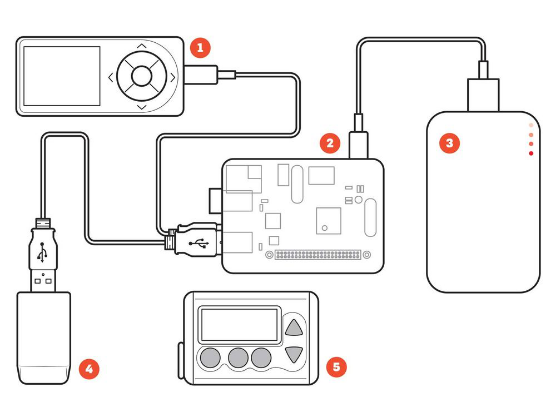
“Artificial Pancreas” is not a new organ transplanted into the human body, but rather a set of electronic components that mimic the missing functions of the pancreas, comprising a mini-computer, micro USB drive, insulin pump, blood glucose monitor, and battery. The computer reads data from the USB drive and the blood glucose monitor, then transmits the recommended dosage to the insulin pump. After algorithmic processing, the system automatically administers the medication, making disease management more convenient and stable for patients with diabetes.
In Lewis’s view, the only issue with their developed system was that it could not directly issue commands to the insulin pump, but instead required manual input via buttons. Consequently, after precisely running the algorithm, Lewis and Leibrand developed a “closed-loop” artificial pancreas system.
The project aims to improve patients' quality of life through DIY home healthcare.
After successfully building a DIY artificial pancreas, the Lewis couple decided to help more people with diabetes transform their lives. They subsequently established the OpenAPS project to provide support for others developing their own DIY artificial pancreases.
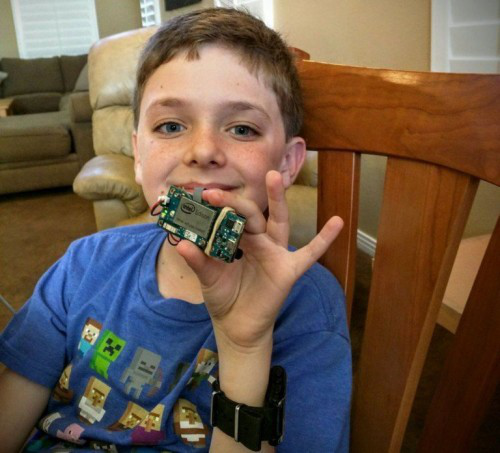
In the United States, many parents of children with type 1 diabetes have found it extremely challenging to monitor their children’s blood glucose levels while they are sleeping or playing outdoors. In response, these parents voluntarily came together in their spare time and established an organization called “CGM in the Cloud” on platform C. With the support of OpenAPS, they began experimenting with DIY artificial pancreas systems and have successfully developed several pediatric-adapted versions.
This project has attracted the attention of the U.S. Food and Drug Administration (FDA). Although it has not yet received approval, the FDA strongly encourages Mr. and Mrs. Lewis to continue their research. They are maintaining regular communication with relevant FDA divisions to ensure that their work remains within regulatory boundaries while still helping patients break the vicious cycle of diabetes and manage their condition and care.
Inspired by OpenAPS, several medical companies have begun moving toward DIY artificial pancreas systems. Medtronic, the world’s largest medical technology company, has completed testing of its OpenAPS-based artificial pancreas system (the 670G model) and will submit it to the U.S. Food and Drug Administration (FDA) for review this month. In addition, Johnson & Johnson, a global pharmaceutical giant, is poised to enter the clinical trial phase for its Artificial Pancreas System (APS) research.