

Betting on the Future of Mobile Health Post-Investment Peak: Chunyu Doctor Files for IPO
Zhang Rui, founder and CEO of Chunyu Yisheng (Spring Rain Doctor), sketched a curve for Caixin reporters: In 2016, the commercial valuations of China’s mobile health companies were on an upward trajectory but had not yet peaked; however, compared with the steep growth seen in the previous two years, capital market sentiment had cooled.
A fund manager who has invested in platform-based and tool-based mobile health companies also drew a curve chart for Caixin reporters: From 2014 to 2015, the commercial valuation of mobile health climbed to its peak; the current trend has passed, but it has not yet hit rock bottom; from 2016 to 2018, a large number of mobile health concept companies will disappear, and the industry’s golden age is over.

Zhang Rui is one of the few optimists in the current market. The divergence between him, as an entrepreneur, and most investors lies in a single question: Has the peak valuation of mobile health already passed? As for the trend that “investment and financing are cooling down and will hit rock bottom in the near future,” this is actually an open secret among them.
In stark contrast to the rampant talk of “disruption” and “restructuring” two years ago, several mobile health entrepreneurs recently told Caixin reporters that they are “anxious about survival.” After years of cash-burning competition, the financing bubble has gradually burst. The era when startups could attract fierce capital bidding merely by presenting numbers of registered doctors or users is over. Lacking robust payers and clear profit centers, these companies have struggled to establish a sustainable business model, leaving founders in a dilemma.
According to the definition by the Healthcare Information and Management Systems Society (HIMSS), mobile health (mHealth) refers to the provision of medical services and information through mobile communication technologies, such as personal digital assistants (PDAs), mobile phones, and satellite communications. In the field of mobile internet, the focus is primarily on healthcare-related mobile applications based on mobile operating systems such as Android and iOS. HIMSS believes that developing countries may leverage mHealth to address bottleneck issues such as shortages of healthcare human resources.
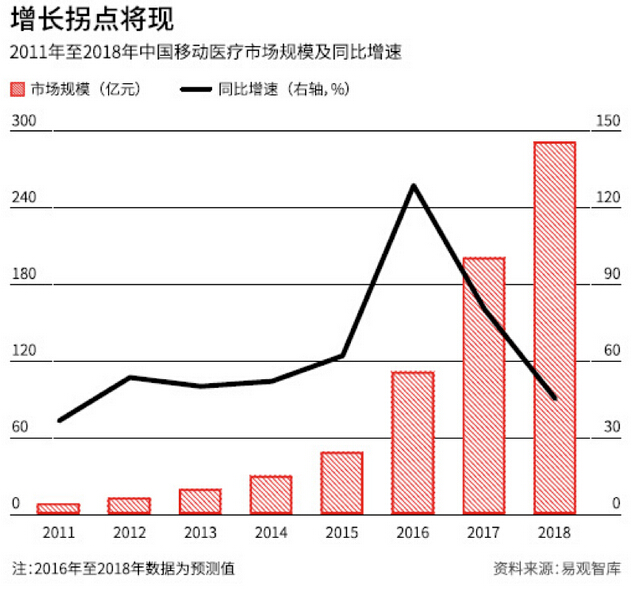
In the past three years, the mobile health market has experienced explosive growth. According to data released by the third-party research firm iiMedia Research, the size of China's mobile health market was approximately RMB 2.95 billion in 2014; it grew by 44.7% in 2015, reaching RMB 4.27 billion; and is projected to reach RMB 12.08 billion in 2017. The number of mobile health users in China was 72 million in 2014, increasing to 138 million in 2015.
The number of mobile health apps has now exceeded 2,000. In 2014, mobile healthcare reached the peak of an investment frenzy, with app developers eagerly awaiting funding. The most notable developments were the significant investments made by BAT (Baidu, Alibaba, and Tencent): Alibaba invested in Haodf.com, Sina Love Doctor, Huakang Mobile Health, and U Doctor U Medicine; Tencent invested in DXY.cn and Guahao.com; and Baidu invested in Health Road, Yihu.com, Zhiwo Cosmeceuticals, Quyi Network, and JiuYi160, among others. That year, there were 80 financing deals in the mobile healthcare sector, totaling $700 million in funding—equivalent to the combined total of the previous three years. In 2015, venture capital funds took over as the primary drivers of mobile healthcare investment, with the market’s financing scale doubling year-on-year.
However, unlike other industries, the healthcare sector is characterized by three major barriers—high professional specialization, high market concentration, and high policy risk—which cannot be overcome simply by burning cash. Several investors told Caixin reporters that they would not consider investing in mobile health in the future. They have gradually come to realize that mobile health has remained on the periphery of traditional medical services, failing to penetrate the core; moreover, it has not addressed the pain points of traditional healthcare, making its social and commercial value difficult to demonstrate.
Over the past two years, mobile health has attracted continuous capital investment with one compelling story after another, but it has now reached a stage where it awaits buyers to take over. By the end of 2015, the mobile health industry began to feel the chill of a capital winter, as issues such as cash-burning subsidies, malicious order falsification, and data fabrication intensified negative sentiment. The vast majority of mobile health apps secured only angel or Series A funding; merely over 50 companies progressed to Series B, and fewer than 20 entered Series C, thereby fulfilling the so-called “Series C curse.” In April 2016, a report titled “Latest List of Defunct Mobile Health Companies” sparked panic within the industry, as 27 moderately well-known mobile health firms declared their demise. In May, “Yao Geili,” the first online-to-offline (O2O) medication delivery enterprise to secure Series A financing, collapsed on the eve of its next funding round and was forced to exit the market.
Entrepreneurs and investors in the mobile health sector are anxiously seeking a path to breakthrough.
Doctors “Returning to the Tide”
In May 2016, Ping An Good Doctor bucked the trend to set new records for financing and valuation in the mobile healthcare sector: its Series A funding round raised $500 million, reaching a valuation of $3 billion, thereby instantly becoming the largest “unicorn” company in this field in China.
However, this event did not inject much excitement into the industry. The prevailing view within the sector is that this was a capital operation leveraging the resources and strategic strength of Ping An Group, and therefore cannot be taken as a pure indicator of the value trends for mobile health companies.
In the mobile healthcare industry, Ping An Good Doctor boasts the largest full-time physician team. According to Wang Tao, Chairman and CEO of Ping An Health Internet Co., Ltd., Ping An Good Doctor has directly employed a full-time medical team of over 1,000 physicians and has established contractual collaborations with more than 50,000 affiliated physicians across 3,000 designated offline hospitals.
Physician resources are the core of medical resources and the most critical commercial asset for mobile health companies. Numerous mobile health entrepreneurs and investors have stated that the number of registered physicians, their professional credentials and ranks, activity levels, and stickiness are key determinants of a company’s competitiveness, and even serve as the sole valuation metric for early-stage investors.
Yet, once they leave the hospital, are doctors still truly doctors? A fund investor involved in investments in multiple mobile health companies told Caixin reporters candidly that when doctors leave hospitals to engage solely in telephone consultations and similar tasks, it means they are detached from the frontline of medical practice and cut off from academic, promotional, and research pathways. Moreover, the cost of recruiting top-tier physicians is exceedingly high, and truly competent doctors do not rely on a single platform. Balancing labor costs with team stability thus presents a significant challenge.
After Ping An Good Doctor aggressively recruited physicians from public hospitals with high salaries, a “backflow phenomenon” emerged, with doctors returning to their original institutions. “Our first team hired 10 people, and six of them went back to their hospitals,” Wu Zongxun, Chief Product Officer of Ping An Health, told Caixin journalists. To ensure the stability of its self-built physician team, Ping An Good Doctor has adopted equity incentive plans and a physician partnership model. Wang Tao also stated that, in the future, Ping An Good Doctor will collaborate with public hospitals and clinics to provide physicians with training, learning opportunities, and career advancement pathways.
Ping An Good Doctor adopts a capital-intensive approach. Most mobile health companies merely collaborate with part-time physicians to expand their scale at lower costs and maximum speed. Chunyu Yisheng claims to have 410,000 professional physicians from public Tier-2 Grade-A hospitals or above; DXY states it has 5 million professional users, including 2 million physician users and 1.37 million certified physicians, covering 80% of the 2.6 million licensed physicians across China; Haodf Online reports that it has listed over 300,000 physicians from more than 3,200 key hospitals.
"Zombie" Apps
Beneath the massive data, among the top-ranked mobile health apps, the rates of duplicate registration for both doctors and users are extremely high, with numerous “zombie doctors” and “zombie users.”
“Almost every doctor at Beijing’s top-tier (Grade 3A) hospitals has registered for and uses more than five mobile health apps simultaneously, yet engagement levels are extremely low,” a mobile health entrepreneur candidly told Caixin reporters. It is not difficult to boost the number of registered physicians through “burning cash” strategies such as in-person outreach (“ground promotion”) and online incentives. “By securing the support of hospital presidents, department heads, or association management, one can register hundreds of doctors at once; however, these doctors rarely, if ever, log on.”
“The scarcity of high-quality physicians and their saturated workloads have resulted in online medical platforms being predominantly staffed by retired doctors and physicians from lower-tier hospitals,” said the aforementioned mobile health entrepreneur, noting that the sector has deviated from its original intent of “optimization” and struggles to deliver high-quality medical services. “Top-tier doctors already have extremely heavy outpatient volumes, in addition to their clinical duties, research, and academic publications. Would they really allocate their valuable time to provide online consultations for a mere few yuan in consultation fees and 100 yuan in service charges?” The increasingly clear-eyed entrepreneur seemed to be asking himself rhetorically.
Unable to penetrate the high walls of hospitals, mobile health companies have shifted their focus to pre-hospital services and post-discharge management. Pre-hospital services include consultation, appointment scheduling, registration, and referrals, while post-discharge management covers follow-up visits, patient follow-ups, interventions, and medical record archiving. However, Zhang Yusheng, founder of Apricot Forest, told Caixin that mobile health should aim to assist doctors in completing their core duties and improving work efficiency; whereas pre-hospital consultations, physician follow-ups, and post-discharge management do not constitute core professional needs for doctors, making it difficult to motivate them and establish long-term collaborations.
Even in the U.S. market, where incentives for medical services are stronger, it is unrealistic to rely on fragmented physician effort, time, and financial incentives for disease management. Omada Health, a U.S.-based mobile health company that has secured $48 million in Series C financing, has found that effective chronic disease management requires full-time professional coaches who deliver online and offline programs covering diet, exercise, and psychological counseling.
Users represent another goldmine of resources for mobile healthcare. “Unlike in the early stages, when only physician resources were assessed, user value is now also being estimated, with valuations calculated based on industry averages and combined with corporate development trends,” a representative from Fosun Group’s investment department told Caixin reporters.
Valuation standards for mobile health are evolving toward diversification. For instance, when targeting the hypertensive patient user base, factors such as patients’ medication expenditures and purchasing power on the platform are factored in to calculate platform commissions; after subtracting customer acquisition costs and accounting for customer retention duration, a relatively accurate valuation can be derived. “However, this estimation method relies on too many assumptions and is subject to ripple effects,” said an investment professional from Fosun Group.
Mobile healthcare services largely originated from appointment registration, rapidly building traffic and a customer base in a short period. However, boosting user engagement remains challenging, as the unique characteristics of the healthcare industry result in low-frequency usage of mobile health apps. According to the “2016 Annual Research Report on China’s Mobile Healthcare Market” released by Analysys Intelligence, the average number of launches per user per session for mobile healthcare apps in China is generally low, mostly ranging between 1.6 and 2.4 times, which confirms the low-frequency nature of healthcare demands.
An investor in a mobile health company told Caixin journalists that two-thirds of users in the United States currently stop using mobile health apps after downloading them. To generate greater commercial value from each user interaction, internet healthcare companies need to focus on enhancing user stickiness and refining their business models.
Two years ago, mobile health companies believed that users had both the ability and willingness to pay, given that mobile health services held a price advantage compared to the high costs of hospital examinations and medications. However, facts have proven otherwise. “Chinese internet users have been spoiled by free online content and lack the willingness to pay. In other words, mobile health has not facilitated genuine medical practices nor provided services with sufficient added value to motivate users to pay,” said the aforementioned mobile health entrepreneur. Currently, user payments are concentrated on single-instance registration and consultation services, typically priced under RMB 20. It remains difficult to promote higher-priced offerings based on concepts such as family doctors, telemedicine, and cloud hospitals.
Who Will Pay?
Mobile healthcare has long been seeking robust payers. Many companies have targeted the vast pharmaceutical consumer market, attempting to integrate online and offline services through O2O platforms to provide users with an end-to-end continuum of care for medical consultation and medication procurement, thereby earning margins from the price differentials. However, stringent policy barriers—specifically, the hard regulations prohibiting online prescription issuance and the sale of prescription drugs—have blocked this critical link.
“Without access to prescriptions, we cannot obtain patient information and needs, making it naturally impossible to sell medications.” According to the aforementioned mobile health entrepreneur, mobile healthcare platforms such as Ping An Good Doctor, Chunyu Doctor, and DXY are all constrained by their inability to secure prescriptions, which prevents them from integrating with pharmaceutical sales channels and establishing a complete commercial loop. Pharmaceutical e-commerce apps like Yaogeli, 111.com.cn, and Xunyi Wenyao, also hindered by the lack of prescription access, are limited primarily to over-the-counter drugs and have been unable to truly penetrate the market.
After much trial and error, some mobile health companies with abundant physician resources have found the “formula” to persuade pharmaceutical companies to pay. In early June, the Chief Commercial Officer of Xingshulin (Medical Trees) assumed office, initiating commercial exploration between physicians and pharmaceutical firms. According to estimates by Founder and CEO Zhang Yusheng, Xingshulin is projected to achieve profitability by the end of the year. Prior to this, multinational pharmaceutical companies such as Pfizer and AstraZeneca, as well as domestic firms like Livzon and Zhongsheng, had already agreed to fund Xingshulin’s commercial projects.
Xingshulin has developed a range of commercial products tailored to the needs of pharmaceutical companies, such as Cloud Data, Cloud Academy, and Cloud Ward. Among these, Cloud Academy, which provides services for physicians’ conference lectures, has achieved the fastest monetization. Meanwhile, Cloud Ward, focused on patient management and medical record analysis, and Cloud Data, dedicated to doctor-patient data analytics, have both generated revenue returns.
In the current healthcare landscape, where medical institutions rely on drug sales for revenue, 40% of expenditures are attributed to pharmaceutical consumption. Pharmaceutical companies spend over RMB 200 billion annually on marketing to physicians, with conference-related expenses accounting for more than RMB 100 billion. However, the return on investment behind these exorbitant costs is low, as socializing and dining fail to establish stable professional relationships.
Zhang Yusheng believes that mobile health platforms should migrate conferences to online venues and conduct analyses of physician information, engagement, retention, and discussion content. When pharmaceutical companies require insights into physician behavior trends, mobile health companies can provide precise pathways. This business model does not involve transferring offline “kickbacks” to online channels; rather, it addresses legitimate service needs of pharmaceutical companies, such as facilitating communication and collaboration with physicians, analyzing medical records, and promoting new products and new indications.
Dingxiangyuan, which started as a “physician community,” has achieved consecutive years of profitability through physician headhunting and pharmaceutical company services, becoming one of the few profitable players in the mobile health industry. Chunyu Doctor follows a similar model. According to Zhang Rui, multinational pharmaceutical companies have already paid RMB 50 million to sponsor Chunyu Doctor’s activities, including keyword click-throughs, offline workshops, and patient education programs.
Real estate developers have emerged as new entrants. Zhang Rui stated that two real estate developers are willing to invest RMB 200 million each in Chunyu Doctor to develop offline clinics. This investment is driven by the transformation of real estate developers into property service providers, who aim to uncover new business opportunities by offering private physician services or leveraging concepts such as medical real estate and elderly care real estate.
Zhao Heng, a columnist for “Village Doctor’s Diary,” argues that the vast majority of non-industry capital has limited understanding of healthcare investment, particularly in medical services. Some of this capital is driven by the need for transformation, as seen with numerous real estate companies, while other investments are motivated by the fear of missing out on emerging trends. Meanwhile, many product-centric companies facing development bottlenecks participate primarily in later-stage mobile health investments to meet transformation and market capitalization management needs. These companies aim to send signals of strategic transition to the secondary market through such “trend-driven” investments, thereby stimulating a rebound in their sluggish stock prices.
Wearable devices are also regarded as a key payer in mobile healthcare. Medical-grade wearables represent the most mature segment, with origins traceable to devices such as cardiac pacemakers and coronary stents. Leading players in the traditional medical device industry—including Baolite, David Medical, and Andon Health—are actively exploring this space. For instance, Andon Health has developed a smart blood pressure monitor that connects with WeChat, while Sinocare has launched a blood glucose meter compatible with smartphones. Both innovations have garnered significant interest from the capital markets.
Through partnerships with smart hardware providers, Xingshulin has enabled physicians to manage patients throughout the entire care continuum, while facilitating both patient-paid and enterprise-paid models. Citing its collaboration with the Department of Cardiovascular Surgery at Jiangsu Province People’s Hospital as an example, Zhang Yusheng stated, “In the field of arrhythmia surgery, physicians can use Xingshulin’s ‘Bingli Jia’ (Medical Record Folder) product to collect and manage data for over 1,000 patients, who can transmit their examination results via handheld ECG devices. In the realm of major diseases, physicians hold decisive authority, resulting in high patient compliance.”
All mobile health companies pin their greatest payment-related aspirations on big data, viewing it as a treasure trove with limitless potential. However, the truly valuable core big data currently resides within public hospitals, which, acting as “information silos,” have been reluctant to open their databases. As a result, big data remains a mirage—visible but unattainable—for mobile health companies.
He Huaping, Deputy Director of the Investment Management Department at Beijing Boxing Securities Investment Advisory Co., Ltd., told Caixin that mobile medical services primarily focused on consultations fail to generate precise, in-depth, and large-scale medical data, making it difficult to demonstrate their commercial value. Zhao Heng believes that the results of data analysis, such as the identification of high-risk populations and risk factors, must be translated into follow-up services integrated with clinical treatment—such as health tracking and advice, professional disease management plans, and medication interventions—to make insurers willing to pay for these services. However, these initiatives require specialized medical expertise and established channels of collaboration with hospitals and physicians, which are particularly challenging to build.
A New Story for Insurance
“Partnering with insurance companies is the latest chapter in mobile health. ‘The insurance narrative sounds more prestigious; everyone talking about insurance is spinning a story. It’s a true story, but one that will take time to unfold,’ said Zhang Rui.”
Zhang Rui stated that offline clinics and health insurance are the two major strategic directions for Chunyu Yisheng (Spring Rain Doctor) in the future. Currently, Chunyu Yisheng serves only as a small-scale service purchaser for insurance companies. However, its future goal is to collaborate with insurers to obtain an insurance license and develop commercial health insurance products featuring mobile healthcare characteristics.
In November 2015, Chunyu Yisheng (Spring Rain Doctor) entered into a partnership with PICC Property and Casualty Company (PICC P&C), with the PICC P&C Shenzhen Insurance Product Innovation Laboratory undertaking the collaborative project. Chunyu Yisheng stated that it would provide tiered and standardized service offerings tailored to the characteristics and different segments of PICC P&C’s customer base. These services would be delivered through its tiered diagnosis and treatment system, which integrates online health consultations, Chunyu Clinics, authoritative medical institutions, and Chunyu International. Additionally, Chunyu Yisheng would provide medical process management for PICC P&C’s health insurance products to prevent adverse selection and over-treatment, thereby controlling risks associated with commercial health insurance operations.
Chen Weiguang, a partner at BlueRun Ventures—the investor behind mobile health companies such as Chunyu Doctor and Xingshulin—told Caixin journalists that well-capitalized insurance enterprises are an inevitable choice for the mobile health sector. “However, the collaboration cycle tends to be relatively long, and insurers often adopt a cautious stance toward innovative models, as mobile health has not yet completed a full business cycle, leaving insufficient data to demonstrate that cost containment can be achieved through online services and private physician arrangements.”
A similar example is the partnership between Xunyi Wenyao and Taikang Life Insurance. Under this collaboration model, insurance companies procure services from mobile health companies—such as medical consultations, appointment registration, and clinical accompaniment—to enrich their insurance offerings and boost sales. “When consumers purchase life insurance, they typically have no tangible service experience unless they suffer a major illness, as insurers only provide final claim settlements. However, with the involvement of mobile health companies, numerous value-added services are offered. This shifts insurers’ service capabilities from major-disease claims processing to offline services, thereby enhancing the appeal of insurance products. This represents a change in the business model,” said Xu Feng, General Manager of the Key Accounts Department at Xunyi Wenyao, part of Wenkang Group.
The procurement model is merely a high-volume, low-margin transaction between mobile health companies and insurance providers. Xu Feng candidly admitted that the annual procurement volume of a single insurance company is only in the range of hundreds of thousands of yuan, which is negligible. An insurer’s payment capacity depends on the type of insurance product. For instance, with maternal and child health insurance, where the annual premium is only around RMB 300, insurers, driven by cost considerations, will only procure the lowest-priced telephone consultation services offered by mobile health companies. In contrast, for high-end insurance products with annual premiums of approximately RMB 20,000, insurers are willing to purchase higher-priced service packages such as “medical escort plus expert appointment registration.” Furthermore, insurers use the low “actual card activation rate” to actuarially calculate loss ratios, ultimately determining the payment amount.
Mobile health companies are not content with the procurement model; instead, they aim to achieve platform-based sales by “co-developing insurance products,” thereby sharing in insurance commission revenues.
According to Xu Feng, Xunyi Wenyao has partnered with Taikang Life Insurance to pilot insurance products such as maternal and child health insurance, clinic closure insurance, and female cancer prevention insurance, achieving high sales efficiency. Jiang Tianjiao, General Manager of the Strategic Development Division at Wenkang Group’s Xunyi Wenyao website, believes that insurance has three core demands: first, expanding the customer base through channels and services; second, differentiating itself from social security by designing products that better meet customer needs beyond mere claim payouts; and third, achieving profitability through effective cost control and actuarial practices. “Mobile healthcare companies can fulfill all three demands. We embed services into insurance products to help expand their customer base, while also conducting health record collection and health management initiatives to identify customer needs and enable cost control and actuarial analysis.”
However, Zhao Heng argues that viewing insurance as a consumable product rather than as risk protection fundamentally contradicts the essence of health insurance.
He cited an example in which an insurance company once launched a high-end insurance product with an annual premium of over RMB 20,000, bundling childbirth services priced at RMB 60,000–100,000 from a high-end private hospital. As a result, individuals primarily purchased the policy for consumption purposes rather than risk protection. The insurer incurred substantial losses shortly after the product’s launch, and it was discontinued after several years of operation.
For medical consultation and treatment, the greater significance of partnering with Taikang Life Insurance lies in achieving a “one-stop chain” layout. “In China, it is difficult for insurance companies to become major payers; life insurance still relies primarily on ground-level promotion, and commercial health insurance has yet to fully develop,” said Xu Feng. He believes that insurance companies can provide credibility endorsement and ensure the quality of pharmaceutical distribution. After establishing initial referral cooperation, there will be greater potential for collaboration in subsequent medical resources and pharmaceutical services.
Mobile health companies are not concerned about insurers following Ping An’s lead by establishing their own mobile health divisions. “Achieving short-term profitability in mobile health is challenging due to the high investment required; building proprietary platforms is not an economically viable option, and only large insurers have the capacity to do so,” said Jiang Tianjiao. Xunyi Wenyao has already secured its “entry ticket” by partnering with Taikang Insurance, allowing it to further explore profitable business models. He believes that the brand enhancement contributed by the insurer, along with the collaboration between their respective membership systems and the resulting growth in user base, all underscore the value of this partnership.
When it comes to partnerships with insurance companies, no mobile healthcare firm can match Ping An Good Doctor in terms of resource advantages. Wang Tao stated that the first close collaboration between Ping An Good Doctor and its affiliated companies was in the insurance sector, including health insurance, life insurance, and more. Ping An Good Doctor establishes customer health records, provides health consultations, health management services, and personalized health plans, while leveraging data and information to facilitate underwriting and claims processing. The company previously reported that its bundled health management service, the “Health Card,” launched in July 2015, generated over RMB 100 million in sales within three months, marking a rare instance of substantial revenue in the mobile healthcare industry.
“Ping An Good Doctor can serve as a customer acquisition channel for insurance products, with costs that are more cost-effective than hiring ground sales personnel. This is a strategy that only Ping An can execute,” said an investor from Fosun Group.
Ping An has even greater ambitions. Wu Zongxun, Chief Product Officer of Ping An Health, revealed that the company’s core business is to integrate health insurance, hospital services, and health management into a unified model, creating an HMO (Health Maintenance Organization) framework.
The HMO model refers to a closed-loop healthcare network in which payers and providers agree on certain discounted rates, offering members bundled medical services that are more affordable and have controllable quality, based on monthly or annual premiums. Members are typically required to select a primary care physician as a gatekeeper, with referrals to specialists within the HMO network made only when necessary, thereby achieving cost containment.
A similar model is the Accountable Care Organization (ACO) framework that WeDoctor Group plans to establish. This model, centered on families, provides users with three-tiered medical services, precision health management, and coverage for medical expenses.
A notable example is Kaiser Permanente in California, USA, which has 9.5 million members and operates 38 hospitals. In 2013, its annual revenue reached $53.1 billion. The Kaiser model integrates healthcare services and products into a closed loop, offering both health insurance products and owning hospitals, thereby facilitating centralized control over costs and medical risks.
However, unlike the United States’ advanced privatized healthcare service system and mature commercial health insurance framework, China’s private healthcare and commercial insurance sectors are still in their infancy. Currently, China’s five specialized health insurers—PICC Health, Kunlun Health, Harmony Health, Ping An Health, and CPIC-Allianz—along with more than 100 other companies engaged in commercial health insurance business, generally face challenges of insufficient customer bases and operational losses. The business model integrating mobile healthcare with insurance, as well as the realization of a closed-loop payment system, remains exceedingly distant in China.
The Challenges of O2O
In an environment where mobile health is generally unprofitable, the ability to generate cash flow confers a competitive advantage. Companies such as Chunyu Doctor, DXY, and Ping An Good Doctor have transitioned from online to offline (O2O) operations, aiming to establish a comprehensive healthcare experience by deploying offline clinics.
Chunyu Yisheng opts for an “asset-light” strategy. In May 2015, it announced the opening of 25 offline clinics in five cities, including Beijing, Shanghai, Guangzhou, Hangzhou, and Wuhan. Its business model primarily involves co-establishing offline clinics with private hospitals: the hospitals provide clinic spaces and basic equipment, thereby addressing the largest cost component, while Chunyu Yisheng delivers services through physicians’ multi-site practice arrangements and internet-based resource allocation. For payment, it adopts an annual subscription model for “online + offline” personal physician services, capped at RMB 980 per year, with no additional fees for diagnoses and partial reimbursement of medications through medical insurance. Its online customer base consists mainly of employees of large enterprises and value-added services for corporate clients; following the launch of its offline clinics, the company plans to channel online demand to its offline facilities.
This trend persisted for a year, but the industry consensus was that the replication speed, outpatient volume, and cash flow performance of Chunyu Clinics were far from optimistic. Zhao Heng argued that the “asset-light” model failed to secure a stable supply of physicians or sustain a loyal user base. With ordinary physicians, it was difficult to persuade patients to pay high consultation fees; with renowned experts, the patient pool was relatively limited, hindering scalable expansion.
However, Zhang Rui firmly believes that operating offline clinics is the future of Chunyu Doctor. He has adjusted his strategy to pursue a self-built model, aiming to reduce property costs through partnerships with real estate companies, lower supply chain costs by collaborating with pharmaceutical suppliers, and cut labor costs by leveraging Chunyu Doctor’s existing management expertise and physician resources.
In terms of clinic positioning, Chunyu Yisheng has also abandoned the common choices of general practice clinics and renowned-expert clinics, instead making “internet-famous doctors” its selling point. By leveraging physicians with strong market appeal, such as Cui Yutao, it has pursued a path of specialized outpatient services in areas like child development and skin care. “These doctors are not necessarily conventional top-tier specialists or those with high professional titles, but they possess excellent communication skills and service orientation, along with powerful market appeal. We will build offline clinics tailored to them to unlock their commercial value,” Zhang Rui told Caixin reporters.
Chen Weiguang, an investor in Chunyu Yisheng (Spring Rain Doctor), believes that delivering a comprehensive healthcare experience necessitates a strong offline presence. “With a sufficiently large user base and access to high-quality physicians, effective resource allocation and matching can stimulate users’ willingness to pay.” However, he also noted that offline operations inevitably involve asset-heavy models, which constrain scalability. Given the pronounced regional characteristics of healthcare—where patient needs and physician competency vary significantly across different areas—establishing a standardized service system poses a major challenge.
Dingxiang Yuan, the pioneer of the offline clinic concept, opened its first clinic in Hangzhou in November 2015. The clinic recruited 15 full-time physicians and 30 full-time nurses, positioning itself as a general practice facility focused on “the treatment of chronic diseases, common illnesses, and frequently occurring conditions.” Dingxiang Clinic concentrates solely on patient care and provides home-visit services. Pharmaceutical supply and distribution are handled by Shanghai Pharma Cloud Health, while laboratory testing, medication preparation, infusion services, and ECG monitoring are outsourced to third-party institutions. A single consultation fee ranges from RMB 300 to RMB 500, excluding examination and medication costs. Li Tiantian, founder and CEO of Dingxiang Yuan, stated that the clinic targets individuals who have both the financial capacity and the need for medical services, and who are willing to engage interactively with physicians.
Industry sentiment is generally pessimistic regarding the payer coverage capabilities and profitability of offline clinics. A fund investor involved in investing in multiple mobile health companies remarked that offline clinics are essentially equivalent to private hospitals. “The market is not short of hospitals; what is lacking are Grade 3A hospitals. Private healthcare facilities suffer from very low patient volumes and lack competitiveness. From the perspective of mobile health, the online-to-offline conversion rate is very low, and offline clinics face significant risks related to patient traffic as well as substantial pressure from heavy-asset costs.”
Ping An Group once suffered a major setback in its expansion of offline clinics. In 2009, Ping An Trust invested RMB 500 million with the plan to develop nearly 1,000 outpatient departments and clinics in Guangdong Province within five years. However, the reality was that by 2012, the two outpatient clinics that had opened were still operating at a loss, forcing the “1,000 Clinics” initiative to be shelved.
In 2015, Ping An Good Doctor made another major move after its launch, announcing a RMB 50 billion investment to establish “10,000 clinics” over ten years. However, the flagship Ping An Clinic, which was scheduled to open in Shanghai in August 2015, faced repeated delays due to opposition from nearby residential communities during the clinic licensing application process.
Given the high capital outlay, long lead times, and substantial risks associated with building clinics from scratch, Ping An Good Doctor has had to abandon its original “wholly self-built” approach in order to accelerate clinic replication. Wu Zongxun previously told Caixin journalists that Ping An Good Doctor has shifted its strategy, expanding across China through a mix of self-built facilities, joint ventures (introducing foreign hospital management partners), and certified franchise partnerships. Ping An Good Doctor primarily assumes the roles of standard-setter and “gatekeeper,” aiming to create “Ping An Clinics” modeled after the Starbucks chain format, with unified service standards, uniform décor specifications, and consistent pricing structures.
Replicating clinics has become a widely recognized challenge within the industry. Zhao Heng believes that, constrained by regional policy differences, varying consumer purchasing power and willingness, and particularly the scarcity of high-quality physicians, the likelihood of rapid nationwide expansion of medical services is low. Instead, providers must first cultivate deep roots in regional markets before gradually expanding. As a capital-intensive sector, overall market development will proceed at a slower pace.
Internet Hospital Scam
Compared with offline clinics, internet hospitals represent a more significant strategic move for the “big players.”
Over the past two years, Alibaba has strategically deployed “pieces” such as Future Hospitals, Cloud Hospitals, the Tmall Pharmacy Pavilion, and the Ali Health App, with the ultimate goal of building a closed-loop ecosystem centered on pharmaceutical sales.
In January this year, Alibaba finally established an internet hospital platform capable of connecting all stakeholders through its collaboration with Wuhan Central Hospital. The underlying business logic is as follows: Wuhan Central Hospital leverages the internet hospital platform to facilitate patient triage and referral, while Alibaba obtains electronic prescriptions issued within the hospital via the platform, thereby enabling pharmaceutical sales.
In October 2014, Alibaba collaborated with the Hebei Provincial Government on the “Smart Hebei” initiative. Leveraging online hospitals as the platform and the Ali Health App as the carrier, it implemented an electronic prescription order-grabbing model similar to that of ride-hailing apps. Under this model, after patients received medical consultations at hospitals, their prescriptions were transmitted via information systems to Alibaba’s electronic prescription platform. The platform then dispatched orders to external pharmacies, which would compete to accept and deliver them. However, due to hospitals’ reluctance to cede pharmaceutical profits and their covert resistance, coupled with a decline in pharmacies’ enthusiasm for order grabbing after Alibaba discontinued subsidies, the venture ultimately ceased operations.
The key to Alibaba’s Internet hospital model lies in integrating the online pharmaceutical sales segment; however, its drug-selling platform, Tmall Medicine Hall, has experienced three cycles of launch and suspension. From June 2011 to February 2012, Tmall Medicine Hall was shut down by local Food and Drug Administrations on three separate occasions shortly after each brief opening, citing “lack of qualification for online drug sales.” After the third launch, Alibaba could only earn referral fees by directing traffic to pharmaceutical companies’ official websites, rather than facilitating direct transactions on its own platform.
In January 2014, Alibaba invested RMB 1.037 billion to take a controlling stake in CITIC 21st Century, and acquired the Hebei Huiyan 95095 platform from Hebei Huiyan Pharmaceutical Technology Co., Ltd. for RMB 3 million. This platform held the pilot qualification for “online retail of pharmaceuticals via third-party internet platforms,” thereby enabling Alibaba to finally obtain the direct sales license for its B2C pharmaceutical trading platform.
However, in June this year, the China Food and Drug Administration (CFDA) suspended all pilot programs for online retail of pharmaceuticals on third-party internet platforms such as Tmall Pharmacy. Overnight, Alibaba returned to the “traffic referral and revenue-sharing” model.
Haodaifu Online is striving to establish a successful model of government-enterprise collaboration. In April this year, Haodaifu Online announced the formal signing of a cooperative agreement with the Yinchuan Municipal Government to jointly build the Yinchuan Smart Internet Hospital. Under this plan, Haodaifu Online will leverage the Yinchuan Smart Internet Hospital as a platform to facilitate the relocation of 100,000 medical experts from 4,800 hospitals across China who are registered on its platform to Yinchuan. These experts will collaborate with healthcare and pharmaceutical service institutions at all levels in Yinchuan, as well as with Tiantian Checkup Houses, while upgrading local hospitals in Yinchuan into internet hospitals.
The key to internet hospitals lies in the redistribution of electronic prescriptions. In China, where healthcare providers have historically relied on drug sales for revenue, the outflow of prescriptions from hospitals means forfeiting pharmacy income. Consequently, internet hospitals can only replicate their model through partnerships with hospitals that have abolished drug markups and seek patient referral flows, resulting in slow expansion.
Liu Qian, a senior pharmaceutical marketing executive and mobile health analyst, told Caixin that the tiered diagnosis and treatment system has yet to fully resolve the interest conflicts between hospitals at different levels. The medical services provided by internet hospitals are currently limited to follow-up consultations and chronic disease management. Furthermore, these platforms face significant challenges, including barriers related to medical insurance coverage, pressures from drug distribution logistics, and difficulties in establishing close collaborations with hospitals. With limited capacity to drive prescription drug referrals, internet hospitals are unlikely to realize commercial value in the short term.
Prior to Alibaba and Tencent’s investments, WeDoctor Group acquired a controlling stake at a premium price in Tongxiang No. 3 People’s Hospital, a secondary Grade B hospital located in Wuzhen, Zhejiang Province, by establishing a joint-stock company with the hospital. Both parties jointly operate the Wuzhen Internet Hospital, which is affiliated with Tongxiang No. 3 People’s Hospital. As the Wuzhen Internet Hospital itself lacks robust physician resources, WeDoctor Group leverages its online platform to enable physicians from various regions to register as “online doctors” at the Wuzhen Internet Hospital under the multi-site practice policy, thereby providing remote medical consultations and other “virtual healthcare services.”
WeDoctor Group easily obtains electronic prescriptions by holding controlling stakes in hospitals. However, the other side of the coin is that such models offer limited opportunities for scalable replication and entail high costs. This is because there are very few hospitals open to controlling investments from social capital; generally, only those ranked third or lower in their respective industries within second- and third-tier cities are willing to accept such controlling investments. Furthermore, the self-built hospital model requires bearing costs for hardware infrastructure, medical equipment, and human resource upgrades, with a typical payback period of seven to eight years or more.
Betting on the Future with High Valuations
For Chunyu Yisheng, WeDoctor Group, Haodf Online, and DXY, all valued at over $1 billion, investment firms are now increasingly questioning whether their valuations are too high.
However, market participants believe that valuations are tied to resource scarcity. “The valuation of mobile health is determined by market forces; investors are betting on the future with high valuations. There are only two or three major platforms. While their current valuations are indeed high, financing demand has reached saturation, making it difficult for investment institutions to enter the market,” said Chen Weiguang.
To expand their resource advantages, mobile health platforms have brought in more participants, aiming to amplify commercial value by building a “super gateway.” For example, Xunyi Wenyao, a mobile health company, has established multi-party collaborations with pharmaceutical companies, medical device manufacturers, and insurance firms.
Jiang Tianjiao stated that in healthcare settings, physicians serve as the decision-makers, while patients are key payers. Stakeholders such as pharmaceutical companies, medical device manufacturers, and insurers all have demands directed at both physicians and patients; engaging a broader range of participants is essential to building a robust ecosystem. He remarked, “We are cultivating a comprehensive ecosystem. By ‘ecosystem,’ we mean that many of the roles and models within it are not necessarily pre-planned, but rather emerge and evolve organically over time.”
Executives at multiple platform-based mobile health companies have all begun promoting a similar “ecosystem” narrative. However, investors point out that the need to draw in numerous stakeholders indicates that mobile health has yet to establish a complete business model; the web of interests is expanding and becoming increasingly complex, making it “harder and harder to understand.”
An investor in a mobile health company believes that the mobile health industry is constantly “spinning narratives” and shifting its development strategies, adding that “burning cash for three to five years without a clear view of the future direction is truly anxiety-inducing.”
Tiered diagnosis and treatment, family doctors, offline clinics, insurance partnerships?? Over the past two years, the mobile health sector has been rife with “storytelling.” Liu Yun, founding partner of Huayi Capital, bluntly told Caixin reporters that these narratives are driven by fundraising needs. However, Chen Weiguang argues that healthcare requires time and a gradual process. Every startup must continuously experiment to find a viable profit model. Restructuring the medical service system involves resolving numerous challenges, necessitating more time to enhance user experience, improve professionalism, and establish payment systems, ultimately achieving a sustainable, profitable business loop. Other internet verticals, such as e-commerce and O2O (online-to-offline), have undergone similar journeys, differing only in pace and industry value chains.
For many mobile health entrepreneurs, investors exert significant pressure on management teams while providing resources and financial support. Multiple investors and mobile health founders told Caixin reporters that emerging mobile health companies, constrained by the fundamental flaw of immature business models, rely entirely on investor funding, which may cause founders to lose control.
Zhang Rui stated that among the multiple rounds of financing for Chunyu Yisheng, there was only one instance involving a valuation adjustment mechanism (VAM) agreement. Another mobile health entrepreneur told Caixin reporters that VAM agreements were present in all four rounds of financing he had secured.
He Huaping believes that valuation adjustment mechanisms (VAMs) are common. “RMB-denominated funds typically require a two-year investment period with an exit within one year, while USD-denominated funds generally allow for a three-year investment period with an exit within two years. Capital providers seek to mitigate cyclical risks through VAM agreements.”
Valuation adjustment mechanisms (VAMs) in angel and Series A rounds hold little practical significance. He Huaping stated, “Equity in startups is neither as sensitive nor as valuable as that in private equity (PE) firms. For unprofitable companies, equity promises are merely empty prospects, and VAMs cannot effectively mitigate risks.”
Valuation adjustment mechanisms (VAMs) are even more common in Series B and C financing rounds for mobile health companies. An investor from Fosun Group candidly admitted, “VAMs place significant pressure on founders, affecting team settlements, monetization, and share repurchases or dilution. Ultimately, for early-stage projects, VAMs do more harm than good as incentives. Some clauses may include revenue targets; given a five-year fund term plus a two-year exit period, the company must go public or be acquired within seven years.”
Investors in the mobile health sector told Caixin reporters that the barrier to entry for investing in this field is not low. Many investment teams often fail to fully understand the projects, blindly driving up prices to secure deals while focusing solely on market size and growth prospects, overlooking policy barriers and commercial risks. Furthermore, there are fundamental differences between foreign and Chinese healthcare systems; mature international models are not directly applicable in China, and valuation methods from mature markets cannot be simply applied to the Chinese context. “The Chinese mobile health market is rife with inflated valuations and bubbles, making it increasingly difficult to find buyers willing to take over these assets.”
Who Will Take the Baton in the Capital Winter?
Valuation is, in a sense, “pie in the sky.” After nearly three years of high-level investment, investors in mobile health are urgently seeking paths to monetization.
Zhang Rui revealed that Chunyu Doctor has completed the Pre-IPO round of its $1.2 billion financing, with financial auditing, corporate structuring, and legal procedures all in place, making its listing plans clear and promising. “Chunyu Doctor’s online consultation business demonstrates strong profitability, generating actual revenue of RMB 130 million and a net profit of RMB 30 million last year. This segment is suitable for being packaged for an IPO.”
He stated that Chunyu Doctor is hesitating between listing on the A-share market and the New Third Board. The high entry barriers and lengthy timelines of the A-share market are perceived by investors as overly inefficient, while the low stock prices and minimal trading volumes on the New Third Board are deemed insignificant.
Zhang Rui candidly admitted that, as the founder and manager of Chunyu Doctor, he had no intention of pursuing an initial public offering (IPO). “An IPO is a demand from capital investors; for me, it amounts to debt repayment. After all, the profitability of Chunyu Doctor’s core business was achieved with the support of its investors.”
The mobile healthcare industry has seen the emergence of a number of “tier-one companies,” including Ping An Good Doctor, Chunyu Doctors, WeDoctor Group, DXY, and Haodf Online. As an investor, Chen Weiguang noted that these companies have secured substantial funding, with amounts exceeding USD 30 million and, in some cases, surpassing USD 100 million. However, a clear trend is that some companies are facing challenges when raising Series B and C rounds. Consequently, many have chosen to raise capital through the National Equities Exchange and Quotations (NEEQ) system, while more mature enterprises are dismantling their VIE (Variable Interest Entity) structures. “Last year, amid the stock market boom, most mobile healthcare companies dismantled their red-chip structures. This year, fewer have done so, as many believe the outlook for China’s capital markets remains uncertain and have therefore opted to temporarily shelve their VIE dismantling plans.”
Overall, the New Third Board is considered a relatively ideal exit route for mobile healthcare companies. He Huaping told Caixin journalists that, under the new regulations issued by the China Securities Regulatory Commission (CSRC), the New Third Board will establish an Innovation Tier, allowing public mutual funds and private equity firms to participate, thereby enhancing trading activity and liquidity—an effect comparable to that of the U.S. NASDAQ. “Within the Innovation Tier, if a Select Tier is further delineated based on profitability and revenue metrics, its capital market impact would be equivalent to that of China’s A-share market.”
Mobile healthcare companies capable of integrating with pharmaceutical enterprises to form an industrial chain also hold potential for mergers and acquisitions. “For instance, many listed pharmaceutical companies are willing to invest in companies engaged in stem cell and immunotherapy research, as well as those specializing in genetic testing and chronic disease management,” stated He Huaping.
However, the long capital recovery cycle of mobile health has exceeded the risk tolerance of most investment institutions. “Since 2012, there have been few cases of mobile health companies listed on the New Third Board or going public; its performance lags significantly behind that of the TMT sector,” noted an investor from Fosun Group. “While healthcare is a hot spot, mobile health has struggled to gain similar traction.”
The hype cycle has passed, and the game has turned into a game of hot potato. “When the tide goes out, you see who’s been swimming naked.” Li Min, General Manager of the Investment Department at Vantone Exhibition & Convention, told Caixin that the risks of speculative investment in the mobile health sector are now materializing. Bi Lei, a partner at Chunfeng Venture Capital under Chunyu Yisheng (Spring Rain Doctor), also told Caixin that the broader capital market’s attitude toward mobile health has entered a cooling-off period, and the current track model is no longer viable. “O2O ventures are all cash-burning projects, making them highly sensitive to capital pressure. The biggest fear for investors is being left holding the bag with no one willing to take over. Those who are still relying on storytelling and showcasing their teams will certainly not secure investment.”
A growing consensus within the industry is that a large number of mobile health companies will fail during the capital winter from 2016 to 2018. Some believe this presents an opportune moment for mergers and acquisitions, noting that “identifying strong teams and advanced technologies creates opportunities for integration.”
Zhang Yusheng stated that Xingshulin has enhanced its capabilities in case data and cloud-based crowdsourcing processing by acquiring two small data-focused teams. “I am willing to acquire technology companies specializing in remote consultation and home testing technologies,” Zhang Rui remarked. For Chunyu Yisheng, which is “well-capitalized,” the capital winter has reduced M&A costs, presenting a “long-awaited opportunity.”
Source: Caixin Health, Li Yan