

Zheng Wei of Zhongjing Tech Investment: 'Now Is the Best Time to Invest in Traditional Chinese Medicine'
Traditional Chinese Medicine (TCM), with a heritage spanning thousands of years and a mixed reputation over the past century, faces an uncertain future in today’s internet- and capital-driven era. While it is difficult to predict precisely how TCM will evolve, it is encouraging to note that it is no longer a field exclusively associated with middle-aged and elderly practitioners. A significant number of talented, ambitious, and passionate young people are now dedicating themselves to this discipline.
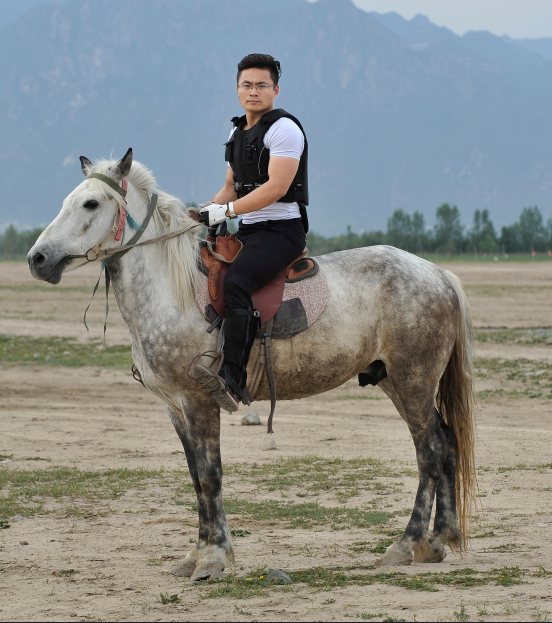
“With the internet, policies, and market pain points all in place for traditional Chinese medicine (TCM), now is the best time to invest in TCM,” Zheng Wei said in an exclusive interview with VCBeat.
Zheng Wei, born in 1986 in Wenling, Zhejiang Province, and raised in Hangzhou; in 2005, he pursued studies in medicine and health at Beijing University of Chinese Medicine, delving into traditional Chinese medicine; in 2009, he specialized in financial securities with a focus on securities law at the Central University of Finance and Economics, studying under Professor Guo Feng, President of the China Securities Law Research Association, while also picking up his mentor’s Sichuan dialect; formerly a core member and Board Secretary of Gushengtang Traditional Chinese Medicine Chain Group, where he facilitated hundreds of millions of dollars in financing; currently serves as Board Secretary of Zhongjing Technology Investment Co., Ltd., focusing on investments in the healthcare sector; and concurrently holds the position of Council Member of the Sub-health Committee of the World Federation of Chinese Medicine Societies.
VCBeat conducted an exclusive interview with Zheng Wei, a rising star who has transitioned from entrepreneurship to investment while bridging the worlds of traditional Chinese medicine (TCM) and modern capital markets, to explore his vision for the future of TCM in its integration with capital.
Nearly 20 New Stores in Three Years: Capital Fuels Gushengtang’s Rapid Expansion in TCM
“At that time, my classmates from the Central University of Finance and Economics all joined major financial institutions after graduation, with average monthly salaries of no less than 8,000 yuan. I chose not to follow this path; instead, I joined a small company offering a monthly salary of only 3,500 yuan because it was preparing for listing on the National Equities Exchange and Quotations (NEEQ), which would provide me with ample opportunities for learning and professional growth. This career choice enabled me to rapidly gain experience in successfully guiding two companies through NEEQ listings and financing within just one and a half years, laying a solid foundation for my joining Gushengtang Traditional Chinese Medicine as a core founding member at the end of 2012.”
Zheng Wei stated that he met Tu Zhiliang, the founder of Gushengtang, in late 2012. The two quickly found common ground, and Zheng subsequently joined Gushengtang as a core founding team member and Board Secretary. He assisted Tu Zhiliang in executing Gushengtang’s strategic pivot from traditional Chinese medicine (TCM) wellness to TCM medical services, and from a business-to-business (B2B) to a business-to-consumer (B2C) model. Additionally, Zheng took on significant responsibilities in major capital operations, including mergers and acquisitions, financing, and the establishment of a Variable Interest Entity (VIE) structure.
To date, Gushengtang has secured over $100 million in total funding from its Angel round through Series C, with investors including Starr Companies, Ping An Capital Intelligence Investment Management Co., Ltd. (Ping An Group), Eight Roads Ventures (formerly Fidelity Asia Ventures), and New Enterprise Associates (NEA), among other leading domestic and international investment firms. Bolstered by this capital infusion, Gushengtang has accelerated its growth trajectory. Over the subsequent four years, the company expanded from a single clinic in Beijing to nearly 20 clinics currently operating in economically developed cities such as Beijing, Guangzhou, Shenzhen, Foshan, Wuxi, Nanjing, Suzhou, Zhongshan, Kunshan, and Chengdu. The annual number of patient visits also grew to nearly one million last year.
Zheng Wei told VCBeat that, given the current stage of development of traditional Chinese medicine (TCM), it is essential to adopt a more proactive and open mindset in collaborating with various capital forces, including international financial capital. “The original intention behind partnering with international financial capital is to gain recognition for TCM from global investors. I also hope that, through operations in the capital markets, TCM will be empowered to soar and successfully enter the international market,” said Zheng Wei.
TCM Is a Long-Term Endeavor; Chinese and U.S. Capital Hold Divergent Views
Zheng Wei engaged with hundreds of venture capital firms, both large and small, encompassing a substantial number of RMB-denominated funds as well as numerous USD-denominated funds. Surprisingly, it was the USD-denominated funds that demonstrated a more positive attitude toward investing in traditional Chinese medicine (TCM).
“It’s quite interesting that RMB-denominated funds are generally hesitant to invest in traditional Chinese medicine (TCM), which is why all of Gushengtang’s financing has come from USD-denominated funds,” Zheng Wei told VCBeat.
Zheng Wei explained that the differing attitudes of Chinese and U.S. capital toward Traditional Chinese Medicine (TCM) stem from two factors: on one hand, they are influenced by the inherent characteristics of TCM itself; on the other, they are determined by the distinct nature of Chinese and U.S. capital.
From the perspective of traditional Chinese medicine (TCM) itself, the growth rate of TCM medical service projects is significantly slower than that of the TMT industry. Moreover, TCM medical services lack the high replicability seen in specialized chain operations such as dentistry, health check-ups, and renal dialysis, resulting in a correspondingly longer profitability cycle. It can be described as the slowest-growing segment within the healthcare services industry. Additionally, TCM medical services are heavily reliant on physician resources, making the recruitment, management, and training of TCM practitioners particularly challenging, with little short-term improvement to be expected.
RMB-denominated funds have largely been hesitant in the face of these challenges. Zheng Wei analyzed that, compared with USD-denominated funds, RMB funds face higher fundraising costs and shorter fund lifespans, making them less suited to projects like traditional Chinese medicine (TCM), which typically have longer return horizons. Consequently, USD-denominated funds demonstrated greater enthusiasm in financing Gushengtang, leading the company to ultimately secure investment from USD-denominated funds.
In contrast, U.S. dollar-denominated funds not only benefit from lower fundraising costs in a long-term low-interest-rate environment but also have longer fund durations, allowing them to pursue more long-term investments. Zheng Wei further pointed out a distinctive feature of U.S. dollar funds: having witnessed the complete course of U.S. healthcare reform, they understand the substantial value that medical services will ultimately hold once the reforms are fully implemented. Consequently, they are willing to make long-term investments in projects such as Gushengtang.
Opportunities in Traditional Chinese Medicine Over the Next 3–5 Years: TCM Community Health Centers
In the past two years, the Chinese government has introduced a series of policies to encourage the development of Traditional Chinese Medicine (TCM). In particular, the “Outline of the Strategic Plan for the Development of Traditional Chinese Medicine (2016–2030)” issued in February this year and the “Traditional Chinese Medicine Law (Draft)” currently under deliberation reflect the state’s policy intention to vigorously promote TCM in order to expand the supply of medical resources. These developments signal that TCM is poised to encounter its most favorable opportunity for growth since the launch of China’s reform and opening-up policy.
Zheng Wei believes that, against the backdrop of national encouragement for traditional Chinese medicine (TCM) and the accelerated development of a tiered diagnosis and treatment system, the status of primary healthcare is poised for a significant rise, with TCM being naturally suited for community-level care. This is partly because Western medicine clinics require relatively higher capital investment, such as in various diagnostic equipment and medical devices; and partly because TCM is well-suited to treating common conditions in grassroots communities, including pediatric, gynecological, respiratory, and digestive disorders, as well as various chronic diseases, including cancer. Furthermore, the current situation of public tertiary Grade-A TCM hospitals in China is characterized by the following:
The outpatient volume at public Grade-A tertiary traditional Chinese medicine hospitals is increasing, but approximately 70% of these visits are for common and chronic diseases that do not require surgery or hospitalization—conditions that should ideally be managed at community health centers;
In tertiary public traditional Chinese medicine (TCM) hospitals, 40%–50% of outpatient revenue comes from pharmaceutical sales. However, as the markup on outpatient medications continues to shrink, even reaching zero, these hospitals face persistent operational losses in their outpatient services. In response, hospitals may incentivize physicians to order more unnecessary tests and examinations, leading to a waste of medical resources. Data shows that the average cost per outpatient visit at tertiary public TCM hospitals is nearly RMB 200, compared to only RMB 60 at community health centers—more than three times higher.
By subsidizing public Grade-A tertiary traditional Chinese medicine (TCM) hospitals based on outpatient volume, the government has increased its healthcare fiscal expenditure. Meanwhile, driven by financial incentives, these hospitals are reluctant to divert outpatient services to community health centers, rendering the policy of “initial consultation at the community level” merely rhetorical rather than practically implemented.
On the other hand, although the state has made substantial investments in community health centers, the returns remain low, resulting in a mismatch between input and output. This is specifically manifested in the low outpatient volume at community health service centers, which are often nearly deserted. The reasons for this outcome are as follows:
Community health centers are public institutions that operate under a system of separate revenue and expenditure management, with fiscal budgets allocated based on the population size of their respective areas;
Healthcare personnel lack incentive mechanisms for their income, resulting in low work motivation;
The policy on multi-site practice remains unimplemented, preventing specialists from Tier 3 Grade A public hospitals from practicing at community health centers, thereby hindering the improvement of clinical competence among general practitioners employed by these centers.
In response, Zheng Wei offered his recommendations: Experts from public tertiary traditional Chinese medicine (TCM) hospitals, particularly renowned senior TCM practitioners who have retired, should practice at community health centers specializing in “TCM for Preventive Care and TCM for Chronic Disease Management” through market-based mechanisms. This approach would facilitate the two-way referral system and initial diagnosis at the community level as advocated by the state, thereby effectively curbing the rise in healthcare costs.
Zheng Wei further pointed out that the positive significance of doing so is:
To the Government: As TCM does not require large-scale diagnostic testing, it is inherently more suitable for community-based development. By establishing community clinics focused on “TCM preventive care and TCM management of chronic diseases,” we can leverage TCM’s strengths in disease prevention and chronic disease management to address China’s rapidly aging society and effectively reduce healthcare expenditures.
For patients: Initial consultations are conducted at the community level, allowing access to senior specialists from tertiary public hospitals within the community. This approach offers greater convenience, eliminates the need to queue at tertiary hospitals, improves consultation efficiency, and addresses the challenge of accessing medical care.
For TCM experts: Increase transparent income and work efficiency, facilitate patient consultations, and preserve traditional Chinese medical practices;
For full-time community healthcare workers: Implement market-based mechanisms to ensure compensation is distributed according to work performance, encourage learning from specialists, and enhance clinical skills.
For TCM universities and colleges: Community outpatient clinics specializing in the TCM management of chronic diseases can serve as clinical teaching and preceptorship bases, thereby addressing graduate employment challenges while enhancing the clinical expertise of these specialized community practices.
Zheng Wei is currently focused on investments in the broader health industry, including traditional Chinese medicine. Recently, he has primarily invested in two projects. One is "Mingyi Bang" (Famous Doctor Help), a service platform designed to assist patients with outpatient visits, hospitalization, surgery, and rehabilitation for tumors and cardiovascular/cerebrovascular diseases at Grade 3A hospitals. This platform enables patients to secure appointments with specialists at Grade 3A hospitals within 2–7 days, arrange hospital admission within 10 working days, facilitate surgeries performed by specific doctors of the patient’s choice at these hospitals, and provide full-process accompaniment by registered nurses from the respective Grade 3A hospitals.
Another project is the carbon nanoparticle-based broad-spectrum anti-cancer technology, which achieves a targeted precision rate of up to 90% and a cancer cell inhibition rate of up to 70%. It addresses key challenges in tracing, including early-stage detection, targeted tracing, and metastasis tracking of cancer cells. In terms of treatment, it resolves critical issues such as enabling broad-spectrum and targeted anti-cancer therapy, reducing the toxic side effects of chemotherapy, and enhancing human immunity.
Zheng Wei stated that he hopes to help more small and medium-sized enterprises (SMEs) with innovative DNA, business models, and technologies accelerate their development, thereby contributing to the advancement of China’s healthcare industry.
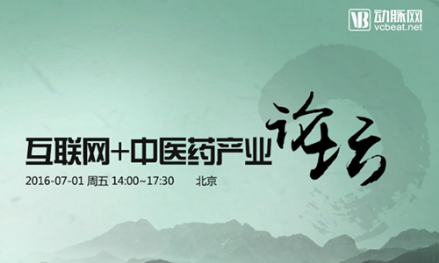
On “Internet + Traditional Chinese Medicine”
What You Want to Know,Everything is available here.
Event Registration Link:http://h5.welian.com/event/i/MTMyNTY=
Scan or long-press the QR code to register instantly.

Event Inquiry: Mr. Li 023-67685030
1. Cloud TCM: Embracing the Boom in TCM Clinics with SaaS
II. Investment Opportunities in “Traditional Chinese Medicine + Internet” from a Policy Perspective
IV. Dajia TCM: Leveraging Big Data to Build an Essential Tool for TCM Practitioners
5. Liudu TCM: Building Brands for Doctors and Doctor Groups via the Internet
VI. Gancao Doctor: Building a TCM Physician Group
VII. How Are TCM Clinics, Favored by Capital, Embracing the Internet?