

VMware Files IPO Prospectus Highlighting EHR Security Solutions for Enhanced Patient Engagement
Currently, patients’ active engagement in healthcare is a critical factor driving collaborative efforts between medical institutions and patients to improve health outcomes. Higher levels of patient participation are more conducive to disease treatment. Studies have found that, compared with patients who do not actively cooperate, those with higher educational attainment tend to make more informed decisions, actively collaborate with healthcare providers, and consequently achieve more favorable treatment outcomes while even reducing some treatment costs.
The U.S. Government Actively Promotes the Adoption of EHRs
Since the beginning of this year, governments around the world have taken numerous measures to encourage patients to actively participate in the development of healthcare. For example, in2011year, the U.S. government launched several incentive programs to promoteEHR(Electronic Health Records) are widely used in healthcare institutions across various states. The implementation of these initiatives aims to encourage qualified healthcare professionals and hospitals to adopt them.EHR, while demonstrating the certifiedEHRThe Significance of Technology.
However, from the perspective of medical professionals, behind this project lies the U.S. government’s “carrot-and-stick” strategy, namely, supporting the use ofEHRInstitutions that comply will receive the “carrot,” i.e., a financial subsidy, while those that do not will face the “stick,” i.e., fines. This constitutes the first phase of the U.S. government’s incentive program; the second phase aims to encourage patients to share their health information with healthcare providers and to deliver targeted patient education.
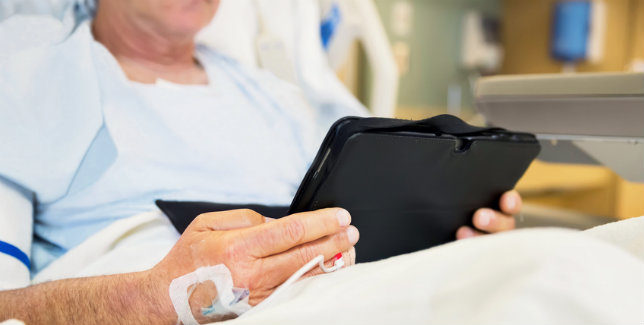
Although patients merely remained in the hospital, they were fully engaged throughout the project. The hospital enabled patients to upload their health information via mobile devices, which provided health guidance based on their physical conditions and offered targeted, reasonable treatment plans. Consequently, these mobile devices not only helped hospitals meet governmental requirements but also supported and promotedEHR...widespread adoption, secured objective subsidy funding, and achieved high patient satisfaction.
Patient involvement in EHR use lacks guaranteed information security
A necessary prerequisite for patients to use mobile devices to upload personal health information is that all previously uploaded health data must be immediately deleted before the next patient uses the device. However, hospitals cannot expect patient caregivers to devote excessive effort to this task, as their primary responsibility is providing patient care rather than managing devices. Therefore, active patient cooperationEHRInformation security is not always guaranteed during work.
VMwareApprovedITTechnological Solutions to Patient Information Security Issues
VMware(VMware) is a global leader in desktop-to-datacenter virtualization solutions. The solutions they provide enhanceITEfficiency.VMwareIt is believed that medical institutions can only useITTechnology that simplifies the use of mobile devices for sharing patient information in healthcare institutions enables nursing staff to efficiently and rapidly clear data from these devices, thereby safeguarding patient information security. This fosters greater willingness and confidence among patients to cooperate with healthcare institutions and participate in the advancement of public health.
InVMwareThe design guidelines for patient engagement in healthcare provided clearly demonstrate medicalITHow the technical solution is implemented. Currently,VMwareInitiating research on solutions for healthcare innovation, as well as work in areas such as low-cost, high-quality patient care interactions.
Original Source: VMware Blog