

First 'Internet + Traditional Chinese Medicine Industry Investment and Venture Capital Trend Report' to Launch
On July 1, 2016, VCBeat will host the “Internet+ Traditional Chinese Medicine (TCM) Industry Forum” in Beijing, themed “Transformation: Identifying New Focal Points for the TCM Industry.” The event will bring together industry leaders, including Lu Gang from Legend Stars, Li Sirui from Tasly, Gong Qiao from Taikang Online, Xu Jing from Kangmei Smart Pharmacy, Zheng Wei from Zhongjing Ketou, and Luo Feng from Kan Zhongyi, to jointly discuss key focal points amidst the transformation of the TCM industry against the backdrop of healthcare reform.
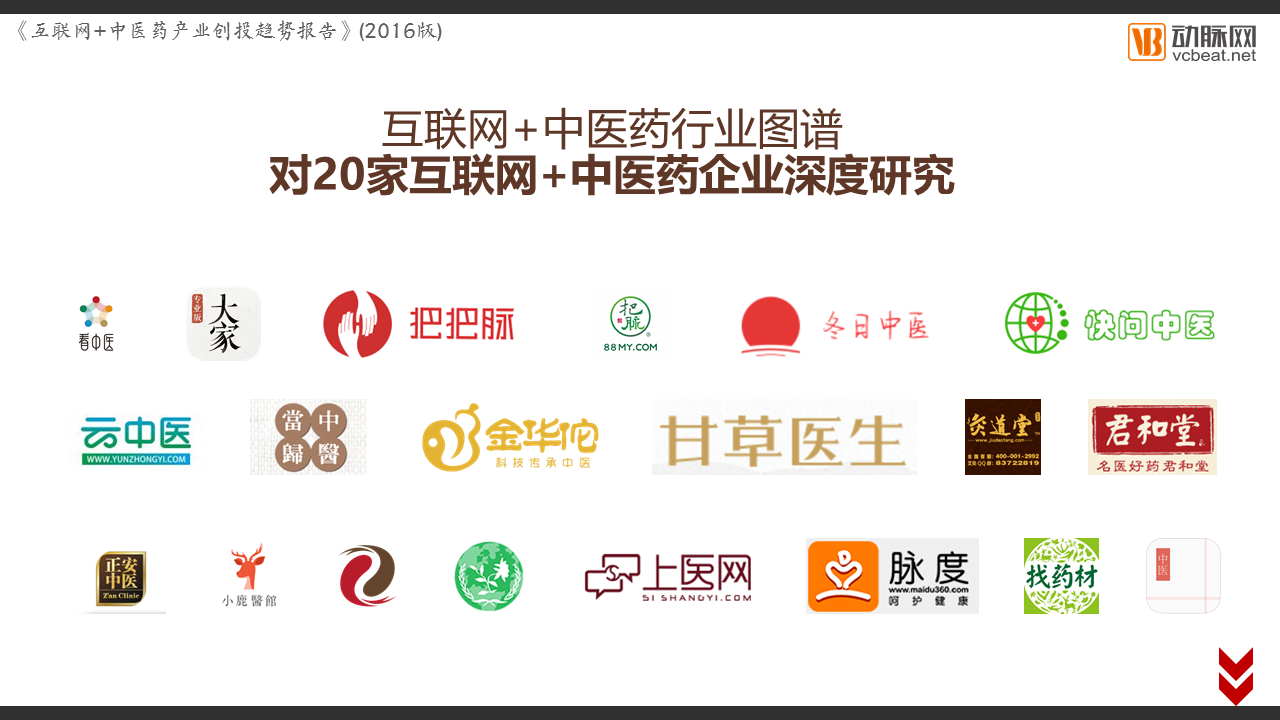
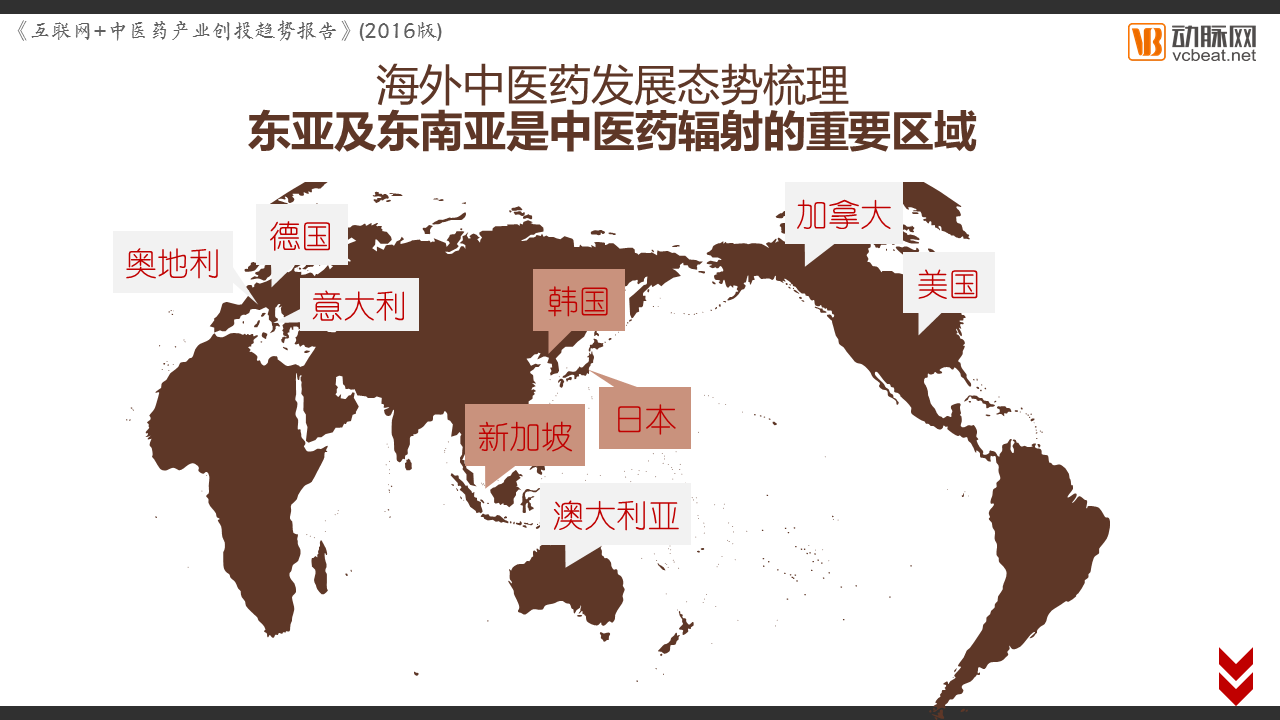
At this conference, VCBeat willLaunching the World’s First “Internet + Traditional Chinese Medicine Industry Venture Capital Trends Report”The report reviews recent policies on traditional Chinese medicine (TCM), surveys nearly 100 projects, and conducts an in-depth analysis of the business models, product logic, and unique advantages of 20 selected projects. It focuses on mapping out venture capital and investment trends in the “Internet + TCM” sector and introduces the development of the TCM industry overseas, with particular emphasis on South Korea and Japan.
Report Highlight 1: Policy-Driven Analysis
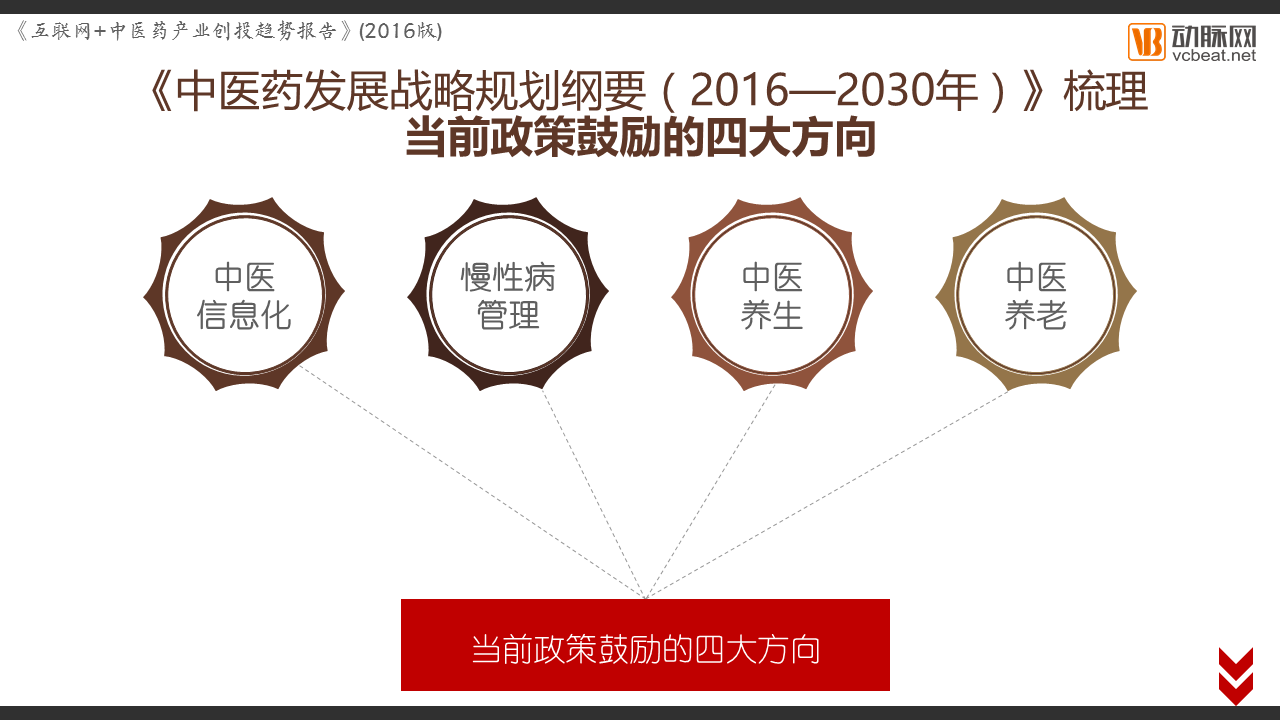
By 2020, everyone will have basic access to traditional Chinese medicine services.
The TCM Industry May Enter a “Golden Decade”
A key section of the report is “Policy-Driven Growth.” As the “Healthy China” initiative has been elevated to a national strategy, China’s traditional Chinese medicine (TCM) industry is benefiting from the dual advantages of rigid demand and policy support. The development strengths of the TCM industry will be further unleashed, ushering in a “Golden Decade.”
It is reported that the State Council previously issued the Outline of the Strategic Plan for the Development of Traditional Chinese Medicine (2016–2030), which proposes that by 2020, basic access to traditional Chinese medicine services will be universally available, and the TCM industry will become one of the important pillars of the national economy.
On June 2, 2016, the ISO Technical Committee on Traditional Chinese Medicine (ISO/TC 249) released six international standards, and 66 types of Chinese herbal medicines were included in the European Pharmacopoeia, accelerating the internationalization and standardization of traditional Chinese medicine.
The state has provided strong policy support for the development of Traditional Chinese Medicine (TCM). Since 2016, numerous policies and regulations have been promulgated, clarifying reforms to the TCM physician qualification access system, relaxing eligibility requirements for entities establishing TCM clinics, and implementing a filing-based registration system for TCM clinics. These measures are expected to alleviate bottlenecks in the supply of TCM human resources and the establishment of TCM clinics.
Report Highlight 2: Discovering Venture Capital Opportunities
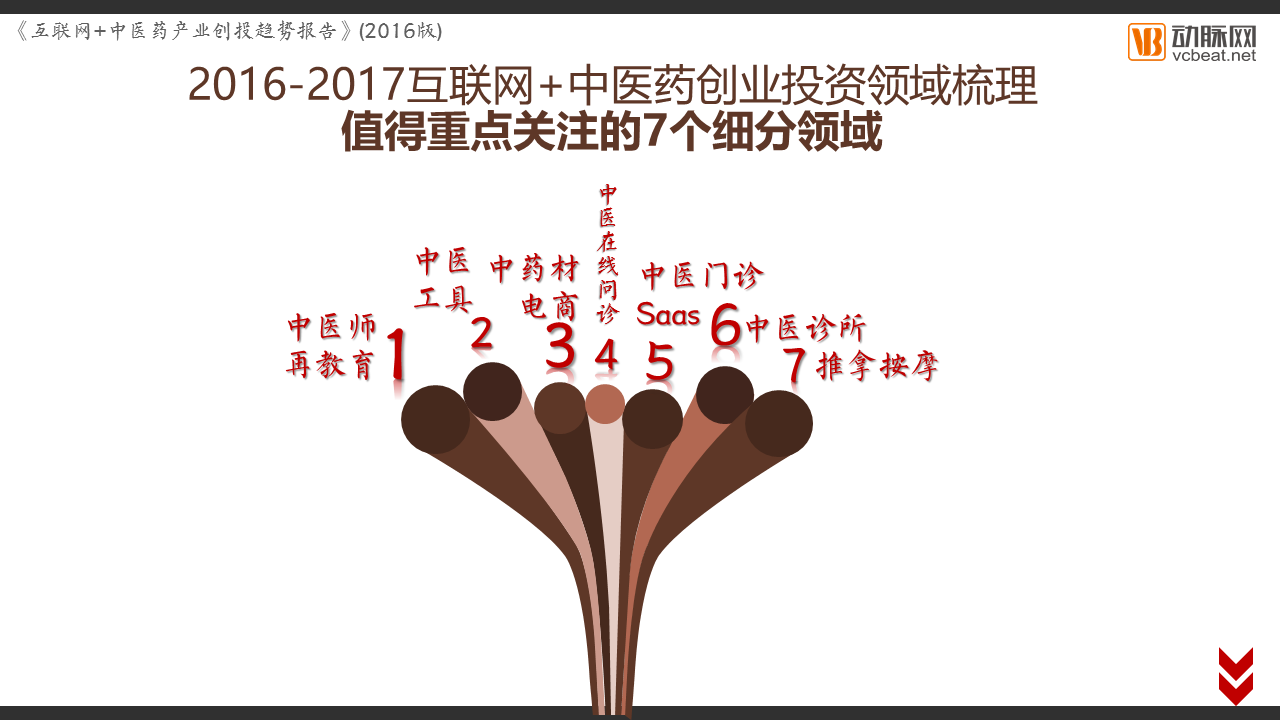
How Industry Investors View Key Investment Areas in Traditional Chinese Medicine
Which Companies Can Secure Tens of Millions in Funding?
Recently, Gancao TCM announced that it had secured its first round of financing, amounting to tens of millions of yuan. Not long before this, Gushengtang, a chain group specializing in traditional Chinese medicine (TCM), also raised $70 million in its Series C funding round. This demonstrates that, amid the sustained momentum of internet healthcare, investment enthusiasm for TCM-related projects is no less than that for Western medicine-oriented initiatives.
However, many issues continue to plague practitioners across the traditional Chinese medicine (TCM) industry chain.
l What business model is more suitable for traditional Chinese medicine projects?
l How Do Top Venture Capitalists View the Development of "Internet + Traditional Chinese Medicine" Projects?
l What direction have policies set for entrepreneurship in traditional Chinese medicine (TCM) projects?
l How Does the Internet Facilitate Traceability and Standardization of Traditional Chinese Medicinal Materials?
……
The report provides a detailed analysis of how to leverage “Internet Plus” as a new engine for the development of Traditional Chinese Medicine (TCM), by establishing a digitalized and standardized system across the entire TCM industry chain, strengthening original innovation in TCM, and utilizing internet technologies to translate original TCM research achievements into clinical practice and industrial applications. More importantly, it explores strategies to expand the application of TCM services and further promote its industrialization.
Report Highlight 3: Overview of Overseas Development Trends
TCM-Based Wellness Has Become the Norm in Japan and South Korea
Europe and the US Focus on Developing Smart Hardware and TCM Clinics
According to incomplete statistics, Traditional Chinese Medicine (TCM) and acupuncture are applied to varying degrees in more than 160 countries worldwide and have become commonplace in Western nations. Outside of China, there are approximately 300,000 practitioners of TCM and acupuncture. TCM is widely used in the treatment of various conditions, including dermatological diseases, chronic pain, gynecological disorders, chronic inflammation, chronic infections, and functional impairments of the body.
Korean medicine and traditional Chinese medicine share the same origins but have evolved along different paths, forming a continuous lineage. As South Korea developed its modern medical system, it did not abandon Korean medicine. Many comprehensive universities in South Korea have established colleges of Korean medicine, and admission to Korean medicine programs has consistently been among the most competitive for applicants. In South Korea, gaining entry into the College of Korean Medicine at Kyung Hee University is comparable to being admitted to Peking University or Tsinghua University in China.
Kampo medicine in Japan is essentially Traditional Chinese Medicine (TCM). After the Meiji Restoration, Kampo medicine was abolished in Japan. In the late 1980s, influenced by the United States’ stance on acupuncture, the application and education of acupuncture gradually developed in Japan. Japan not only has many universities offering specialized programs in acupuncture but also provides undergraduate education in acupuncture, such as that offered by Meiji University of Acupuncture. Approximately 150 years after the abolition of Kampo medicine, the Ministry of Education issued a directive a few years ago requiring all medical universities to offer courses in Kampo medicine.
Acupuncture is widely practiced across all U.S. states and in countries such as Germany and Austria, where it holds recognized legal status as a medical discipline. Many universities in Western countries offer courses in Traditional Chinese Medicine (TCM), with some even establishing dedicated TCM majors. To date, eight countries have enacted legislation granting TCM formal legal recognition as a medical practice. This year, the United States has further distinguished TCM from complementary and alternative medicine, treating it as a complete and independent medical system. In June 2016, the European Commission’s Directorate-General for Research and Innovation, the Italian Ministry of Health, and China’s Ministry of Science and Technology jointly convened the Conference on Science and Technology of Traditional Chinese Medicine in Rome, marking a significant improvement in the European Union’s stance toward TCM.
—————————— Report on Sale ——————————
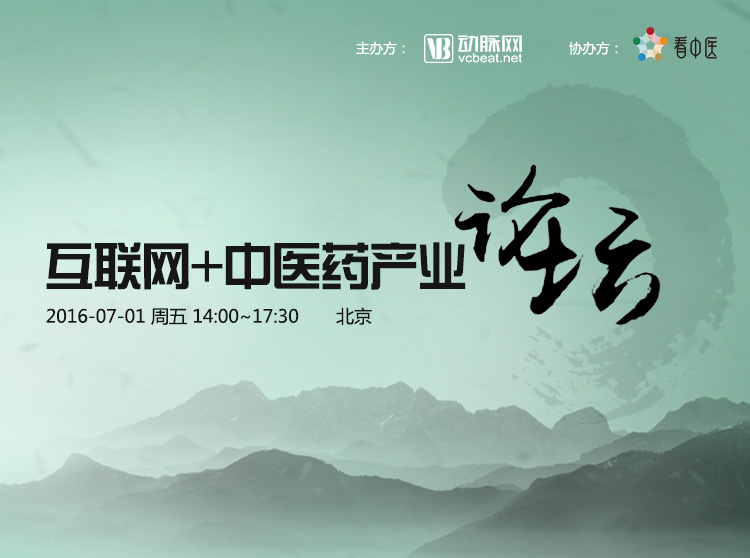
“Internet Plus” Traditional Chinese Medicine Industry Venture Capital Investment Trend Report (2016 Edition)New
Current Price: Report (including forum event ticket) 499 yuan
After the event, the price will revert to the original ¥800.
PCLink to purchase the terminal report:http://h5.welian.com/event/i/MTMyNTY=
Long-press & scan the QR code to purchase this report directly
For details, please contact: Mr. Li at 023-67685030