

GeekFounders' Jiang Tao Infuses Traditional Chinese Medicine with a 'Geek' Twist
In the public imagination, Traditional Chinese Medicine (TCM) is often viewed as a millennia-old cultural heritage, embodied by dense and challenging classical medical texts and case records, and personified by esteemed, elderly TCM practitioners stroking their beards. However, with the recent rise of “Internet Plus” initiatives and angel investment, this ancient practice has begun to take on a distinct “geek” flavor. GeekBang, founded in 2011 and focused on early-stage investments in the TMT (Technology, Media, and Telecom) sector, has brought its forward-looking expertise in artificial intelligence, big data, and SaaS to the TCM industry. Against the backdrop of today’s profound technological transformation, it aims to help TCM rejuvenate and thrive anew.
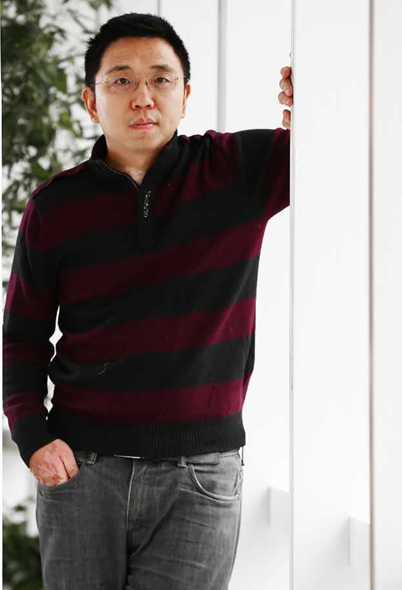
Jiang Tao, Founding Partner of GeekBang, is among China’s earliest IT professionals. He once served as Manager of the Chinese Application Development Department at Giant Group, founded by Shi Yuzhu, and as Deputy General Manager of Kingsoft Software’s Beijing branch under Lei Jun’s leadership. Later, he co-founded Beijing Haojie Company with Liang Zhaoxin, launching the nationwide hit software Super Jieba in 1998, and established CSDN.NET, the world’s largest Chinese-language IT community, in 1999.
Jiang Tao launched his investment career in 2011. The surging wave of new technologies, such as mobile internet, gave him a sense of returning to his twenties: “The new opportunities brought by mobile internet and cloud computing made me feel as if I were back in my 20s. Many things I did back then can be done again now, albeit with different approaches.” Driven by this inner “primordial force,” Jiang chose to begin equity investments in the TMT sector in 2011. As technological trends and business models accelerated, he ultimately co-founded Geekbang Ventures in 2014 with Wang Feng, founder of Bluegang Interactive, focusing on early-stage investments.
Geek Style: Investing in TCM Clinic SaaS and Smart Pulse Diagnostic Devices
Although Jiang Tao has always worked in the TMT sector, which falls under science and engineering, he has maintained a strong enthusiasm for traditional culture, including Traditional Chinese Medicine (TCM). Since the establishment of Geekbang Capital, its primary investment areas have been divided into three main categories: 1. Pan-entertainment and tools; 2. SaaS services; 3. New hardware. Apart from the first category, Jiang Tao has invested in TCM-related projects in both the SaaS and new hardware sectors: the former is Yun Zhongyi, a SaaS platform for TCM clinics, and the latter is Xiaobo TCM Assistant, a smart hardware device that records and quantifies TCM pulse conditions.
SaaS has been a key focus area for GeekBang since its inception. Jiang Tao told VCBeat that, similar to other traditional industries, SaaS services present significant growth opportunities in the healthcare sector. This is partly because, in the current healthcare market, a purely online approach is no longer an optimal path; healthcare still requires offline components to deliver services and create a closed loop. Meanwhile, against the backdrop of policies encouraging private participation in healthcare, numerous private clinics and medical service providers are emerging rapidly. However, these entities cannot afford expensive Hospital Information Systems (HIS), making lightweight and user-friendly SaaS solutions the ideal choice.
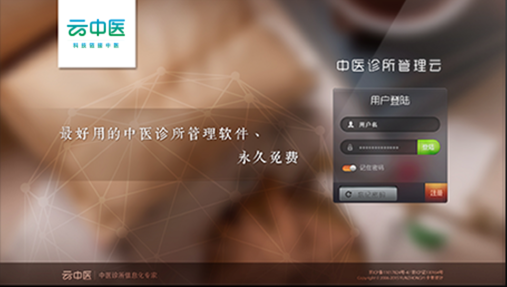
Cloud TCM
Cloud TCM was an angel investment made by GeekBang in 2015. At that time, the Chinese government’s support for Traditional Chinese Medicine (TCM) was becoming increasingly clear. The advantages of TCM in primary healthcare, preventive treatment (“treating potential diseases before they occur”), and chronic disease management were becoming more prominent. However, grassroots TCM clinics remained significantly backward in terms of operational efficiency and informatization. There was an urgent need for SaaS solutions to enhance the overall management capabilities of TCM clinics, preparing them for the impending renaissance of Traditional Chinese Medicine.
Another objective of Jiang Tao’s investment in Yunzhongyi is to accumulate medical big data. Although medical big data is a hot topic within the industry, few instances have translated into practical and effective applications. Nevertheless, Jiang Tao remains firmly optimistic about the future value of medical big data and artificial intelligence (AI) built upon such data. As Geekbang Fund focuses on early-stage investments, it is willing to make long-term commitments in this direction.
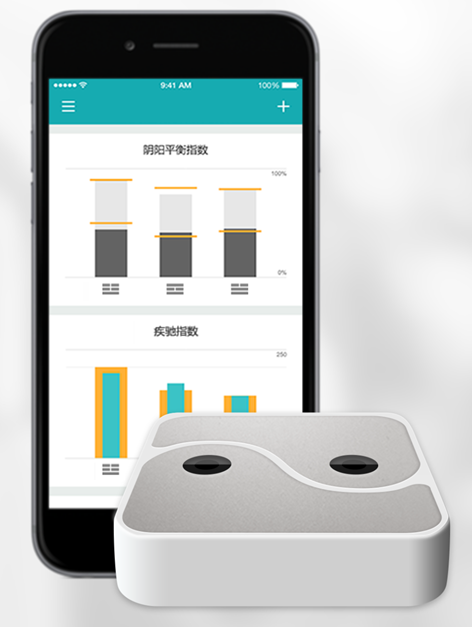
Xiaobo TCM Assistant
Another TCM project invested in by Jiang Tao is Xiaobo TCM Assistant, a smart hardware device that helps TCM practitioners record and quantify pulse conditions. By using sensor chips to detect characteristics such as yin-yang, deficiency-excess, floating-sinking, and slippery-choppy qualities of the pulse, and leveraging a specially developed “Pingren Index” intelligent metric system, it digitizes and concretizes TCM pulse diagnostics, thereby providing references for both doctors and patients.
From the perspective of traditional Chinese medicine (TCM), this smart hardware device may have many shortcomings worth criticizing. Jiang Tao also acknowledges that the current development level of wearable devices is still insufficient to meet medical-grade requirements in the short term. However, the real-time, continuous collection of physiological data and the monitoring of diseases and health status through wearable devices are undoubtedly one of the important trends in the future of healthcare. Jiang Tao believes that although TCM has always emphasized face-to-face diagnosis through inspection, auscultation and olfaction, inquiry, and pulse-taking, maintaining an open and collaborative mindset toward emerging technologies—including the Internet of Things (IoT), cloud computing, big data, and even artificial intelligence—may help usher in a new era of prosperity for TCM in the context of rapid technological advancement.
TCM × AI: Significant Room for Future Growth
Among various emerging technologies, Jiang Tao is most optimistic about artificial intelligence, believing that the integration of traditional Chinese medicine with AI holds vast potential for development.
Jiang Tao pointed out that artificial intelligence is currently at a critical technological turning point. Deep neural network technology has brought about comprehensive breakthroughs in AI, which is no longer limited to the mere analysis and computation of data but can now learn intuition previously considered unique to humans.
Jiang Tao is particularly optimistic about the prospects of artificial intelligence (AI) in the healthcare sector. He believes that the core of AI lies in the probabilistic causal relationships between data and outcomes. With sufficient medical data, deep neural network technologies can be leveraged to train highly effective expert diagnostic systems, significantly surpassing earlier rule- and knowledge-base-driven expert systems.
Specifically regarding Traditional Chinese Medicine (TCM), Jiang Tao believes that the primary prerequisite for artificial intelligence to play a role in the field of TCM is the availability of various TCM-related data. This foundational task of data accumulation is precisely what Cloud TCM and Xiaobo TCM Assistant are currently undertaking. By leveraging this extensive data repository to extract the expertise of top-tier TCM practitioners from China and around the world, and by applying artificial intelligence technologies, it may be possible to develop TCM-assisted diagnostic systems comparable in proficiency to leading physicians. Such an advancement would be highly beneficial not only to the development of TCM but also to national welfare and people's livelihoods.
However, this long-term vision appears overly “sci-fi,” as many practical issues remain to be addressed. For instance, the lack of standardization in Traditional Chinese Medicine (TCM) terminology, or the presence of significant yet subtle differences among seemingly similar terms, may compromise the accuracy and practical utility of TCM-assisted diagnostic systems.
Jiang Tao argues that, rather than drawing distinctions between Traditional Chinese Medicine (TCM) and Western medicine, modern medicine as a whole is not an “exact” science. Instead, it is a discipline characterized by significant “ambiguity,” built upon inductive statistical methodologies and continuously refined, supplemented, or even overhauled by generations of practitioners. Medical statistics from both domestic and international sources indicate that the misdiagnosis rate in Western medicine is also considerably high. This observation is not intended to exonerate TCM, but rather to highlight that with the accumulation of big data and the training of deep learning models, the accuracy of auxiliary diagnosis will inevitably improve, offering increasingly substantial support to physicians.
GeekBang: Tech-Savvy, Founder-Focused
In recent years, new funds flooding into the venture capital and private equity sector have been as numerous as “carp crossing the river.” Amidst the many early-stage funds, what distinct advantages does GeekBang Capital possess?
“Understanding both technology and entrepreneurs is Geekbang’s greatest advantage,” Jiang Tao told VCBeat.
As one of China’s first-generation IT professionals and internet entrepreneurs, Jiang Tao has consistently remained at the forefront of the development of China’s TMT (Technology, Media, and Telecom) industry. In 2011, he transitioned into venture capital, strongly inspired by emerging technologies such as mobile internet. Jiang Tao summarizes GeekBang Investment Partners’ investment style as follows: “We have a certain technical inclination and prefer to invest in projects with technological innovation, even those that may seem far-fetched.”
According to statistics from the Geekbang team, 86% of the more than 80 projects invested in were founded by entrepreneurs with backgrounds in technology and product development.
After several years of investing, Jiang Tao has also come to deeply appreciate the importance of being on the front lines of entrepreneurship for angel investors—a point that is particularly evident in Silicon Valley, USA.
Jiang Tao introduced that the most powerful players in Silicon Valley’s investment community today are venture capital funds established by entrepreneurial CEOs, such as Andreessen Horowitz (founded by Netscape co-founder Marc Andreessen) and Reid Hoffman of Greylock (LinkedIn co-founder). In the 1990s, Andreessen developed the earliest web browser; his company went public with a market valuation exceeding $4 billion but was later crushed by Microsoft. Although Andreessen’s subsequent entrepreneurial ventures were less successful, he achieved remarkable success in mentoring and incubating entrepreneurs. He played a pivotal role in nurturing a new generation of tech giants and unicorns, including Facebook, Twitter, Groupon, Zynga, Airbnb, Pinterest, Box, and GitHub, thereby becoming one of the most influential investors in Silicon Valley.
Having worked for many years at Giant Group and Kingsoft Software, Jiang Tao went on to found Beijing Hero Company and CSDN. Having long remained at the forefront of the industry, he boasts extensive experience in management and entrepreneurship, and can truly empathize with the dreams, passion, and pressures faced by entrepreneurs.
As more startups join the “GeekBang Family,” its portfolio companies are forming an entrepreneurial ecosystem characterized by mutual assistance and support. For instance, some portfolio companies serve as natural traffic gateways, providing user traffic to other GeekBang-backed ventures. Additionally, many of these companies offer enterprise services; by consolidating and streamlining their service capabilities into “system-level resources,” they can support other portfolio companies, thereby fostering a robust entrepreneurial ecosystem.
Moreover, Geek+ is striving to help startups integrate into broader capital and industrial ecosystems, such as by partnering with multiple listed companies that are actively expanding their industrial footprints, with the aim of jointly supporting the growth of its portfolio companies. Some of these listed companies have already become limited partners (LPs) in Geek+.
It is reported that GeekBang Fund is raising an early-stage investment fund with a target size of RMB 500 million to make early-stage investments in TMT sectors, including pan-entertainment, SaaS, tool-based cloud services, and smart hardware. The fund primarily focuses on angel and Series A rounds, with individual investment amounts ranging from RMB 2 million to RMB 10 million.