

Annex Innovation Restructures Telemedicine Around Precision Medical Records Following $85M Funding
Antai Innovation was founded in2006In its founding year, it focused onPACS System(The development of Picture Archiving and Communication Systems) ranks first in market share in South China. However, Antai’s ambitions do not stop there; with the diversified development of healthcare informatization, a singleHITIndustrial technology has long failed to keep pace with the demands of the internet era. Antai’s higher goal is to build a precise, cloud-based electronic medical record platform that is patient-centric and enables physicians to conduct diagnosis and treatment anytime, anywhere.
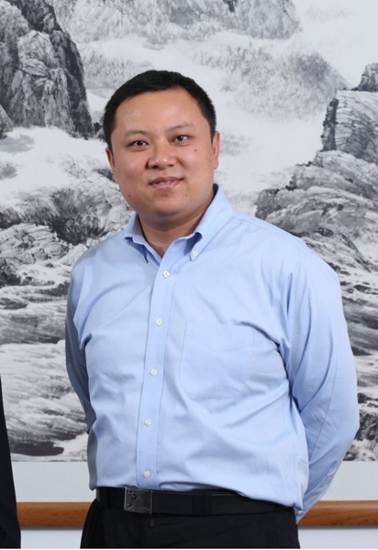
Mr. Shao Yuan, Chairman of Antai Innovation, is an entrepreneur with dreams.
Recently, Shao Yuan, Chairman of Antai Innovation, granted an exclusive interview to VCBeat, discussing the misconceptions and breakthroughs in telemedicine development, Antai Innovation’s product development path and business model logic, as well as its recentHonghui Capital and Renowned Internet Investor Wu Jiong Jointly Investof8500From multiple perspectives, including the behind-the-scenes story of fundraising, he shared the reflections of an entrepreneur with a medical background and a longstanding dream in healthcare, drawn from over a decade of experience in healthcare informatics.
Among the various interview topics, Shao Yuan spoke most extensively about telemedicine. It is evident that his unique insights into telemedicine also form the logical framework underlying Antai Innovation’s product development and business strategy.
In the field of telemedicine, there is a jocular saying in the industry: “Much seen, little used; much demonstrated, little applied; high investment, low return.”
“Where lies the problem? In the internet era, physical distance is no longer significant. The term ‘telemedicine’ is akin to ‘long-distance calling’—a concept from the last century. The concept of telemedicine should be redefined,” said Shao Yuan. Throughout the interview, he had remained calm, yet his words now revealed a certain passion regarding the current state of affairs. (Note: Last century50Late 19xxs, American scholarsWittsonThe bidirectional television system was first used for medical purposes; in the same yearJutraet al. founded teleradiology.)
“Telemedicine” is an outdated term, but that does not mean “telemedicine” (or more appropriately, “internet-based healthcare”) lacks value.
Shao Yuan, who has a medical background, stated that with the advancement of modern medicine and increasing specialization, medical fields have become ever more subdivided. Consequently, high-level experts require even more discussion and exchange. Today, internet-based medical communication has become an integral part of doctors’ daily work routines and even their leisure time. It is common to see case discussions in doctors’ WeChat groups and receive phone consultations from patients regarding their conditions after working hours. In essence, while there is substantial demand and a large market for this form of “telemedicine,” which is used on a daily basis, relying on a non-professional tool like WeChat fails to achieve the desired outcomes, leaving those seeking services without satisfactory care.
Everyone has also recognized the pain point: when too many medical images are shared via WeChat, they cannot be saved. CTThe images were mostly taken against sunlight or artificial lighting, resulting in significant loss of diagnostic information. Physicians cannot provide truly valuable and precise diagnostic or treatment recommendations based solely on a few messages exchanged via WeChat. Therefore, patients are advised to seek in-person consultations at hospitals.
“Although the internet exists, doctors still find it difficult to leverage their professional expertise online. From a commercialization perspective, service quality falls short, and patients are unlikely to pay physicians for such services. This is why many light-consultation projects in the mobile internet sector struggle to sustain operations. However, in reality, if patients can submit their complete medical records to doctors and receive more professional medical advice based on them, their willingness to pay will increase significantly,” said Shao Yuan.
Currently, the telemedicine services we commonly see require a fixed location—a telemedicine center—typically equipped with numerous large screens and audio-visual devices.
“Most functions of the equipment in a telemedicine center can be integrated into a single mobile phone, with computations performed in the cloud, which will certainly greatly improve computational efficiency,” said Shao Yuan.
Examining the normal operations of telemedicine, since most systems lack medical data integration, dedicated personnel are required to copy and organize patient medical record data. Statistics show that copying the data for a single patient takes an average of40minutes, after which it still needs to be uploaded, and the recipient also needs to download it.
“What’s even more awkward is that ‘during discussions of medical images, if one cannot see in real time the exact markings made by the other party on the images, relying solely on verbal descriptions of image orientation often leaves the party initiating the consultation entirely unsure of the location of the lesion under discussion. This significantly undermines communication efficiency and may even lead to misdiagnosis,’” said Shao Yuan.
Telemedicine is also constrained by time. The most valuable providers—senior physicians and specialists—are often overwhelmed with surgeries and outpatient duties at their own hospitals, making it difficult for them to allocate fixed hours for telemedicine services.
Therefore, although “telemedicine” has become ubiquitous, neither the existing telemedicine services in hospitals nor most online medical consultations available on the market are clearly the type of “telemedicine” that doctors and patients truly desire.
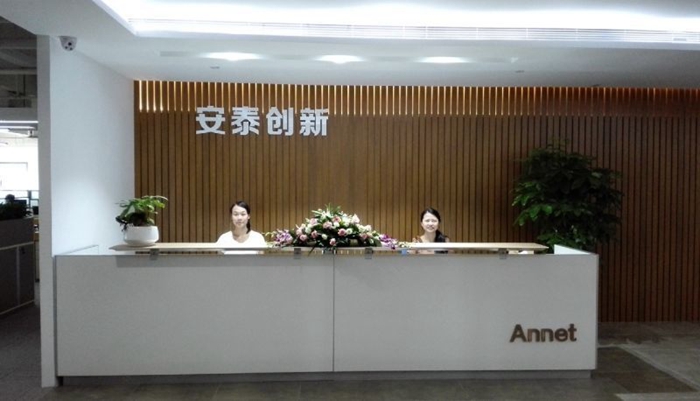
“Demand for telemedicine is enormous, yet its development has been sluggish. Fundamentally, the primary issue to address is ‘supply-side reform.’ Whether it involves commercialization, regulatory oversight, or physicians’ time constraints, once high-quality consultation services are delivered through technological innovation—thereby completing ‘supply-side reform’—we believe the government will certainly allow market forces to regulate and allocate resources, and robust business models will inevitably emerge,” said Shao Yuan.
How to provide high-quality internet healthcare services has been a question that Shao Yuan began contemplating years ago, and this mindset has also driven the shift in Antai Innovation’s product development strategy.
Shao Yuan introduced to the reporter, “From the perspective of our company’s history, we started with medical imaging, and then”2012In that year, the company reached a significant milestone. We decided to expand our product offerings from radiology departments to clinical departments. Since clinicians require not only imaging data but also comprehensive patient diagnosis and treatment information, we began integrating clinical data.
Antai Innovation, having established a clinical data center, has successively launched solutions including panoramic medical co-consultation on a single screen/Conference System, Panoramic Mobile Ward Rounds, Digital Integrated Operating Room, PanoramaBIand other products.
As Antai Innovation transitioned from a singlePACSAs the product line transitions toward a comprehensive healthcare information system, its primary service scenarios are telemedicine and remote consultations. The drawbacks of existing telemedicine models have been extensively discussed above. In Shao Yuan’s view, the key to addressing these issues lies in whether physicians can conveniently access comprehensive and accurate medical record data—with patient authorization—and thereby deliver high-quality services.
So-called precision medical records primarily encompass two aspects: first, comprehensive data, including all historical and current diagnosis and treatment data for the patient, such as electronic medical records, laboratory test results, and various imaging studies; second, accurate data, for example, imaging must be complete and diagnostically valid.DICOMImaging (DICOMis the international standard for digital medical imaging).
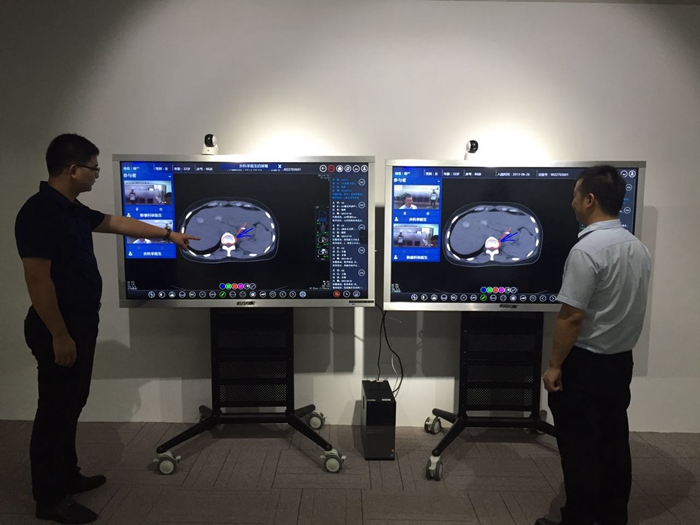 At Antai Innovation’s newly relocated office, Shao Yuan demonstrated two product usage scenarios to reporters.
One scenario is a large-screen remote consultation display, with two units.65Large screens arranged side by side; in practical applications, these two large screens are placed separately in the two hospitals participating in the consultation. Compared with traditional remote hospital consultation centers, one of the features is the integration of equipment, with all devices centralized on a single screen that can be either large or small, suitable for placement in a major consultation room or flexibly deployed in a small departmental office; secondly, the software system behind the large screen has already aggregated patientHIS、EMR、PACS、LIS, hand numbness, physical examination results, and other types of heterogeneous diagnostic and treatment data—collectively forming the patient’s comprehensive medical record—thereby eliminating the cumbersome process of data collection in telemedicine. Lastly, it is worth specially mentioning Antai Innovation’s patented “Same-Screen” technology, which enables lossless, real-time interaction of all communication content between both parties during consultations. For example, when a consulting physician displays an image on the large screenCTMarkings can be placed on the images, allowing the other end to view the marked locations synchronously and precisely, and vice versa. With the remote consultation large-screen system, telemedicine no longer requires cumbersome preparations and can be initiated promptly, thereby doubling work efficiency.
Antai Innovation has across China100Many large hospitals have installed teleconsultation display systems, which closely connect hospitals separated by distances ranging from tens to thousands of kilometers. In addition to remote consultations, these systems enable physicians to conveniently and efficiently conduct academic exchanges, conference discussions, and teaching demonstrations across a wide range of application scenarios.
Another scenario is the “Antai Huizhen” mobile application. This is a professional medical communication software based on patients’ complete medical records, with a product form similar to WeChat. Through Antai Huizhen, physicians can view in real time all medical record materials of the patients under their care, including imaging images, which areGBThe acquired images are stored in the cloud, freeing up phone storage space,4GData consumption is also minimal. Furthermore, similar to WeChat messaging, physicians can promptly send messages to in-app contacts, initiate discussions on patient conditions and treatment plans, and authorize other physicians to access either partial medical records or complete records that have undergone data security de-identification. Like a professional consultation center, it provides high-quality video and audio communication, along with precise, synchronized viewing of all medical records and imaging data.
It can be said that a mobile phone is a consultation center, where similar remote consultation exchanges can be conducted anytime and anywhere there is a mobile network signal.
These two use cases demonstrate that Antai Innovation’s technologies and products enable all data from a patient’s complete medical record to be accessible to physicians anytime, anywhere via a cloud-based platform, and to be shared and discussed among physicians with utmost ease, thereby providing a secure and reliable internet healthcare platform that facilitates accurate diagnosis and treatment for both physicians and patients.
The original intention behind the product development designed by Antai Innovation for Shao Yuan, as discussed in the newly published book *The Future of Medicine* by Eric Topol...translated by Zheng Jie), Eric Topol’s vision of a “Personal Life Cloud” encompassing an individual’s complete health data aligns closely with the patient-centered future healthcare model.
Not long ago, Antai Innovation secured RMB 85 million in financing from Honghui Capital and renowned internet investor Wu Jiong.. When asked about the investment process and its impact, Shao Yuan highly praised Honghui Capital for its professional expertise in both healthcare and capital operations, noting that it helped establish a corporate structure compliant with listed company requirements and improved the company’s internal control and governance framework.。Mr. Wu Jiong, former CTO of Alibaba Group, further assisted the company in formulating its development strategy in the internet sector and provided critical guidance and support on the overall technical architecture of its products. This investment marks another key milestone in Antai’s development journey.
As the interview drew to a close, the reporter also requested the phone number of Zhao Gang, Founding Partner of Honghui Capital and the project lead, and conducted an additional interview with him that same evening.
When discussing the value proposition of Antai Innovation that resonated with him most, Zhao Gang stated, “Antai Innovation combines differentiated and continuous product development pathways. Its patient-centric data integration is gradually expanding from in-hospital consolidation to the integration of out-of-hospital internet healthcare data. This empowers hospitals, physicians, and even health administrative agencies across the entire medical service chain with a comprehensive perspective and momentum, thereby enabling a holistic, person-centered view of an individual’s complete medical data.”
Antai Innovation’s technical advantages, honed over years of experience in the medical imaging field, constitute a key aspect of its differentiation. According to Shao Yuan, a significant proportion of Antai Innovation’s hospital clients, which are currently implementing enterprise-wide healthcare information system integration, have upgraded their legacy systems with Antai’s panoramic medical imaging solution during the project implementation phase.PACS。
Zhao Gang, a physician with many years of clinical practice experience, stated, “Comprehensive medical data centered on medical imaging form the foundation of modern medical science. Access to such patient data is a prerequisite for physicians to make precise and effective clinical judgments. Antai Innovation can help hospitals and physicians integrate and unlock valuable data that lie dormant within healthcare institutions, enabling doctors to deliver precise and effective services to patients safely, in compliance with regulations, and anytime, anywhere.”
According to Shao Yuan, Antai Innovation has also established in-depth collaborations with research institutions such as Sun Yat-sen University and Wuhan University, aiming to mine vast amounts of clinical data and perform big data analytics, combined with artificial intelligence algorithms, to develop next-generation products.