

Kuaixingfang: A Third-Party Pharmaceutical Care Service Platform Aligning Patient Safety with Commercial Value
Under the old system of “funding healthcare through drug sales,” drugs easily formed a gray chain of interests within hospitals, transforming them from medical means for prevention, treatment, and diagnosis into revenue-generating commodities. This fostered practices such as “excessive prescribing,” “drug abuse,” and “off-label use,” distorting the structure of medical income and professional values, and undermining patients’ health, well-being, and financial interests.
Data show that up to 2.7 million patients in China are hospitalized annually due to adverse drug reactions (ADRs), and among these hospitalized patients, 200,000 die each year from drug-induced diseases. Adverse drug reactions and drug-induced diseases cannot be ignored. As the official record of a patient’s medication use, the prescription is regarded as core information in healthcare services. The prescribing process involves physicians at the front end and pharmacies at the back end, with physicians holding absolute decision-making authority over prescriptions.
In response to the aforementioned phenomena, China’s new healthcare reform plan introduced the concept of “pharmaceutical care services,” which refers to providing patients with rational and safe medication regimens along with corresponding pharmaceutical supply assurance services. On April 26, 2016, the General Office of the State Council issued the Key Tasks for Deepening Healthcare System Reform in 2016, which stated that various measures would be implemented this year to promote the separation of prescribing from dispensing. Hospitals are prohibited from restricting the outflow of prescriptions, allowing patients to freely choose whether to purchase medications at hospital outpatient pharmacies or at retail pharmacies with a prescription. Meanwhile, the state actively advocates new directions and approaches for pharmaceutical care service fees, aiming to advance the reform of separating medical service revenue from drug revenue, abolish the policy of drug markups, and address the resulting revenue reductions or losses incurred by hospitals through the introduction of pharmaceutical care service fees, adjustments to certain technical service pricing standards, and increased government funding. Pharmaceutical care service fees will be included in the basic medical insurance reimbursement scope.
To ensure patient safety, alleviate doctor-patient conflicts, and enhance the level of rational drug use, it is imperative to conduct reviews of prescription appropriateness through third-party pharmaceutical care service providers. In April 2015, Kuai Xing Fang, an internet healthcare company dedicated to improving the medical environment and enhancing medical quality, was launched. Its goal is to systematically address traditional medication risks, improve the quality of patient care and the efficiency of health insurance fund utilization, and avoid the waste of medical resources. Currently, it has established mature product lines and services, including prescription review and clinical pharmacy, and serves nearly 1,000 medical institutions and close to 100 regional health organizations.
As a “third-party pharmaceutical care service platform,” Kuai Xing Fang integrates pre-prescription audit with in-process control, and real-time alerts with comprehensive prevention and control by interfacing with hospital information systems. It conducts pre-audits based on review rules before prescriptions are formally submitted, identifies irrational prescribing practices in advance, shifts issue identification upstream, and provides real-time prompts to physicians, thereby effectively reducing potential risks for healthcare institutions. Through deep collaborations with healthcare institutions, Kuai Xing Fang has accumulated extensive experience while actively providing solutions to upstream and downstream clients, leading exploratory efforts in the field of pharmaceutical care services and effectively aligning clinical medication practices with national healthcare reform policies.
In October 2015, Kuai Xing Fang secured tens of millions in venture capital funding from ZhenShun Fund and Matrix Partners China.
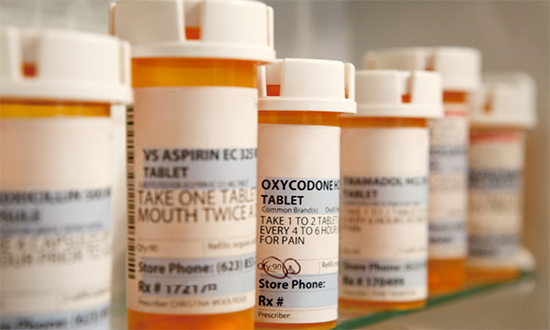
In recent years, telemedicine in China has experienced rapid development. Telemedicine services between medical institutions, as well as mobile health operator-led telemedicine services, have become the dominant trend for the future. Following the opening of hospital prescriptions, mobile health organizations have established closed-loop business models, entering core segments of the healthcare process. By leveraging prescription data for big data analytics, the integration and sales of pharmaceuticals have become clearly attainable.
However, challenges have emerged: how to regulate the outflow of prescriptions in telemedicine, and how to ensure the compliance and rationality of these prescriptions have become difficult issues to address.
In the telemedicine market, Pharmacy Benefit Management (PBM) serves as a critical management tool. In practice, PBM models tailored to China’s specific conditions will gradually emerge, enabling effective oversight of healthcare activities extending beyond hospital settings through PBM systems, particularly with regard to retrospective monitoring.
PBMs can prevent retail outlets from directly tracing prescriptions back to specific medical institutions by shielding the source of the prescriptions, thereby severing the chain of financial interests between them. This will help return the prices of prescription drugs at the retail level to market-driven levels, benefiting patients and aiding health insurance funds in cost control. With the large-scale development of remote consultations and the outward flow of prescriptions, PBMs are poised for explosive growth.
A key component of PBM operations is the provision of pharmaceutical care management services. Kuai Xingfang’s “Xingfang Guardian” has established over ten million review rules for its prescription auditing service, including more than 4 million drug interaction checks and over 2.6 million medication compatibility reviews, thereby helping to mitigate potential risks for healthcare institutions.
“Xingfang Guardian” enables healthcare administrators to comprehensively monitor prescription review outcomes. By aggregating, analyzing, and comparing risk points, it supports management in enhancing and improving healthcare quality and facilitating rapid response, serving as a valuable aid in healthcare administration while adding a critical safety firewall for the well-being of both physicians and patients.
The commercial value generated during prescription review permeates the entire healthcare industry chain. Prescriptions contain vast amounts of data on disease types, medication usage, medical insurance, and healthcare services. By conducting comparative analysis of this data, pharmaceutical companies can adjust their business planning, drug pricing, and market strategies, while insurance companies can leverage the information for actuarial cost calculations, establishing cost-control standards, and price setting.
Meanwhile, third-party pharmaceutical services focus on ensuring that patients use medications in a rational, safe, effective, and cost-effective manner; on advancing reforms in the modern pharmaceutical distribution system and mechanisms; on establishing a win-win mechanism among hospitals, patients, and enterprises; on fostering sustainable innovation and development for enterprises; and on enhancing the overall efficiency of the pharmaceutical industry supply chain.
Based on U.S. experience, the pharmaceutical e-commerce sector has primarily emerged as an offshoot of the development of Pharmacy Benefit Managers (PBMs). By providing PBM services to insurers and employers, these third-party companies have amassed extensive user and medication usage data, enabling them to conduct precision marketing grounded in member management.