

Yan Education Files IPO Prospectus to Expand Chain of Pediatric Speech Rehabilitation Centers
According to reports published by Xinhua Hospital Affiliated to Shanghai Jiao Tong University and Shanghai Children's Medical Center, the prevalence of speech disorders among children in China is as follows:2Age17approximately %3Age4%~7.5%,6Age:3%~6%. Children with these speech development disorders have various underlying causes, including autism spectrum disorder, intellectual disability, hearing impairment, and specific speech sound disorders. For instance, half of children with autism spectrum disorder exhibit speech impairments.
Self2003Since [year], approximately ... in China each year1600per 10,000 live births, with the lowest annual figure being158410,000, among which2014years, even approaching2001of the year170210,000. If4%incidence and average annual1600In terms of births per 10,000 population, China has approximately64per 10,000 newborns may develop varying degrees of speech disorders, and in2years old~6age group, it is estimated that there will be200~300Up to one million.
In developed countries in Europe and America, children with speech development disorders generally from birth18Diagnosis begins within the first few months of life and continues through the elementary school years, with therapeutic interventions provided throughout childhood. Data indicate that the United States spends tens of billions of dollars annually on speech and communication rehabilitation. Despite this, discouraging statistics have emerged: research published by the American Speech-Language-Hearing Association shows that nearly10In recent years, the prevalence of speech disorders among children in the United States has increased by63%。
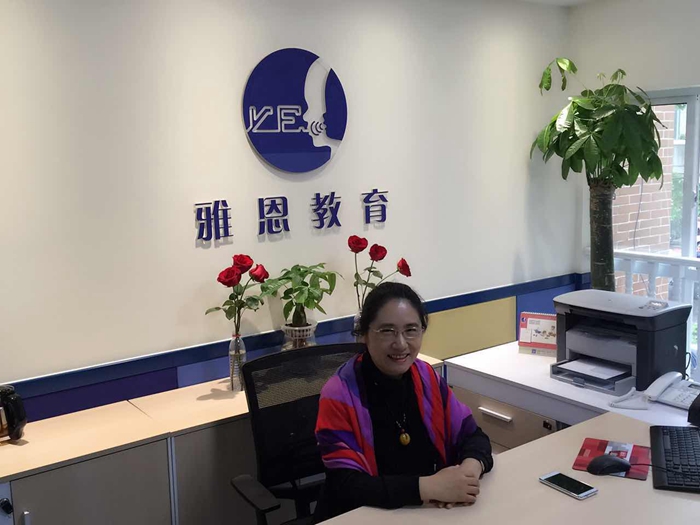
Ms. Bian Qiongxia, founder of Yan Education, has long been dedicated to the rehabilitation and treatment of children with speech disorders.
In the United States, the rehabilitation industry for children with speech disorders has a history spanning several decades, featuring a well-established system of private specialized clinics and public health services. Bian Qiongxia, founder of Yaan Education, who has long focused on children with speech disorders, revealed to VCBeat that every school in the U.S. is equipped with professional speech-language pathologists, although one therapist may serve two or even multiple schools. In contrast, pediatric speech rehabilitation services in China remain largely undeveloped. Apart from occasional media coverage of scattered non-profit organizations, commercially viable and sustainable rehabilitation institutions are only just beginning to emerge.
As a specialized field for pediatric speech disorders has yet to be established in China, developmental and behavioral pediatricians, despite their interest in this area, are constrained by limited hospital facilities and staffing. Consequently, their focus remains primarily on diagnostic assessment, leaving them with insufficient capacity to provide rehabilitative therapy services for speech disorders. In its initial years of entering the field of rehabilitative therapy for children with special needs, Yaan Education served children with various conditions. Subsequently, driven by an increasingly clear and in-depth understanding of speech disorders, it gradually evolved into a specialized institution focused on speech disorder intervention and speech ability development training.
From2008Since [year], Yaan Education has successively established three rehabilitation training centers in Hangzhou.2015In [year], Legend Capital began its investment, and Yaen Education also entered a phase of cross-regional expansion and replication across China.2016Year5Month21Recently, with the opening of Yaen Education’s Nanjing Rehabilitation Training Center, this chain rehabilitation institution for children with speech disorders has expanded its outlets to6Our business has expanded from its initial base in Hangzhou to cover Shanghai and Nanjing. Furthermore, our training center in Beijing is currently in the preparatory phase and is scheduled to open in the second half of this year.
For an industry starting from scratch, Ya'en Education first faces the challenges of cultivating professionally trained therapists and designing specialized training curricula. Investment in talent constitutes Ya'en Education's largest expenditure, such as inviting therapists from Hong Kong, Europe, and the United States to deliver lectures in China, as well as fostering a professional team. Currently, Ya'en Education has established a100A multidisciplinary professional team spanning medicine, psychology, education, nursing, and social work, with core members primarily holding master’s degrees in medicine or psychology, or specializing in special education.
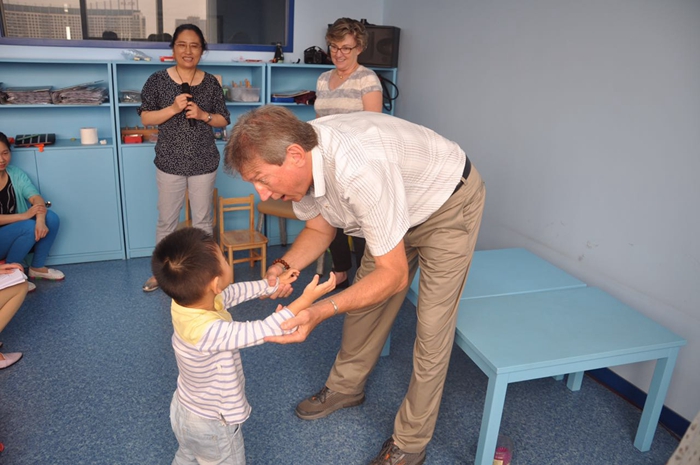
The therapist is working withInteraction with Children with Special Needs
In terms of business, Yaen Education primarily targets2Age~6Speech and language therapy for children with special needs, offering personalized training programs for children with language disorders, developmental delays, and autism. Services include oral-motor training, articulation therapy, language comprehension and expression training, sensory integration therapy, as well as social and emotional management. Each year, we help hundreds of children progress from nonverbal to verbal communication, from unclear speech to clear expression, while also enhancing their social and communicative abilities.
Yaen Education currently offers programs in developmental language training, speech articulation,RDIConsultation and Counseling,PECSSix major course modules, including the Picture Exchange Communication System. Notably, Yaan Education has specially introduced the Picture Exchange Communication System (PECS) from Pyramid Educational Consultants in the United States.Picture Exchange Communication System, abbreviated asPECS). For preschool-aged children with autism and related disorders, after undergoingPECSFollowing training, the majority achieve independent language capabilities.
In addition, Yaan Education has developed online courses for parents of children with speech disorders. One objective is to enhance parents’ knowledge and skills in home-based training, thereby reducing the need for offline sessions and helping families lower treatment costs. Another objective is to provide parents in regions where training centers are not yet established with access to a professional training system.
In an era of soaring housing prices, particularly in first-tier cities, establishing offline chain stores is destined to be a capital-intensive model. Bian Qiongxia stated frankly that without the intervention and support of venture capital, it would be quite difficult for Yaen Education to achieve rapid cross-regional expansion relying solely on its own resources, especially in a slow-growth sector like healthcare services. Beyond capital constraints, limitations in talent reserves and community infrastructure are equally tangible.
For Yaen Education, the shortage of professional talent will clearly affect its expansion speed. In the United States,2014Total population at year-end:3.19billion, among whom licensed speech-language pathologists are13tens of thousands of people. In China, it is only in recent years that a handful of universities, such as Beijing Language and Culture University and Shanghai University of Traditional Chinese Medicine, have established relevant programs, with not even the first cohort of students having graduated to date. Moreover, the occupation of speech-language therapist is still not included in China’s Occupational Classification System. Consequently, organizations like Yan Education must recruit professionals from fields such as medicine, psychology, and early childhood education, and then provide secondary training—a process that is both time-consuming and costly.
However, the relatively low income level and psychological pressure that exceeds that of ordinary professions have also led to a high turnover rate among speech-language therapists who are difficult to train. Taking Yan Education in Hangzhou160Yuan/Calculations show that the actual compensation speech therapists receive per session lacks significant competitiveness compared to instructors of traditional subjects such as music and art. Nevertheless, speech-language pathologists undoubtedly face greater psychological pressure, as they work with special-needs children on a daily basis while contending with parents’ high expectations for therapeutic outcomes.
In light of this situation, there appear to be no readily available solutions for significant improvement at present, and the severe challenges of insufficient capital and talent will persist in the near future. Perhaps strong leadership from the founders, coupled with the dissemination of a positive corporate culture, could help build core competitiveness.