

Dr. Yu Ying Files IPO Prospectus for Her Primary Care Chain Pursuing 'Ideal Healthcare'
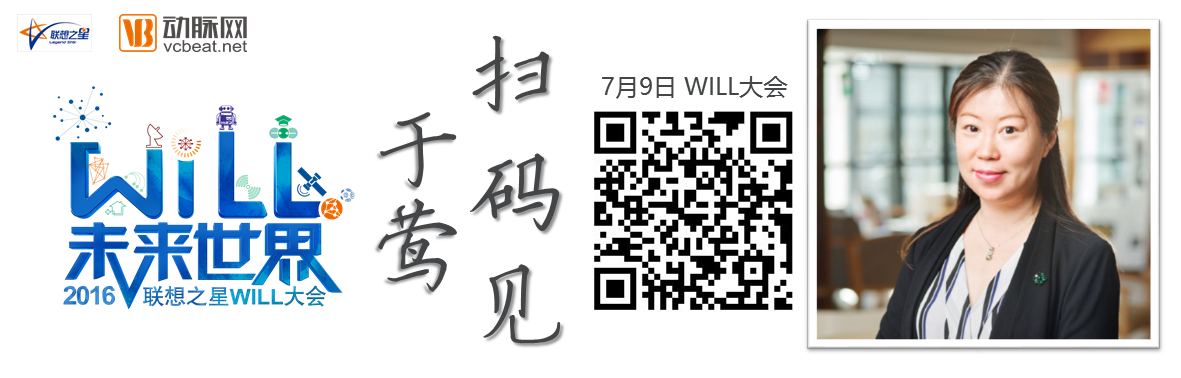
“Restlessness is a factor etched into one’s bones and blood” — Yu Ying
“Superwoman of the Emergency Department,” Yu Ying, resigned from Peking Union Medical College Hospital in 2013 because she “no longer wished to play by the evaluation system imposed on physicians for research performance,” sparking widespread debate within China’s healthcare system. Over the past two years, her path of “departure”—from opening a Taobao store, to planning a private clinic, and finally joining United Family Healthcare—has been far less effortless than it appeared to outside observers.
VCBeat Exclusive Interview with Yu Ying: An In-Depth Look at the Journey of This “Superwoman” After Her Departure
Left the system
Only Then Did Yu Ying Learn of These Three Matters
In summarizing the shifts in her mindset after leaving Peking Union Medical College Hospital, Yu Ying repeatedly used the phrase “you only realize it once you’ve left” three times, reflecting her profound insights into a broader world:
1.“Only after leaving did I realize that the system serves as a very effective safety net.Because physicians within the state-run healthcare system can follow a set of established rules step by step to survive and thrive with ease. This path involves graduation, taking postgraduate entrance exams, obtaining medical licenses, completing residency rotations, writing research papers, advancing in professional titles, applying for research grants, publishing articles, and further promotion. Such work is highly stable, yet the assessment of clinical competence is not a priority, let alone humanistic care. When facing medical disputes, it depends on whether the hospital’s medical affairs department takes responsibility and can resolve issues smoothly; for short-term training courses, many pharmaceutical companies make thorough arrangements, allowing doctors to attend lectures and travel without conflict; as for periodic assessments of physician licenses, continuing education credits, and personnel files, the extensive administrative logistics department will handle every detail meticulously. Physicians are like flowers in a greenhouse, but also like frightened birds startled by the mere twang of a bowstring. Due to limited understanding of the market, they generally do not know how to maintain their patient communities and personal brands, lacking competitiveness in the market.
2.“It is only after leaving that one realizes how challenging work in any industry can be."I used to think that doctors working within the public healthcare system had a tough and exhausting job with low salaries. However, after leaving the system, I realized that even white-collar workers, who are often envied by many, need to put in significant effort to earn substantial compensation. Not to mention those small business owners who work from dawn till dusk every day."
3.“It was only after leaving that I realized how lacking my knowledge was in areas other than my own medical skills when it came to entrepreneurship.“For instance, policies and regulations that change annually, fundamental medical knowledge such as why patients with type 1 diabetes are more prone to ketoacidosis than those with type 2, chronic disease management, elderly care services, and even business communication, equity structure, human resources, and financial systems all require step-by-step learning and development.”
Join the Private Sector / Start Your Own Business / Work for a Conglomerate
Yu Ying Explains Three Directions for Doctors’ “Exodus”
In recent years, with the deepening of healthcare reform, doctors have increasingly “left” the system to explore various forms of independent practice. Even if policies fully liberalize independent medical practice, doctors who have long worked within the public system may face challenges in adapting to this new model. There is no pre-existing, ready-to-apply framework for determining which form of “independent practice” is most feasible, making a process of exploration indispensable. Yu Ying believes that there are currently three main models, namelyEstablish a presence on private platforms, and build self-created platforms and physician groups。
The first type,Settling on private platforms, i.e., establishing cooperative partnerships with private hospitals or medical institutions. This model leverages the venues, equipment, licenses, and medical resources of private platforms, along with a self-established team of physicians, to provide services to patients.
The second type,Establishing a self-created platform, i.e., independently operating a healthcare institution or enterprise.From applying for licenses, securing venues, recruiting teams, to establishing resource channels, every step requires deep involvement.
The third type,Physician Group, or "Physician Practice Team," refers to an alliance or organization composed of multiple physician teams.Physician groups will serve as the primary vehicle for independent medical practice in China, as they can meet physicians’ needs for support services such as patient acquisition, integration with commercial health insurance, and practice facilities.
The emergence of physician groups touches upon the core of healthcare reform—namely, the allocation of medical human resources—and is currently recognized as a relatively effective model. However, Yu Ying frankly expressed skepticism about physician groups operating within the public healthcare system. First, physicians’ time is limited, and balancing their responsibilities in both public and private sectors poses a significant challenge. Second, regulations governing practice standards, clinical protocols, and liability assignment for medical malpractice involving such in-system physician groups remain inadequate. Clarifying these issues is a prerequisite for the mature development of physician groups within the public healthcare system.
What Does Ideal Medical Service Look Like?
Yu Ying: China Has a Major Shortage of Family Doctors
Yu Ying joked, “Zhang Qiang once said that I am just a woman, always more emotional than rational.” In the early stages of her independent practice, Yu Ying candidly admitted to lacking comprehensive planning and allowing emotions to play a significant role in her decision-making. Therefore, she summarized her entrepreneurial journey as a process of emotional restraint, during which she gradually learned to re-examine the current state of healthcare, identify gaps in the target market, pinpoint customer pain points, and reflect on the question, “What kind of healthcare can truly help people?”
As for this issue, Yu Ying has also provided her own answer.
“My ideal healthcare service works like this: our primary care needs—including health prevention, chronic disease management, and elderly care services—are all handled by a family doctor. This physician has a thorough understanding of our physical condition and medical history, knows where our disease risks lie, and can remind us when to pay attention to specific issues. They also provide appropriate advice on daily diet and exercise. Once a condition evolves into a specialty-specific problem, the family doctor is responsible for referring us to the appropriate specialist. After surgery, the family doctor oversees postoperative rehabilitation until full recovery is achieved. The value of a family doctor lies in their ability to communicate thoroughly with patients, integrating health management seamlessly into their everyday lives.”
Yu Ying believes that most of the physician groups emerging today are specialized in specialty care services, while teams providing primary care services are relatively scarce.
A major reason lies in the issue of charging for basic services. While some believe that basic services should be free, Yu Ying argues that there is a market willing to pay if such services reach the standard of family doctors. Meanwhile, the involvement of commercial health insurance signals that primary healthcare is entering an era of paid services.
Another reason lies in the widespread lack of a solid medical foundation among physicians. For instance, if medical education were scored on a scale of 0 to 100, the current system in China tends to focus on the 60–100 range. Physicians trained under this model undergo three years of standardized residency training and are channeled into specialized career paths. Coupled with China’s large population, which provides ample clinical practice opportunities within the public healthcare system, most specialist professors achieve high levels of surgical proficiency—often aligning with international standards and even surpassing them in certain technical skills. However, Chinese medical education falls short in delivering the foundational 0–60 segment, which significantly hinders the service quality and market recognition of primary care physicians.
During the interview, the five most frequently used words in Yu Ying’s conversation were:System, Private Practice, Physician Resources, Family Physicians, Chain Clinics, perhaps Yu Ying’s next move is related to this. On July 9, 2016, Yu Ying will attend the medical session of the Legend Stars WILL Conference as a keynote speaker and unveil her new entrepreneurial venture on site.
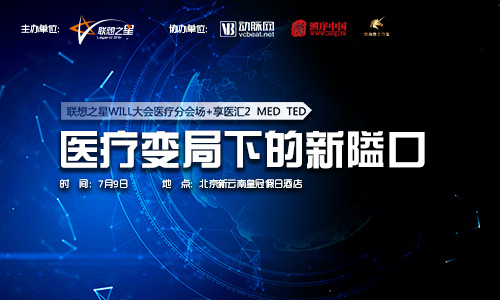
Lenovo Star WILL Conference Medical Sub-venue + Xiangyihui 2 MED TED
Event Registration Link:http://m.grouplus.cn/ebsufm
Scan the QR Code to Enter Future Healthcare
![[MED TED主题演讲活动]活动二维码.png](https://cdn.vcbeat.top/upload/image/a8/23/ad/87/1865aaef2c7a2763913ae529193db435.png "1467022323201748.png")