

Xiuling TCM Files IPO Prospectus: Empowering General Practitioners to Prescribe Like Master Physicians with AI
Compared with the explosive growth of internet healthcare, traditional Chinese medicine (TCM) developed relatively slowly in the early stages of this sector. However, over the past two years, there has been a rush of capital vying for position in TCM-themed internet projects. With 2016 as a turning point, most internet TCM projects were still immature in the preceding period; as time progressed, various business models gradually became clear in the first half of 2016. Seizing this opportunity, VCBeat will launch a series of related articles and host an industry salon focused on internet TCM at the end of June. For more details, please continue to follow VCBeat.
“Xiuling TCM” is affiliated with Shanghai Xiuling Information Technology Co., Ltd. It is an online auxiliary learning and diagnostic support system developed by leveraging modern information technology to simulate the diagnostic and therapeutic philosophies, pattern differentiation logic, and prescription experiences of Yan-style Traditional Chinese Medicine (TCM). In 2012, the Shanghai Municipal Health and Family Planning Commission announced 15 Haipai TCM schools, among which Yan-style TCM, led by Professor Yan Dexin, a “National Medical Master,” was included. The system has currently been piloted for trial use.
In primary healthcare institutions, such as community health service centers, traditional Chinese medicine (TCM) outpatient clinics, and TCM pharmacies with on-site practitioners, physicians can collect patients’ “four diagnostic” information (inspection, listening/smelling, inquiry, and pulse-taking) along with other relevant disease-related data on site, guided by the “Xiuling TCM” system. The system simulates the clinical reasoning of renowned senior TCM experts to generate fully personalized TCM prescriptions for physicians’ reference, enabling general practitioners to prescribe at a master level.
“Xiuling TCM” CEO Li Wenyou told VCBeat that, by further integrating the clinical techniques of other excellent TCM schools and leveraging increasingly mature devices such as the “Four-Examination Instrument” and “Pulse Diagnosis Instrument,” Xiuling TCM’s system will gradually acquire capabilities in TCM big data and deep learning.
The Core of Revitalizing Traditional Chinese Medicine Lies in Inheritance, Application, and Development
In recent years, the Chinese government has placed increasing emphasis on the development of Traditional Chinese Medicine (TCM), providing substantial support through legislation and industrial policies. On December 21, 2015, the Draft Law on Traditional Chinese Medicine was finally submitted to the Standing Committee of the National People’s Congress for deliberation. The following day, marking the 60th anniversary of the China Academy of Chinese Medical Sciences, President Xi Jinping sent a special letter of congratulations, while Premier Li Keqiang issued instructions expressing his congratulatory remarks—an unusually high level of official recognition. On February 14, 2016, the State Council executive meeting reviewed and discussed the Outline of the Strategic Development Plan for Traditional Chinese Medicine (2016–2030), making specific arrangements for the development of the TCM industry.
“Revitalizing traditional Chinese medicine (TCM) hinges on effectively addressing three key areas: inheritance, promotion and application, and development. This is a consensus within the TCM community,” said Li Wenyou. In reality, however, significant challenges persist in these three areas.
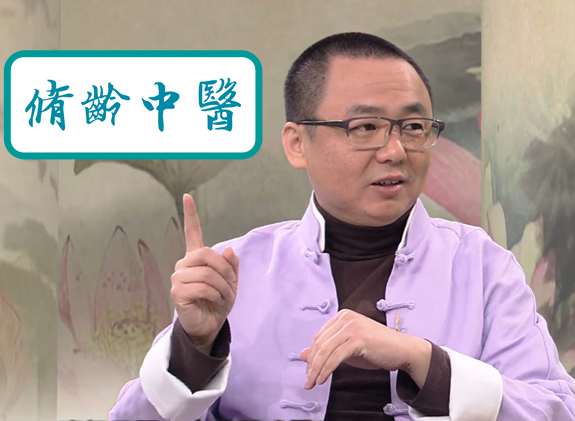
Pictured is Li Wenyou, CEO of Xiuling TCM
Regarding inheritance, current approaches at both the national and local levels primarily involve establishing schools-of-thought inheritance bases or studios led by renowned senior TCM practitioners. Although this “master-to-apprentice” model is closer to clinical practice than university-based training, it has notable shortcomings. These include a lack of standardization, inevitable distortions in oral and experiential teaching, variability in what apprentices learn due to differences in aptitude and diligence, prolonged talent development cycles, and excessive reliance on human factors.
In terms of promotion and application, the primary challenge lies in the inability to replicate services and the difficulty of scaling. Since a single practitioner can only mentor a few apprentices over three to five years, broader dissemination is constrained, which constitutes the core obstacle preventing the chain operation of Traditional Chinese Medicine (TCM) diagnosis and treatment. Furthermore, mutual isolation among different TCM schools of thought, characterized by a lack of interaction and exchange, has led to insularity and an inability to learn from one another, making it difficult for patients to make informed choices.
In terms of development, TCM case records have historically been sporadic and lack sufficient clinical data support, confining the field to a stage characterized by “difficult inheritance and even greater challenges in advancement.”
Li Wenyou stated that the online assisted learning and clinical decision support system of “Xiuling TCM” can largely address the challenges encountered in the inheritance, promotion, application, and development of traditional Chinese medicine (TCM), as previously mentioned. He described it as highly innovative and a unique model of “TCM plus Internet.” Furthermore, such a system offers strong practicality for primary healthcare institutions and their TCM practitioners, effectively enhancing their clinical capabilities and providing new methods and pathways for learning TCM. This holds positive significance for leveraging the role of TCM in advancing the reform of tiered diagnosis and treatment.
Integrating Diagnostic and Treatment Protocols from Major Schools of Traditional Chinese Medicine
In implementing its business operations, Xiuling Company has adopted a “four-in-one” business model that integrates online and offline efforts. This model includes establishing demonstration sites for the inheritance and promotion of traditional medical schools at primary healthcare institutions, conducting offline physician training, introducing online assisted learning and diagnosis-and-treatment systems, and dispatching experts for on-site mentoring. Over the past few months, the “Haipai Traditional Chinese Medicine Yan’s Internal Medicine Chronic Disease Assisted Learning and Diagnosis-and-Treatment System” has been piloted at eight outpatient clinics of Shanghai iKang Guobin and several private hospitals, demonstrating its feasibility. The company is currently seeking to expand pilot applications into public community health service centers and additional private medical institutions.
“We have developed a mechanism that aligns with both Traditional Chinese Medicine (TCM) theory and business logic. Through this mechanism, we integrate the clinical experience of well-known TCM schools that are still in circulation and practice, simulating their ‘theoretical principles, therapeutic methods, formulas, and medicinals’ using computer technology to create an online artificial intelligence system. This integration of TCM and the internet is unique to ‘Xiuling TCM’ and presents significant barriers to entry,” Li Wenyou told VCBeat. “Generally speaking, the process by which a renowned senior TCM practitioner treats a patient can be divided into three stages. In the first stage, patient information is collected through the four diagnostic methods: inspection, listening and smelling, inquiry, and pulse-taking. In the second stage, TCM syndrome differentiation is performed based on the patient’s information, categorizing the patient’s condition into different syndromes. In the third stage, a prescription is formulated according to the patient’s syndrome pattern. Our system provides guidance and reference recommendations for all three stages, offering assistance to physicians who use the system.”
Currently, this system has incorporated diagnostic and treatment protocols for more than 30 common chronic diseases from the Yan School of Internal Medicine, a prominent lineage of Shanghai-style Traditional Chinese Medicine (TCM). In the future, the system will gradually integrate the superior diagnostic and treatment protocols from major renowned TCM schools across China.
“Currently, our clients are various medical institutions qualified to provide TCM diagnosis and treatment. We have two business models. In one model, the system serves as a tool for physicians, with institutions paying a fixed monthly software licensing fee plus a usage-based fee (an additional charge is incurred for each prescription generated by the system),” said Li Wenyou. “The other model involves revenue sharing of consultation fees and medication costs. Different medical institutions can choose the model that best suits their circumstances.”
Team and Financing
Li Wenyou, CEO of “Xiuling TCM,” serves as the Director of Cooperation and Development at the Shanghai Yan Dexin Traditional Chinese Medicine Foundation. He graduated from the Department of Materials Science at Shanghai Jiao Tong University in 1990 and has subsequently served as General Manager at wholly-owned subsidiaries of listed companies, state-owned enterprises, and his own ventures. Since 2009, he has studied Traditional Chinese Medicine (TCM). In recent years, he has acted as the planner and resident guest for the Shanghai TV Documentary Channel’s program Bian Que Hui, and has appeared as a guest on multiple health and wellness television programs across the Foreign Language Channel’s Yangsheng Dongxifang (Wellness: East Meets West), the Star Fashion Channel, and the Arts & Humanities Channel, establishing himself as a renowned TCM wellness expert in Shanghai. He is the author of Wisdom of Wellness for White-Collar Workers (first edition published by Shanghai Scientific and Technical Publishers in 2011; second edition in 2014), among other works.
“Xiuling TCM” Medical TeamThe medical team of “Xiuling TCM” is advised by Professor Yan Qianlin, a nationally renowned senior TCM practitioner and the third-generation direct heir of the Yan School of Traditional Chinese Medicine. Dr. Hu Qixiang, the fourth-generation inheritor of the Yan School of TCM, serves as the Medical Director. Dr. Hu previously held the position of Associate Chief Physician in the Department of Cardiology at Shuguang Hospital Affiliated to Shanghai University of Traditional Chinese Medicine, and in the Department of Traditional Chinese Medicine at Shanghai Ninth People’s Hospital Affiliated to Shanghai Jiao Tong University. He is a master’s thesis supervisor, a council member of the First Jingfang (Classical Formula) Professional Committee of the World Federation of Chinese Medicine Societies (WFCMS), a committee member of the first and second Psychosomatic Medicine Professional Committees of the Shanghai Association of Integrative Medicine, a committee member of the ninth Cardiac Disease Branch of the Shanghai Association of Traditional Chinese Medicine, a member of the Shanghai Yan Dexin TCM Foundation, and a member of the National Yan School Internal Medicine Studio of Renowned Senior TCM Practitioners.
Xia Lin, CIO of “Xiuling TCM,” graduated from Shanghai Jiao Tong University in 1998. He previously worked in R&D at Huawei, where he served as Head of the South Pacific R&D Center, overseeing the development of large-scale billing systems and business intelligence big data analytics platforms. He also held the position of Director of the New Product Development Center at ZTE, responsible for cloud storage and CDN networks, and served as Product Manager for China Unicom’s WoStore and Zhongxin (a WeChat-like platform). Additionally, he was CTO at Xieyun Technology, leading app development for TV set-top boxes, and spearheaded the construction of the 10086 e-commerce platform at Quancheng Technology. Furthermore, he served as CTO at Yizhong Technology and acted as Product Manager for multiple apps, including Lanqu, Zhai Nvshen, Yi Cai Shiguang, and Fensi Bao.
Zhao Jing, Brand and Marketing Director of “Xiuling TCM,” graduated from Shanghai Jiao Tong University in 1997 with dual bachelor’s degrees in Plastic Forming and Technological Economics. She previously conducted industry and corporate research in the financial and foreign trade sectors at Everbright Securities. At Huayuan Analytics Technology Co., Ltd., she served successively as Project Manager, Project Director, and Marketing Director, demonstrating unique insights in big data analytics and customer needs mining. As General Manager of the Shanghai Branch and Marketing Director for East China at Shuchuang Information Technology Co., Ltd., she accumulated extensive experience in corporate management, big data analytics, and new media marketing.
It is reported that in September 2015, Xiuling Traditional Chinese Medicine received RMB 3 million in angel investment from Shanghai Nanxiang Venture Capital Co., Ltd. Currently, the project is undergoing Pre-A round financing.
1. Cloud TCM: Embracing the Boom in TCM Clinics with SaaS
II. Investment Opportunities in “Traditional Chinese Medicine + Internet” from a Policy Perspective
IV. Dajia TCM: Leveraging Big Data to Build an Essential Tool for TCM Practitioners
V. Liudu TCM: Leveraging the Internet to Build Brands for Physicians and Physician Groups
VI. Gancao Doctor: Building a TCM Physician Group
VII. How Are TCM Clinics, Favored by Capital, Embracing the Internet?
9. Zheng Wei of Zhongjing Ketou: Now Is the Best Time to Invest in Traditional Chinese Medicine
XI. Dingdang Cloud TCM: A Key Component of Renhe Group’s Full-Industry-Chain Strategy
12. GeekBang’s Jiang Tao: Adding a “Geek” Flavor to Traditional Chinese Medicine
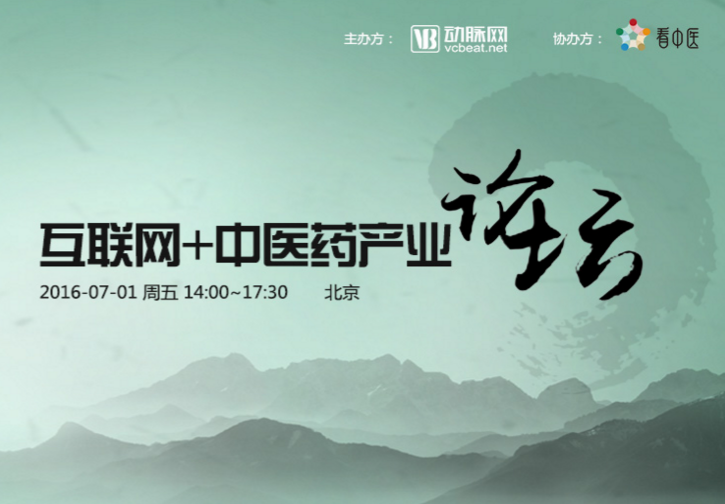
On “Internet + Traditional Chinese Medicine”
What You Want to Know,Everything is available here.
Event Registration Link:http://h5.welian.com/event/i/MTMyNTY=
Scan or long-press the QR code to register instantly.
Event Inquiries: Mr. Li 023-67685030