

Zhongyi Online Submits IPO Prospectus: A Digital Learning Platform for Over 410,000 TCM Practitioners
Compared with the explosive growth of internet healthcare, traditional Chinese medicine (TCM) developed relatively slowly in the early stages of this sector. However, over the past two years, there has been a rush of capital vying for position in TCM-focused internet projects. With 2016 as a turning point, most internet TCM projects were still immature in the preceding period; yet as time progressed, various business models gradually became clear in the first half of 2016. Seizing this opportunity, VCBeat will launch a series of related articles and host an industry salon themed on internet TCM at the end of June. For more details, please continue to follow VCBeat.
TCM Online is an online education platform for practitioners of Traditional Chinese Medicine (TCM). Since its inception, more than 1,100 physicians have delivered courses through TCM Online. The platform has hosted over 2,000 academic lectures, accumulated 3,000 hours of audio and video coursework, and reached an audience of more than 180,000 learners.
A Year-Long “Marathon” and a Four-Month “Parkour”
“Every Monday, the live-streamed academic activities of the Department of Respiratory Medicine at Beijing Hospital of Traditional Chinese Medicine attract over 1,000 TCM practitioners via the ‘Zhongyi Zaixian’ mobile app, equivalent to hosting a weekly conference for a thousand TCM professionals.”
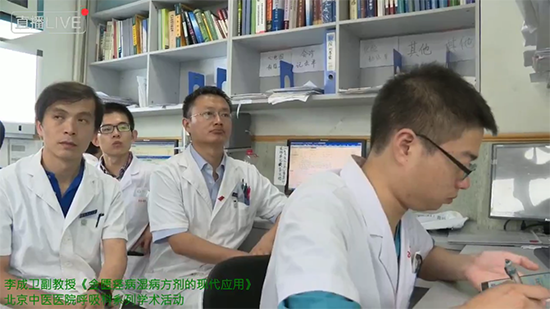
Weekly Academic Activities of the Department of Respiratory Medicine, Beijing Hospital of Traditional Chinese Medicine
The predecessor of Zhongyi Online was the “Zhongyi Online Forum Alliance.” The alliance was established in January 2015, initiated and founded by department directors from several Grade A tertiary hospitals in Beijing.
From three founding WeChat groups to more than 400 active ones, TCM Online has gradually expanded through the WeChat group model. Currently, 332 of TCM Online’s WeChat groups serve as professional medical forums. In early 2016, building on its WeChat groups, TCM Online launched a mobile internet product called “TCM MOOC,” which became version 1.0 of the “TCM Online APP.” It took over a year to evolve from WeChat groups to version 1.0 of the TCM Online APP, whereas only four months were needed to advance from version 1.0 to version 2.0.
“Our development history can be clearly divided into two distinct phases. The first was the WeChat group stage, a prolonged campaign. Don’t just look at the vibrant activity across our three to four hundred groups; behind the scenes, there was a massive amount of organizational and service work. Without exceptional endurance, we would not have made it to where we are today. Therefore, I liken this phase to a marathon.” In He Jian’s view, compared to the marathon-like growth during the WeChat group era, the team’s current development is more akin to “parkour.” “The development and iterative upgrades of our mobile internet product represent a new endeavor, fraught with many thrilling stumbles and setbacks.”
Passive Entrepreneurship: Addressing Physicians' Learning Needs
“We developed this product because physicians had a genuine need for it, and these TCM enthusiasts also created it with the intention of helping educators address their challenges.” For He Jian and his team, the “birth” of Zhongyi Online was truly a case of “passive entrepreneurship.”
Beijing Hospital of Traditional Chinese Medicine (TCM), which brings together numerous renowned senior TCM practitioners and is acclaimed as the “National Academic Center for TCM,” served as the birthplace and main hub of the initial TCM Online Forum Alliance. Within this single hospital, the Dermatology Department established the “National TCM Dermatology Friends Association,” the Gynecology Department founded the “TCM Gynecology Forum,” the Pediatrics Department launched the “TCM Pediatrics Forum,” and the Acupuncture and Moxibustion Department created the “TCM Acupuncture and Moxibustion Forum.” These forums constituted the founding members of the TCM Online Forum Alliance.
Within the Online Forum Alliance for Traditional Chinese Medicine, physicians can engage in mutual communication and deliver lectures to one another. Initially, these lectures were conducted via WeChat voice messages. While voice messaging is an effective medium for communication, each WeChat voice clip is limited to 60 seconds. Consequently, a single “lecture,” including questions and interactions from group members, could generate thousands of voice messages. This created significant inconvenience for participants who wished to replay the content or catch up on sessions they had missed.
Several founders of Zhongyi Online are enthusiasts of Traditional Chinese Medicine (TCM). After identifying this drawback, they discussed ways to address the issue. By leveraging technological solutions, they converted audio recordings of physicians’ lectures into shareable links, which were then paired with the physicians’ photos to create a “multimedia” product.
Among the three to four hundred WeChat groups under the alliance, many were infiltrated by advertisers spamming content. The alliance implemented centralized management, requiring real-name verification for group entry, collective invitations before classes, and collective likes after classes, while removing inactive members and spammers. These measures not only purified the group ecosystem but also enabled He Jian’s team to recognize the substantial and tangible demand for learning within the traditional Chinese medicine community.
Building a "Single Screen" for Traditional Chinese Medicine Education
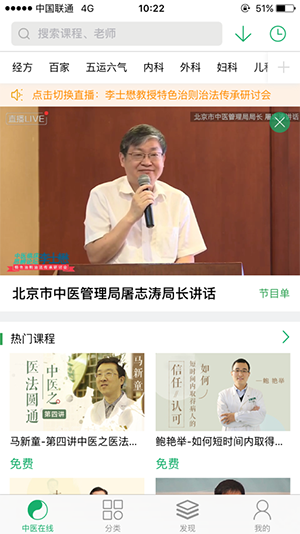
On June 18, 2016, the live-streaming version of TCM Online 2.0 was launched. The TCM Online APP Version 2.0 added a live-streaming feature. At the top of the homepage is a live-streaming screen, which features both live broadcasts and recorded premium courses. TCM Online aims to use this screen to “live-stream all the exciting developments happening in the field of Traditional Chinese Medicine.”
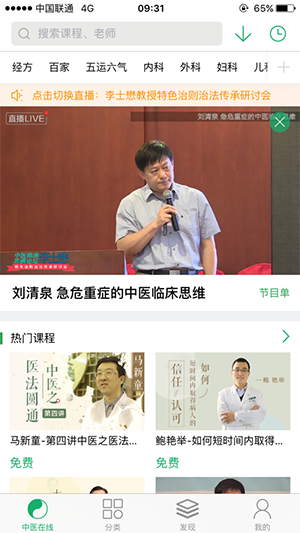
TCM Online App Interface
On its first day of launch, this version was installed by over 2,000 users, among whom 1,170 physicians focused their attention on this small “screen,” including 360 physicians at the associate chief level or above.
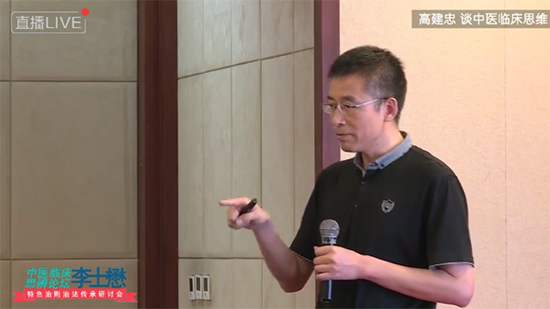
Screenshot of Traditional Chinese Medicine Online Live Video
“The Screen” is a limited resource. In addition to the live-streaming content curated by TCM Online itself, the remaining time slots will be made available to the 332 professional forums under its alliance. “Of course, only high-quality content will be featured; we must ensure that users enjoy a premium experience, where they can access top-tier content whenever they tune in,” He Jian told VCBeat. Video live streaming offers greater bandwidth than audio-only formats; for instance, practitioners in the Acupuncture and Tuina forum have long been eager to adopt video-based live instruction.
TCM Academic Conference Meets Internet+
On June 25 and 26, the “TCM Clinical Dialectical Thinking Forum and Symposium on the Inheritance of Professor Li Shimao’s Characteristic Therapeutic Principles and Methods” was held at the Tangshan Hotel in Beijing. Meanwhile, the “Inaugural Meeting of the Clinical Research Statistics Committee of the World Federation of Chinese Medicine Societies (WFCMS) and the First Annual Academic Conference” took place at the Beifang Jiayuan Hotel. To ensure simultaneous live broadcasting of both venues on separate channels, TCM Online deployed a team of 30 personnel across the event sites and the backend production control room.
“It is gratifying that nearly 3,000 TCM colleagues participated in the two forums via live streaming from remote locations,” said He Jian. “The goal of a thousand-attendee conference has been achieved; moving forward, Zhongyi Online aims to leverage the internet to host a TCM conference with 10,000 participants.”
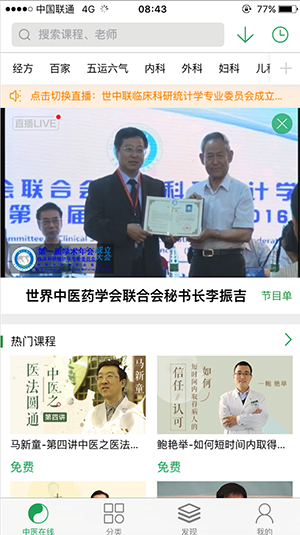
Inaugural Conference of the World Federation of Chinese Medicine Societies’ Special Committee on Clinical Research Statistics and the First Annual Academic Conference
TCM Clinical Dialectical Thinking Forum and Symposium on the Inheritance of Professor Li Shimao’s Characteristic Therapeutic Principles and Methods
“TCM Online focuses on physician education. Education is inherently challenging, and educating physicians is even more difficult due to the limited target audience. Both live and recorded streaming require substantial team support, resulting in high costs and limited revenue. Of course, we cannot abandon this endeavor simply because of a low return on investment. Seeing so many professional physicians diligently learning with us, how could we bear to leave them behind?” said He Jian. TCM Online’s target users are physicians. Currently, there are nearly 410,000 registered licensed TCM practitioners in China, and an additional 1.32 million primary care physicians across the country also constitute our target user base.
In July 2015, TCM Online secured RMB 5 million in angel investment. In March 2016, the team raised RMB 25 million in Series A funding. It is reported that TCM Online is currently preparing for its Series B financing round.
Post-80s Founders and Their TCM Enthusiast Companions
TCM Online currently has a team of nearly 40 people, many of whom have come together out of their passion for Traditional Chinese Medicine.
He Jian, the team’s founder and CEO, was born in 1981. “People always talk about the post-80s generation; my daughter is already 10 years old,” he remarked. He Jian has been involved in the internet industry since its early days, dating back to the BBS era in 1994. He began studying Traditional Chinese Medicine (TCM) in 2006. In 2012, he established a TCM interest group, personally teaching two courses: History of the Development of Traditional Chinese Medicine and Shanghan Lun in Daily Life. Most of the participants were tech enthusiasts from internet companies, and half of the founding team became devoted advocates of TCM after attending his classes. Since 2014, He Jian has successively served as Director of the Traditional Chinese Medicine Public Welfare Fund under the China Population Welfare Foundation, Vice Chairman of the China Traditional Chinese Medicine Health Big Data Alliance, and Director of the Beijing Center for Online Education in Traditional Chinese Medicine.
CTO Ren Yi developed a passion for Traditional Chinese Medicine (TCM) after attending He Jian’s lectures. Previously, Ren Yi served as the CTO of a mobile gaming company. Driven by his enthusiasm for the work being done at TCM Online, he resigned from his former team to co-found a venture with He Jian. Within the TCM Online team, there are several other examples similar to Ren Yi’s.
In addition, the Product Director and technical team of TCM Online are all from internet companies such as Baidu.
He Jian said, “A group of people passionate about Traditional Chinese Medicine (TCM) have come together with the aim of doing something valuable and meaningful for the inheritance of TCM.”
I. Cloud TCM: Embracing the Boom in TCM Clinics with SaaS
II. Investment Opportunities in “Traditional Chinese Medicine + Internet” from a Policy Perspective
IV. Dajia TCM: Building an Essential Tool for TCM Practitioners with Big Data
V. Liudu TCM: Leveraging the Internet to Build Brands for Physicians and Physician Groups
VI. Gancao Doctor: Building a Traditional Chinese Medicine Physician Group
VII. How Are TCM Clinics, Favored by Capital, Embracing the Internet?
IX. Zheng Wei of Zhongjing Ketou: Now Is the Best Time to Invest in Traditional Chinese Medicine
XI. Dingdang Cloud TCM: A Key Component of Renhe Group’s Full Industry Chain Construction
12. GeekBang’s Jiang Tao: Adding a “Geek” Flavor to Traditional Chinese Medicine
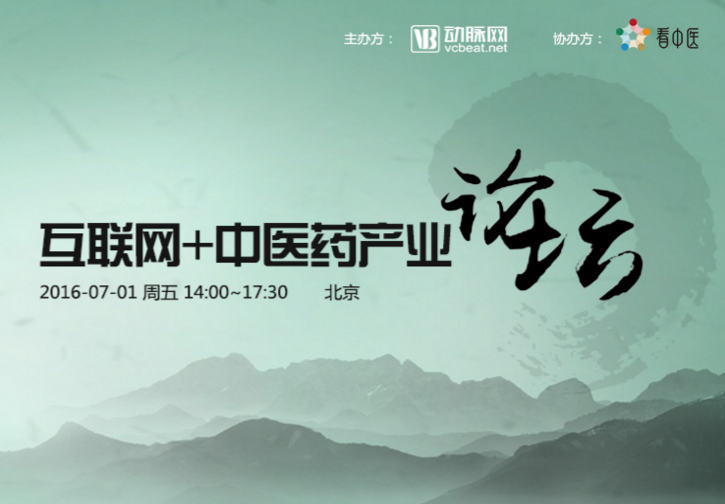
On “Internet Plus Traditional Chinese Medicine”
What You Want to Know,All available here.
Event Registration Link:http://h5.welian.com/event/i/MTMyNTY=
Scan or long-press the QR code to register instantly
Event Inquiries: Mr. Li 023-67685030