

WeDoctor: How Internet Healthcare Empowers Pharmaceutical Retail Terminals
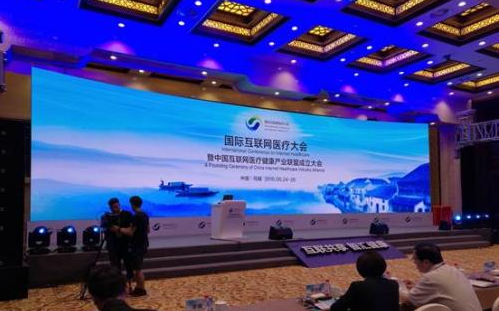
From June 24 to June 26, 2016, the inaugural “International Internet Healthcare Conference and Founding Ceremony of the China Internet Healthcare Industry Alliance,” themed “Interconnected Sharing, Smart Health,” was held in Wuzhen, Tongxiang. The conference attracted more than 800 attendees, including representatives from the domestic and international internet and healthcare sectors, executives from the pharmaceutical and financial insurance industries, and industry experts, who engaged in discussions and experience-sharing on “Internet + Healthcare.” As a media representative, VCBeat provided comprehensive coverage of the event and will sequentially share key insights derived from it.
Retail at pharmaceutical endpoints is a crucial component in creating a closed-loop internet healthcare ecosystem and an essential link in building a comprehensive healthcare system. WeDoctor has made numerous attempts in this field. What insights have they gained in supporting retail at pharmaceutical endpoints, and what actions have they taken? Let us explore how Mr. Lu Zigui from WeDoctor shares his perspectives. (The following content is edited and compiled based on the transcript of Mr. Lu Zigui’s speech at the International Internet Healthcare Conference.)
The Fundamental Pathway of Internet Healthcare
Internet healthcare is a highly complex system. In most business sectors, it is rare to find such a diverse range of participants. For instance, user profiles are categorized across multiple dimensions, including sub-health, general health, disease, chronic conditions, and critical illnesses. Physicians are also stratified by level, ranging from senior specialists to junior doctors and community-based practitioners. Hospitals, too, constitute a standardized social service system.
Within the value chain, this is a government-regulated domain. WeDoctor has a crisis management department, and its business operations are guided by relevant laws and regulations applicable to various stakeholders, including enterprises, payers, social security agencies, and insurance departments. Organizing these participants and enhancing efficiency presents a challenge of unimaginable magnitude.
The development trajectory of internet healthcare typically progresses from online searches and consultations on platforms like Baidu, to specialized medical services, then to B2B applications, and finally to general advisory services. WeDoctor has evolved step by step from its origins in the appointment registration system.
In the initial stages of development, the trajectory typically involves gradual penetration across the entire value chain from a single dimension. Traditionally, in offline settings, patients visit hospitals and schedule appointments with physicians in person. In the online context, certain hospital processes are digitized through internet-based solutions, thereby extending these service access points to the digital realm.
Regarding development pathways, whether examining WeDoctor’s growth trajectory or that of other enterprises with a certain business scale in the internet healthcare sector, their development generally follows three stages. Typically, an app starts by identifying and leveraging a specific point within these relationships, using it as an entry point, and gradually evolving into a platform. As observed at the end of last year, this evolution gave rise to Wuzhen Hospital.
Drivers of Internet Healthcare Development
From the perspective of the driving forces behind the development of internet healthcare, innovation must address critical pain points, such as the difficulty and high cost of accessing medical care, by delving deeper into these issues. The core objective of this system is to enhance its overall efficiency. Since last year, internet healthcare has received strong policy support from the Chinese government. This support is reflected in various guidelines, including those for “Internet Plus,” as well as recent medical documents related to health big data. Overall, the development of internet healthcare is predominantly driven by innovation.
At this stage, WeDoctor has solidified doctor-patient relationships through the Wuzhen Internet Hospital by leveraging its appointment and registration service system. When medical teams join the Wuzhen Internet Hospital, they can access historical data of patients they have previously treated. The platform notifies patients accordingly, enabling physicians to provide online services directly through the system. Doctors have expressed pleasant surprise at the platform’s capabilities, feeling that their professional services are being recognized. WeDoctor’s service ecosystem here is highly comprehensive.
Over the past few years, WeDoctor has connected patients, hospitals, and doctors on its platform, building service capabilities across these three areas. It has accumulated 110 million users, more than 7,200 expert teams, and 220,000 doctors providing services on the platform. This year, the focus is to leverage these accumulated resources and extend them offline, integrating resources with primary community health service centers and pharmaceutical terminals, and constructing a comprehensive service system. Such integration will help pharmaceutical terminals and community medical institutions enhance patient trust in their services.
The preceding section outlined the historical development of internet healthcare. This prompts a key insight: the evolution of pharmaceutical and medical terminals requires the integration of internet-based services to facilitate their transformation from traditional product-sales models to service-oriented models. We aim to leverage the resources accumulated by WeDoctor to empower these service terminals and enhance their capabilities.
Opportunities for the Development of Pharmaceutical Endpoints
From a policy perspective, measures such as the elimination of zero-markup pricing, price reductions through drug tendering, and stricter drug controls present an opportunity for the development of terminal pharmaceutical services, potentially accelerating the growth of this system. Furthermore, from the standpoint of internet development, online hospitals are generating prescriptions, while for hospitals themselves, the implementation of zero-markup policies has transformed pharmacies into cost centers.
Hospitals also aim to channel prescription outflows to retail endpoints. In the future, this will involve more than simply diverting prescriptions to alternative sales channels. Prescriptions lacking regulatory oversight are difficult to authenticate. With policy shifts—such as a 10% reduction in the drug revenue ratio—the expansion of large-scale terminal networks is expected to drive significant incremental growth.
From the perspective of the development environment for pharmacies, there are several major challenges and opportunities. Cost pressures are significant: housing prices continue to rise, rental costs are increasing rapidly, and labor represents a substantial expense. All these factors place considerable strain on business operations.
Another factor is price competition; as drug prices decline, pharmacy gross margins shrink, making competitive pressures increasingly evident.
It can be seen that the products offered by pharmacies in China are quite similar to those in the United States around the year 2000. During that period, the U.S. also experienced a wave of pharmacy mergers and acquisitions, which ultimately led to the emergence of several large-scale enterprises. It is highly likely that China will follow a similar development path.
All enterprises are rethinking their business models, transitioning from traditional sales-oriented approaches to service-oriented ones, including reforms to their membership systems. In the future, close collaboration between internet-based companies and offline pharmaceutical terminals within this industry chain will enable the realization of a closed-loop online-to-offline (O2O) service model.
This approach establishes a comprehensive holistic health service ecosystem. The upper tier comprises service capabilities, primarily encompassing online diagnosis and treatment, medication management, and other clinical services provided by physicians.
Finally, in terms of service value. Many people have started businesses around pharmacies, and the development trend can be seen: it is conducive to the low-cost expansion of pharmacies and boosting sales. Furthermore, it can expand the closed loop of chronic disease management, allowing users to form a complete experience at the pharmacy, where minor illnesses can receive the required treatment plans and obtain prescriptions.
Furthermore, it facilitates the optimization of pharmaceutical services at our terminals, enabling such sales to transition toward a prescription drug service system.
Next is the enhancement of the membership system, which encompasses more than traditional marketing and services; it constitutes a comprehensive framework. Additionally, there is potential to explore collaborations with pharmacies in the realm of health insurance. WeDoctor will launch certain insurance products and integrate them with its offline membership system, ultimately providing end-user pharmacies with a complete suite of pharmaceutical and healthcare services.
Overall, the approach begins with online diagnosis and treatment via internet hospitals, followed by pharmaceutical management and service systems supported by professional pharmacists, and finally involves collaborative efforts with users, including the management of chronic diseases and medication adherence. These medication solutions are applied not only to large pharmacy chains but also to small and medium-sized chains. We hope that this service system will facilitate the rapid growth of terminal retail channels.