

WeDoctor Files for IPO After Five Years of Building China's Digital Health Leader: 87 Million EHRs Created, Over 100 Million Users Served
From his initial unpleasant experiences to the germination of his entrepreneurial idea, and finally to turning his dream into reality, Liao Jieyuan’s in-depth sharing has allowed us to understand, on one hand, how internet technology can connect hospitals, doctors, and patients; and on the other hand, it has provided insights into the evolution of WeDoctor’s business model, as well as its practical explorations in optimizing medical care processes, enabling precise appointment scheduling, implementing internet-based tiered diagnosis and treatment, building internet hospitals, and establishing Accountable Care Organizations (ACOs).
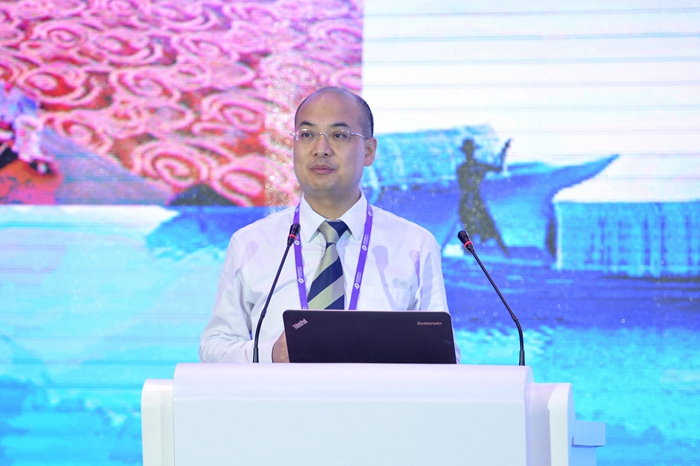
Liao Jieyuan, Chairman and CEO of WeDoctor
Long before starting his own venture, Liao Jieyuan had already accomplished something remarkable: developing Chinese intelligent speech recognition technology that enables computers to understand human speech. If computers can be made to understand human language, why not make accessing medical care less difficult? With this vision in mind, Liao and his team began a phased exploration of new models for healthcare delivery:
With the support of relevant authorities, WeDoctor undertook the task of building a health consultation and medical guidance platform in 2010, creating a national model for appointment-based diagnosis and treatment within six months. Since then, WeDoctor has gradually expanded its services to 27 provinces and municipalities, deploying over 1,700 front-end servers in more than 1,900 hospitals across China. This infrastructure enables interaction between hospital intranets and the internet, establishing these 1,900+ hospitals as joint windows for internet-based healthcare services. WeDoctor also pioneered time-slot appointment scheduling in China, allowing patients scheduled for consultations at 10:10 AM to arrive by 10:00 AM.
Currently, WeDoctor has cumulatively served over 110 million real-name authenticated users. To connect these users with physicians, WeDoctor has developed a physician-oriented “WeChat” platform called WeDoctor for Doctors. More than 200,000 doctors use the WeDoctor for Doctors app to manage hundreds of millions of patients. Through WeDoctor, the problem of patients queuing late at night to register at hospitals has been significantly alleviated.
WeDoctor first piloted precision appointment scheduling in Beijing and Shanghai. During this process, we found that the most effective way to combat ticket scalpers is through the internet. Precision appointment scheduling requires patients to upload their medical records in advance and accurately matches them with suitable doctors, thereby circumventing scalpers.
Today, WeDoctor’s services cover every stage of the patient care journey, including waiting for consultations, accessing test reports, and payment and settlement of registration and treatment fees, and have been implemented on a large scale in hospitals.
The Internet holds significant potential for application in the field of medical services. A seemingly simple application, such as online consultation and payment settlement, can reduce the number of times patients need to queue at hospital counters from 4–6 times to just once, cutting down their original waiting time from 2–3 hours to half an hour. In hospitals that have completed payment system upgrades, 80% of counter services have been shifted to mobile platforms, allowing more than half of the service counters to be closed, while post-consultation follow-ups have become routine practice.
Over the past year, WeDoctor successfully provided services to 270 million patient visits, saving the public nearly 20 million working days of waiting time.
Meanwhile, by leveraging data accumulated through its one-stop patient care services, WeDoctor has created more than 87 million electronic health records.
If China’s 1.3 billion citizens all rely on the limited number of large hospitals and renowned specialists for medical care, the problem of difficult access to healthcare will never be resolved. To address this, WeDoctor has begun exploring how to leverage the internet to achieve a more balanced allocation of medical resources and has undertaken numerous initiatives in this regard.
Exploration and Discovery: Leveraging the Internet to Assemble Expert Teams Is an Effective Solution to the Difficulty of Accessing Medical Care.
The expert team is led by a discipline leader, who may first recruit members from their own department as team members, then extend invitations to physicians from affiliated collaborative medical institutions, and finally open applications to other physicians in the same specialty. An assistant is appointed within the expert team, typically served by the head nurse or an aide of the team. The assistant helps recommend and match patients with appropriate team members based on the patients’ clinical conditions and physicians’ availability, thereby achieving precise triage.
In the past, mentorship among physicians required specific occasions and times; today, through expert teams, such mentorship has become more continuous and interactive.
To date, the WeDoctor platform has assembled more than 7,200 expert teams, comprising over 200,000 team physicians, thereby expanding an individual expert’s patient care capacity into that of a collaborative team. Meanwhile, with the efforts of more than 15,000 team assistants on the platform, the physician–patient matching rate has increased from an initial 72% to over 96%.
To explore internet healthcare, WeDoctor has conducted in-depth research on domestic and international medical service systems. In the United States, supported by health insurance coverage, American Well—the first company certified by the American Telemedicine Association—saw its telemedicine service volume in 2015 equal to the total of the previous eight years combined. Its total telemedicine service volume in the first quarter of 2016 already approached the full-year total for 2015. CVS Health’s MinuteClinic, a subsidiary of the U.S. pharmacy retail giant, served over 18 million patients in 2013.
The evolution of healthcare in the United States prompts us to reflect: What will healthcare services look like once a truly internet-based, continuously accessible service system is established?
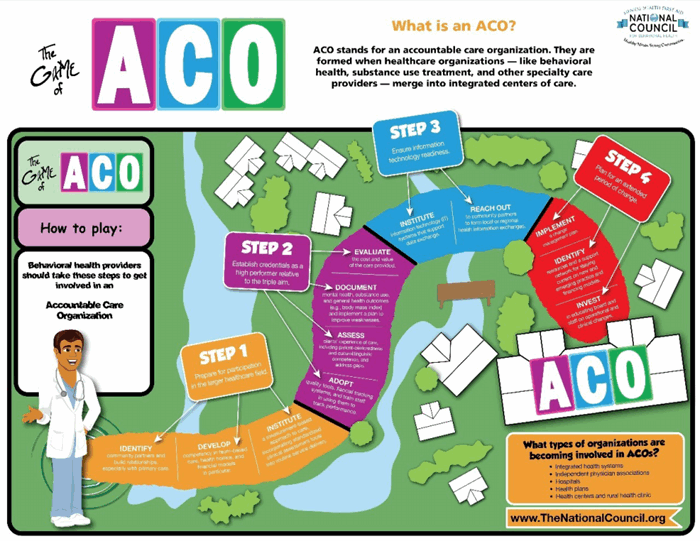
The ACO model can be understood through two case studies:
The first is what is commonly referred to as “Healthcare + Internet,” exemplified by the telemedicine services offered by the Cleveland Clinic in the United States. The Cleveland Clinic has established a regional healthcare consortium that encompasses remote monitoring and emergency care. Its team-based medical care extends to families along both horizontal and vertical dimensions, similar to a medical alliance.
Another model is the “Internet + Healthcare” model. American Well was the first company in the United States to receive certification from the American Telemedicine Association. It currently serves over 120 million people, accounting for more than half of the U.S. population. In partnership with CVS Health, a leading U.S. pharmacy chain, American Well has established more than 2,000 clinics within over 7,800 pharmacy locations. Each visit costs $49, and the number of patient consultations exceeded 18 million in 2013.
Furthermore, Cleveland Clinic provides access to top-tier specialist resources for its telemedicine services. This innovative tripartite collaborative care model creates a highly accessible platform that effectively saves time and enhances the efficiency of medical services. Ninety-five percent of patients reported satisfaction with the quality and service of their telemedicine experiences.
From Fee-for-Service (FFS) to Health Maintenance Organizations (HMOs), and then to Accountable Care Organizations (ACOs), U.S. practices serve as a reference model for China’s exploration of internet healthcare. As an internet healthcare platform providing online medical services and remote consultations, Wuzhen Internet Hospital is a typical case of China’s internet healthcare practice.
For first-time patients, Wuzhen Internet Hospital provides triage, appointment scheduling, and consultation services to help match patients with appropriate offline hospitals based on their symptoms. For follow-up and multidisciplinary consultation patients (primarily those with common and chronic conditions), Wuzhen Internet Hospital leverages technologies such as electronic medical record sharing and remote high-definition audio-video communication to directly facilitate online follow-up visits and remote consultations between doctors and patients.
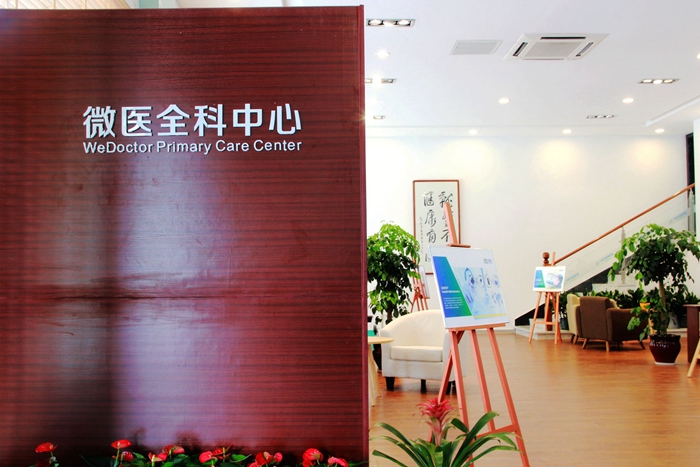
The General Practice Medicine Center serves as the offline platform for the Internet Hospital and is an indispensable link between large tertiary hospitals and primary care institutions.
Backed by the General Practice Medical Center, the internet hospital’s consultation points function similarly to outpatient clinics. These primary care facilities are established at the doorsteps of millions of residents, serving as local hubs for primary referrals, diagnostic testing, and chronic disease management. They offer particular convenience for residents who are not adept at using the internet or unfamiliar with computers. The public can connect to the internet hospital via equipment installed in pharmacies. After residents undergo electrocardiogram (ECG) measurements at these pharmacy-based consultation points, the data is transmitted to the internet hospital, where cardiologists provide remote diagnoses. The results are then sent back and printed at the pharmacy. Each pharmacy can serve 30–50 patients per day. Through this model, the internet hospital, which primarily handles follow-up visits and consultations, achieves a daily patient volume exceeding 18,000.
Nowadays, China’s first “Internet + Smart Pharmacy” has emerged. (See details:China’s First “Internet + Smart Pharmacy” Established in Hangzhou)
Currently, internet hospitals connect expert teams and offline hospitals, while also linking suppliers of health consumer products such as pharmaceuticals and insurance. In the future, they will provide membership-based services to the public with the goal of enhancing health services, thereby evolving into Accountable Care Organizations (ACOs). Such organizations can be driven either by the state or by society.
The WeDoctor ACO, currently under exploration, aims to leverage the internet to transform today’s passive healthcare into an accountable care organization model centered on health management and improving public health.
On the WeDoctor platform, not only is service volume climbing, but the number of users applying for health insurance is also increasing significantly. Individuals first establish a health account, with each family and every citizen having their own health savings account. Hengfeng Bank provides substantial support to users in this regard; after depositing idle funds into their accounts, individuals can convert these funds into health insurance premiums.
Currently, WeDoctor has served 3.2 million health insurance users, and WeDoctor ACO is developing a product with an average monthly cost of RMB 500 per person,It includes health management services beyond those covered by basic medical insurance. This accountability-based care model, under which the public pays a small additional fee to entrust their health to professional institutions, has gained widespread recognition.
Over the past five years, WeDoctor has grown into a unicorn enterprise in the “Internet Plus Healthcare” sector, becoming a typical representative of the internet healthcare industry. On the day of President Xi Jinping’s visit to the United States, Forbes announced the Top 10 Chinese-American Innovators of 2015, with Liao Jieyuan included on the list. This is both an honor and a responsibility. In his own words: “We look forward to giving healthcare the wings of the internet, truly realizing patient-centered medical services, making diagnosis and treatment more efficient and accessible, enabling precision medicine to serve the general public, and helping us all lead healthier lives.”