

Accenture Outlines Five Key Trends Shaping the Future of Digital Health in Upcoming IPO Filing
On June 28, Accenture hosted a live webcast that provided an in-depth discussion of the five forces driving the development of the digital health sector, and from this perspective explored five future trends. The keynote speaker was Dr. Kaveh Safavi, Senior Global Managing Director of Accenture Health, with health economist Jane Sarasohn-Kahn also participating in the discussion.
First Trend: “Intelligent Automation”
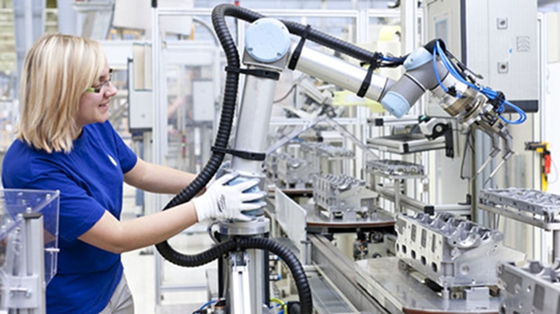
This concept encompasses a range of tools designed to liberate humans from the substantial labor demands of healthcare systems; however, this does not imply complete replacement of human workers, let alone their elimination.
“We should really be discussing how to leverage new technologies such as computers and artificial intelligence, integrating them into human work to make our activities more efficient and achieve better outcomes. Thus, this is an era of integration between humans and technology, not one where humans are replaced by machines,” said Safavi.
Safavi cited the example of a UK-based company called SilverCloud Health. Its technology assists patients with mental health conditions after they leave the clinical setting. “This technology was initially developed in the laboratory, where it was discovered that computer-based algorithms could be used to treat mental disorders such as depression. However, one challenge is that people are reluctant to accept a purely technological product, as they genuinely desire human interaction. The solution developed by SilverCloud is designed for use by licensed therapists, enabling patients to continue interacting with their clinicians and receiving therapeutic recommendations even after leaving the clinic.”
The second trend is “mobile workforce”
This concept is rooted in the virtualization and decentralization of healthcare, enabling service providers to work from anywhere and allowing healthcare enterprises to access a broader pool of potential employees and partners. However, this trend is not without its challenges.
“We may have a mobile workforce, but we lack corresponding labor laws. In the United States, each of our 50 states has its own distinct set of laws and regulations governing physicians,” said Sarasohn-Kahn, discussing the challenges faced by the mobile workforce. Furthermore, reimbursement and payment for medical services vary significantly across states, posing substantial challenges. In many areas, inadequate network connectivity severely limits healthcare professionals’ access to systems and constrains their practice locations.
The third trend is the “platform economy”
Safavi attributes this to the convergence of two minor trends: platform technology and the ecosystem economy. “From a technological perspective, we have shifted from discrete technologies to what we call platforms. A platform is a framework that truly enables multiple technologies to work together. In terms of the business economy, our economy is increasingly based on value creation by multiple participants rather than a single entity, which we refer to as the ecosystem economy. When you combine platform technology with the ecosystem economy, you get the platform economy.”
He cited Apple Inc. as an example, arguing that the company has effectively leveraged platform technologies and ecosystem economics to deliver substantial value to users. “What users desire are streamlined, seamlessly integrated products with superior user experiences, akin to personalized customization. However, they do not truly concern themselves with the underlying platforms, which serve merely as foundational support.”
Accenture’s Fourth Trend: “Predictable Disruptors”
Healthcare is being disrupted by new innovators. A closer look reveals that other sectors are also being disrupted by the same technologies. Stakeholders who adapt to these trends can avoid being left behind by new technologies. This transformation may originate from outside the healthcare system or from within.
“Interestingly, this new technology and platform have suddenly enabled outsiders to the healthcare system to drive significant changes in this field, fundamentally transforming the existing framework. We can see this by looking at what Uber is doing in the healthcare sector. Evidence shows that many people at home desire products and services, such as medications and vaccines, to be delivered to their doorstep. Many nurses providing home-based care need to take taxis, so Uber chose to enter the healthcare space by offering logistical support. This has allowed many medical services to be provided in patients’ homes, instantly reshaping the entire healthcare system,” said Safavi.
Accenture’s final trend is “Digital Trust”
This pertains to privacy. Sarasohn-Kahn and Savafi discuss how companies can earn consumer trust and what ethical responsibilities they bear regarding patient data.
“We obtained a Federal Trade Commission document last year stating that health data should be used within a shared environment. Therefore, if your service generates health-related data, consumers expect such data to be utilized within relevant healthcare contexts. It is illegal if the data flows to third-party brokers and is exploited.” Sarasohn-Kahn believes that the key for businesses now is to earn users’ trust.
Sarasohn-Kahn believes that if companies can consistently safeguard user interests, they will ultimately gain market recognition. Like businesses in other sectors, genuine trust and customer loyalty can only be cultivated gradually through practical operations.