Transformation in the Traditional Chinese Medicine Industry: Insights from 18 Key Perspectives
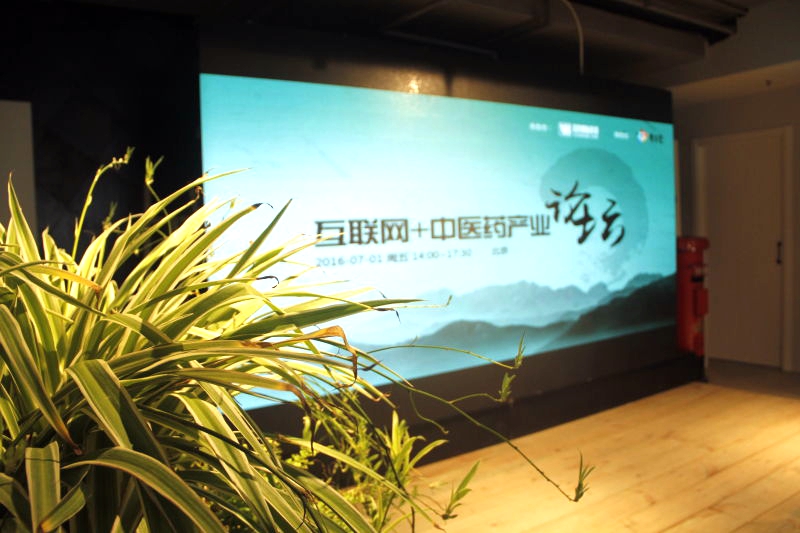
The “Internet + Traditional Chinese Medicine (TCM) Industry Forum,” themed “Navigating Change: Identifying New Focal Points in the TCM Industry,” was held on the afternoon of July 1 at the Zhubang 2000 Business Building, Ciyunsi, Chaoyang District, Beijing. The event was hosted by VCBeat, co-organized by Kan Zhongyi, and received media support from Jinri Toutiao, Sohu Health, NetEase Technology, Bioon, Life Times, People’s Health Channel, Life Times, 36Kr, Health Point, China Digital Healthcare Network, and New Kangjie.
This forum has invitedLu Gang from Legend Star, Li Sirui from Tasly, Gong Qiao from Taikang Online, Xu Jing from Kangmei Smart Pharmacy, Zheng Wei from Zhongjing Scientific Investment, Zhu Tianyu from BlueRun Ventures, and Luo Feng from Kan ZhongyiIndustry leaders gathered to discuss key issues in the transformation of the traditional Chinese medicine industry amid healthcare reform.
At this conference, VCBeat launchedThe World’s First “Internet + Traditional Chinese Medicine Industry Venture Capital and Investment Trends Report”The report reviews recent policies on traditional Chinese medicine (TCM), surveys nearly 100 projects, and conducts in-depth analyses of the business models, product logic, and unique advantages of 20 selected projects. It focuses on mapping out venture capital and investment trends in the “Internet + TCM” sector and provides an overview of TCM industry development overseas, particularly in South Korea and Japan.
VCBeat has compiled the insightful perspectives shared by conference attendees for our readers’ benefit.
1. During the development of Traditional Chinese Medicine (TCM), challenges such as the standardization of TCM practices, heritage preservation, and standards for herbal extract quality have hindered its global expansion;
2. There is substantial demand for traditional Chinese medicine (TCM) in overseas markets, particularly in Chinese communities in Southeast Asia, Europe, and Australia, where the need for botanical extracts, TCM decoction pieces, and TCM granules is significant and continues to grow. Meanwhile, if challenges such as standardization of TCM materials, quality control, traceability of sources during circulation, and securing product pricing power in the international market can be addressed, China’s TCM materials are poised to gain a foothold in the global marketplace.
3. Traditional trading models for Chinese herbal medicines are plagued by issues such as elongated value chains, cross-industry complexity, low standardization, and information opacity. It is worth exploring whether the internet can address information asymmetry in this sector and reduce costs associated with intermediate distribution channels.
Currently, there is minimal integration between commercial health insurance and Traditional Chinese Medicine (TCM). Through data organization and analytical approaches, Taikang has gained indirect insights into the current state of TCM.
4. First, during Taikang’s comprehensive review of its nationwide network of designated hospitals, it was observed that every province, city, and county has at least one traditional Chinese medicine (TCM) hospital, indicating a high level of penetration. However, when Taikang developed expense-reimbursement insurance products, it found that costs associated with TCM treatments were difficult to control. Therefore, Taikang’s current relevant insurance products are aligned with the social security system: if a treatment is covered by social security, Taikang’s insurance products will also provide reimbursement.
5. Second, through an intriguing big data initiative on the internet, Taikang has identified substantial market demand among Chinese consumers for traditional Chinese medicine (TCM) services.
6. Many hope to leverage healthcare reform to drive industrial change, but the adage “policies from above are met with countermeasures from below” still holds true, meaning significant obstacles remain in implementation. Therefore, while capitalizing on this momentum is advantageous, it is crucial to carefully calibrate the intensity of your efforts.
7. For startups, before mastering strategic pacing, it is essential to first establish the “Four Bigs” mindset: recognizing that healthcare is controlled by four major forces—“Big Tier-3A Hospitals,” “Big Department Heads,” “Big Pharmaceutical Companies,” and “Big Social Insurance.” Entrepreneurship is a protracted war; only with sufficient wisdom and patience can one truly prevail.
8. Mobile internet is not a panacea for solving pain points; rather, it serves as a new mode of service, distinct from traditional approaches. It is a tool, not a label that defines the nature of an enterprise. Only by looking beyond such labels can one gain a more comprehensive perspective.
9. Traditional Chinese Medicine (TCM) does not rely on medical equipment or proprietary medicines, making it relatively easier to commercialize. Meanwhile, the core of TCM’s dialectical thinking lies in general practice, an attribute that gives TCM a natural advantage in the incremental market for primary healthcare.
10. For those seeking traditional Chinese medicine (TCM) services, TCM is not a matter of sentiment or sense of mission, but rather a business. For TCM practitioners, the four most desired aspects, ranked by strength of demand, are: patients, income, respect, and learning opportunities. The key lies in leveraging multi-site practice to provide TCM physicians with a second career, thereby transforming their lives.
11. The TCM Buzzword “Standardization”: Standardization Is Not Uniformity, But Finding Solutions Through Data. Data Standardization Opens Up Broader Customer Acquisition Channels. The Direction of Standardization Must Focus on Enhancing User Experience and Driving User Conversion, Bringing Patients and Providers Closer Through In-Home TCM Consultations.
12. From disease treatment to post-treatment rehabilitation, and further to health maintenance in a healthy state, all fall within the scope of the traditional Chinese medicine (TCM) market. This process reflects a gradually increasing level of trust in the doctor-patient relationship. Such trust can be established not only offline but also fully online, which is why the development of TCM requires the impetus of the internet.
13. From a capital perspective, we seek entrepreneurs who truly address fundamental issues. Traditional Chinese Medicine (TCM), both in terms of therapeutic efficacy and the dialectical diagnostic process, has consistently lacked robust data. This deficiency has resulted in the TCM industry holding relatively weak influence; only genuine efficacy data can reverse this disadvantageous position.
14. The current development opportunity for the traditional Chinese medicine (TCM) industry lies in entering the market through its weak links, leveraging existing resources and momentum to win over consumers. It is highly anticipated whether the TCM sector can become the breakthrough starting point for dismantling the entrenched healthcare fortress.
15. The value of Kangmei Smart Pharmacy to hospitals lies in reducing patient foot traffic. Patients can quickly obtain their prescriptions after consultation, fill in their delivery address, and receive their medications at home. If decoction services are required, the prepared herbal decoctions will be delivered directly to their homes. This model reduces the operational costs of hospital outpatient pharmacies, saves space and facilities, and significantly cuts financial expenditures, thereby enhancing overall patient satisfaction with the hospital.
16. At Kangmei, quality is our core priority. First, we leverage the advantages of our full-industry-chain resources to support this commitment. Second, we employ a series of decoction machines and maintain strict control over all aspects, including water sources. Kangmei adheres to standardized processing protocols, with over 400 specified standard operating procedures, rigorous management practices, and specialized teams, including pharmaceutical professionals who review prescriptions.
17. A review of the development of Traditional Chinese Medicine (TCM) during the 12th Five-Year Plan period reveals a disproportionate growth: while the number of practitioners has surged, the expansion of hospitals has been insufficient. Currently, nearly 400,000 TCM physicians face a common predicament—insufficient patient volumes and low incomes. For capital providers, investors, or entrepreneurs, a key strategic focus should be on unlocking these physicians’ clinical capabilities in TCM and enabling them to earn market-competitive incomes.
18. Traditional Chinese Medicine (TCM) can be approached from three key angles. First, the localization of health management must center on TCM’s preventive care (“treating potential disease”) and chronic disease management. Second, the system for TCM preventive care and chronic disease management should operate independently of public tertiary TCM hospitals; patients seeking wellness interventions naturally prefer convenient, local access near their homes. Third, the primary vehicle for this system must be community-based TCM clinics.
"Internet Plus Traditional Chinese Medicine Industry Venture Capital Trend Report" (2016 Edition)New~
Purchase Report,Click here
Long-press and scan the QR code to purchase this report directly.