

Gong Qiao of Taikang Online: Standardization Remains the Biggest Challenge in Integrating Commercial Health Insurance with Internet-Based Traditional Chinese Medicine
The “Internet + Traditional Chinese Medicine (TCM) Industry Forum,” themed “Navigating Change: Identifying New Focal Points in the TCM Industry,” was held on the afternoon of July 1 at the Zhubang 2000 Business Building in Ciyunsi, Chaoyang District, Beijing. The event was hosted by VCBeat, co-organized by Kan Zhongyi, and received media support from Jinri Toutiao, Sohu Health, NetEase Technology, Bioon, Life Times, People’s Health Channel, 36Kr, Health Point, China Digital Healthcare Network, and New Kangjie.
This forum brought together industry leaders, including Lu Gang from Legend Star, Li Sirui from Tasly, Gong Qiao from Taikang Online, Xu Jing from Kangmei Smart Pharmacy, Zheng Wei from Zhongjing Sci-Tech Investment, Zhu Tianyu from BlueRun Ventures, and Luo Feng from Kan Zhongyi, to jointly discuss the focal points of the transformation in the traditional Chinese medicine (TCM) industry against the backdrop of healthcare reform.
At this conference, VCBeat launched the world’s first “Venture Capital Trends Report on the ‘Internet + Traditional Chinese Medicine’ Industry.” The report reviews recent TCM-related policies, surveys nearly 100 projects, and provides in-depth analyses of the business models, product logic, and unique advantages of 20 selected projects. It focuses on mapping out venture capital trends in the “Internet + TCM” sector and introduces the development of the TCM industry overseas, particularly in South Korea and Japan.
VCBeat has compiled the insightful perspectives shared by conference attendees for our readers’ benefit. This is the second installment.
Guest Profile:
Gong Qiao, General Manager of the Big Health Business Department, Taikang Online Property Insurance Co., Ltd.
With 13 years of experience in the life insurance industry, possessing extensive industry expertise. Previously served as a Product Manager at eHealth China Inc., a U.S.-based online commercial health insurance platform; formerly headed the Channel Management Department of the Health Insurance Division at Taikang Life Insurance’s headquarters.
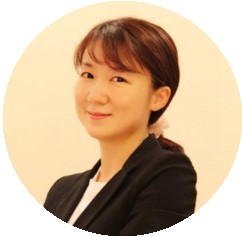
Gong Qiao
Core Views:1. Taikang Online is Taikang Life’s window into the internet sector;
2. The internet is transforming insurance sales models, and Taikang has already experimented with several new online insurance sales approaches;
3. Taikang identified a group of fans interested in Traditional Chinese Medicine (TCM) through WeChat questionnaire surveys, but the lack of standardized services made it difficult to provide more in-depth engagement.
"Commercial health insurance combined with traditional Chinese medicine is indeed very rare."Gong Qiao stated,Over the years of his practice, he has truly engaged in only two initiatives integrating traditional Chinese medicine with commercial health insurance.
First, during Taikang’s comprehensive review of its nationwide network of designated hospitals, it was observed that every province, city, and county had at least one traditional Chinese medicine (TCM) hospital, indicating a high level of accessibility. However, when Taikang developed expense-reimbursement insurance products, it found that costs associated with TCM treatments were difficult to control. “TCM formulations may contain expensive ingredients such as ginseng and deer antler velvet, leading to significantly higher insurance costs,” said Gong Qiao. Consequently, Taikang’s health insurance offerings aligned with the coverage scope of China’s social medical insurance: any TCM products reimbursable under social insurance were also covered in Taikang’s insurance plans.
Second, Taikang conducted an interesting big data experiment online, which revealed a substantial market demand among the Chinese public for traditional Chinese medicine (TCM) services.
Taikang Online, officially known as Taikang Property & Casualty Insurance Co., Ltd., was established in 2000. It originated as the earliest division within Taikang Life Insurance to explore commercial insurance operations via the internet. Over the past decade, it has been dedicated to digitizing life insurance services, serving as the primary window for the entire life insurance group’s internet-based initiatives. Last year, Taikang Online obtained a property and casualty insurance license, significantly broadening its business scope and achieving comprehensive integration with the industry in both life and property/casualty insurance sectors.
Taikang Life is the fifth-largest life insurance company in China. It has been deeply cultivating the broader health industry chain and, in recent years, has been strategically positioning itself in the comprehensive health sector covering the entire human lifecycle—from birth to aging, illness, and death.
Taikang Group has always firmly believed that insurance, as a payer, holds significant advantages and a solid foundation for entering the healthcare industry. Therefore, Taikang Life Insurance’s various subsidiaries are exploring deep integration with the medical industry from different directions. For instance, some subsidiaries focus on physical healthcare delivery by investing in hospitals and elderly care communities; others provide health management services; while still others offer supplemental corporate medical insurance and supplemental social medical insurance.
Commercial health insurance in China did not start late. Since its development in the 1980s to the present, an increasing number of companies have been operating commercial health insurance businesses. Life insurance companies engage in health insurance operations; property and casualty insurance companies also offer one-year short-term health insurance products; additionally, there are four specialized health insurance companies. These entities are exploring the professional development of health insurance from different perspectives: life insurance, property and casualty insurance, and specialized health insurance.
Notably, commercial health insurance has been experiencing rapid growth. In particular, between 2010 and 2015, its share within the life insurance segment gradually increased. However, in 2015, commercial health insurance accounted for less than 15% of the overall insurance market, representing a significant gap compared to the nearly 36% share observed internationally.
Factors influencing the share of commercial health insurance in public health include government stance, public service coverage, the framework of the healthcare delivery system, and the sales channel models adopted by insurers. Meanwhile, the development of the internet has brought certain changes and disruptions to commercial health insurance, particularly in terms of the healthcare delivery system framework and sales models.
First, the framework and structure of the healthcare service system are critical factors influencing the development of consumer health insurance. Second, the financing models of healthcare institutions, payment arrangements between these institutions and commercial insurers, the supply volume of healthcare providers, and regulatory frameworks all impact the growth of commercial health insurance. While commercial insurers abroad wield considerable influence over hospitals as payers, it is difficult for commercial insurers in China to exert similar influence on Tier 3 Grade A hospitals. However, internet healthcare is driving greater marketization of services, thereby creating more opportunities for collaboration with commercial health insurance.
Commercial health insurance has historically relied on several key sales modules. The first is the agent channel, which remains the largest sales channel for insurance companies to this day; however, it incurs very high labor costs. The second is the corporate channel, which distributes commercial insurance through enterprise supplemental medical plans, but achieving product innovation in this area is challenging. Additionally, there are bancassurance and brokerage channels, among others.
From 2011 to 2015, total domestic insurance premiums grew rapidly, with internet insurance experiencing even more accelerated growth; during this period, the overall scale of internet insurance increased 69-fold. Taikang has implemented the following practices and strategic initiatives in the realm of internet insurance.
Taikang Online is fully committed to integrating online customers with the broader health industry chain, achieving a deep fusion of insurance and services.
In the past, Taikang sold pension insurance as a standalone product, promising customers an annual payout after age 60. Starting in 2007, Taikang began exploring the development of its own senior living communities. These communities represent a capital-intensive investment integrated with extensive elderly care services. Under this model, Taikang Life Insurance customers who purchase a pension insurance policy not only receive financial benefits upon reaching age 60 but also gain access to Taikang’s senior living communities, where they can enjoy high-quality elderly care services.
Based on this, Taikang will also attempt a similar model in the big health industry.
Since the rise of the entire internet healthcare industry in 2011, Taikang has continuously engaged with various internet healthcare companies, but it has been difficult to establish effective cooperation models.
The reason is that internet healthcare companies tend to view commercial insurance providers merely as purchasers and payers, consistently seeking to have them leverage their existing customer base to buy their services.
However, this single-layered integration makes it difficult for commercial insurers to observe cost-containment effects in the short term. Moreover, such collaborations are easily replicable, prompting competitors to follow suit quickly. As a result, insurers gain little benefit beyond increased fixed costs, leading to waning motivation over time.
Therefore, Gong Qiao suggests that internet healthcare companies should deeply integrate insurance with their own products to deliver greater value to customers and foster closer collaboration between the two parties.
The benefits that the Internet brings to insurance companies are mainly reflected in two aspects: first, shifting from focusing on channel demands to addressing customers’ intrinsic needs. This enables insurers to devote more time and energy to developing innovative insurance products and to offering segmented and diversified products tailored to different population groups. In less than six months since obtaining its property insurance license last year, Taikang Online has launched more than 200 internet-based health insurance products, which are more affordable and convenient than traditional insurance offerings.
Second, changes driven by service providers. In the past, when pursuing product innovation, the link between commercial health insurance and medical services was relatively weak due to the uncontrollable nature of healthcare delivery. As a result, insurers merely acted as payers, which severely limited their product innovation capabilities and made data integration difficult.
In such cases, insurance companies tend to focus on expense-reimbursement products, closely aligning with social health insurance by reimbursing only what social insurance covers. Another approach involves offering pure indemnity products, where coverage is defined by specific diseases—paying out for certain conditions while excluding others, or providing a fixed lump-sum payment. Products that are deeply integrated with healthcare services remain rare.
However, the Internet can integrate insurance with corresponding medical services. For instance, insurers can offer telemedicine as a commercial insurance product to consumers.
On the other hand, new data and services are transforming insurance pricing and cost control. Historically, commercial health insurance pricing relied heavily on in-force policy data and incidence rates accumulated over many years from foreign populations. Today, however, many services inherently generate big data, providing a reference for pricing new insurance products. Furthermore, insurers can leverage the internet to connect users with the entire service chain, delivering comprehensive online services and enabling innovative product trials.
Taikang operates a WeChat official account with over 10 million followers. Last year, Taikang released a questionnaire on Traditional Chinese Medicine (TCM) constitution assessment via WeChat, which takes approximately ten minutes to complete. Surprisingly, more than 2.8 million users completed the questionnaire on Taikang Online’s WeChat platform, enabling Taikang to collect constitution data from over 2.8 million individuals. This outcome greatly surprised Gong Qiao.
Subsequently, Taikang began to implement categorized tagging for these population segments. Leveraging backend big data analytics, Taikang discovered that individuals’ Traditional Chinese Medicine (TCM) constitutional types may correlate with their personality traits. “With the support of big data, there is potential for further interaction and research,” stated Gong Qiao.
However, it was not easy for Taikang to integrate high-quality traditional Chinese medicine (TCM) services for these populations. “First, there are too few standardized TCM services and products, leaving us with very limited options. Even online consultation services struggle to achieve long-term sustainability, effectiveness, and standardization.” Ultimately, attempts to engage fans in this area came to nothing.
Gong Qiao stated that if relevant traditional Chinese medicine (TCM) service products can be standardized and enjoy high acceptance among the target population, Taikang could consider integrating insurance with such products to pilot regional initiatives.
Overall, Taikang aims to integrate disease screening, high-value medical services, premium treatment protocols, chronic disease management, and medication purchase discounts with standardized services, positioning insurance as a payment mechanism.
In the past, health insurance was not sold to patients; once they fell ill, they were unable to purchase health insurance. However, today, the internet enables the sale of insurance to individuals with pre-existing conditions.
Taikang has made two attempts in this regard: one focusing on patients with diabetes and the other on breast cancer patients. For diabetes, risks can be mitigated through chronic disease management, while data support from diabetes-related medical devices enables outcome analysis to provide corresponding coverage. In the case of breast cancer, there is a deep integration with pharmaceutical solutions; Taikang collaborates closely with manufacturers of targeted therapies. For instance, data validation demonstrates that patients using targeted drugs can achieve favorable five-year survival rates. By incorporating commercial insurance into this model, even if high medical expenses are reimbursed, the insurer will provide a certain payout if the patient does not survive for five years.