

Jiamai Medical Files for IPO: Bridging Oncology Resources Between Tier-1/2 and Lower-Tier Cities in China
Shanghai Jiamai Medical Technology Co., Ltd. was established in July 2014 and is located in the Caohejing Development Zone, Xuhui District, Shanghai. Starting with oncology, Jiamai has built a platform to connect patients with healthcare providers such as doctors and hospitals, matching medical resources from first- and second-tier cities to smaller cities. The company currently has 10 full-time employees and 20 part-time employees.
Jiamai has obtained the Class II Medical Device Operation Record and has established partnerships with medical service platforms such as Yijia Yi, Yiliu Zhushou, Yisuizhen, Kang'ai Weishi, Jiufeng Mobile Healthcare, WeDoctor, Chunyu Doctor, and Chengmei International Medical Center (Hainan). To better leverage overseas medical resources, Jiamai is actively collaborating with international healthcare institutions and has entered into agreements with Beijing Yuntian Cihang Health Management Co., Ltd. (specializing in India), Beijing Shengnuo Yijia Hospital Management Co., Ltd. (specializing in the United States), and Houpu Nuoya Health Management (Beijing) Co., Ltd. (specializing in Japan and Hong Kong).
The $300 Billion Annual Cancer Care Expenditure Hides Massive Business Opportunities
According to the "2015 Annual Report of China's Cancer Registry" released by the National Cancer Registry Center, there are approximately 3.5 million new cases of malignant tumors in China each year, with over 3 million deaths.
“Annual medical expenditures for cancer reach as high as 300 billion yuan, with lung, gastric, liver, thyroid, breast, cervical, and esophageal cancers accounting for the highest incidence and mortality rates. Many of these cases are preventable, and treatment outcomes could be improved through rational resource allocation. Recognizing the vast market potential, Jiamai initially focused primarily on oncology, supplemented by other chronic conditions such as cardiovascular, cerebrovascular, and infectious diseases,” Wu Penghui, Founder and CEO of Jiamai, told VCBeat.
Addressing the Pain Points of Difficult and Costly Access to Medical Care in Small and Medium-Sized Cities
Many internet healthcare entrepreneurs have entered the market by focusing on oncology, but their approaches to resource integration and patient engagement vary. “Currently, there is a significant imbalance in the distribution of medical resources between first- and second-tier cities and smaller cities. This disparity is mainly reflected in healthcare costs, availability of physicians, prices of scarce medications, and the deployment of mobile health services. What Jiamaim aims to do is build a platform that connects patients, doctors, hospitals, and other stakeholders, facilitating the flow of resources to smaller cities and addressing or alleviating the difficulties and high costs associated with accessing medical care in these areas.” Wu Penghui summarized the problems Jiamaim seeks to solve in this manner. He outlined the following key points regarding the substantial disparities between smaller cities and first- and second-tier cities in the field of cancer prevention and treatment:
1. The incidence of chronic diseases such as cancer continues to rise, while clinical experts are predominantly concentrated in first- and second-tier cities or even abroad; consequently, patients in small and medium-sized cities face extremely high costs and significant difficulties in accessing medical care;
2. Healthcare professionals in rural and community medical service stations or county-level primary hospitals in small cities lack access to complementary specialist resources and second opinions, and are unable to efficiently request advanced diagnostic services (such as genetic testing and pathological subtyping) and treatments;
3. Scarce drugs (including those approved or not yet approved for marketing in China) are prohibitively expensive or even unavailable in small and medium-sized cities;
4. High-quality mobile health enterprises (providing services such as online consultations, remote image interpretation, internet hospitals, e-prescriptions, and chronic disease management) lack implementation sites in small and medium-sized cities, remaining out of reach for end users (doctors, nurses, or patients).
Building a Doctor-Patient Platform to Connect Tier-1 and Tier-2 Cities with Small and Medium-Sized Cities
“Jiamai’s platform comprises an online resource-matching platform and offline medical service entities, with the aim of introducing experts, pharmaceuticals, and diagnostic technologies from first- and second-tier cities and abroad into small and medium-sized cities. This initiative seeks to enhance the efficiency of primary-care physicians’ clinical practice and provide cancer patients with better services and more scientifically grounded treatments.” Wu Penghui believes that the platform established by Jiamai can optimize resource allocation, benefiting all stakeholders.
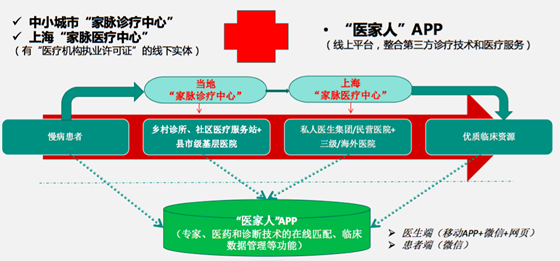
The platform established by Jiamai aims to connect various stakeholders and build a comprehensive oncology diagnosis and treatment system. Centered on offline Jiamai Diagnosis and Treatment Centers holding “Medical Institution Practice Licenses,” and leveraging the “Yijiaren” APP as an online resource-matching tool, the system facilitates the efficient deployment of high-quality clinical resources in small and medium-sized cities, providing tiered diagnosis and treatment, health management, and consultation services for patients with chronic diseases.
To facilitate the flow of resources between first- and second-tier cities and smaller cities, Jiama has established collaborations with multiple stakeholders. In smaller cities, it partners with a vast network of rural clinics, community healthcare service stations, and county-level primary hospitals to enable real-time access to high-quality resources, thereby serving patients directly or indirectly. It collaborates with leading diagnostic service providers—such as imaging data centers, genetic testing firms, and disease subtyping technology companies—to make these services readily accessible locally. In first- and second-tier cities, it works closely with clinical experts to refer patients to tertiary hospitals where these experts practice for continued treatment when necessary. Additionally, it maintains close partnerships with overseas medical service institutions to facilitate medical treatment and medication access abroad for patients with sufficient financial means. In first- and second-tier cities, it also collaborates with community or private hospitals to channel resources from tertiary hospitals in areas facing shortages, such as advanced medical equipment and hospital beds, thereby alleviating clinical pressure on large public hospitals and improving the efficiency of social resource utilization. By connecting rural general practitioners and primary care physicians, Jiama directs patients to offline “Jiama Clinical Centers,” ensuring the efficient deployment of high-quality clinical resources in smaller cities.
Multi-party Collaboration to Build Core Competitiveness
In 2016, Jiamai began building the “Yi Jiaren” software platform, which includes a mobile app, web portal, and WeChat service account. The platform was scheduled to officially launch at the end of August 2016. Additionally, in its offline operations, Jiamai has established closer partnerships with rural clinics, community healthcare stations, and county- and city-level primary hospitals in small and medium-sized cities; with leading diagnostic service providers offering technologies such as imaging data centers, genetic testing, and pathological classification; and with specialized mobile health companies, “Internet+” healthcare enterprises, and third-party overseas medical service providers.
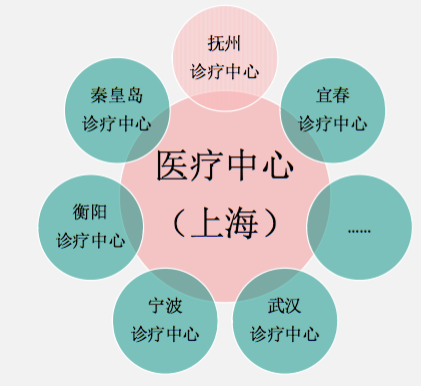
Jiamai is also actively expanding its physician-side resources. In collaboration with the Alumni Office of Soochow University Medical College, it has established an expert pool of over 5,000 specialists in radiation oncology, chemotherapy, and nuclear medicine. Through partnerships with industry associations, tertiary hospitals, and mobile health platforms, it has built a chronic disease expert pool comprising more than 50,000 professionals. Additionally, Jiamai has independently established two diagnostic and treatment centers in Fuzhou, Jiangxi Province, and Ningbo, Zhejiang Province, as well as a medical center in Shanghai, thereby creating an integrated framework that connects patients, primary care physicians, and specialist resources.
Wu Penghui believes that the core competitiveness of Jiamai is mainly reflected in the following aspects:
1. The independently developed “Yi Jia Ren” APP, serving rural and grassroots hospitals and physicians;
2. The diagnosis and treatment center holds a "Medical Institution Practice License" and is connected to the medical insurance system;
3. The partner team’s years of experience in clinic management and clinical practice, along with extensive offline resources (including village doctors, primary care physicians, medical insurance systems, and health and family planning authorities);
4. Collaboration between Shanghai medical centers and local diagnostic and treatment centers, along with internal distribution channels;
5. The founder possesses deep technical and industry expertise in the healthcare sector, along with strong resource integration capabilities (including alumni networks, experts, overseas medical institutions, and capital).
Steadfast Progress: Charting the Course for the Next Three Years
Wu Penghui is full of anticipation for Jiama’s three-year strategic plan, detailing the objectives to be achieved over the next three years:
1. Strengthen the “Yijiaren” software platform, with a focus on collaboration and system integration with third-party mobile health companies and “Internet+” healthcare technology providers, including but not limited to Yijiayi, WeDoctor, Chunyu Doctor, Yunnan Shanba, and Haina Medical Information;
2. Collaborate with third-party enterprises to refine the “Clinical Experts’ Hometown Cities” database and expert directory. The database shall cover at least 60% of experts in China holding associate chief physician titles or above in departments such as radiation oncology/chemotherapy, nuclear medicine, and cardiovascular and cerebrovascular diseases, as well as incorporate overseas expert resources to the greatest extent possible;
3. Deepen cooperation and resource sharing with local medical institutions at all levels, and establish collaborative partnerships with industry associations, health insurers, pharmaceutical companies, and medical device manufacturers;
4. Strengthen and expand the established diagnostic and treatment centers, and ultimately replicate the successful model to at least 10 offline medical service entities;
5. Expand business scope to chronic diseases beyond malignant tumors, such as heart disease, cerebrovascular disease, and respiratory disease.
Furthermore, Jiamai has set clear and specific targets for the number of partner institutions, medical teams, and users. Over the next three years, the goals are as follows: more than 5,000 partnered rural clinics; over 100 partnered primary-care hospitals; 10 self-built diagnostic and treatment centers; one self-built medical center (in Shanghai); a full-time medical service team of 150 members; rapid replication to at least 30 diagnostic and treatment centers through management model export and capital operations (combining franchising with self-built facilities); 10,000 partnered clinical experts; 50 partnered tertiary hospitals; 50 partnered third-party institutions; 700,000 chronic disease patients with cancer; and 300,000 chronic disease patients with non-cancer conditions.
A Specialized Team with Years of Experience to Propel Growth
Wu Penghui holds an MBA from Cheung Kong Graduate School of Business and earned his bachelor’s degree from the Medical College of Soochow University in 1997, specializing in radiation oncology. With nearly two decades of experience in the healthcare industry—spanning medical imaging, digital dentistry, and mobile health—he possesses extensive industry expertise and interdisciplinary knowledge. After spending a year and a half as an entrepreneur focused on hospital information system integration and mobile health, he has developed proven capabilities in effectively integrating traditional healthcare with “Internet+” healthcare models, with particular proficiency in optimizing the allocation efficiency of clinical resources.
Furthermore, Wu Penghui places particular emphasis on the integration and utilization of resources. He stated, “My previous experience has allowed me to accumulate a certain base of primary care physicians, pharmaceutical resources, and pharmaceutical company connections in Jiangxi, Zhejiang, Hunan, and other regions. Overseas, I have access to expert networks in Japan, the United States, India, and other countries, as well as high-quality overseas medical service partner institutions. In major domestic cities such as Beijing, Shanghai, Guangzhou, Shenzhen, Tianjin, and Hangzhou, I also have access to expert resources, along with a wide range of high-quality technical service providers for genetic testing, pathological subtyping, and more.” It is precisely these resources and experiences that have helped Jiama gradually expand its market presence.
The company is currently conducting its Pre-A round of financing, with a planned fundraising amount of RMB 6 million.