

2016’s Must-Know Emerging Medical 'Black Tech': Nanosensors, Open AI Health Assistants, Optogenetics, and Organ-on-a-Chip
Not long ago, the World Economic Forum announced the Top 10 Emerging Technologies of 2016 at its Annual Meeting in Davos. These technologies are poised to play a significant role in improving people’s lives, driving industry transformation, and safeguarding the Earth’s ecology. Compared with previous years, this year’s selected emerging technologies place greater emphasis on the biosciences. In addition to assessing the benefits of each technology to humanity, greater consideration has been given to their environmental impact. As VCBeat (WeChat official account: vcbeat), which closely follows cutting-edge science and technology, we are particularly interested in the healthcare-related technologies among them and provide an analysis in this article.
The Internet of Things (IoT) is in a phase of rapid development and expansion. Analysts project that the total number of IoT devices will reach 30 billion by 2020. The IoT can endow ordinary objects with unexpected capabilities, particularly those monitored by artificial intelligence systems. For instance, when you return home from work, your door can recognize and verify your identity as the homeowner and open automatically. Similarly, for a patient with heart disease, if their heart shows signs of functional decline, an implanted cardiac monitor will detect the signal and immediately alert their physician.
Currently, scientists have initiated research into miniaturizing sensors, aiming to reduce those at the millimeter or micrometer scale down to the nanometer scale. This advancement would enable nanosensors to enter the human circulatory system. This pivotal research represents the first step in transitioning from the traditional Internet of Things (IoT) to the Nano-Internet of Things (Nano-IoT). Once successful, the Nano-IoT will have a profound impact on future medicine and pharmaceutical manufacturing.
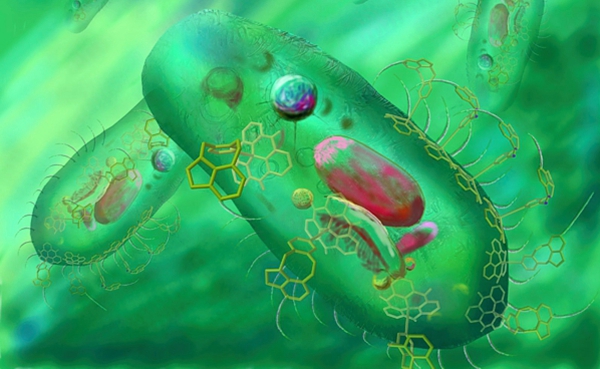
To date, scientists have developed some of the world’s most advanced nanosensors by using synthetic biology tools to engineer single-celled organisms such as bacteria. Their goal is to create sleek and stylish biocomputers that can leverage DNA and proteins to recognize specific chemical targets, store substantial amounts of information, and then change color or generate other easily detectable signals to record the location of this information. Synlogic, a startup based in Cambridge, Massachusetts, is currently working to commercialize probiotic strains—identified through computational biology research—that can treat certain rare metabolic disorders.
The transition from smart nanosensors to the nano-level Internet of Things is inevitable, yet it is poised to encounter significant challenges. One technical hurdle that must be overcome is the integration of all components required for self-powered nanodevices designed to detect changes and transmit signals to the network. Other obstacles include thorny issues related to privacy and security. Furthermore, due to the inherent toxicity of nanomaterials, any nanodevice introduced into the human body carries a certain degree of toxicity or may trigger a series of immune responses.
Beyond the medical field, nanosensors and the nano-level Internet of Things (IoT) will also exert a profound impact on future architecture, agriculture, and other sectors. As the nano era truly arrives, our bodies, homes, environments, and factories will all see significant advancements. In the future, billions upon billions of nanosensors will capture massive volumes of real-time data and synchronize it to the cloud.
Compared with most ordinary people, company CEOs have a distinct advantage: they do not need to spend excessive time on mundane tasks such as scheduling appointments, planning itineraries, or searching for information, because they hire personal assistants to handle these matters. However, with the emergence of an open-source artificial intelligence system, we too will be able to enjoy this luxury service for merely the price of a few lattes.
Apple’s Siri, Microsoft’s Cortana, Google’s OK Google, and Amazon’s Echo can all recognize and process user queries through natural language processing programs. However, they often respond with phrases such as “Sorry, I don’t know that” or “Here is what I found online,” making it difficult for users to associate them with loyal, dedicated assistants. Furthermore, these systems are protected by patents, which makes it challenging to extend them with new functionalities.
In recent years, the emergence of several new technologies has been driven by the goal of creating powerful, anthropomorphic digital assistants, giving rise to open artificial intelligence systems. These systems can not only connect to our mobile devices and computers—thereby accessing text messages, emails, contacts, calendars, and work files—but also link to bedroom thermostats, wearable devices, and even automobiles. Within the framework of the Internet and the Internet of Things (IoT), users’ personal data are interconnected, enabling instant interaction with open AI systems from anywhere. This connectivity is poised to enhance the living standards and well-being of millions of people in the coming years.
With open artificial intelligence systems, users’ health conditions can be substantially improved and their medical expenses reduced by collecting anonymous health data and providing personalized health consultations. To date, machines are largely unable to perceive the details of our physical states, lives, and work. If one were to hire an expensive personal assistant, that individual would observe when you are bored, tired, hungry, or ill, and would also know which people and things matter most to you. Therefore, this represents the target direction for the development of open AI systems, as researchers strive to equip these systems with the capacity to understand humans.
Just like high-paid human assistants, AI assistants in the digital age will serve us loyally, safeguarding our health, safety, and privacy. Guided by the principle of maximizing customer benefits, these objectives present intriguing and significant challenges for artificial intelligence research.

In the past, neurologists and psychologists could observe how the brain responded to various stimuli and had mapped out how genes were expressed throughout the brain, but they were unable to control individual neurons or switch other types of brain cells on and off. For researchers, elucidating the pathways through which the brain generates behavior was itself an extremely challenging task. Consequently, effective treatments for diseases such as Parkinson’s disease and depression were not available.
Scientists have previously attempted to record neuronal activity using electrodes, which proved effective to some extent. However, because electrical stimulation activates every nearby neuron, it is impossible to distinguish between different types of brain cells, resulting in recordings that are coarse and imprecise.
It was not until 2005 that a new breakthrough was finally achieved in resolving this long-standing challenge. Neurogeneticists discovered that neuronal activity could be recorded using a novel technique that employs genetic engineering to make neurons responsive to light of specific wavelengths. Established in the 1970s, this approach is known as optogenetics. It is primarily applied to the study of pigment proteins, specifically those encoded by the rhodopsin and opsin gene families. These proteins function similarly to light-activated ion pumps; the use of rhodopsin in microorganisms and in individuals with visual impairments can facilitate the capture of energy and information from incident light.
Today, biologists can insert one or more opsin genes into specific neurons in mice, allowing them to use visible light to arbitrarily control the activation or deactivation of those neurons. Over the years, scientists have engineered these proteins to respond to different colors of light, ranging from deep red to green, yellow, and blue. By introducing different genes into distinct cells and using light pulses of various colors to activate individual neurons, researchers can precisely determine the activity of several adjacent neurons in a specific temporal sequence.
Resolving this challenge represents a significant advancement in the development of neuroscience, as timing is critical for living brain tissue. Even when the brain emits identical signals, a discrepancy of just a few milliseconds can produce diametrically opposite effects.
The development of optogenetics has accelerated the progress of brain science, but researchers have encountered obstacles in delivering light deep into brain tissue. Fortunately, flexible, ultra-thin wireless microchips have now emerged that can be deeply implanted into brain tissue with minimal damage to the overlying structures. These devices are being developed as injectable systems for wireless control of neurons and are currently in the testing phase.
Optogenetics has opened new avenues for the treatment of brain disorders such as Parkinson’s disease, chronic pain, visual impairment, and depression. Studies have also shown that, in certain cases, non-invasive phototherapy can alleviate chronic pain by silencing specific neurons. Currently, approximately one in four people worldwide suffers from a mental disorder, which is a leading cause of brain damage; unfortunately, optogenetic therapies for these conditions are not yet clinically feasible.
Perhaps, except in Hollywood’s special effects studios, you are unlikely to see living human organs floating in a biological laboratory. Setting aside the technical challenges of maintaining organ viability ex vivo, intact organ transplants are highly valuable for scientific experiments. However, many important biological studies and practical drug tests can be conducted using only the specific organs that play a key role, without necessarily requiring experiments on mice or humans. As human organs evolve into miniaturized functional devices, a new technology has emerged that meets these needs on a chip.
In 2010, Donald Ingber of the Wyss Institute developed a lung-on-a-chip, marking the first successful implementation of this technology on a microfluidic chip. Consequently, various institutions have devoted themselves to advancing this technology. Led by Ingber and other researchers at the Wyss Institute, scientists have established collaborative partnerships with industry and government entities, including the Defense Advanced Research Projects Agency (DARPA), which has invested $75 million in this effort. To date, numerous media outlets have reported the successful development of miniature models of the lung, liver, kidney, heart, bone marrow, and cornea.
Working Principles of Organ-on-a-Chip
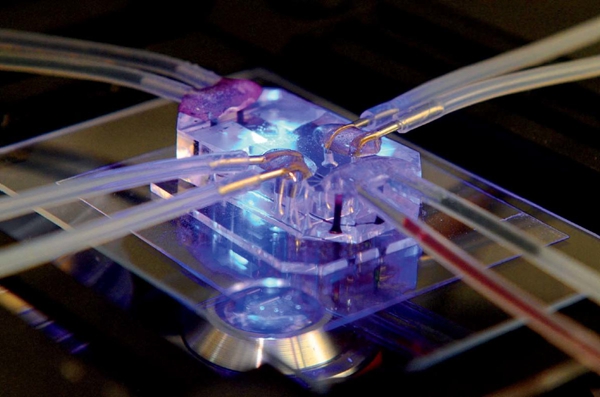
The Wyss Institute employs computer chip fabrication techniques to implant living human organ cells into chips, which can simulate the cellular environment within the human body. An organ-on-a-chip is comparable in size to a USB flash drive and is made of flexible, translucent polymer. The chip features three parallel fluidic channels within its microfluidic circuitry: two outer vacuum channels and a central channel for cell implantation. Channels with diameters smaller than one millimeter are seeded with cells extracted from human organs, allowing them to flow through the intricate network of microchannels within the chip. When nutrients, blood, and compounds under investigation—such as experimental drugs—are pumped through the microfluidic tubes, these organ cells can replicate key functions of living organs.
At the center of the middle channel lies a permeable biological membrane dotted with microscopic pores. A layer of lung cells is cultured on the upper surface of this membrane, while vascular endothelial cells line the opposite side. This configuration allows air to flow over the top and blood to circulate beneath. Additionally, vacuum channels on either side can contract, mechanically drawing the central channel and the lung cells into contraction, thereby mimicking the physiological expansion and contraction of human alveoli during respiration. Furthermore, bacteria introduced into the blood channel can invade the tissue, enabling scientists to observe cellular immune responses to bacterial infection without posing any risk to human subjects. Consequently, this technology provides researchers with clear insights into biological mechanisms and physiological processes that were previously unobservable in vivo.
Bringing New Opportunities to Pharmaceutical Research
The emergence of organ-on-a-chip technology will drive new drug development. Pharmaceutical companies can simulate human organ functions to test and screen drugs more realistically and precisely. In 2015, a company used a chip to mimic the pathway by which endocrine cells secrete hormones into the bloodstream and conducted critical tests on diabetes treatments using this endocrine cell chip. Other teams are exploring how to apply organ-on-a-chip technology in personalized medicine. In principle, chips can be constructed using patients’ own cells. Testing has demonstrated their feasibility, suggesting that organ-on-a-chip technology is likely to succeed in the field of personalized therapy.
Finally, we have reason to believe that organ-on-a-chip technology can significantly reduce the pharmaceutical industry’s reliance on animal testing for drug experiments. Millions of animals worldwide are sacrificed each year for drug testing, sparking intense public debate. Beyond ethical considerations, researchers have demonstrated that the extensive use of experimental animals is largely wasteful, as few studies yield reliable insights into how drugs respond in the human body, thereby necessitating a large number of repetitive animal experiments. In this regard, testing via organ-on-a-chip platforms may achieve better outcomes compared to traditional animal-based drug testing.