

AppliedVR Files IPO Prospectus: Pioneering VR-Based Alternative to Opioid Painkillers
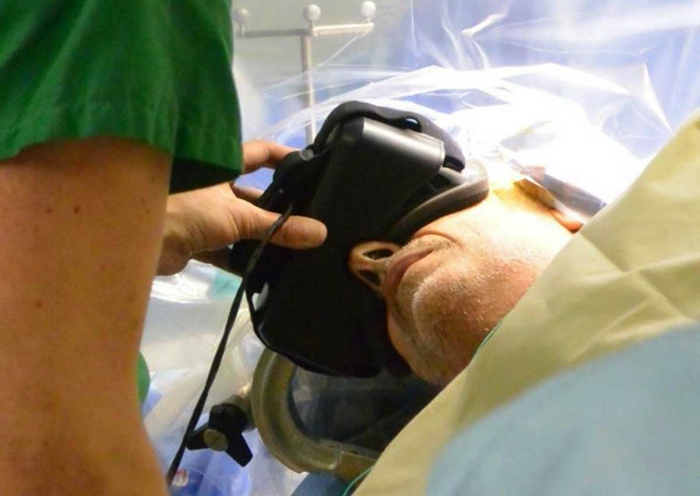
In the near future, when you visit a doctor, they may no longer need to prescribe painkillers; instead, simply experiencing a few engaging VR games could make your pain vanish instantly.
As the founder of AppliedVR, a VR startup, Matthew Stoudt has long been driven by the goal and corporate vision of leveraging VR technology to enable pain-free surgical procedures. The company has already built an extensive library of VR resources designed to alleviate the physical pain and physiological anxiety patients experience during medicated surgeries. Currently, the company is working closely with hospitals and physicians; patients can use Samsung Gear VR headsets to access these experiences, which not only help reduce pain but also facilitate the monitoring of clinical responses.
To date, the company has developed three distinct VR applications for pain relief, as well as an anxiety-reduction application powered by a third-party platform. Head-mounted devices running AppliedVR’s proprietary platform have been widely deployed in major hospitals, waiting rooms, and clinics, facilitating procedures such as blood draws, epidural injections, anesthesia administration, and postoperative pain management.
In fact, VR technology has long attracted widespread attention, acclaim, and research due to its immense potential in effectively distracting burn patients during wound care, thereby alleviating their pain. However, the equipment required to bring VR technology into clinical hospital settings is prohibitively expensive. Hunter Hoffman, director of the VR Research Center at the University of Washington’s Human Photonics Laboratory, is candid about the high costs. He also developed a pain-relief game called “SnowWorld.” Just how expensive is it? The VR equipment used solely as part of ICU pain management studies costs as much as $35,000, a price tag beyond the reach of most ordinary patients and institutions.
This situation has gradually improved, as head-mounted devices such as Samsung’s Gear VR, Oculus Rift, and HTC Vive are now very affordable while offering solid performance. Technology is transforming lives, enabling more hospitals and physicians to consider incorporating VR technology into medical practice. Startups like AppliedVR have also keenly identified emerging business opportunities. For instance, AppliedVR offers a bundled VR service—comprising a Gear VR headset and virtual applications—for an annual fee of $5,000 per patient. Although the hardware costs are relatively low, requiring only a $100 Gear VR headset and a compatible high-end Samsung smartphone, the overall solution remains significantly more affordable than the expensive VR systems of the past.
AppliedVR is working closely with professional institutions, such as its investor Cedars-Sinai Medical Center and Children’s Hospital Los Angeles, both of which are using the application platform developed by AppliedVR to observe patient responses and outcomes. Cedars-Sinai Medical Center is conducting a trial involving 60 patients with diverse symptoms (such as abdominal pain caused by pancreatitis and chest pain due to acute pneumonia, among others). These patients are asked to wear VR headsets and play a game called “Bear Blast,” in which they throw balls at cartoon bears by moving their heads.
“I often play this game in the office. It is not only easy to pick up but also highly engaging. You simply keep tossing balls forward, with a rhythm that is very easy to control. Each ball that lands on the cartoon bear scores points, allowing you to play indefinitely. Unlike other games, it never causes injury or fatigue.”
Brennan Spiegel is an expert in health research at Cedars-Sinai Medical Center. By having patients play VR games, he found that every 20 minutes of gameplay reduced patients’ pain levels by 24%. Before using VR, the average pain score (on a scale of 0–10) was 5.5; after use, it dropped to approximately 4.
“Therefore, VR can indeed effectively alleviate patients’ pain,” he said. “In terms of efficacy, it is truly indistinguishable from conventional anesthetics.”
Cedars-Sinai Medical Center also plans to conduct a controlled trial. One group will have unrestricted access to head-mounted devices, while the other will not, thereby enabling a more accurate validation of VR’s efficacy.
Nevertheless, Spiegel remains cautiously optimistic about the prospects of VR technology in alleviating patient pain. Current research suggests that this technology is highly beneficial for pain relief, if only by helping patients relax both physically and mentally. However, VR is not a panacea guaranteed to work for everyone; its true clinical efficacy requires further validation through additional data and experiments.
Elliot Krane, Director of Pediatric Pain Management at Stanford Children’s Health, also believes that VR technology can help children undergo physical therapy or remain still during imaging examinations by diverting their attention. He analyzes that the biggest challenge at present is the need for more software developers to create targeted applications for specific medical issues. This is precisely what AppliedVR aims to do next.
Spiegel also noted that determining the optimal timing for deploying VR technology is a significant challenge; improper implementation may not only prove ineffective but also lead to adverse effects. He recalled a previous attempt to persuade a patient with metastatic cancer to wear a VR headset to view virtual landscapes of Iceland. The outcome was unsatisfactory, as the patient found this approach highly inappropriate.
“We must maintain a cautious attitude toward VR and other digital technologies, avoiding excessive hype,” he added.
Original source: technologyreview.com