

How Big Data Empowers Hypertension Patient Management: Innovations and Solutions
On July 3, 2016, the Hypertension Big Data Forum 2016 and the Inaugural Conference of the Joint Laboratory for Hypertension Big Data were held at the China Science and Technology Hall. The event was jointly hosted by the Medical Data and Medical Metrology Branch of the International Exchange and Promotion Association of Chinese Healthcare, the Institute of Scientific and Technical Information of China, and the Scientific and Technical Literature Press, and organized by Guoren Medical Technology Co., Ltd.
The conference focused on the precise diagnosis of hypertension. Attending experts and scholars discussed topics including the diagnosis and treatment of hypertension in the era of big data, medical data and precision-appropriate healthcare, as well as the current status and strategies for hypertension research. Below is a summary compiled by VCBeat based on presentations by experts such as Wang Jiguang from Ruijin Hospital and Wang Xinyan from the Air Force General Hospital.

Leveraging Big Data in Hypertension Requires Patient Engagement
To achieve effective hypertension management, it is essential to leverage existing technologies, which fall into three categories: medical technology, biotechnology, and advanced data technologies, including wireless communications, big data, and cloud computing.
Big data can be viewed and understood from two perspectives. On one hand, with a population of 1.3 billion in China, if each individual provides their date of birth, it becomes possible to visualize the daily birth statistics across the country. On the other hand, big data can also refer to the extensive dataset collected from a single individual; for instance, when a patient measures their blood pressure daily, particularly through ambulatory blood pressure monitoring, this constitutes an individual’s big data.
So, how can we effectively leverage big data to enhance the management of hypertension-related big data? Faced with 200 to 300 million hypertensive patients, how should we address this challenge? While there are numerous patient education initiatives and public welfare activities at the primary care level, it is even more critical to approach this issue from a strategic perspective.
The collection of big data must involve patient participation; relying solely on physicians is far from sufficient if patients are not engaged. Hypertension management should be divided into three components. The first involves patients themselves, focusing on self-management in medication adherence and dietary habits. The second component is led by physicians, with both primary care institutions and large hospitals participating in hypertension management, and every clinical department playing a role. The third component involves promoting and advancing the development of specialized hypertension clinics to help manage complex cases.
Engaging patients in this process is the most critical approach to developing big data for hypertension, and it should account for more than 90% of all hypertension management efforts. The most important component is blood pressure measurement. If patients fail to provide blood pressure measurement data, or if the measured blood pressure values cannot be integrated into the big data platform, the role of big data in guiding hypertension treatment cannot be realized.
How to Advance Hypertension Management
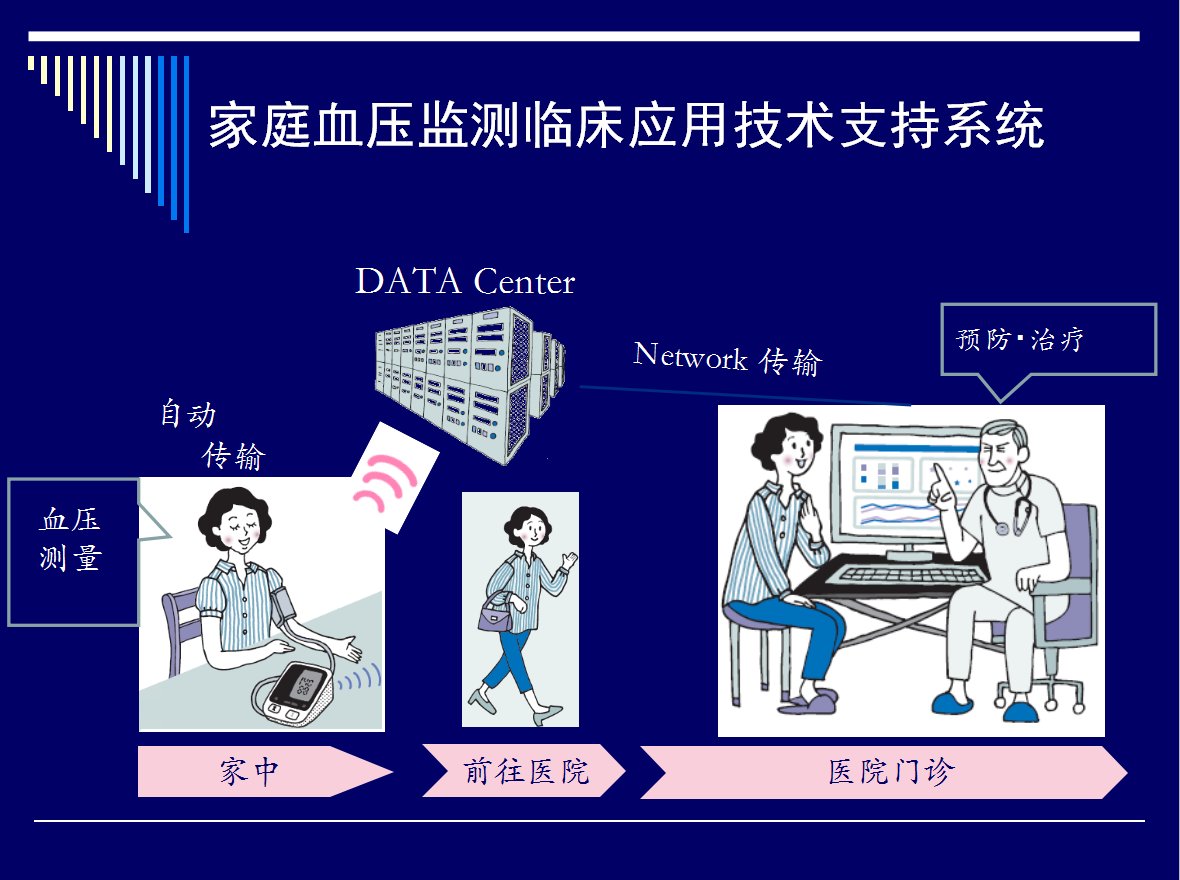
• In alignment with China’s current disease management system, we should promote stratified, staged, and classified management of hypertension, and establish an integrated prevention and control network for hypertension that links specialists, general practitioners, and family-based care.
• Leverage big data capabilities to popularize 24-hour ambulatory blood pressure monitoring, enabling accurate diagnosis of hypertension and assessment of antihypertensive efficacy. Promote the clinical application of home blood pressure monitoring to improve awareness rates and evaluate long-term antihypertensive outcomes. Establish electronic support infrastructure for hundreds of millions of hypertensive patients, achieving home-based management for over 90% of patients, thereby freeing up medical resources for the 10% with acute, critical, or severe hypertension.
• The challenges of hypertension management are immense, but big data technology offers viable solutions. Although medical practice, both now and in the future, remains a highly empathetic endeavor where electronic information cannot replace communication between physicians and patients, these new technologies will significantly enhance the effectiveness, efficiency, and cost-effectiveness of such communication.